1/n

Why Orderflow Charts?

Lets explain this with some basics comparing Candlestick Chart with Ordeflow Chart

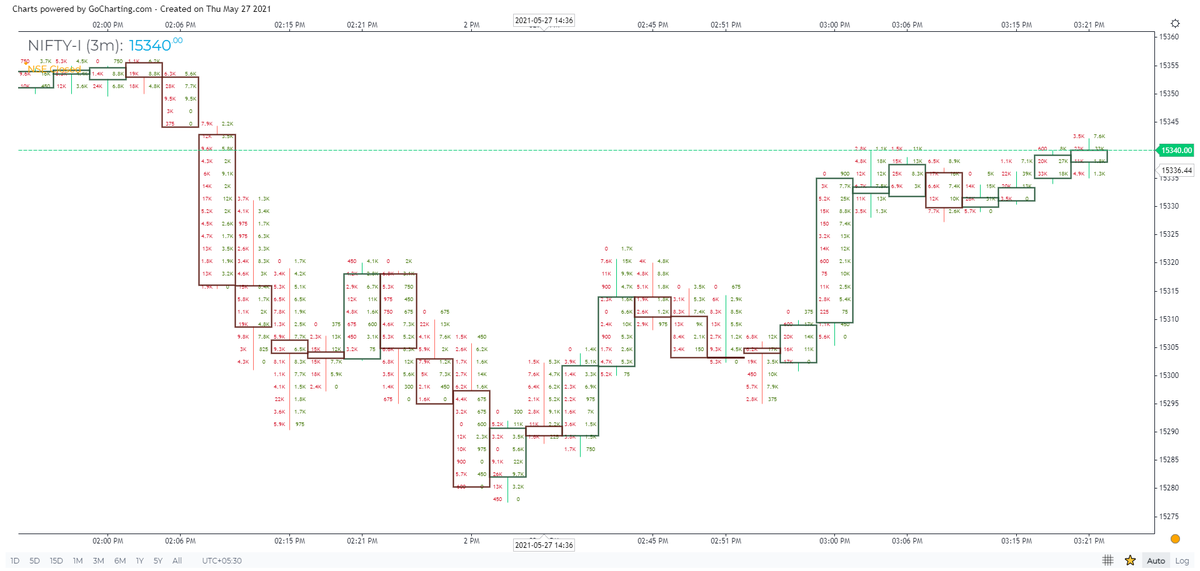
Order flow candle shows the contract volume traded on the seller side (left) and contract volume on the buyer side (right) on each single price level...

#orderflow

2 / n

Why this additional info important to the trader?

Trader is now

1. Closer to the actual market happenings
2. Gets an insight to the candle
3. Receives in depth market information in real-time
4. Can see the volume on each price level separated in buyers and sellers ...
3/n

5. Can discover price and volume patterns that cannot be seen with a regular candle chart
6. Can see how the buy and sell orders affect the price
7. Better assessment of whether the market will continue its trend

More self-confidence when trading...
4/n

Most Common Order Flow Chart Types

1. Volume Order Flow Chart

2. Bid x Ask Order Flow Chart

3. Delta Order Flow Chart
5/n

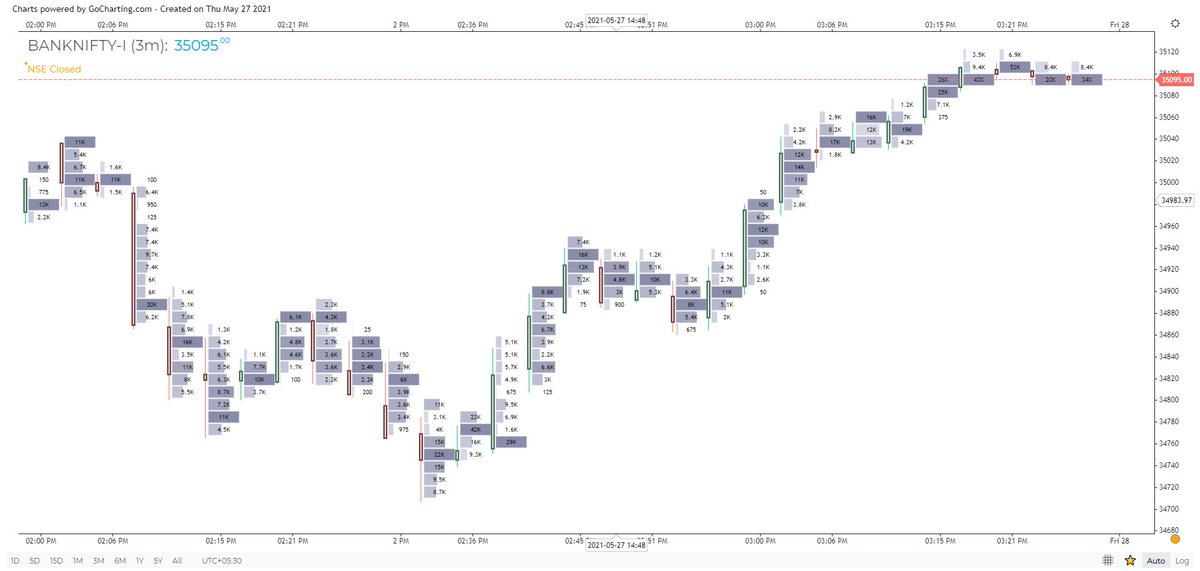
Volume Orderflow Chart

Basically this gives you the Volume Profile of every Candle
6/n

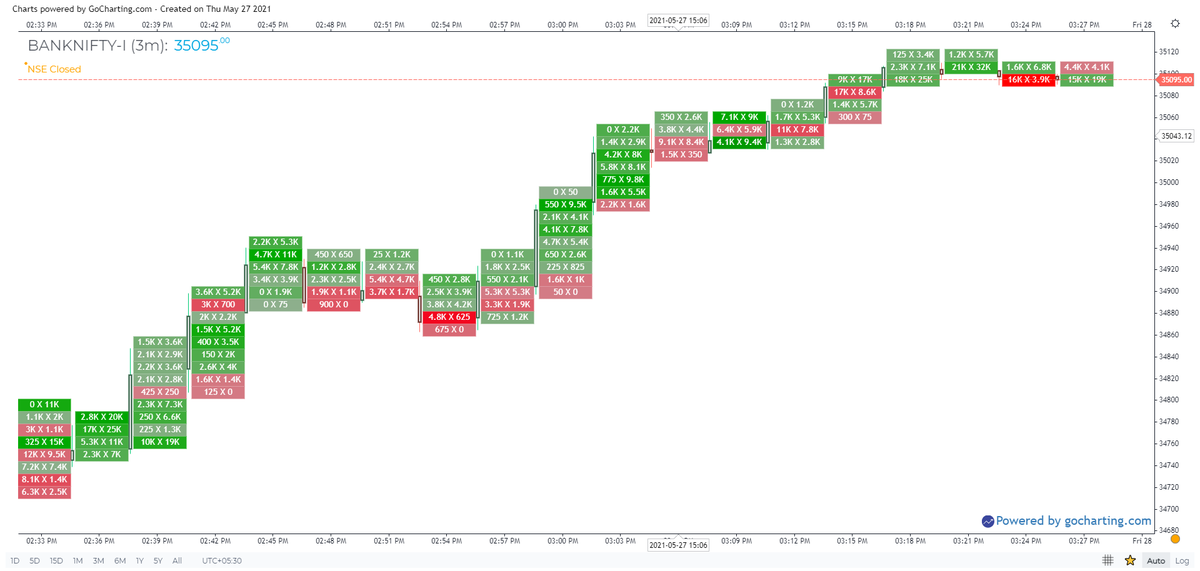
Bid x Ask Order Flow Chart

​This order flow chart type splits the total volume into the seller and buyer side. It illustrates the volume traded on each side a certain price level.
7/n

The bid x ask order flow provides overview of how the volume is traded at a certain price and whether it has been traded more on the buyer or seller side. Helps in identifying a change in momentum, market pressure and order absorption
8/n

Each bar brick is color coded based on Delta.

Delta = Buy Volume - Sell Volume

Green = + Delta (Buy Volume > Sell Volume)
RED = - Delta (Buy Volume < Sell Volume)
9/n

Another popular variation is where the sellers are on the left side of the candle and buyers on the right side
10/n

Delta Order Flow Chart

Chart illustrates difference between buy and sell market orders. Delta is shown in +ve or -ve. +ve delta illustrates there are were more aggressive buyers active and, in contrast, a -ve delta illustrates more aggressive sellers were active.
11/n

Delta order flow chart type provides an opportunity to measure the aggressive buying and selling pressure at a price level and indicates which side is more aggressive - buyers or sellers.
Popular Order Flow Chart Combinations

Order flow charts can also be combined in various ways to have multiple order flow information in one chart.

​Bid x Ask Order Flow + Volume Combo

Bid x Ask Order Flow + Profile Combo

Bid x Ask Order Flow + Delta etc.

More from All

MASTER THREAD on Short Strangles.

Curated the best tweets from the best traders who are exceptional at managing strangles.

• Positional Strangles
• Intraday Strangles
• Position Sizing
• How to do Adjustments
• Plenty of Examples
• When to avoid
• Exit Criteria

How to sell Strangles in weekly expiry as explained by boss himself. @Mitesh_Engr

• When to sell
• How to do Adjustments
• Exit


Beautiful explanation on positional option selling by @Mitesh_Engr
Sir on how to sell low premium strangles yourself without paying anyone. This is a free mini course in


1st Live example of managing a strangle by Mitesh Sir. @Mitesh_Engr

• Sold Strangles 20% cap used
• Added 20% cap more when in profit
• Booked profitable leg and rolled up
• Kept rolling up profitable leg
• Booked loss in calls
• Sold only


2nd example by @Mitesh_Engr Sir on converting a directional trade into strangles. Option Sellers can use this for consistent profit.

• Identified a reversal and sold puts

• Puts decayed a lot

• When achieved 2% profit through puts then sold

You May Also Like

I’m torn on how to approach the idea of luck. I’m the first to admit that I am one of the luckiest people on the planet. To be born into a prosperous American family in 1960 with smart parents is to start life on third base. The odds against my very existence are astronomical.


I’ve always felt that the luckiest people I know had a talent for recognizing circumstances, not of their own making, that were conducive to a favorable outcome and their ability to quickly take advantage of them.

In other words, dumb luck was just that, it required no awareness on the person’s part, whereas “smart” luck involved awareness followed by action before the circumstances changed.

So, was I “lucky” to be born when I was—nothing I had any control over—and that I came of age just as huge databases and computers were advancing to the point where I could use those tools to write “What Works on Wall Street?” Absolutely.

Was I lucky to start my stock market investments near the peak of interest rates which allowed me to spend the majority of my adult life in a falling rate environment? Yup.