The Tamil Nadu Waqf Board claims an entire Hindu-majority village including temple lands as its property.

A thread with all the details. (1/17)

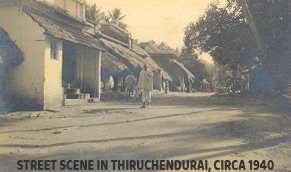
A shocking case of the Waqf Board claiming a property has come to light in Tamil Nadu, where an entire Hindu majority village has been declared as waqf property. Thiruchendurai village near Trichy has been designated as a waqf property by the Tamil Nadu Waqf Board. (2/17)
A person named Rajagopal attempted to sell his 1 acre 2 cents of land. When he arrived at the Registrar’s office to get the sale of his land registered, he shockingly learnt that the land did not belong to him and instead belonged to the Waqf Board. (3/17)
"The Waqf Board owns the land on which you have come to register the deed. This contract cannot be registered, according to the Waqf Board’s directive," the registrar stated. "You should obtain an NOC from the Waqf Board in Chennai," he further added. (4/17)
"Why do I need to obtain a no-objection certificate from the Waqf Board to sell my land which I purchased in 1992?” Rajagopal inquired in astonishment. (5/17)
Showing a 250-page letter from Tamil Nadu Waqf Board to Rajagopal, the registrar said that any sale of land in Thiruchendurai village requires a no-objection certificate from the Waqf Board in Chennai. (6/17)
"The Waqf Board informed the Deeds Dept. by letter and documentation that the entire village is theirs. It has also been stated that individuals who come to register a deed for land in the village should obtain a no-objection certificate from them," the registrar said. (7/17)
When Rajagopal narrated the incident to the villagers, all of them were shocked to learn that their land is'nt theirs. They wondered how Waqf Board can claim ownership of the entire village when the villagers have all the necessary documents for their respective lands. (8/17)
When this subject was brought to the District Collector’s attention by the villagers, he stated that the matter will be investigated and action will be taken after that. (9/17)
Trichy district BJP leader Allur Prakash said, "Thiruchendurai village, near Trichy, is an agricultural area dominated by Hindus. What is the Waqf Board’s connection with Thiruchendurai Village?” (10/17)
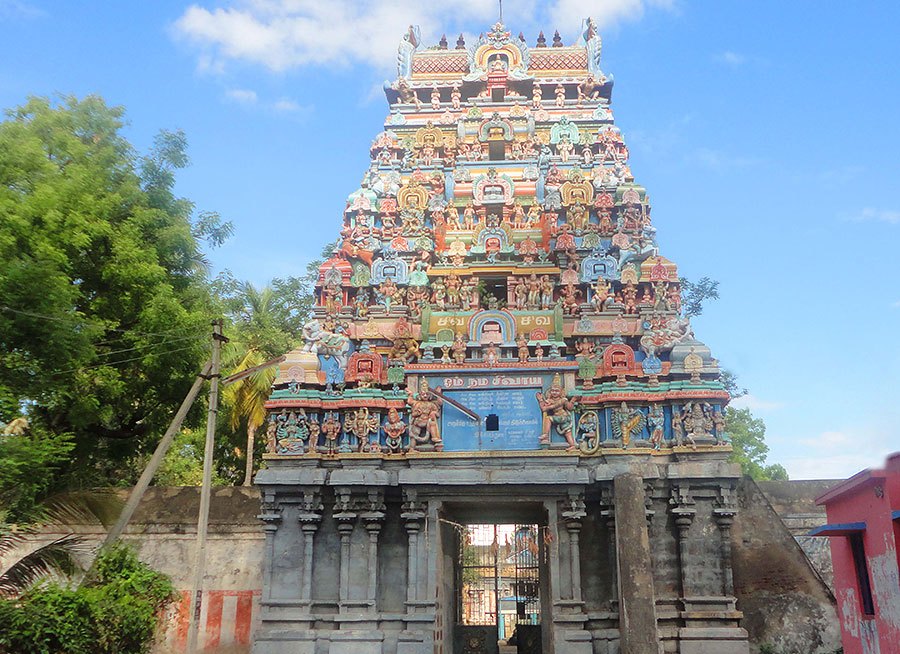
Allur Prakash: The Manendiyavalli Sametha Chandrasekhara Swamy temple in this village is 1500 years old according to many documents and evidence. The temple holds 369 acres of property in and around Thiruchendurai village. Is this temple property also owned by Waqf Board? (11/17)
Allur Prakash: What is the basis for this? How can the Waqf Board proclaim without any fundamental evidence when the revenue records belong to individuals? (12/17)
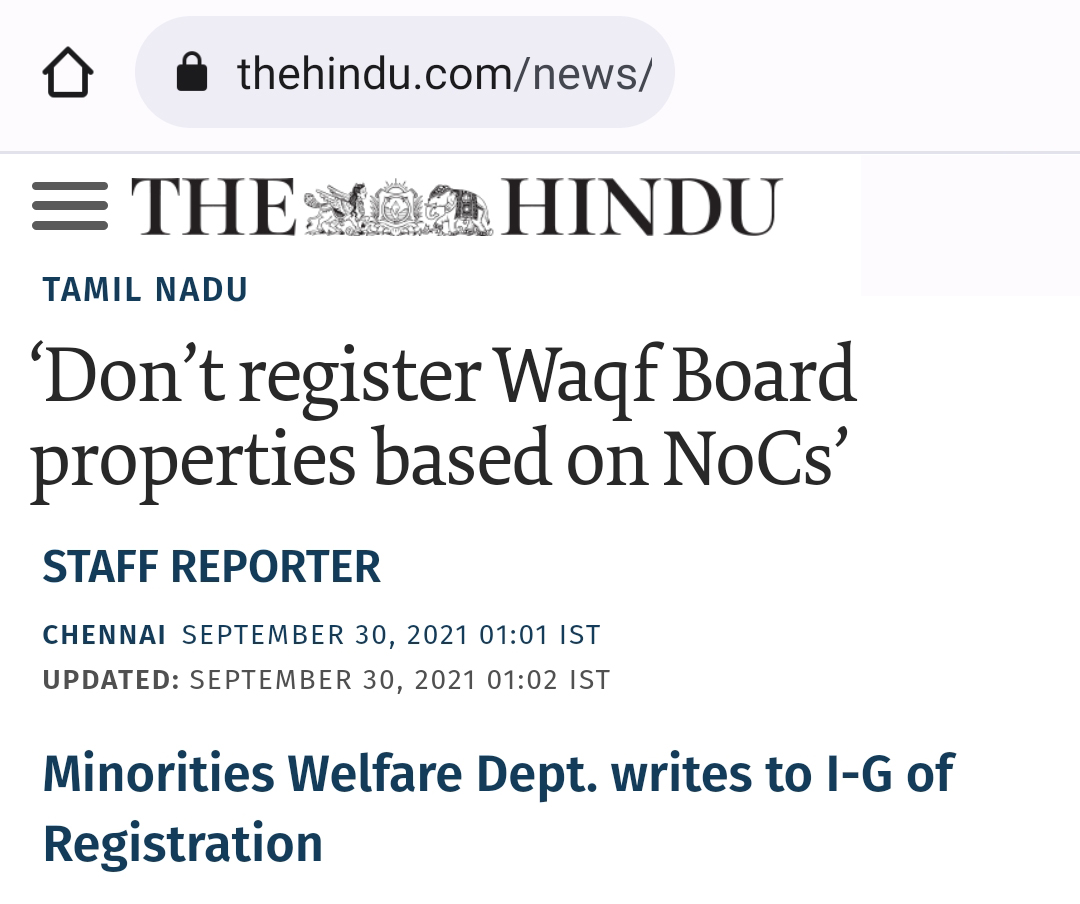
Also, in 2021, the 'Minorities Welfare Department' had instructed the Inspector-General of Registration to not register documents alienating Waqf Board properties based on “NOCs” issued by the staff of Tamil Nadu Waqf Board.
https://t.co/gM8sKQeXbk (13/17)
After the above instruction by the Minorities Welfare department in 2021, Manithaneya Makkal Katchi president M.H. Jawahirullah reportedly thanked Chief Minister M.K. Stalin.
https://t.co/gM8sKQeXbk (14/17)
The information in this thread is sourced from the below article.
https://t.co/pvqKFQ67zf (15/17)
A tweet from @sreeramjvc regarding this issue.
https://t.co/08bZPbSzKP (16/17)
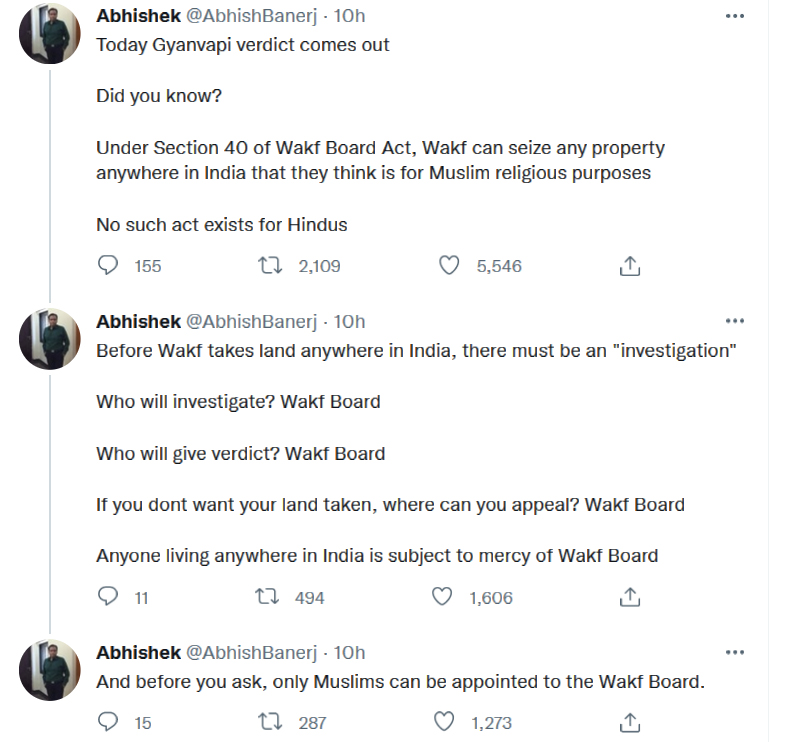
Some useful information from @AbhishBanerj. (17/17)

More from All

You May Also Like

**Thread on Bravery of Sikhs**
(I am forced to do this due to continuous hounding of Sikh Extremists since yesterday)

Rani Jindan Kaur, wife of Maharaja Ranjit Singh had illegitimate relations with Lal Singh (PM of Ranjit Singh). Along with Lal Singh, she attacked Jammu, burnt - https://t.co/EfjAq59AyI


Hindu villages of Jasrota, caused rebellion in Jammu, attacked Kishtwar.

Ancestors of Raja Ranjit Singh, The Sansi Tribe used to give daughters as concubines to Jahangir.


The Ludhiana Political Agency (Later NW Fronties Prov) was formed by less than 4000 British soldiers who advanced from Delhi and reached Ludhiana, receiving submissions of all sikh chiefs along the way. The submission of the troops of Raja of Lahore (Ranjit Singh) at Ambala.

Dabistan a contemporary book on Sikh History tells us that Guru Hargobind broke Naina devi Idol Same source describes Guru Hargobind serving a eunuch
YarKhan. (ref was proudly shared by a sikh on twitter)
Gobind Singh followed Bahadur Shah to Deccan to fight for him.


In Zafarnama, Guru Gobind Singh states that the reason he was in conflict with the Hill Rajas was that while they were worshiping idols, while he was an idol-breaker.

And idiot Hindus place him along Maharana, Prithviraj and Shivaji as saviours of Dharma.
1/ Some initial thoughts on personal moats:

Like company moats, your personal moat should be a competitive advantage that is not only durable—it should also compound over time.

Characteristics of a personal moat below:


2/ Like a company moat, you want to build career capital while you sleep.

As Andrew Chen noted:


3/ You don’t want to build a competitive advantage that is fleeting or that will get commoditized

Things that might get commoditized over time (some longer than


4/ Before the arrival of recorded music, what used to be scarce was the actual music itself — required an in-person artist.

After recorded music, the music itself became abundant and what became scarce was curation, distribution, and self space.

5/ Similarly, in careers, what used to be (more) scarce were things like ideas, money, and exclusive relationships.

In the internet economy, what has become scarce are things like specific knowledge, rare & valuable skills, and great reputations.