9 trading strategies everyone should know (with Python code):

Bollinger Bands Pattern Recognition

The mid band is the moving average on the price series.

The upper and lower bands are two moving standard deviations away from the mid band.
MACD oscillator

MACD refers to Moving Average Convergence/Divergence.

MACD is a momentum trading strategy.

It assumes momentum has more impact on short-term moving average than long-term moving average.
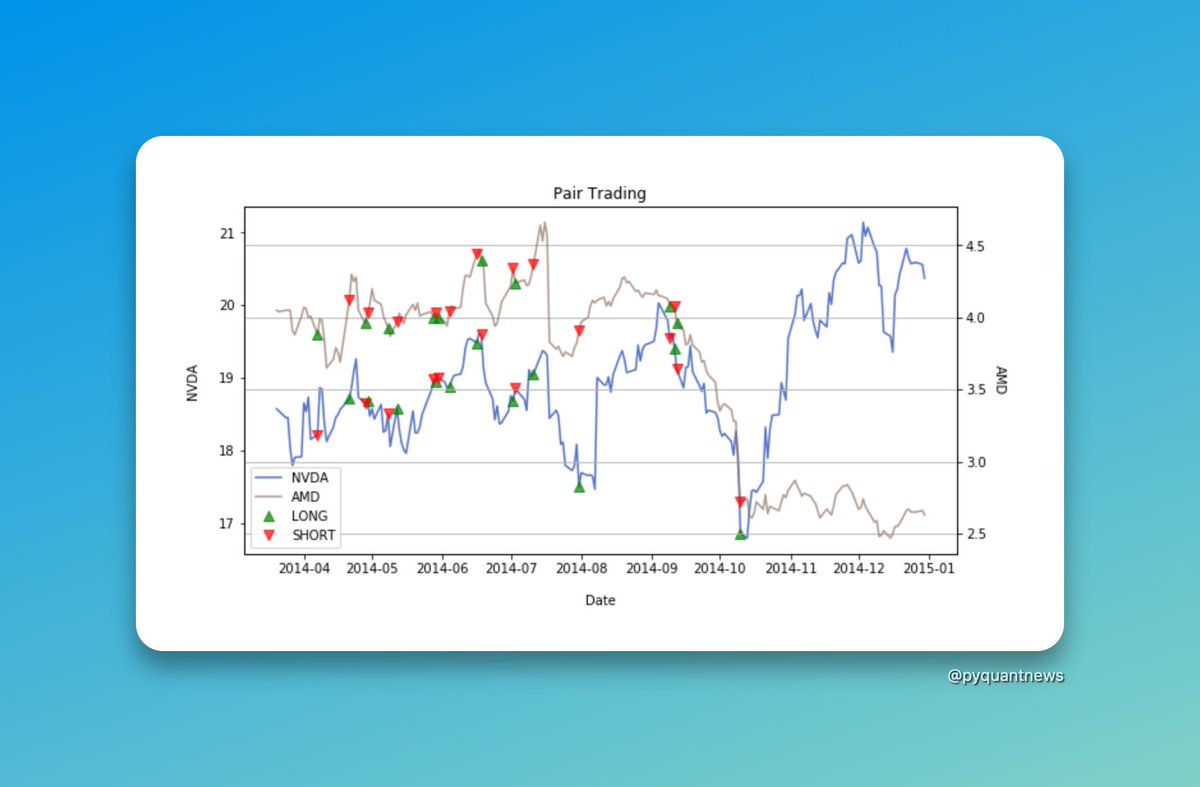
Pairs Trading

Pairs trading is a basic form of statistical arbitrage.

It assumes that two cointegrated stocks do not drift too far away from each other.

When they do, it generates the trading signal.
Heikin-Ashi Candlestick

Heikin-Ashi refers to 'Average Bar' in Japanese.

It's an alternative style of candlestick chart.

The rules of Heiki-Ashi are designed to filter out the noise for momentum trading.
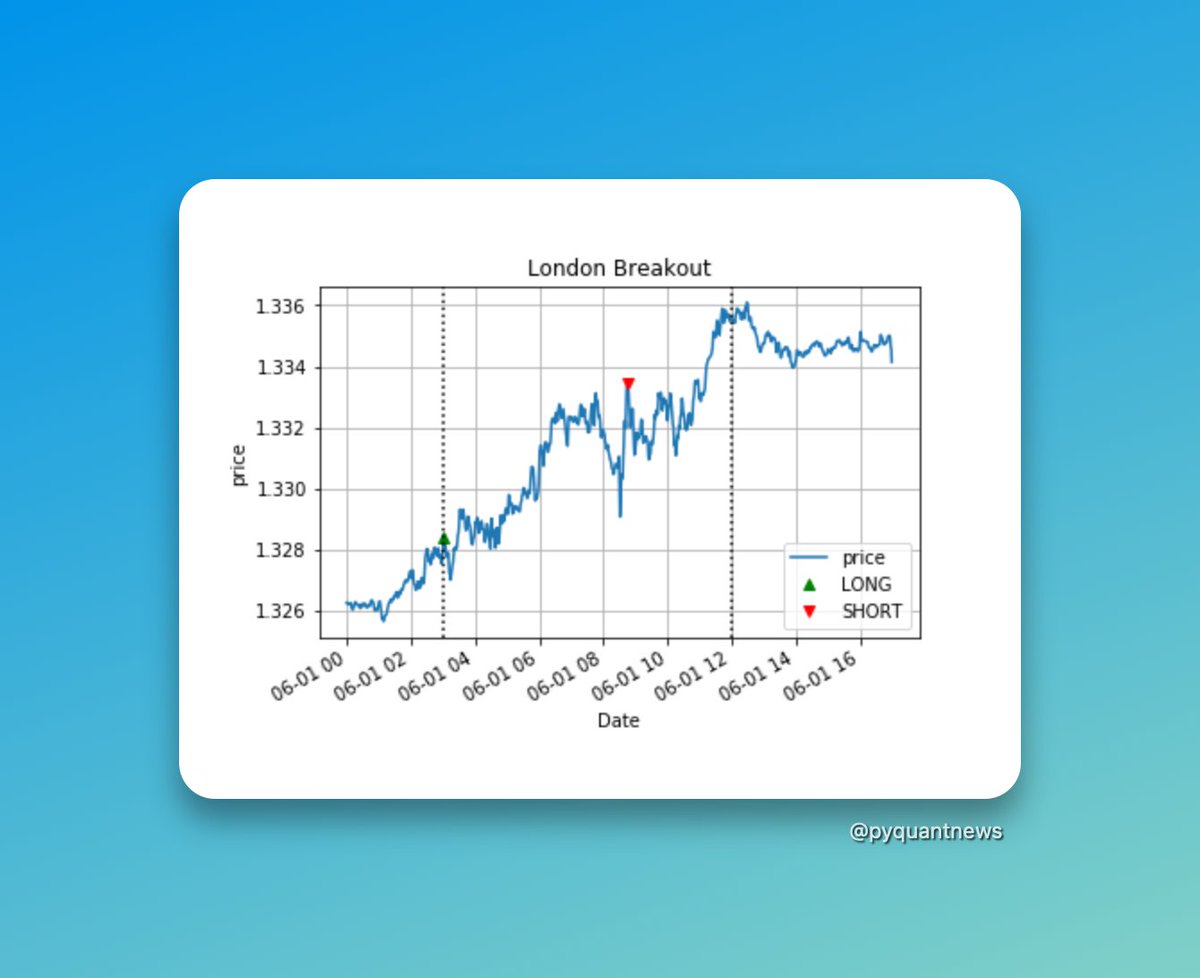
London Breakout

It’s an information arbitrage strategy across different markets in different time zones.

As FX markets are decentralized, you can take a peek at the activity in a closed foreign FX market before the opening of the domestic FX market.
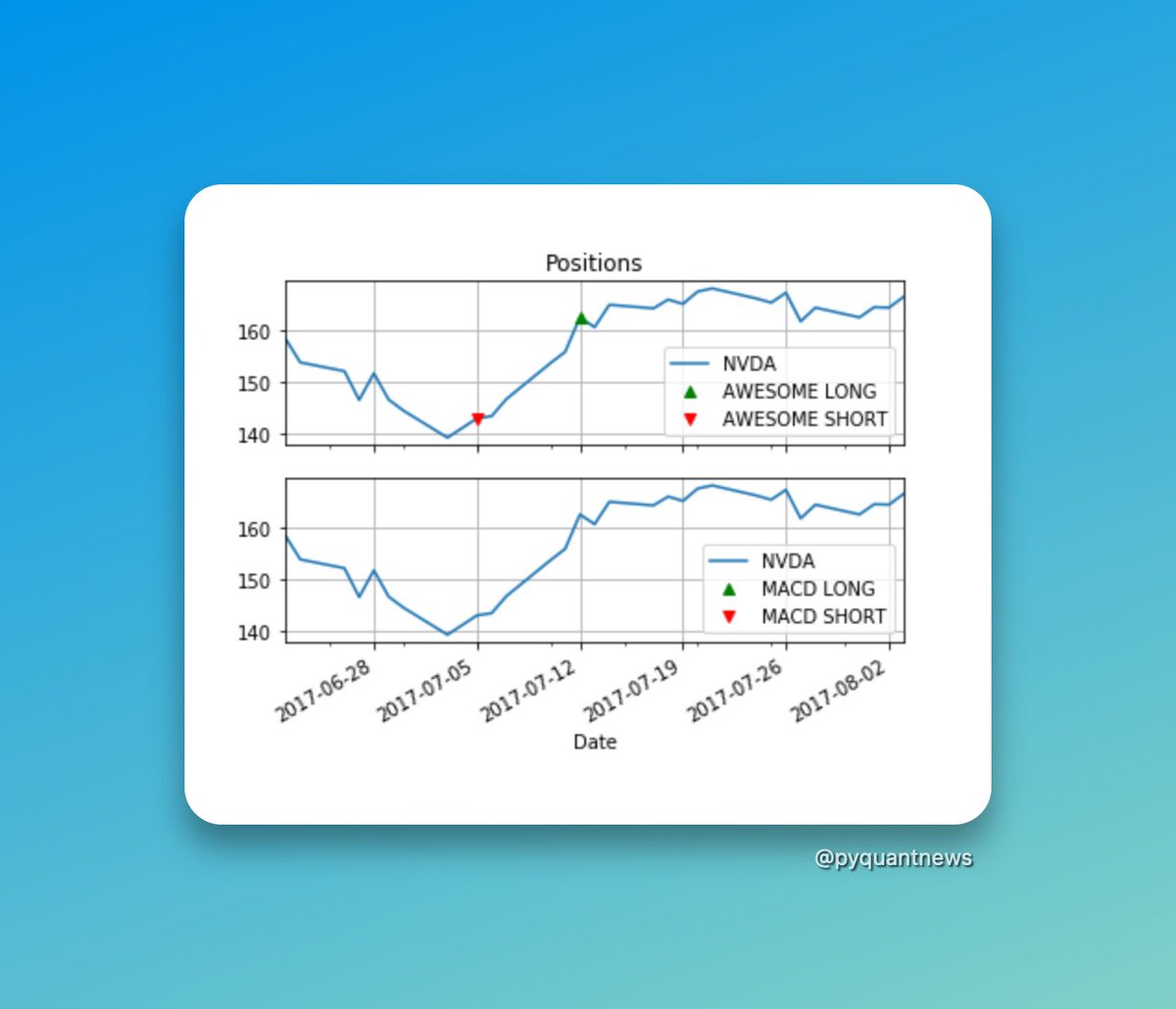
Awesome Oscillator

Awesome oscillator is an upgraded version of the MACD oscillator.

Instead of taking a moving average on the close price, it uses the mean of high and low.

It uses short-term and long-term moving averages to construct the oscillator.
Dual Thrust

Dual thrust is an opening range breakout strategy.

We establish upper and lower thresholds based on previous day's open, close, high and low.

When the market opens and the price exceeds the thresholds, take positions before the thresholds.
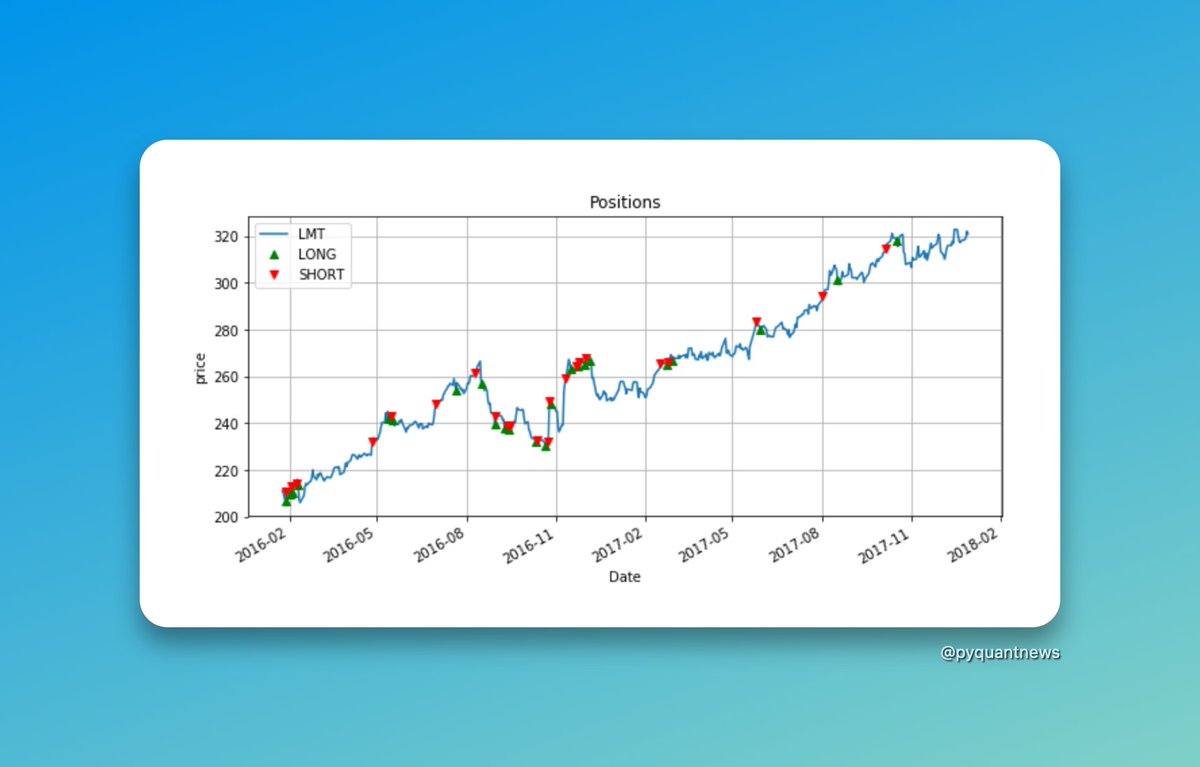
Parabolic SAR

Parabolic SAR identifies the stop and reversal of a trend.

It's used to identify resistance to the price momentum.

Orders are executed when the SAR and price curves cross over.
Relative Strength Index Pattern Recognition

RSI reflects the current strength/weakness of the stock price momentum.

When RSI above 70 is overbought and RSI below 30 is oversold.
And if that isn't enough, there's 8 more strategies here:

https://t.co/hBlNYzjJyt

And if THAT isn't enough, there's one more thing for you:
Check out the 46-Page Ultimate Guide to Pricing Options and Implied Volatility With Python.

Here's why:

• Compute Black-Scholes, the greeks and implied volatility
• Includes a Jupyter Notebook with the code
• How to use Python to analyze the results

https://t.co/uUXgYrCqgx
That's a wrap!

If you enjoyed this thread:

1. Follow me @pyquantnews for more of these
2. RT the tweet below to share this thread with your audience https://t.co/zqjQlUT23e

More from PyQuant News

More from All

You May Also Like

Recently, the @CNIL issued a decision regarding the GDPR compliance of an unknown French adtech company named "Vectaury". It may seem like small fry, but the decision has potential wide-ranging impacts for Google, the IAB framework, and today's adtech. It's thread time! 👇

It's all in French, but if you're up for it you can read:
• Their blog post (lacks the most interesting details):
https://t.co/PHkDcOT1hy
• Their high-level legal decision: https://t.co/hwpiEvjodt
• The full notification: https://t.co/QQB7rfynha

I've read it so you needn't!

Vectaury was collecting geolocation data in order to create profiles (eg. people who often go to this or that type of shop) so as to power ad targeting. They operate through embedded SDKs and ad bidding, making them invisible to users.

The @CNIL notes that profiling based off of geolocation presents particular risks since it reveals people's movements and habits. As risky, the processing requires consent — this will be the heart of their assessment.

Interesting point: they justify the decision in part because of how many people COULD be targeted in this way (rather than how many have — though they note that too). Because it's on a phone, and many have phones, it is considered large-scale processing no matter what.