Well some people can't digest it. They either call it hoax or made by "ancient aliens". A term created to defamehindu civilization.

Kalpa vigrah is found to be more than 28,450 years old.

We have seen many excavation throughout the globe. In Russia we found Mata

kali and Bhagwan Vishnu deva's idols. Mexico: we found Mahadev & Shri Ganesh.
None created controversy like Kalpa Vigraha
This is made up of metal alloy more than 28k years back. Official datas shows that metallurgy started in neolithic period 3k BC. But our history oppose it.
Bhartiyas used to make zinc, which is hard to create even today, before neolithic period ✨

Why is it controversial?

Kalpa Vigraha was stolen and smuggled out of Nepal. This idol was found in a chest. The Box was amazingly 9×9×9 inches large. It had heavy metal around it.
The Box was tightly locked & was designed in such a way that CIA could not conduct a radiocarbon test on it.

A manuscript was in the Box & the language on it belonged to a time when existence of language is hard to think of today. It was concluded that the language was used as
a means to transfer the knowledge of vedas orally.

The manuscript mentioned the name of the idol – “Kalpa Maha-Ayusham Rasayana Vigraha” abbreviated in CIA files to “Kalpa Vigraha.”

But What Does it Means ?

Maha-Ayusham - Great Life/Immortal
Rasayan - Chemicals
Vigraha - Idol
“Kalpa Maha-Ayusham Rasayana Vigraha” Itself Means
'A Idol Which Cannot Get Damage And Has Long Life Because of Its Special Chemical Properties' !!!

The most amazing thing about this Box is, it dosent belong to this Yuga it belongs to Dwaparyuga !!! This
Box is the oldest human artifact in the world.

Information about the Physical & Chemical Properties and where was this Idol lost in the History is given in the Comments Section !!!
Must Read
Source -
dharmo_rakshati_rakshitah_108 insta page

More from All

You May Also Like

1/ Here’s a list of conversational frameworks I’ve picked up that have been helpful.

Please add your own.

2/ The Magic Question: "What would need to be true for you


3/ On evaluating where someone’s head is at regarding a topic they are being wishy-washy about or delaying.

“Gun to the head—what would you decide now?”

“Fast forward 6 months after your sabbatical--how would you decide: what criteria is most important to you?”

4/ Other Q’s re: decisions:

“Putting aside a list of pros/cons, what’s the *one* reason you’re doing this?” “Why is that the most important reason?”

“What’s end-game here?”

“What does success look like in a world where you pick that path?”

5/ When listening, after empathizing, and wanting to help them make their own decisions without imposing your world view:

“What would the best version of yourself do”?
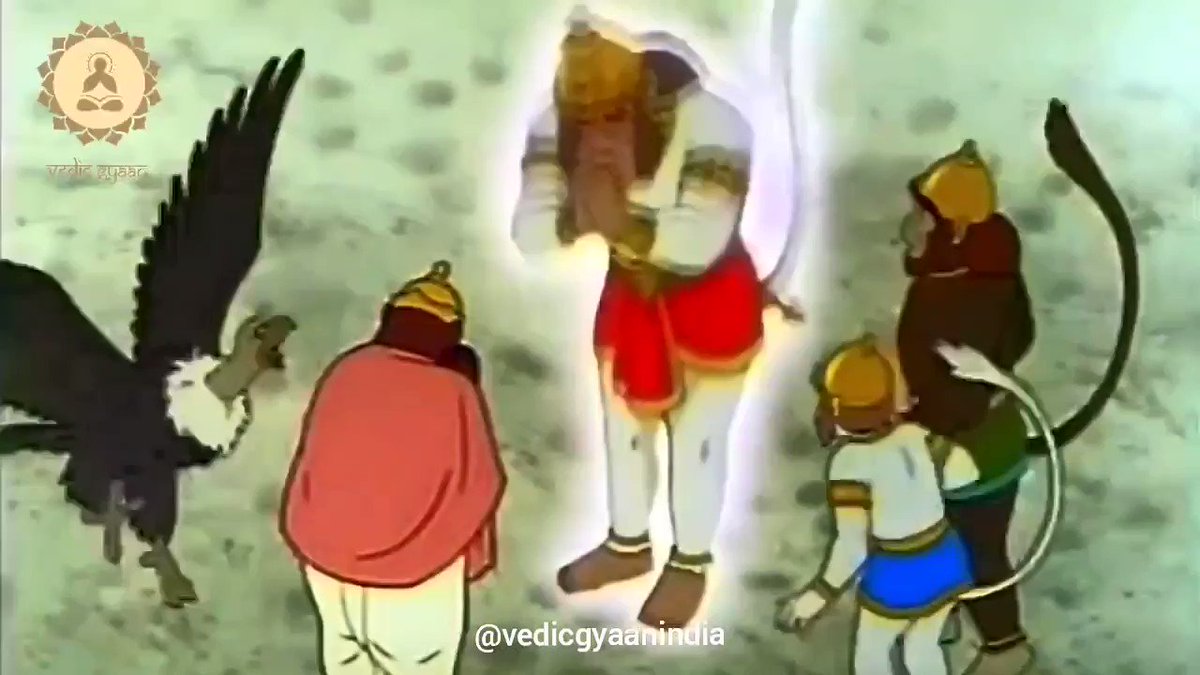
The chorus of this song uses the shlokas taken from Sundarkand of Ramayana.

It is a series of Sanskrit shlokas recited by Jambavant to Hanuman to remind Him of his true potential.

1. धीवर प्रसार शौर्य भरा: The brave persevering one, your bravery is taking you forward.


2. उतसारा स्थिरा घम्भीरा: The one who is leaping higher and higher, who is firm and stable and seriously determined.

3. ुग्रामा असामा शौर्या भावा: He is strong, and without an equal in the ability/mentality to fight

4. रौद्रमा नवा भीतिर्मा: His anger will cause new fears in his foes.

5.विजिटरीपुरु धीरधारा, कलोथरा शिखरा कठोरा: This is a complex expression seen only in Indic language poetry. The poet is stating that Shivudu is experiencing the intensity of climbing a tough peak, and likening

it to the feeling in a hard battle, when you see your enemy defeated, and blood flowing like a rivulet. This is classical Veera rasa.

6.कुलकु थारथिलीथा गम्भीरा, जाया विराट वीरा: His rough body itself is like a sharp weapon (because he is determined to win). Hail this complete

hero of the world.

7.विलयगागनथाला भिकारा, गरज्जद्धरा गारा: The hero is destructive in the air/sky as well (because he can leap at an enemy from a great height). He can defeat the enemy (simply) with his fearsome roar of war.