#Thread
|| KAMAL MOULANA MASJID IN DHAR |
Firstly, Dhar is a Sanskrit Word. This city was the capital of a prosperous empire in ancient times. Hence it had many temples and Rajprasāda. Most of them now stand as mosques.

More from ~✿ शिवशर्वाणी ✿~
#Thread on #BhagvadGita : The Divine Gift of Shri Krishna to ब्रह्माण्ड!

Tomorrow is the Ekadashi of Margasirsha Shukla Paksh , the day when Sri Krishna gave the divine knowledge of Bhagvad Gita. Honestly speaking,no one has the capability to describe the glories of this divine knowledge Bhagvad Gitā in https://t.co/SnrpNuIV8L comes under 'Bhishma

Parva' which is from Chapter 13 to 42.
The first chapter of Shrimad Bhagwat Geeta begins with chapter 25 of Bhishma Parva.
The names of 4 Parva that comes under Bhishma Parva are:
1) Jambhund Nirman Parv
2) Bhoomi Parva
3) Shrimad Bhagwat Geeta Parva
4)BhismaVadh Parva
Description of all the chapters are given in Padma Purana briefly and Gītāsaar in Agnipurana.

This book is the compilation of all the Shashtras.
इमं विवस्वते योगं प्रोक्तवानहमव्ययम् |
विवस्वान्मनवे प्राह मनुरिक्ष्वाकवेऽब्रवीत् |
According to this shloka Sri Hari gave the divine Gyaan of Gita to Surya Dev before giving it to Arjuna.
Tomorrow is the Ekadashi of Margasirsha Shukla Paksh , the day when Sri Krishna gave the divine knowledge of Bhagvad Gita. Honestly speaking,no one has the capability to describe the glories of this divine knowledge Bhagvad Gitā in https://t.co/SnrpNuIV8L comes under 'Bhishma
Parva' which is from Chapter 13 to 42.
The first chapter of Shrimad Bhagwat Geeta begins with chapter 25 of Bhishma Parva.
The names of 4 Parva that comes under Bhishma Parva are:
1) Jambhund Nirman Parv
2) Bhoomi Parva
3) Shrimad Bhagwat Geeta Parva
4)BhismaVadh Parva
Description of all the chapters are given in Padma Purana briefly and Gītāsaar in Agnipurana.
This book is the compilation of all the Shashtras.
इमं विवस्वते योगं प्रोक्तवानहमव्ययम् |
विवस्वान्मनवे प्राह मनुरिक्ष्वाकवेऽब्रवीत् |
According to this shloka Sri Hari gave the divine Gyaan of Gita to Surya Dev before giving it to Arjuna.




#Thread on Mahavidya Lalita Tripura Sundari also known as दिव्यरूपिणी , सिद्धविद्या , कामराहुप्रिया ,सर्वलक्ष्मीमयी & आनन्दरूपिणी।

One can worship Shri Bhairavi through both the Marga (वाम and दक्षिण).
-Aways remember one can attain fruits of worshiping Devi Lalita Tripur Sundari ,if it is done according to गुरुपरम्परा / आत्मसम्प्रदाय, with devotion.
- Her yantra was made of भूपुर containing अष्टदलपद्म तथा चतुर्द्वार and नवयोनिकोण in the middle of it,Devi Bhagvati provides wealth to her devotees.
- Maa Tripur Sundari is अधिष्ठात्री devi of the third chapter of 'Durga Saptashati'.

https://t.co/NhzJgE3jNa Thread on Devi Chinnamastika 🙏
Thread on Devi Dhoomavati
One can worship Shri Bhairavi through both the Marga (वाम and दक्षिण).
-Aways remember one can attain fruits of worshiping Devi Lalita Tripur Sundari ,if it is done according to गुरुपरम्परा / आत्मसम्प्रदाय, with devotion.
- Her yantra was made of भूपुर containing अष्टदलपद्म तथा चतुर्द्वार and नवयोनिकोण in the middle of it,Devi Bhagvati provides wealth to her devotees.
- Maa Tripur Sundari is अधिष्ठात्री devi of the third chapter of 'Durga Saptashati'.
https://t.co/NhzJgE3jNa Thread on Devi Chinnamastika 🙏
#Thread on Devi Chinnamastika, Also known as \u092a\u094d\u0930\u091a\u0902\u0921 \u091a\u0923\u094d\u0921\u093f\u0915\u093e \u0964 pic.twitter.com/gHh8tl9BO4
— ~\u273f \u0936\u093f\u0935\u0936\u0930\u094d\u0935\u093e\u0923\u0940 \u273f~ (@Elf_of_Shiva_) November 15, 2021
Thread on Devi Dhoomavati
#Thread on Mahavidya Dhumavati : A fierce force and form of Mahavidya also known as \u091c\u094d\u092f\u0947\u0937\u094d\u0920\u093e \u0926\u0947\u0935\u0940, \u0927\u0942\u092e\u093f\u0928\u0940. pic.twitter.com/KmFGynUNlS
— ~\u273f \u0936\u093f\u0935\u0936\u0930\u094d\u0935\u093e\u0923\u0940 \u273f~ (@Elf_of_Shiva_) November 17, 2021
More from All












You May Also Like

I just finished Eric Adler's The Battle of the Classics, and wanted to say something about Joel Christiansen's review linked below. I am not sure what motivates the review (I speculate a bit below), but it gives a very misleading impression of the book. 1/x
The meat of the criticism is that the history Adler gives is insufficiently critical. Adler describes a few figures who had a great influence on how the modern US university was formed. It's certainly critical: it focuses on the social Darwinism of these figures. 2/x
Other insinuations and suggestions in the review seem wildly off the mark, distorted, or inappropriate-- for example, that the book is clickbaity (it is scholarly) or conservative (hardly) or connected to the events at the Capitol (give me a break). 3/x
The core question: in what sense is classics inherently racist? Classics is old. On Adler's account, it begins in ancient Rome and is revived in the Renaissance. Slavery (Christiansen's primary concern) is also very old. Let's say classics is an education for slaveowners. 4/x
It's worth remembering that literacy itself is elite throughout most of this history. Literacy is, then, also the education of slaveowners. We can honor oral and musical traditions without denying that literacy is, generally, good. 5/x
As someone\u2019s who\u2019s read the book, this review strikes me as tremendously unfair. It mostly faults Adler for not writing the book the reviewer wishes he had! https://t.co/pqpt5Ziivj
— Teresa M. Bejan (@tmbejan) January 12, 2021
The meat of the criticism is that the history Adler gives is insufficiently critical. Adler describes a few figures who had a great influence on how the modern US university was formed. It's certainly critical: it focuses on the social Darwinism of these figures. 2/x
Other insinuations and suggestions in the review seem wildly off the mark, distorted, or inappropriate-- for example, that the book is clickbaity (it is scholarly) or conservative (hardly) or connected to the events at the Capitol (give me a break). 3/x
The core question: in what sense is classics inherently racist? Classics is old. On Adler's account, it begins in ancient Rome and is revived in the Renaissance. Slavery (Christiansen's primary concern) is also very old. Let's say classics is an education for slaveowners. 4/x
It's worth remembering that literacy itself is elite throughout most of this history. Literacy is, then, also the education of slaveowners. We can honor oral and musical traditions without denying that literacy is, generally, good. 5/x

Speech Delay is most common in children nowadays
In ancient times, our grandparents used to follow typical natural way of caring the needs of a child. All they used were more of natural products than chemical based for the growth of child.

One of major step followed was to feed Gurbach Jadd/ Vasa Kommu/ Acorus Calamus for initiating good speech ability in a child. This stem was needed to babies on Tuesdays and Sundays in mother's milk.
Vasa is feed to baby after the 1st bath on 12th day in week. Weekly only thrice it is fed and named as :
Budhwar - Budhi Vasa
Mangalwar - Vaak Vasa
Ravi Vaar - Aayush Vasa
This stem is burnt and rubbed against the grinding stone in mother's milk or warm water to get a paste
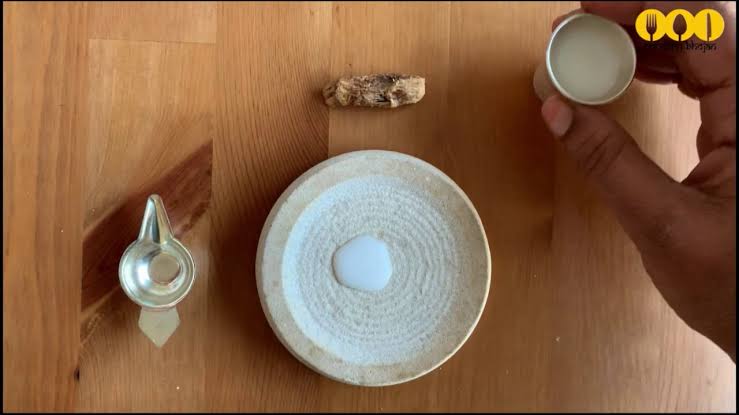
The procedure to make it is in the link
https://t.co/uo4sGp7mUm
It should not be given daily to the child. Other main benefits are
1. It clears the phlegm in child's throat caused due to continuous milk intake. It clears the tracts and breathing is effortless.
2. Digestion
For children who haven't got their speech and is delayed than usual should feed this vasa on these days in week atleast for 6months. Don't get carried away with this dialogue
"Some gain speech little late"
In ancient times, our grandparents used to follow typical natural way of caring the needs of a child. All they used were more of natural products than chemical based for the growth of child.
One of major step followed was to feed Gurbach Jadd/ Vasa Kommu/ Acorus Calamus for initiating good speech ability in a child. This stem was needed to babies on Tuesdays and Sundays in mother's milk.
Vasa is feed to baby after the 1st bath on 12th day in week. Weekly only thrice it is fed and named as :
Budhwar - Budhi Vasa
Mangalwar - Vaak Vasa
Ravi Vaar - Aayush Vasa
This stem is burnt and rubbed against the grinding stone in mother's milk or warm water to get a paste
The procedure to make it is in the link
https://t.co/uo4sGp7mUm
It should not be given daily to the child. Other main benefits are
1. It clears the phlegm in child's throat caused due to continuous milk intake. It clears the tracts and breathing is effortless.
2. Digestion
For children who haven't got their speech and is delayed than usual should feed this vasa on these days in week atleast for 6months. Don't get carried away with this dialogue
"Some gain speech little late"