Are You Making These Costly Beginner Mistakes With Your Sales Letters?

*** Thread ***

Pssst... if you sell anything on Gumroad...

You might wanna pay attention to this 👇

I usually focus on email...

But I've been busy critiquing sales letters this past week.

Instead of getting in the weeds...

Let's zoom out and talk about 5 high-level areas that can help you boost those juicy conversions.
#1 — Weak structure

I want to see how the sales letter flows.

How are we organizing the sections?

Do we even HAVE sections?

What about section headers for skimmers?

We want to take the reader through a logical sequence that primes them to buy.
#2 — Fuzzy targeting

WHO is our ideal client or customer?

Are we speaking to this person... or trying to appeal to everyone?

A common, common mistake I see is that the offer owner isn't clear on the target.

Instead, write to ONE person.
#3 — Incomplete offer

Many people will create a book, course, or coaching program...

Slap a price on it...

And call it a day.

They don't really give thought to offer positioning, bonuses, one-time offers, upsells, ascension, urgency, etc.
We want to solve a SPECIFIC problem...

Offer a SPECIFIC solution...

Talk about WHY they haven't been able to solve this problem...

And highlight what makes our entire offer stack UNIQUE.
#4 — No FAQ

I know some people may disagree...

But I like to have an FAQ for the people who jump straight to the bottom of the sales page (like me).

This is a good opportunity to recap the offer...

Overcome objections...

Set expectations...

And tell the reader how to buy.
#5 — No background story

People want to know who created this product.

Who are you?

And why did you create THIS particular product?

A good story will help you break down buying resistance...

And build a bond with your reader.

It's also an opportunity to build trust.
This is high-level stuff.

Nothing earth-shattering if you're writing sales letters for Agora.

But for people just getting their feet wet with sales letters...

Like coaches and course creators writing their own copy...

These are some key ingredients you'll want to include.
Enjoyed this thread?

5x a week I write a newsletter for 2,000 subscribers about email marketing + online business.

Readers include millionaires, small biz owners, copywriters, and top freelancers.

Join here:

https://t.co/WturMkgI6l

More from All

https://t.co/6cRR2B3jBE
Viruses and other pathogens are often studied as stand-alone entities, despite that, in nature, they mostly live in multispecies associations called biofilms—both externally and within the host.

https://t.co/FBfXhUrH5d


Microorganisms in biofilms are enclosed by an extracellular matrix that confers protection and improves survival. Previous studies have shown that viruses can secondarily colonize preexisting biofilms, and viral biofilms have also been described.


...we raise the perspective that CoVs can persistently infect bats due to their association with biofilm structures. This phenomenon potentially provides an optimal environment for nonpathogenic & well-adapted viruses to interact with the host, as well as for viral recombination.


Biofilms can also enhance virion viability in extracellular environments, such as on fomites and in aquatic sediments, allowing viral persistence and dissemination.
1. Mini Thread on Conflicts of Interest involving the authors of the Nature Toilet Paper:
https://t.co/VUYbsKGncx
Kristian G. Andersen
Andrew Rambaut
Ian Lipkin
Edward C. Holmes
Robert F. Garry

2. Thanks to @newboxer007 for forwarding the link to the research by an Australian in Taiwan (not on

3. K.Andersen didn't mention "competing interests"
Only Garry listed Zalgen Labs, which we will look at later.
In acknowledgements, Michael Farzan, Wellcome Trust, NIH, ERC & ARC are mentioned.
Author affiliations listed as usual.
Note the 328 Citations!
https://t.co/nmOeohM89Q


4. Kristian Andersen (1)
Andersen worked with USAMRIID & Fort Detrick scientists on research, with Robert Garry, Jens Kuhn & Sina Bavari among


5. Kristian Andersen (2)
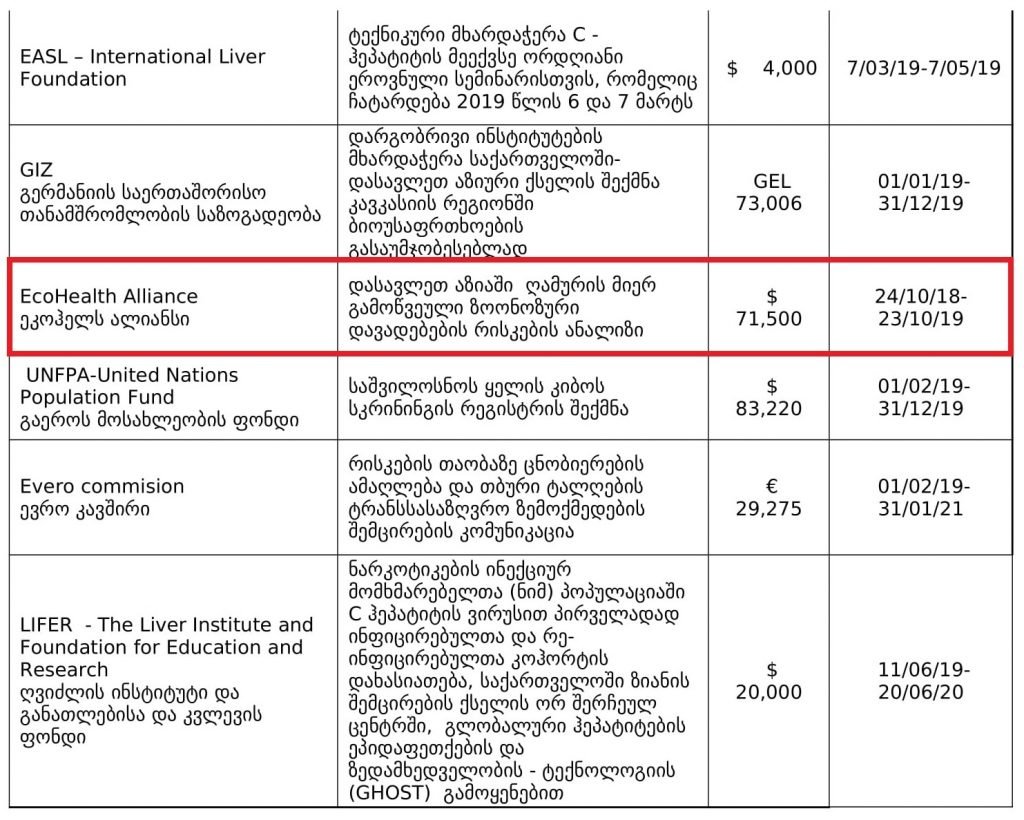
Works at Scripps Research Institute, which WAS in serious financial trouble, haemorrhaging 20 million $ a year.
But just when the first virus cases were emerging, they received great news.
They issued a press release dated November 27, 2019:

You May Also Like

A brief analysis and comparison of the CSS for Twitter's PWA vs Twitter's legacy desktop website. The difference is dramatic and I'll touch on some reasons why.

Legacy site *downloads* ~630 KB CSS per theme and writing direction.

6,769 rules
9,252 selectors
16.7k declarations
3,370 unique declarations
44 media queries
36 unique colors
50 unique background colors
46 unique font sizes
39 unique z-indices

https://t.co/qyl4Bt1i5x


PWA *incrementally generates* ~30 KB CSS that handles all themes and writing directions.

735 rules
740 selectors
757 declarations
730 unique declarations
0 media queries
11 unique colors
32 unique background colors
15 unique font sizes
7 unique z-indices

https://t.co/w7oNG5KUkJ


The legacy site's CSS is what happens when hundreds of people directly write CSS over many years. Specificity wars, redundancy, a house of cards that can't be fixed. The result is extremely inefficient and error-prone styling that punishes users and developers.

The PWA's CSS is generated on-demand by a JS framework that manages styles and outputs "atomic CSS". The framework can enforce strict constraints and perform optimisations, which is why the CSS is so much smaller and safer. Style conflicts and unbounded CSS growth are avoided.