Jay_millerjay Categories Society
7 days
30 days
All time
Recent
Popular





Serum albumin, a protein measured by a common lab test, has a large inverse relation with mortality.
Why?
Thread👇
In very old people, albumin was a more important risk marker than traditional risk factors such as HDL, LDL, and HbA1c.
https://t.co/1wolLynI1O
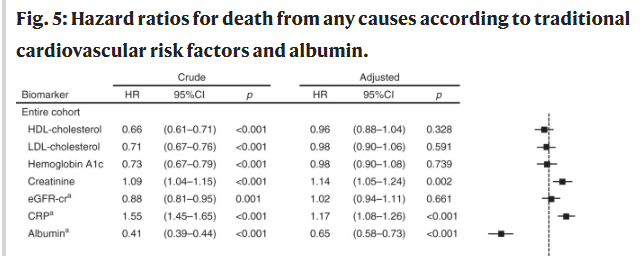
"serum albumin concentration is inversely related to mortality risk in a graded manner over its entire range"
in both healthy people and those with acute or chronic
But, low albumin is NOT a consequence of normal aging.
So, what's going
While there are suggestions that low albumin is a sign of undetected illness...
albumin is also associated with loss of muscle
Why?
Thread👇
In very old people, albumin was a more important risk marker than traditional risk factors such as HDL, LDL, and HbA1c.
https://t.co/1wolLynI1O
"serum albumin concentration is inversely related to mortality risk in a graded manner over its entire range"
in both healthy people and those with acute or chronic
But, low albumin is NOT a consequence of normal aging.
So, what's going
While there are suggestions that low albumin is a sign of undetected illness...
albumin is also associated with loss of muscle


We finally have the U.S. Citizenship Act Bill Text! I'm going to go through some portions of the bill right now and highlight some of the major changes and improvements that it would make to our immigration system.
Thread:
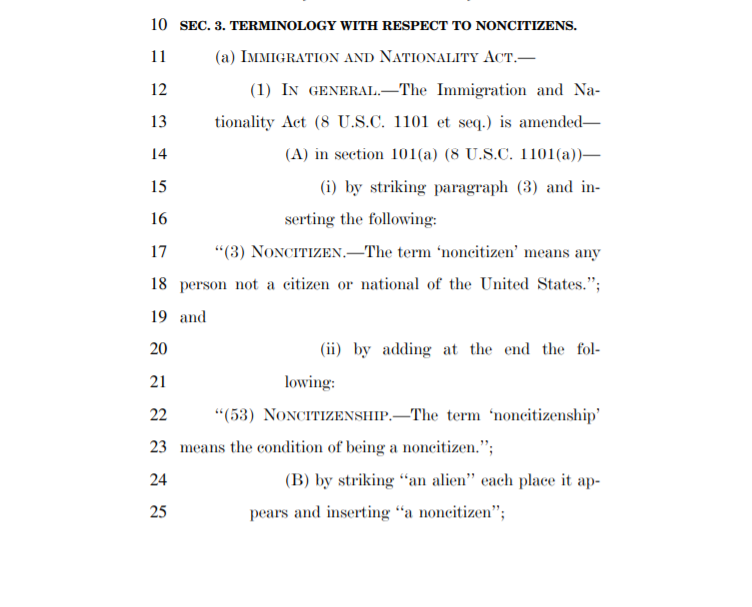
First the Bill makes a series of promises changes to the way we talk about immigrants and immigration law.
Gone would be the term "alien" and in its place is "noncitizen."
Also gone would be the term "alienage," replaced with "noncitizenship."
Now we get to the "earned path to citizenship" for all undocumented immigrants present in the United States on January 1, 2021.
Under this bill, anyone who satisfies the eligibility criteria for a new "lawful prospective immigrant status" can come out of the shadows.
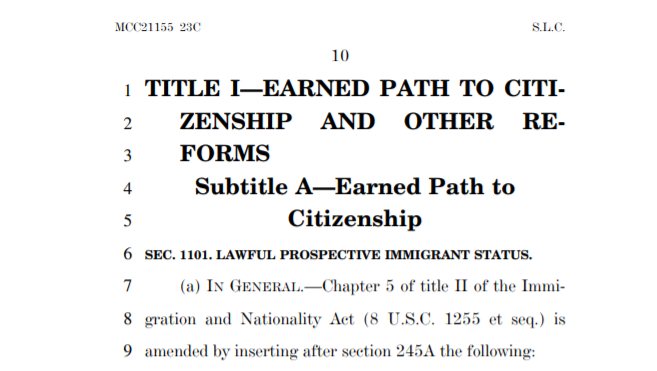
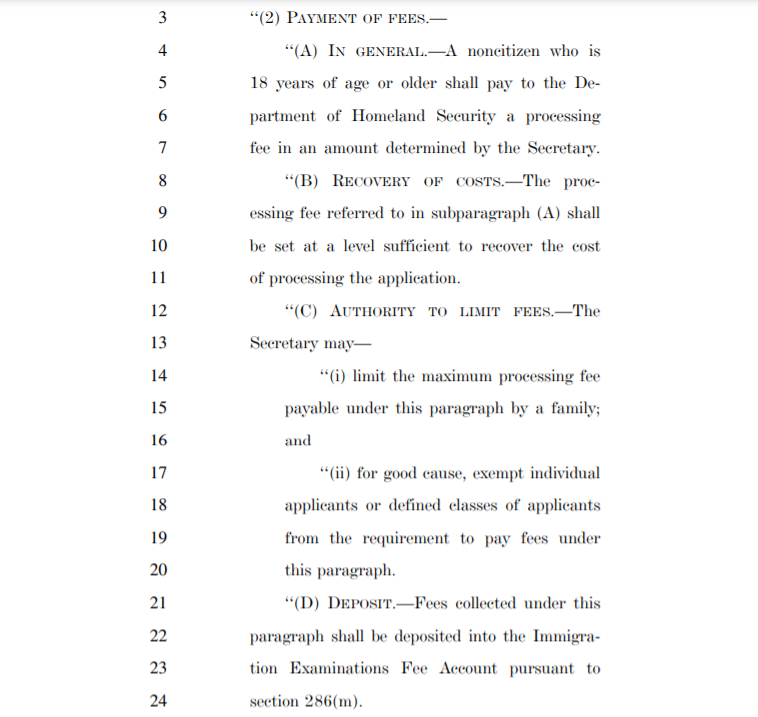
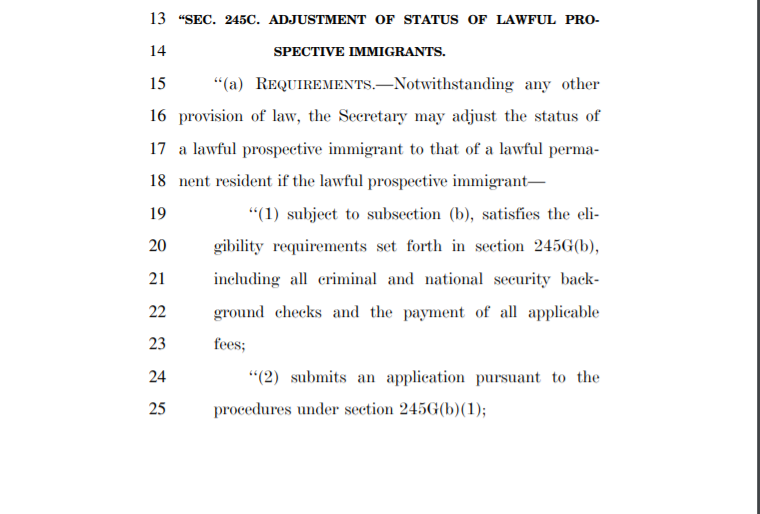
So, what are the eligibility criteria for becoming a "lawful prospective immigrant status"? Those are in a new INA 245G and include:
- Payment of the appropriate fees
- Continuous presence after January 1, 2021
- Not having certain criminal record (but there's a waiver)
After a person has been in "lawful prospective immigrant status" for at least 5 years, they can apply for a green card, so long as they still pass background checks and have paid back any taxes they are required to do so by law.
However! Some groups don't have to wait 5 years.
Thread:
The immigration bill text is out!
— Nicole Narea (@nicolenarea) February 18, 2021
Senate version: https://t.co/aJUmtVW6Ir
House version: https://t.co/JMKjQaDi04
Excuse me while I go at this with a highlighter.
First the Bill makes a series of promises changes to the way we talk about immigrants and immigration law.
Gone would be the term "alien" and in its place is "noncitizen."
Also gone would be the term "alienage," replaced with "noncitizenship."
Now we get to the "earned path to citizenship" for all undocumented immigrants present in the United States on January 1, 2021.
Under this bill, anyone who satisfies the eligibility criteria for a new "lawful prospective immigrant status" can come out of the shadows.
So, what are the eligibility criteria for becoming a "lawful prospective immigrant status"? Those are in a new INA 245G and include:
- Payment of the appropriate fees
- Continuous presence after January 1, 2021
- Not having certain criminal record (but there's a waiver)
After a person has been in "lawful prospective immigrant status" for at least 5 years, they can apply for a green card, so long as they still pass background checks and have paid back any taxes they are required to do so by law.
However! Some groups don't have to wait 5 years.




Brief thread to debunk the repeated claims we hear about transmission not happening 'within school walls', infection in school children being 'a reflection of infection from the community', and 'primary school children less likely to get infected and contribute to transmission'.
I've heard a lot of scientists claim these three - including most recently the chief advisor to the CDC, where the claim that most transmission doesn't happen within the walls of schools. There is strong evidence to rebut this claim. Let's look at
Let's look at the trends of infection in different age groups in England first- as reported by the ONS. Being a random survey of infection in the community, this doesn't suffer from the biases of symptom-based testing, particularly important in children who are often asymptomatic
A few things to note:
1. The infection rates among primary & secondary school children closely follow school openings, closures & levels of attendance. E.g. We see a dip in infections following Oct half-term, followed by a rise after school reopening.
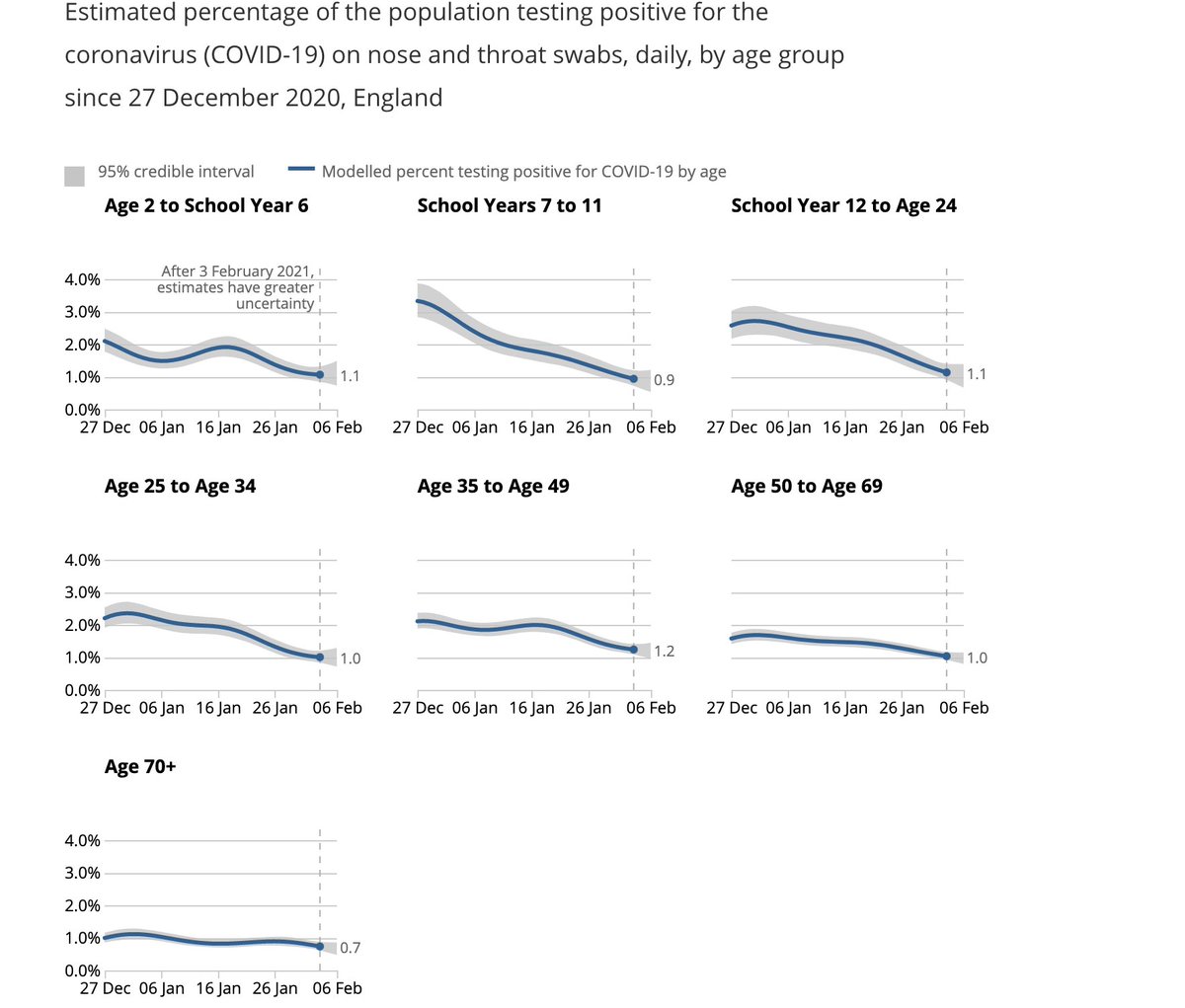
We see steep drops in both primary & secondary school groups after end of term (18th December), but these drops plateau out in primary school children, where attendance has been >20% after re-opening in January (by contrast with 2ndary schools where this is ~5%).
I've heard a lot of scientists claim these three - including most recently the chief advisor to the CDC, where the claim that most transmission doesn't happen within the walls of schools. There is strong evidence to rebut this claim. Let's look at
The science shows us that most disease transmission does not happen in the walls of the school, but it comes in from the community. So, CDC is advocating to get our K-5 students back in school at least in a hybrid mode with universal mask wearing and 6 ft of distancing. https://t.co/dfvJ2nl2s4
— Rochelle Walensky, MD, MPH (@CDCDirector) February 14, 2021
Let's look at the trends of infection in different age groups in England first- as reported by the ONS. Being a random survey of infection in the community, this doesn't suffer from the biases of symptom-based testing, particularly important in children who are often asymptomatic
A few things to note:
1. The infection rates among primary & secondary school children closely follow school openings, closures & levels of attendance. E.g. We see a dip in infections following Oct half-term, followed by a rise after school reopening.
We see steep drops in both primary & secondary school groups after end of term (18th December), but these drops plateau out in primary school children, where attendance has been >20% after re-opening in January (by contrast with 2ndary schools where this is ~5%).