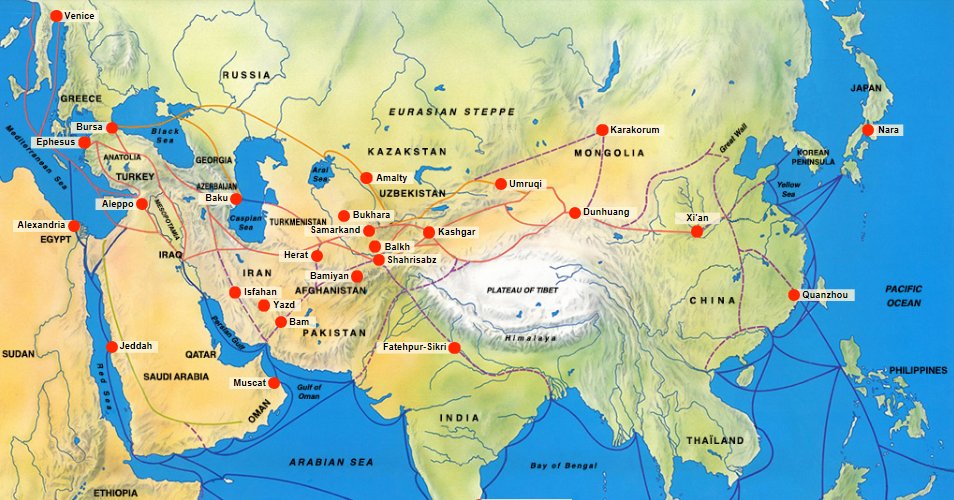
1/ We've discussed Persia-in-China, but what about China-in-Persia? Before the Mongols, known sources record few Chinese ppl in Iran. However, Chinese products left a distinct mark. The most famous (and imitated) was Chinese blue-and-white porcelain. #iranchina - @IranChinaGuy


By the 17th century, Persian artisans soon began producing copies of Chinese pottery in large quantities, an early example of mass-produced imitations of an elite style. Mashad and Kerman were early centers of ceramic (re)production.


More from World



@Ayjchan @K_G_Andersen @stgoldst @RozSofia @Ayjchan @K_G_Andersen please note that there were 11 infections in the Beijing 2004 leaks, not 8.
The 8 you are mentioning are for the main chain of infection with 3 levels from one primary case in April.
But there were 3 more primary cases for a total of 11 cases.
@K_G_Andersen @stgoldst @RozSofia All were linked to the heavily contaminated CDC P3 lab (the top P3 in China at the time).
The cases are typically separated between:
- The February ones (Cui and Ren) which seem to have been covered up by the CDC Institute of Virology. Also we only have pseudonyms for these 2.
@K_G_Andersen @stgoldst @RozSofia - The April ones-9 infections (1+8, officially the 'Beijing-Anhui Apr-2004 breakout'.
The official Chinese report only focussed on the April infections - keeping very quiet about the February ones. Here is the main April chain of infection.
Here is are the 9 from Apr 2004:
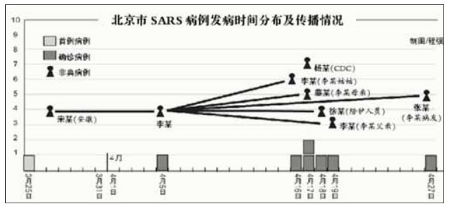
@K_G_Andersen @stgoldst @RozSofia And here are the 9 people infected in Apr 2004:
(4-22 in the title -> April chain with alarm raised on the 22nd):
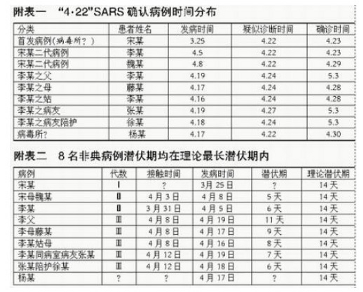
@K_G_Andersen @stgoldst @RozSofia The WHO eventually correctly mentioned 11 cases:
https://t.co/a1HvuT0C8z

The 8 you are mentioning are for the main chain of infection with 3 levels from one primary case in April.
But there were 3 more primary cases for a total of 11 cases.
@K_G_Andersen @stgoldst @RozSofia All were linked to the heavily contaminated CDC P3 lab (the top P3 in China at the time).
The cases are typically separated between:
- The February ones (Cui and Ren) which seem to have been covered up by the CDC Institute of Virology. Also we only have pseudonyms for these 2.
@K_G_Andersen @stgoldst @RozSofia - The April ones-9 infections (1+8, officially the 'Beijing-Anhui Apr-2004 breakout'.
The official Chinese report only focussed on the April infections - keeping very quiet about the February ones. Here is the main April chain of infection.
Here is are the 9 from Apr 2004:
@K_G_Andersen @stgoldst @RozSofia And here are the 9 people infected in Apr 2004:
(4-22 in the title -> April chain with alarm raised on the 22nd):
@K_G_Andersen @stgoldst @RozSofia The WHO eventually correctly mentioned 11 cases:
https://t.co/a1HvuT0C8z


You May Also Like






Facebook originally a CIA program called "LifeLog".
LifeLog, via DARPA, terminated on Feb 4th, 2004.
Facebook was launched on Feb 4th, 2004.
Many of the LifeLog team became execs at FB.
Zuckerberg is a figurehead.
CIA allowed Cambridge to help Trump win
https://t.co/enzOXDCogV

Pentagon Kills LifeLog
LifeLog, via DARPA, terminated on Feb 4th, 2004.
Facebook was launched on Feb 4th, 2004.
Many of the LifeLog team became execs at FB.
Zuckerberg is a figurehead.
CIA allowed Cambridge to help Trump win
https://t.co/enzOXDCogV
Project: Lifelog
— Robert Horan (@Robby12692) December 13, 2018
Started by DARPA in 1999, the goal of Lifelog was to create a database on civilians without their knowledge, and track everything they do.
The project "ended" on Feb 4th, 2004.
Facebook began the exact same day.
The CIA funneled tens of millions into Facebook. pic.twitter.com/r7hwF0v9kh
Pentagon Kills LifeLog