
When money changes, everything else anchored on money starts to change as well. Prices being the most obvious one, but crucially, not the only one.
1/ Wow, what an essay, trying to distill thoughts from this masterpiece: https://t.co/bxR3cnNJrM
Hat tip: @NSKinsella
The essay is about inflation's effect on culture, through the analysis of a short story set in Weimar Germany. I've selected some quotes and will comment.
When money changes, everything else anchored on money starts to change as well. Prices being the most obvious one, but crucially, not the only one.
The insanity and disorder of society, in other words, can be traced back to monetary policy.
Unreal, in this sense is counterfeit or fake. Societal attitudes become as fake as the money we use because it no longer just represents value provided, but also value fraudulently obtained.
Money helps us to know where we can expend our labor to best provide value. If our sense of value is skewed, we will no longer properly value our labor, time or energy.
Fake money leads to fake values leads to fake people.
Relativism develops because there are no anchors, no fixed values. That comes from a constantly changing money.
Bad money causes uncertainty and uncertainty makes everyone become a lot more high time preference.
Low time preference saving and working are spurned in favor of hitting it big on one big gamble.
Postmodern art, in particular, is all about representing itself and not anything else. Its value is derived from itself. It's literally fiat art.
More from World

THREAD
1)
Newsweek — #Iran has sent deadly "Shahed-136 suicide/kamikaze drones" to the Houthis in #Yemen. These advanced UAVs are deployed to the Houthi-controlled northern Yemeni province of Al-Jawf.
More reason why the West should not appease Tehran.
https://t.co/gtNDCGbtQs
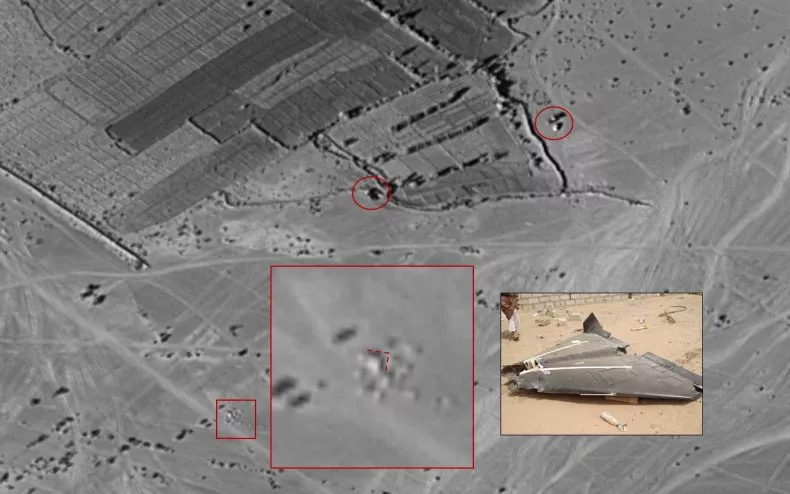
2)
#Iran has long provided drones to the Houthis
March 22, 2017
“… seven Houthi Qasef-1 drones and one drone engine recovered by forces from the UAE. Six of the drones were captured in October on a known Iranian smuggling route that runs through
3)
US to designate #Iran-backed Houthis in #Yemen as a foreign terrorist org (FTO)
https://t.co/ILBCg3Pfvs
Iran’s IRGC long funded/armed/trained/provided for the Houthis.
Dec 30—Missile attack on Aden airport. Yemen gov holds Houthis

4)
#Iran provides at least $360 million, ballistic missiles, other ordnance, technology and training to the Houthis in
5)
The Houthis recently claimed responsibility for a missile attack targeting Saudi Arabia’s Aramco oil

1)
Newsweek — #Iran has sent deadly "Shahed-136 suicide/kamikaze drones" to the Houthis in #Yemen. These advanced UAVs are deployed to the Houthi-controlled northern Yemeni province of Al-Jawf.
More reason why the West should not appease Tehran.
https://t.co/gtNDCGbtQs
2)
#Iran has long provided drones to the Houthis
March 22, 2017
“… seven Houthi Qasef-1 drones and one drone engine recovered by forces from the UAE. Six of the drones were captured in October on a known Iranian smuggling route that runs through
3)
US to designate #Iran-backed Houthis in #Yemen as a foreign terrorist org (FTO)
https://t.co/ILBCg3Pfvs
Iran’s IRGC long funded/armed/trained/provided for the Houthis.
Dec 30—Missile attack on Aden airport. Yemen gov holds Houthis
4)
#Iran provides at least $360 million, ballistic missiles, other ordnance, technology and training to the Houthis in
5)
The Houthis recently claimed responsibility for a missile attack targeting Saudi Arabia’s Aramco oil


You May Also Like


So friends here is the thread on the recommended pathway for new entrants in the stock market.
Here I will share what I believe are essentials for anybody who is interested in stock markets and the resources to learn them, its from my experience and by no means exhaustive..
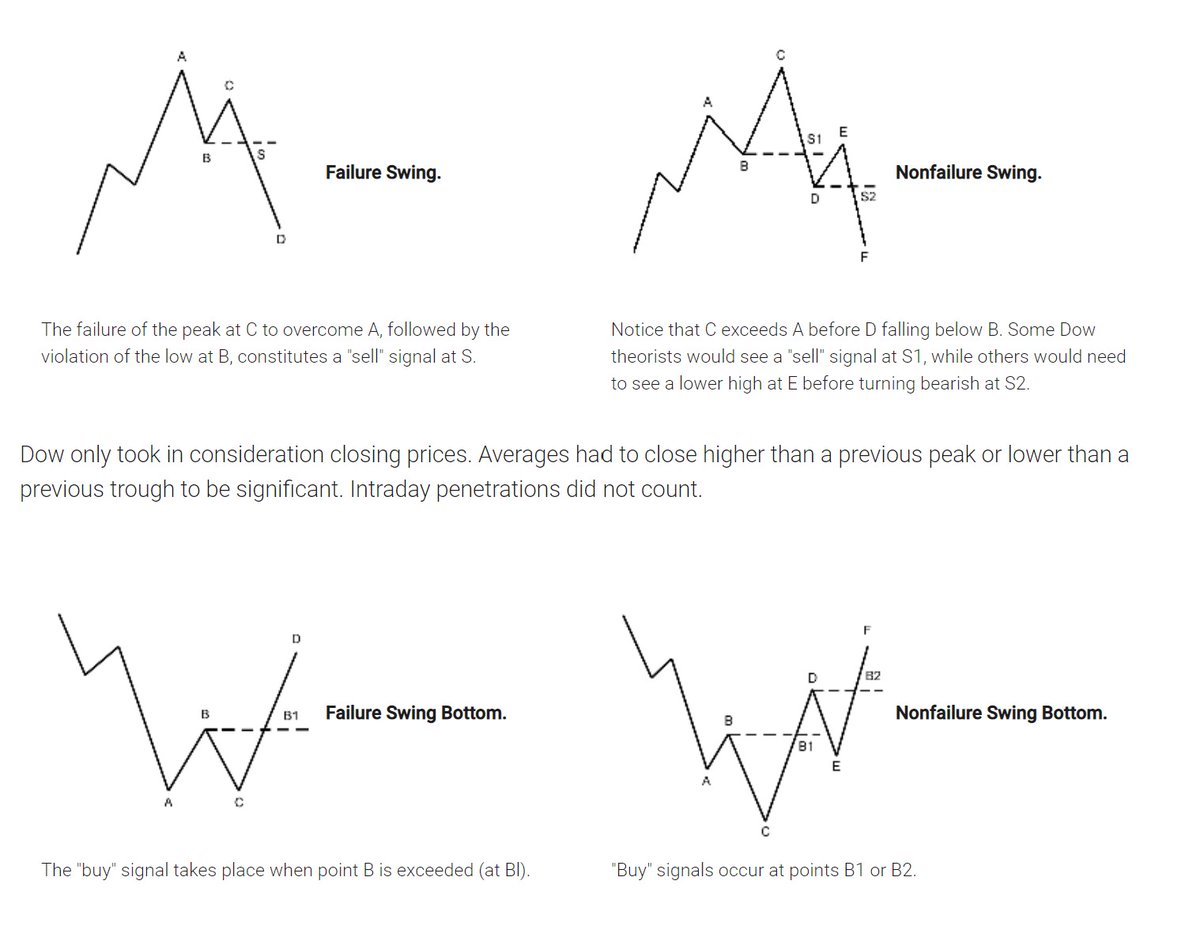
First the very basic : The Dow theory, Everybody must have basic understanding of it and must learn to observe High Highs, Higher Lows, Lower Highs and Lowers lows on charts and their
Even those who are more inclined towards fundamental side can also benefit from Dow theory, as it can hint start & end of Bull/Bear runs thereby indication entry and exits.
Next basic is Wyckoff's Theory. It tells how accumulation and distribution happens with regularity and how the market actually
Dow theory is old but
Here I will share what I believe are essentials for anybody who is interested in stock markets and the resources to learn them, its from my experience and by no means exhaustive..
First the very basic : The Dow theory, Everybody must have basic understanding of it and must learn to observe High Highs, Higher Lows, Lower Highs and Lowers lows on charts and their
Even those who are more inclined towards fundamental side can also benefit from Dow theory, as it can hint start & end of Bull/Bear runs thereby indication entry and exits.
Next basic is Wyckoff's Theory. It tells how accumulation and distribution happens with regularity and how the market actually
Dow theory is old but
Old is Gold....
— Professor (@DillikiBiili) January 23, 2020
this Bharti Airtel chart is a true copy of the Wyckoff Pattern propounded in 1931....... pic.twitter.com/tQ1PNebq7d


To people who are under the impression that you can get rich quickly by working on an app, here are the stats for https://t.co/az8F12pf02
📈 ~12000 vistis
☑️ 109 transactions
💰 353€ profit (285 after tax)
I have spent 1.5 months on this app. You can make more $ in 2 days.
🤷♂️

I'm still happy that I launched a paid app bcs it involved extra work:
- backend for processing payments (+ permissions, webhooks, etc)
- integration with payment processor
- UI for license activation in Electron
- machine activation limit
- autoupdates
- mailgun emails
etc.
These things seemed super scary at first. I always thought it was way too much work and something would break. But I'm glad I persisted. So far the only problem I have is that mailgun is not delivering the license keys to certain domains like https://t.co/6Bqn0FUYXo etc. 👌
omg I just realized that me . com is an Apple domain, of course something wouldn't work with these dicks
📈 ~12000 vistis
☑️ 109 transactions
💰 353€ profit (285 after tax)
I have spent 1.5 months on this app. You can make more $ in 2 days.
🤷♂️
I'm still happy that I launched a paid app bcs it involved extra work:
- backend for processing payments (+ permissions, webhooks, etc)
- integration with payment processor
- UI for license activation in Electron
- machine activation limit
- autoupdates
- mailgun emails
etc.
These things seemed super scary at first. I always thought it was way too much work and something would break. But I'm glad I persisted. So far the only problem I have is that mailgun is not delivering the license keys to certain domains like https://t.co/6Bqn0FUYXo etc. 👌
omg I just realized that me . com is an Apple domain, of course something wouldn't work with these dicks