
https://t.co/Ufu03lhOpD
I'll bite, Mr. Gray. We can even play by your rather finicky rules.
Let's begin with some of the things you have said about Xinjiang, notably absent from your more recent media appearances, but still present in your blog about your 2014 biking trip.
Prove it...
— Jerry's China (@Jerry_grey2002) December 30, 2020
Without quoting Adrian Zenz who's never been there or exiles and criminals who seek asylum or cash for their stories or perhaps some satellite images of shopping centres and factories with fencelines.
You can't show any evidence that this is true https://t.co/wiozJIjusH
https://t.co/Ufu03lhOpD


You'll also see, if you read, and you obviously have, that I've never denied Xinjiang security is a pain in the butt - I've mentioned it several times, including on my CGTN and my Isobel Cockerel interview, as well as in my writing - there's the reason it's a pain in the butt
— Jerry's China (@Jerry_grey2002) January 1, 2021


China's cruel treatment of my family made me become an activist, and I won\u2019t stop until I see my mother.
— Akida Pulat (@akida_p) October 7, 2020
People on Twitter, I need your help in sharing my story to rescue my mother and other Uyghurs. Please google Uyghur, listen to Uyghur\u2019s testimonies, and share our story. pic.twitter.com/cdlDQ78C39

The biggest giveaway of accounts like BCT is that they don\u2019t talk about East Turkestan, the ETIP, CIA funded Wahhabi militias.... they just focus on \u201chere is bad thing China doing something human writes, haha journalism points go brrrrrrrr\u201d ok good night
— Bad Leninism Takes \u262d \U0001f41f\u26cf\U0001f96d\U0001f354\U0001f336\U0001f42c (@BadLeninism) January 1, 2021

More from World








@Ayjchan @K_G_Andersen @stgoldst @RozSofia @Ayjchan @K_G_Andersen please note that there were 11 infections in the Beijing 2004 leaks, not 8.
The 8 you are mentioning are for the main chain of infection with 3 levels from one primary case in April.
But there were 3 more primary cases for a total of 11 cases.
@K_G_Andersen @stgoldst @RozSofia All were linked to the heavily contaminated CDC P3 lab (the top P3 in China at the time).
The cases are typically separated between:
- The February ones (Cui and Ren) which seem to have been covered up by the CDC Institute of Virology. Also we only have pseudonyms for these 2.
@K_G_Andersen @stgoldst @RozSofia - The April ones-9 infections (1+8, officially the 'Beijing-Anhui Apr-2004 breakout'.
The official Chinese report only focussed on the April infections - keeping very quiet about the February ones. Here is the main April chain of infection.
Here is are the 9 from Apr 2004:
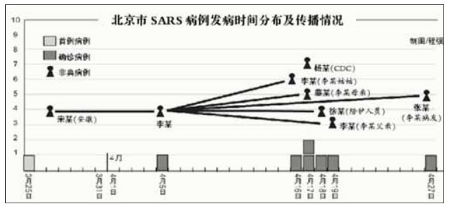
@K_G_Andersen @stgoldst @RozSofia And here are the 9 people infected in Apr 2004:
(4-22 in the title -> April chain with alarm raised on the 22nd):
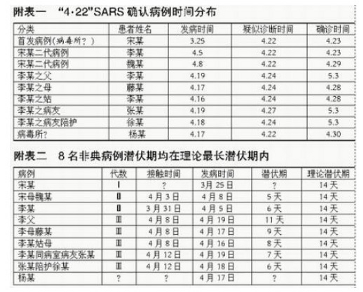
@K_G_Andersen @stgoldst @RozSofia The WHO eventually correctly mentioned 11 cases:
https://t.co/a1HvuT0C8z

The 8 you are mentioning are for the main chain of infection with 3 levels from one primary case in April.
But there were 3 more primary cases for a total of 11 cases.
@K_G_Andersen @stgoldst @RozSofia All were linked to the heavily contaminated CDC P3 lab (the top P3 in China at the time).
The cases are typically separated between:
- The February ones (Cui and Ren) which seem to have been covered up by the CDC Institute of Virology. Also we only have pseudonyms for these 2.
@K_G_Andersen @stgoldst @RozSofia - The April ones-9 infections (1+8, officially the 'Beijing-Anhui Apr-2004 breakout'.
The official Chinese report only focussed on the April infections - keeping very quiet about the February ones. Here is the main April chain of infection.
Here is are the 9 from Apr 2004:
@K_G_Andersen @stgoldst @RozSofia And here are the 9 people infected in Apr 2004:
(4-22 in the title -> April chain with alarm raised on the 22nd):
@K_G_Andersen @stgoldst @RozSofia The WHO eventually correctly mentioned 11 cases:
https://t.co/a1HvuT0C8z



You May Also Like













Recently, the @CNIL issued a decision regarding the GDPR compliance of an unknown French adtech company named "Vectaury". It may seem like small fry, but the decision has potential wide-ranging impacts for Google, the IAB framework, and today's adtech. It's thread time! 👇
It's all in French, but if you're up for it you can read:
• Their blog post (lacks the most interesting details): https://t.co/PHkDcOT1hy
• Their high-level legal decision: https://t.co/hwpiEvjodt
• The full notification: https://t.co/QQB7rfynha
I've read it so you needn't!
Vectaury was collecting geolocation data in order to create profiles (eg. people who often go to this or that type of shop) so as to power ad targeting. They operate through embedded SDKs and ad bidding, making them invisible to users.
The @CNIL notes that profiling based off of geolocation presents particular risks since it reveals people's movements and habits. As risky, the processing requires consent — this will be the heart of their assessment.
Interesting point: they justify the decision in part because of how many people COULD be targeted in this way (rather than how many have — though they note that too). Because it's on a phone, and many have phones, it is considered large-scale processing no matter what.
It's all in French, but if you're up for it you can read:
• Their blog post (lacks the most interesting details): https://t.co/PHkDcOT1hy
• Their high-level legal decision: https://t.co/hwpiEvjodt
• The full notification: https://t.co/QQB7rfynha
I've read it so you needn't!
Vectaury was collecting geolocation data in order to create profiles (eg. people who often go to this or that type of shop) so as to power ad targeting. They operate through embedded SDKs and ad bidding, making them invisible to users.
The @CNIL notes that profiling based off of geolocation presents particular risks since it reveals people's movements and habits. As risky, the processing requires consent — this will be the heart of their assessment.
Interesting point: they justify the decision in part because of how many people COULD be targeted in this way (rather than how many have — though they note that too). Because it's on a phone, and many have phones, it is considered large-scale processing no matter what.