THREAD: Why do Kenyans view anti-BBI sentiment as an endorsement of Ruto? Githeri media journalists are projecting our refusal to adopt a misguided constitutional review, as part of a mock cock-fight between political rivals.
Far from it. Ruto is a thief and we know it.
More from World



@Ayjchan @K_G_Andersen @stgoldst @RozSofia @Ayjchan @K_G_Andersen please note that there were 11 infections in the Beijing 2004 leaks, not 8.
The 8 you are mentioning are for the main chain of infection with 3 levels from one primary case in April.
But there were 3 more primary cases for a total of 11 cases.
@K_G_Andersen @stgoldst @RozSofia All were linked to the heavily contaminated CDC P3 lab (the top P3 in China at the time).
The cases are typically separated between:
- The February ones (Cui and Ren) which seem to have been covered up by the CDC Institute of Virology. Also we only have pseudonyms for these 2.
@K_G_Andersen @stgoldst @RozSofia - The April ones-9 infections (1+8, officially the 'Beijing-Anhui Apr-2004 breakout'.
The official Chinese report only focussed on the April infections - keeping very quiet about the February ones. Here is the main April chain of infection.
Here is are the 9 from Apr 2004:
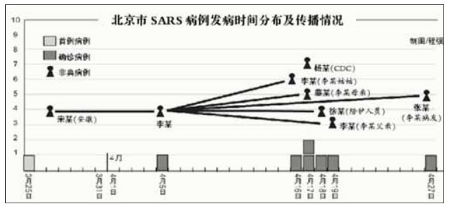
@K_G_Andersen @stgoldst @RozSofia And here are the 9 people infected in Apr 2004:
(4-22 in the title -> April chain with alarm raised on the 22nd):
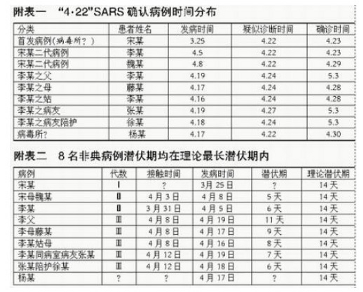
@K_G_Andersen @stgoldst @RozSofia The WHO eventually correctly mentioned 11 cases:
https://t.co/a1HvuT0C8z

The 8 you are mentioning are for the main chain of infection with 3 levels from one primary case in April.
But there were 3 more primary cases for a total of 11 cases.
@K_G_Andersen @stgoldst @RozSofia All were linked to the heavily contaminated CDC P3 lab (the top P3 in China at the time).
The cases are typically separated between:
- The February ones (Cui and Ren) which seem to have been covered up by the CDC Institute of Virology. Also we only have pseudonyms for these 2.
@K_G_Andersen @stgoldst @RozSofia - The April ones-9 infections (1+8, officially the 'Beijing-Anhui Apr-2004 breakout'.
The official Chinese report only focussed on the April infections - keeping very quiet about the February ones. Here is the main April chain of infection.
Here is are the 9 from Apr 2004:
@K_G_Andersen @stgoldst @RozSofia And here are the 9 people infected in Apr 2004:
(4-22 in the title -> April chain with alarm raised on the 22nd):
@K_G_Andersen @stgoldst @RozSofia The WHO eventually correctly mentioned 11 cases:
https://t.co/a1HvuT0C8z



You May Also Like


1/“What would need to be true for you to….X”
Why is this the most powerful question you can ask when attempting to reach an agreement with another human being or organization?
A thread, co-written by @deanmbrody:
2/ First, “X” could be lots of things. Examples: What would need to be true for you to
- “Feel it's in our best interest for me to be CMO"
- “Feel that we’re in a good place as a company”
- “Feel that we’re on the same page”
- “Feel that we both got what we wanted from this deal
3/ Normally, we aren’t that direct. Example from startup/VC land:
Founders leave VC meetings thinking that every VC will invest, but they rarely do.
Worse over, the founders don’t know what they need to do in order to be fundable.
4/ So why should you ask the magic Q?
To get clarity.
You want to know where you stand, and what it takes to get what you want in a way that also gets them what they want.
It also holds them (mentally) accountable once the thing they need becomes true.
5/ Staying in the context of soliciting investors, the question is “what would need to be true for you to want to invest (or partner with us on this journey, etc)?”
Multiple responses to this question are likely to deliver a positive result.
Why is this the most powerful question you can ask when attempting to reach an agreement with another human being or organization?
A thread, co-written by @deanmbrody:
Next level tactic when closing a sale, candidate, or investment:
— Erik Torenberg (@eriktorenberg) February 27, 2018
Ask: \u201cWhat needs to be true for you to be all in?\u201d
You'll usually get an explicit answer that you might not get otherwise. It also holds them accountable once the thing they need becomes true.
2/ First, “X” could be lots of things. Examples: What would need to be true for you to
- “Feel it's in our best interest for me to be CMO"
- “Feel that we’re in a good place as a company”
- “Feel that we’re on the same page”
- “Feel that we both got what we wanted from this deal
3/ Normally, we aren’t that direct. Example from startup/VC land:
Founders leave VC meetings thinking that every VC will invest, but they rarely do.
Worse over, the founders don’t know what they need to do in order to be fundable.
4/ So why should you ask the magic Q?
To get clarity.
You want to know where you stand, and what it takes to get what you want in a way that also gets them what they want.
It also holds them (mentally) accountable once the thing they need becomes true.
5/ Staying in the context of soliciting investors, the question is “what would need to be true for you to want to invest (or partner with us on this journey, etc)?”
Multiple responses to this question are likely to deliver a positive result.

THREAD: 12 Things Everyone Should Know About IQ
1. IQ is one of the most heritable psychological traits – that is, individual differences in IQ are strongly associated with individual differences in genes (at least in fairly typical modern environments). https://t.co/3XxzW9bxLE
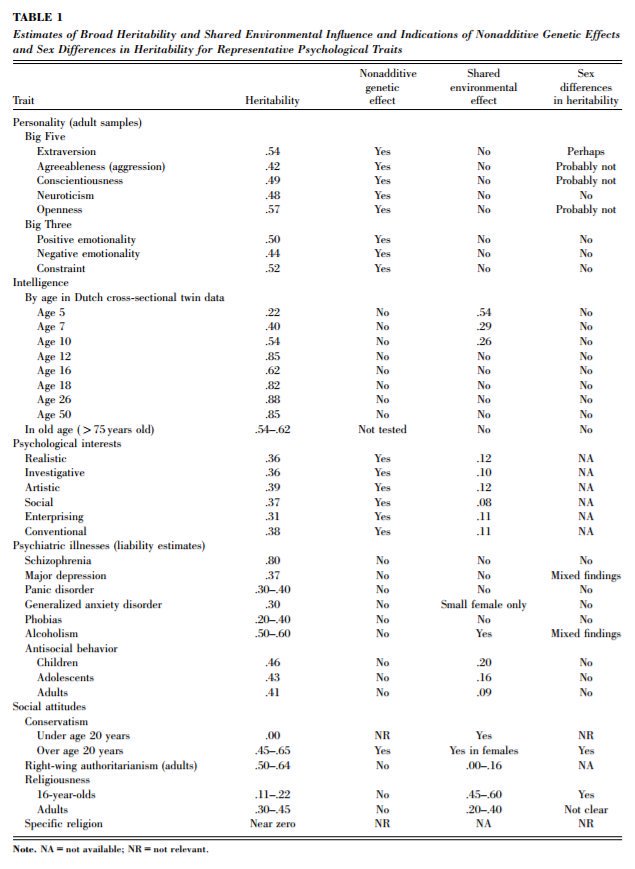
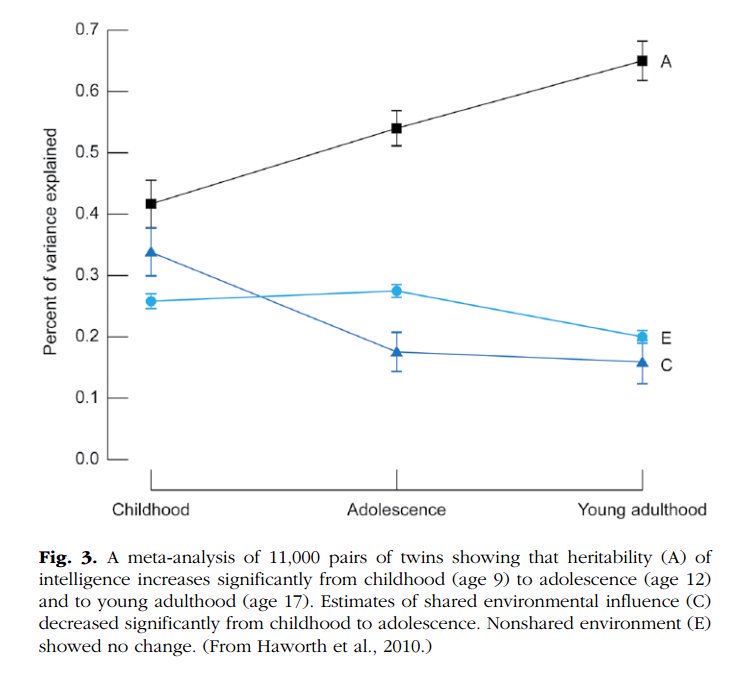
2. The heritability of IQ *increases* from childhood to adulthood. Meanwhile, the effect of the shared environment largely fades away. In other words, when it comes to IQ, nature becomes more important as we get older, nurture less. https://t.co/UqtS1lpw3n
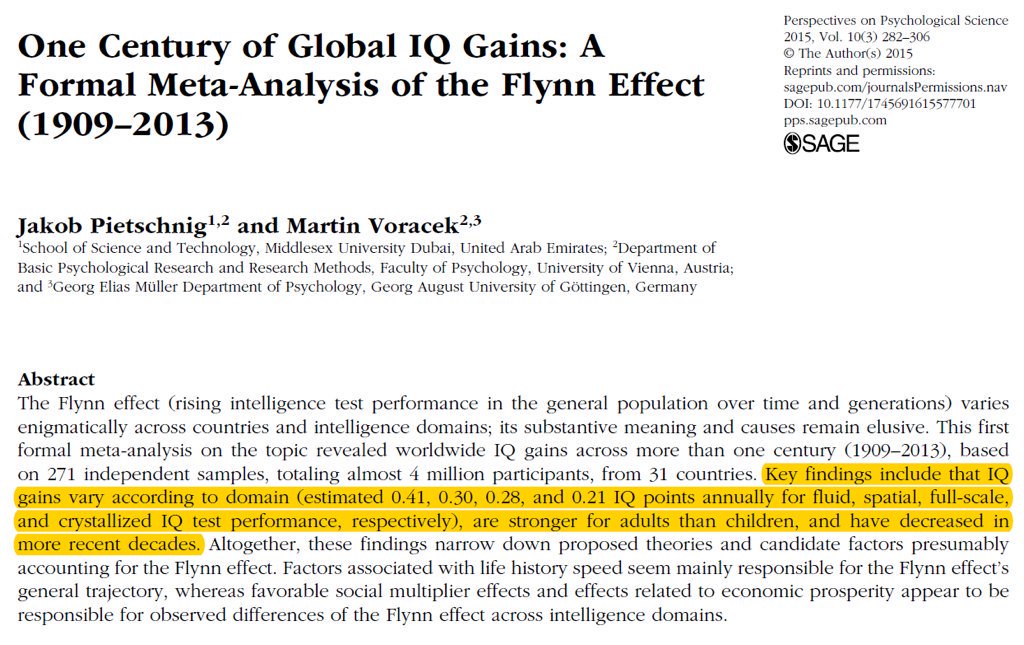
3. IQ scores have been increasing for the last century or so, a phenomenon known as the Flynn effect. https://t.co/sCZvCst3hw (N ≈ 4 million)
(Note that the Flynn effect shows that IQ isn't 100% genetic; it doesn't show that it's 100% environmental.)
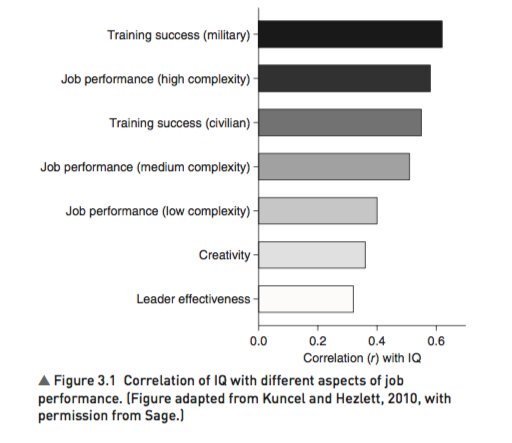
4. IQ predicts many important real world outcomes.
For example, though far from perfect, IQ is the single-best predictor of job performance we have – much better than Emotional Intelligence, the Big Five, Grit, etc. https://t.co/rKUgKDAAVx https://t.co/DWbVI8QSU3
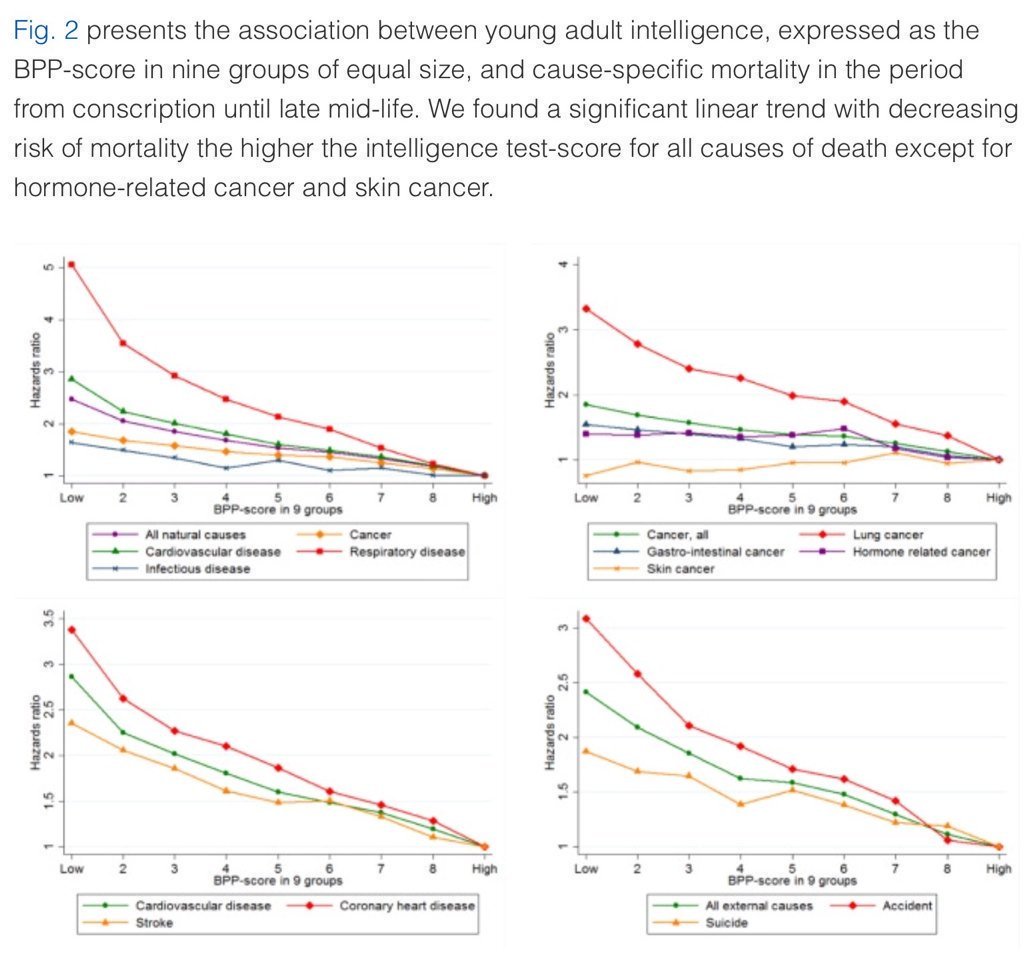
5. Higher IQ is associated with a lower risk of death from most causes, including cardiovascular disease, respiratory disease, most forms of cancer, homicide, suicide, and accident. https://t.co/PJjGNyeQRA (N = 728,160)
1. IQ is one of the most heritable psychological traits – that is, individual differences in IQ are strongly associated with individual differences in genes (at least in fairly typical modern environments). https://t.co/3XxzW9bxLE
2. The heritability of IQ *increases* from childhood to adulthood. Meanwhile, the effect of the shared environment largely fades away. In other words, when it comes to IQ, nature becomes more important as we get older, nurture less. https://t.co/UqtS1lpw3n
3. IQ scores have been increasing for the last century or so, a phenomenon known as the Flynn effect. https://t.co/sCZvCst3hw (N ≈ 4 million)
(Note that the Flynn effect shows that IQ isn't 100% genetic; it doesn't show that it's 100% environmental.)
4. IQ predicts many important real world outcomes.
For example, though far from perfect, IQ is the single-best predictor of job performance we have – much better than Emotional Intelligence, the Big Five, Grit, etc. https://t.co/rKUgKDAAVx https://t.co/DWbVI8QSU3
5. Higher IQ is associated with a lower risk of death from most causes, including cardiovascular disease, respiratory disease, most forms of cancer, homicide, suicide, and accident. https://t.co/PJjGNyeQRA (N = 728,160)