This thread was inspired by @PrinceGanaku. He made a legal argument pushing back against the legalization of homophobia, which some like @konkrumah have happily advocated.
I come from an academic background in social and political philosophy. I wanna make a moral argument 1/x.
The attraction btwn man and woman is thought to have been reduced to a material cause in our being so what about gays?
I would encourage anyone to seek this: "what is the cause of heterosexual attraction" and I would confidently tell you that the science is inconclusive
We don't know
We know HOW it happens. That is to say we can explain observable phenomena like hormones and receptors moving but we don't know WHY men like women.
We know why we procreate, for eg. But we can't confuse that with attraction
Heterosexual attraction cannot be answered with the sciences of procreation and sexual release. They are inadequate
There are different religious oppositions but usually they operate under the notion of Divine Command
"Our God says..."
Religious conservatives believe we cannot have morality if we have no idea of a god. False.
Morality is acquired in socialization before the young have a concept of a being out of this world.
That is to say if they are never introduced to this God-concept, it's sensible to argue that it WILL NOT NECESSARILY AFFECT THEIR MORAL PERFORMANCE.
Thus, if the argument is that our humanity and morality begin from beyond us, we are neglecting the importance of human-to-human relationships
Saying that "that's not how God created us" is fairly problematic
How do you know that's not how God created us? How are you more willing to hold on to an out-of-this world claim than respect the reality of another human in this world?
My point about morality has been made.
We lie when we say we can't think of humans doing good without a knowledge of a god.
We know humans before we know a concept out of this world. Respect your primary contact before you move to the man upstairs
What do we mean when we say the majority must have their way in democracy? It means that there's an intrinsic value to pleasing the majority
In that case, authority in a democracy is expected to make a moral choice
Having dealt with the first two opposition arguments, I believe @PrinceGanaku's legal arguments answer the moral question in the majoritarian problem
To destroy the humanity of those who cause you no harm, don't rope in a god or morality. You just seek to do harm.
More from World




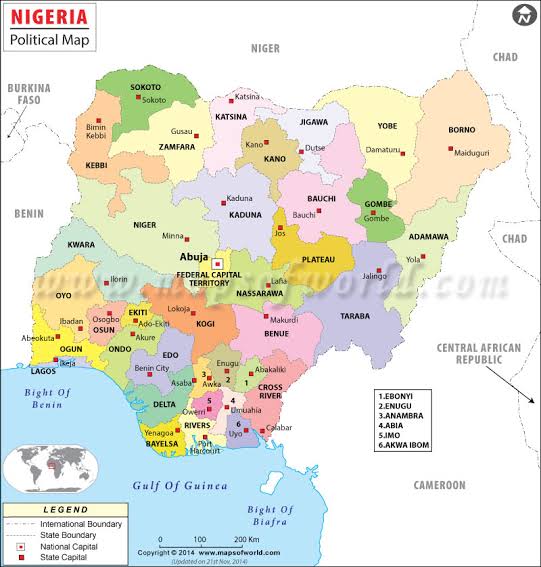
Niger state shares borders with Zamfara, kebbi, Kaduna & Benin Republic. Terrorists from Niger republic and Burkina faso easily move money and arms across the borders of Kebbi, Zamfara and Benin R into Niger state. According to UN over 900,000 people have been displaced in B'Faso https://t.co/65YEMJhqDp
Niger, Mali and Burkina faso are weak countries populated by Shell terrorists who have now found a safe haven in the forests in Kaduna and Niger state. Birin Gwari, Mokwa forest, Nanati forests, Kanji lake areas.
No decent human resides permanently in forests.
We are facing both external and internal threats from these weak and failed countries we are surrounded with. As a senator you know that a FG police system with less than 300k officers can't actively police the landmass and borders in the North.
Form your state police now!
You and other senators should scrap the FG police system and devote the unaudited security votes and constituency allowance to policing your corridors and forests. Let the airforce bomb them and put your rangers in the forests. Issue an ultimatum for those in the forests to leave
You are all living in a dream if you think the current police structure will become efficient overnight.
Budget, Personnel, Technology, Equipment, Surveillance..It's impossible.
Form your state and community police and flush out the terrorists.
I am shocked and saddened by the attack on GSS, Kagara in Rafi LGA that led to the abduction of innocent schoolboys in Niger East. It is appalling that acts of violence against our educational institutions are becoming a norm & perpetrated on defenseless children.
— Senator Moh\u2019d Sani Musa (@MohdSaniMusa) February 17, 2021
Niger, Mali and Burkina faso are weak countries populated by Shell terrorists who have now found a safe haven in the forests in Kaduna and Niger state. Birin Gwari, Mokwa forest, Nanati forests, Kanji lake areas.
No decent human resides permanently in forests.
We are facing both external and internal threats from these weak and failed countries we are surrounded with. As a senator you know that a FG police system with less than 300k officers can't actively police the landmass and borders in the North.
Form your state police now!
You and other senators should scrap the FG police system and devote the unaudited security votes and constituency allowance to policing your corridors and forests. Let the airforce bomb them and put your rangers in the forests. Issue an ultimatum for those in the forests to leave
You are all living in a dream if you think the current police structure will become efficient overnight.
Budget, Personnel, Technology, Equipment, Surveillance..It's impossible.
Form your state and community police and flush out the terrorists.


You May Also Like

fascinated by this man, mario cortellucci, and his outsized influence on ontario and GTA politics. cortellucci, who lives in vaughan and ran as a far-right candidate for the italian senate back in 2018 - is a major ford donor...
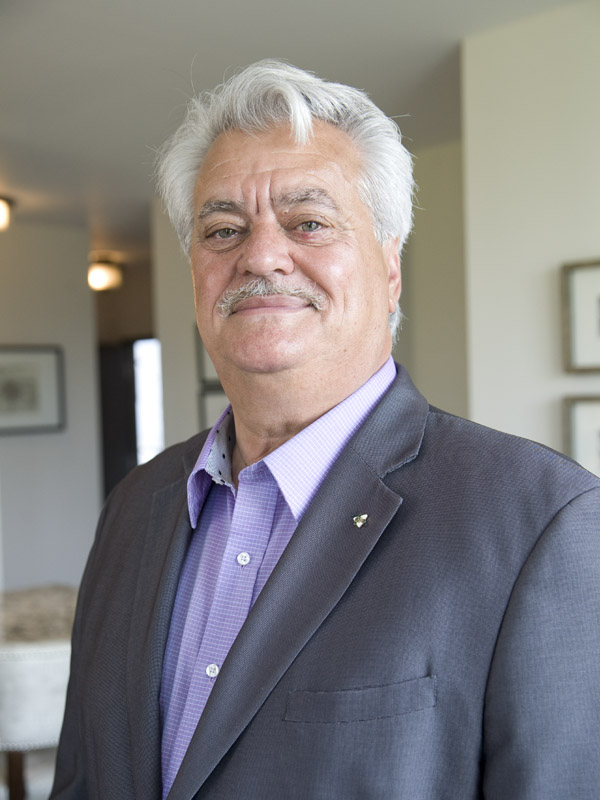
his name might sound familiar because the new cortellucci vaughan hospital at mackenzie health, the one doug ford has been touting lately as a covid-centric facility, is named after him and his family
but his name also pops up in a LOT of other ford projects. for instance - he controls the long term lease on big parts of toronto's portlands... where doug ford once proposed building an nfl stadium and monorail... https://t.co/weOMJ51bVF
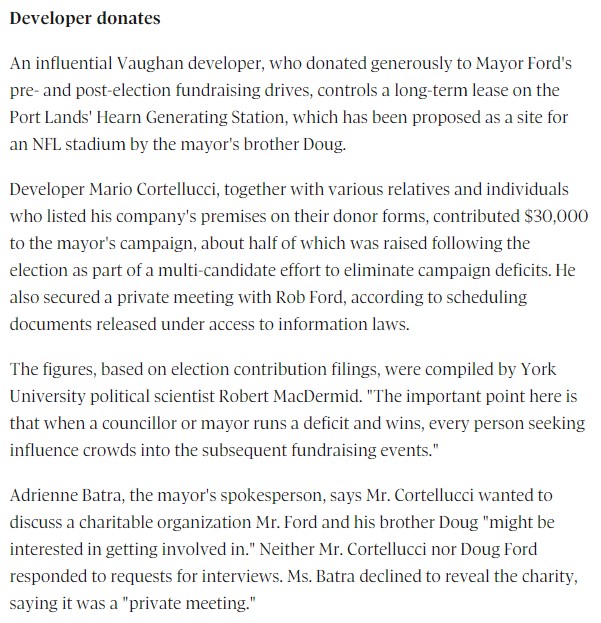
cortellucci, who is a developer, also owns a large chunk of the greenbelt. doug ford's desire to develop the greenbelt has been
and late last year he rolled back the mandate of conservation authorities there, prompting the resignations of several members of the greenbelt advisory
his name might sound familiar because the new cortellucci vaughan hospital at mackenzie health, the one doug ford has been touting lately as a covid-centric facility, is named after him and his family
but his name also pops up in a LOT of other ford projects. for instance - he controls the long term lease on big parts of toronto's portlands... where doug ford once proposed building an nfl stadium and monorail... https://t.co/weOMJ51bVF
cortellucci, who is a developer, also owns a large chunk of the greenbelt. doug ford's desire to develop the greenbelt has been
and late last year he rolled back the mandate of conservation authorities there, prompting the resignations of several members of the greenbelt advisory


First thread of the year because I have time during MCO. As requested, a thread on the gods and spirits of Malay folk religion. Some are indigenous, some are of Indian origin, some have Islamic
Before I begin, it might be worth explaining the Malay conception of the spirit world. At its deepest level, Malay religious belief is animist. All living beings and even certain objects are said to have a soul. Natural phenomena are either controlled by or personified as spirits
Although these beings had to be respected, not all of them were powerful enough to be considered gods. Offerings would be made to the spirits that had greater influence on human life. Spells and incantations would invoke their
Two known examples of such elemental spirits that had god-like status are Raja Angin (king of the wind) and Mambang Tali Arus (spirit of river currents). There were undoubtedly many more which have been lost to time
Contact with ancient India brought the influence of Hinduism and Buddhism to SEA. What we now call Hinduism similarly developed in India out of native animism and the more formal Vedic tradition. This can be seen in the multitude of sacred animals and location-specific Hindu gods
i wonder if you can make a thread bout witchcraft in malaysia.. or list of our own local gods/deites..
— r a y a \U0001f319 (@lcvelylilith) February 20, 2020
Before I begin, it might be worth explaining the Malay conception of the spirit world. At its deepest level, Malay religious belief is animist. All living beings and even certain objects are said to have a soul. Natural phenomena are either controlled by or personified as spirits
Although these beings had to be respected, not all of them were powerful enough to be considered gods. Offerings would be made to the spirits that had greater influence on human life. Spells and incantations would invoke their
Animist ceremonies of a religious or magical nature were normally held for the purpose of divination or making a request. This would either be done at a keramat or at a shrine similar to the Thai spirit houses or Chinese roadside shrines pic.twitter.com/I1hliyi0x3
— \u2745\u1710\u170b\u1713\u170e (@uglyluhan) June 16, 2019
Two known examples of such elemental spirits that had god-like status are Raja Angin (king of the wind) and Mambang Tali Arus (spirit of river currents). There were undoubtedly many more which have been lost to time
Contact with ancient India brought the influence of Hinduism and Buddhism to SEA. What we now call Hinduism similarly developed in India out of native animism and the more formal Vedic tradition. This can be seen in the multitude of sacred animals and location-specific Hindu gods

A list of cool websites you might now know about
A thread 🧵
1) Learn Anything - Search tools for knowledge discovery that helps you understand any topic through the most efficient
2) Grad Speeches - Discover the best commencement speeches.
This website is made by me
3) What does the Internet Think - Find out what the internet thinks about anything
4) https://t.co/vuhT6jVItx - Send notes that will self-destruct after being read.
A thread 🧵
1) Learn Anything - Search tools for knowledge discovery that helps you understand any topic through the most efficient
2) Grad Speeches - Discover the best commencement speeches.
This website is made by me
3) What does the Internet Think - Find out what the internet thinks about anything
4) https://t.co/vuhT6jVItx - Send notes that will self-destruct after being read.