So how easy was it for British & Canadian soldiers to keep clean and healthy in Normandy?

Couldn't be too hard, right? /1
#WW2 #SWW #History

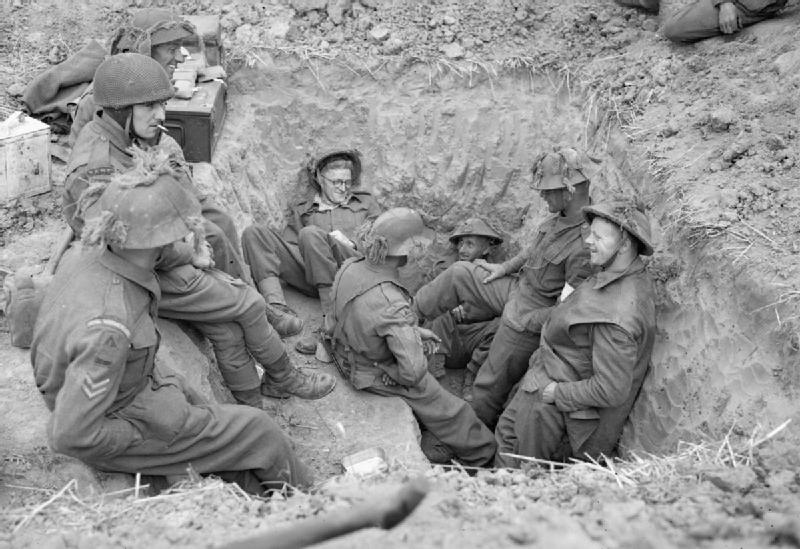
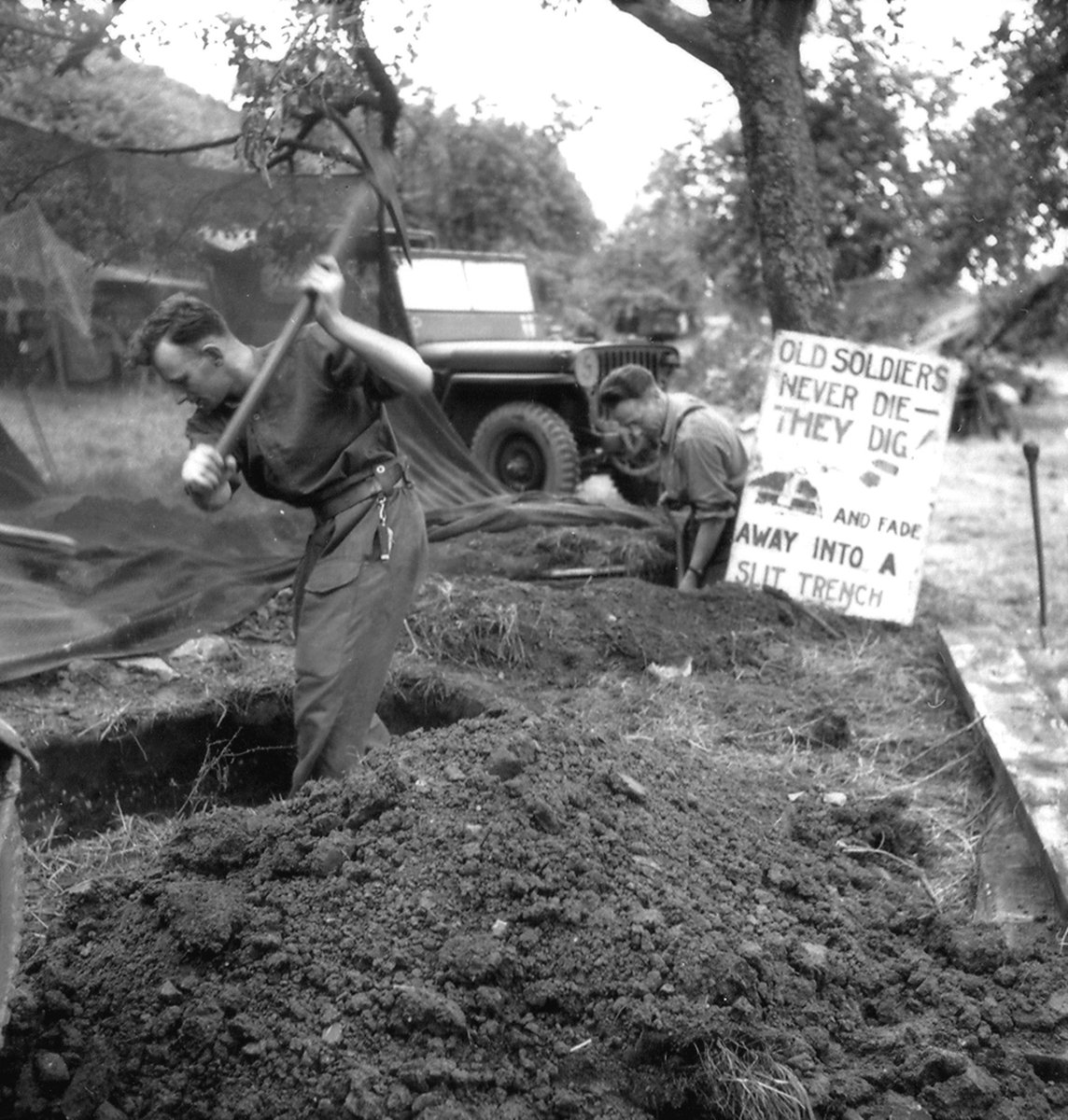
You're an front line infantryman in a two man covered slit trench. Maybe 100m from the enemy

From dawn to dusk you're hunched underground, making the best of things in a covered trench 6' long, 3' deep and 2 1/2' wide or so.

With your mate crammed in there with you. /2
You know you're under constant observation by enemy observers and marksmen, who scan the ground looking to punish any foolish or unlucky opportunity target.

They may not get you, but their rounds may well kill or maim your friends. /3
Night offers a modicum of respite.

In darkness fresh, hot grub is bought up in large thermos flasks from the cooks in B Echelon. It's good hearty stuff.

The problem is the closer you are to the enemy, the more likely it'll be delayed or obliterated by an errant 155mm shell. /4
You can always tuck into food from your compo crates, which is fine, or 24 hour ration pack... or the famed emergency ration in a sticky spot.

The latter is really nice.

Chocolate laced with amphetamine or high dose of caffeine.

Yum. /5
In a quiet moment you fill your mess tin with nice hot scran, supper time.

A few others sense it's time to feast.

The millions upon millions of bloated bluebottles.

They land on the living, the dead, cattle, the rotten. The food. /6
There air is alive with insects, absolutely stinking with a sickly smell of omnipresent death and rampant decomposition.

You waft away the first load, but eventually... well... feel rather like King Canute.

You tuck in. /7
After a while your stomach starts to rumble.

You've got it.
"Compo Tummy"
"Beachhead Bully"
"Compo Sickness"

Or just, "The Shits."

Diahorrea is endemic in Normandy. But only 0.17% of those afflicted require serious medical intervention.

Almost everyone has it. /8
What do you do?

By night you may risk it to relieve yourself in a small hole near the trench.

By day... either go in a sludgy, disgusting mini-latrine in your trench, or discreetly risk it and crawl out, but there are snipers.

Or crap in your helmet and sling out the mess. /9
Either way, you've only got a handful of 'Army Form Blank' with which to clean up.

Slang for the coarse sheets of army loo roll. /10
In such a situation cleanliness is paramount.

You prioritise washing and shaving.

You may not have much control over anything else, but can still try to look your best, even as your battledress gets steadily ingrained with dirt and crusted with sweat. /11

More from Jonathan Ware

More from War

You May Also Like

The entire discussion around Facebook’s disclosures of what happened in 2016 is very frustrating. No exec stopped any investigations, but there were a lot of heated discussions about what to publish and when.


In the spring and summer of 2016, as reported by the Times, activity we traced to GRU was reported to the FBI. This was the standard model of interaction companies used for nation-state attacks against likely US targeted.

In the Spring of 2017, after a deep dive into the Fake News phenomena, the security team wanted to publish an update that covered what we had learned. At this point, we didn’t have any advertising content or the big IRA cluster, but we did know about the GRU model.

This report when through dozens of edits as different equities were represented. I did not have any meetings with Sheryl on the paper, but I can’t speak to whether she was in the loop with my higher-ups.

In the end, the difficult question of attribution was settled by us pointing to the DNI report instead of saying Russia or GRU directly. In my pre-briefs with members of Congress, I made it clear that we believed this action was GRU.