It is past due time we talk about microaggressions on interviews (a thread #MedTwitter #AcademicTwitter):
First, microaggressions are harmful! Despite their name, they signal “you don’t belong here” to marginalized groups.
Second, interview days are already nerve-wrecking.
I didn’t have an opportunity to report most. When I shared once, I was told how the person had a “good heart” and is a leader so nothing can be done. Message received: power matters more than my hurt.
More from Twitter

Twitter removed 800 followers from my account today. People have been writing saying twitter automatically unfollowed me for them. Follow me on Parler @robinmonotti & Telegram https://t.co/o5rFaSrCpa to bypass this.
I have already left both Facebook & Instagram. We need to keep agile.
They will try to ban Parler, blaming it for Capitol theatre. I think Telegram may survive as it's not based in the
Yes Telegram owner @durov received & accepted what effectively is an award, not a partnership: the Young Global Leaders membership of the World Economic Forum in 2017. Does this mean he passes users info on? I don't think so.
This is what @Snowden had to say about @durov. Since then Telegram introduced the option of end to end encrypted chats not saved in Telegram servers. These private chats cannot be forwarded, and none of the participants can capture screenshots of
I have already left both Facebook & Instagram. We need to keep agile.
They will try to ban Parler, blaming it for Capitol theatre. I think Telegram may survive as it's not based in the
Yes Telegram owner @durov received & accepted what effectively is an award, not a partnership: the Young Global Leaders membership of the World Economic Forum in 2017. Does this mean he passes users info on? I don't think so.
This is what @Snowden had to say about @durov. Since then Telegram introduced the option of end to end encrypted chats not saved in Telegram servers. These private chats cannot be forwarded, and none of the participants can capture screenshots of
Trust us not to turn over data. Trust us not to read your messages. Trust us not to close your channel. Maybe @Durov is an angel. I hope so! But angels have fallen before. Telegram should have been working to make channels decentralized\u2014meaning outside their control\u2014for years.
— Edward Snowden (@Snowden) December 30, 2017

Today's Twitter threads (a Twitter thread).
Inside: Privacy Without Monopoly; Broad Band; $50T moved from America's 90% to the 1%; and more!
Archived at: https://t.co/QgK8ZMRKp7
#Pluralistic
1/
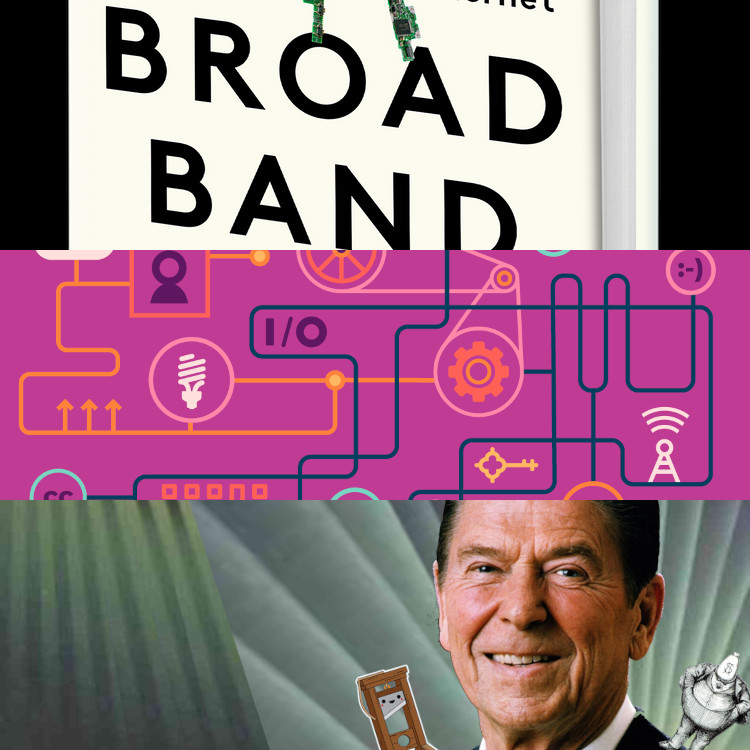
This weekend, I'm participating in Boskone 58, Boston's annual sf convention.
https://t.co/2LfFssVcZQ
Tonight, on a panel called "Tech Innovation? Does Silicon Valley Have A Mind-Control Ray, Or a Monopoly?" at 530PM Pacific.
2/

Privacy Without Monopoly: A new EFF white paper, co-authored with Bennett Cyphers.
https://t.co/TVzDXt6bz6
3/

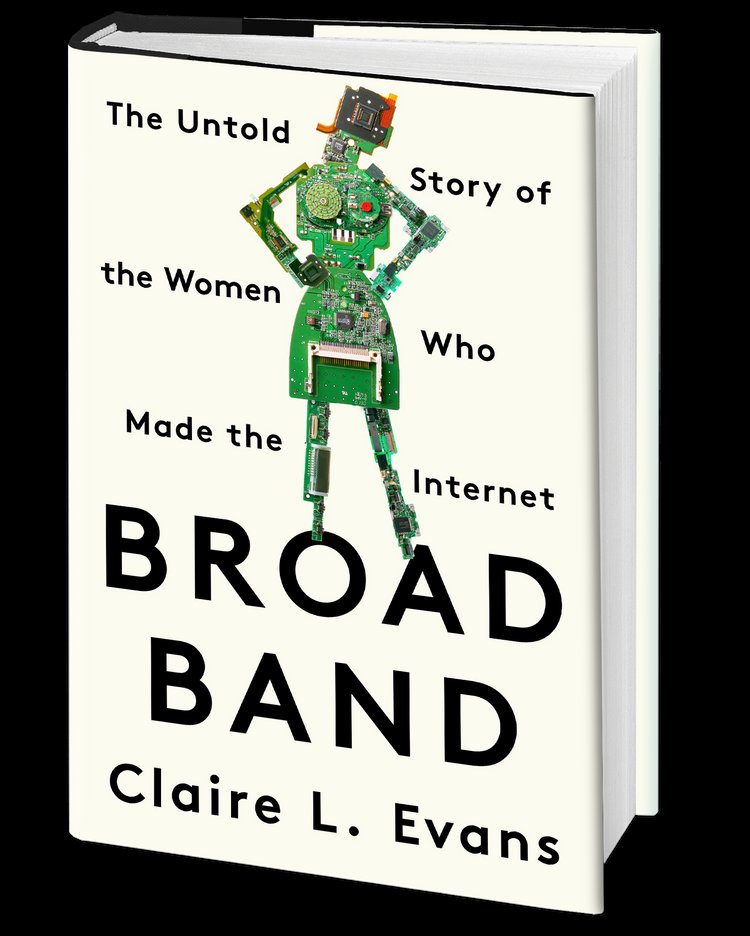
Broad Band: Claire L Evans's magesterial history of women in computing.
https://t.co/Lwrej6zVYd
4/
$50T moved from America's 90% to the 1%: The hereditary meritocracy is in crisis.
https://t.co/TquaxOmPi8
5/
Inside: Privacy Without Monopoly; Broad Band; $50T moved from America's 90% to the 1%; and more!
Archived at: https://t.co/QgK8ZMRKp7
#Pluralistic
1/
This weekend, I'm participating in Boskone 58, Boston's annual sf convention.
https://t.co/2LfFssVcZQ
Tonight, on a panel called "Tech Innovation? Does Silicon Valley Have A Mind-Control Ray, Or a Monopoly?" at 530PM Pacific.
2/
Privacy Without Monopoly: A new EFF white paper, co-authored with Bennett Cyphers.
https://t.co/TVzDXt6bz6
3/
Today, @EFF published "Privacy Without Monopoly: Data Protection and Interoperability," a major new paper by Bennett Cyphers and me. https://t.co/Ma2FE2vZ9u
— Cory Doctorow #BLM (@doctorow) February 13, 2021
1/ pic.twitter.com/RzCkQdQRxy
Broad Band: Claire L Evans's magesterial history of women in computing.
https://t.co/Lwrej6zVYd
4/
One of the most Monkey's Paw things about my life is my relationship to books. When I was a teenager, I read all the way through the school and public libraries, spent everything I had on books, and still couldn't get enough and dreamt of more.
— Cory Doctorow #BLM (@doctorow) February 13, 2021
1/ pic.twitter.com/Lgkdk5a7YA
$50T moved from America's 90% to the 1%: The hereditary meritocracy is in crisis.
https://t.co/TquaxOmPi8
5/
Inequality requires narrative stabilizers. When you have too little and someone else has more than they can possibly use, simple logic dictates that you should take what they have.
— Cory Doctorow #BLM (@doctorow) February 13, 2021
1/ pic.twitter.com/BUFyq9H2n4


So regarding to my "bombshell"...it's perhaps a bit less dramatic than many presumed, yet it still troubles me a lot, to the point that I wondered whether I should stop posting on certain things
You see, I realized in the last few months that, by translating information and news related to one of the fastest growing spaceflight powers of the world...I inadvertently became a spreader of PRC propaganda.
And with me exactly 180 degrees away from them, I feel scared.
It actually started a few years ago - it's not hard to meet Chinese Twitter users interested in spaceflight, either those living overseas or find a way to climb over the wall. Not surprisingly, many of these S/F enthusiasts are interested in their own military too.
This steadily grew with my followers' count until the flagship Chinese spaceflight missions of 2020 (Chang'e 5 especially but also many others) brought in dozens of them liking/re-tweeting my info tweets sometimes, and similar no. of such followers every month.
I do casually check these new followers/users sometimes. To my horror, far too many of them routinely insults, attacks, mocks others who they see as "anti-China" or spread potential mis-information, even blatant attacks, that started off w/ their state media/spokesperson.
I'm going to make a bomb shell statement here around the turn of the year, something so risky that I face prospects of the Twitter account being attacked or even banned.
— Cosmic Penguin (@Cosmic_Penguin) December 31, 2020
It's about my very uneasy Twitter experience over the past 2-6 months, the worst I could ever remember.
You see, I realized in the last few months that, by translating information and news related to one of the fastest growing spaceflight powers of the world...I inadvertently became a spreader of PRC propaganda.
And with me exactly 180 degrees away from them, I feel scared.
It actually started a few years ago - it's not hard to meet Chinese Twitter users interested in spaceflight, either those living overseas or find a way to climb over the wall. Not surprisingly, many of these S/F enthusiasts are interested in their own military too.
This steadily grew with my followers' count until the flagship Chinese spaceflight missions of 2020 (Chang'e 5 especially but also many others) brought in dozens of them liking/re-tweeting my info tweets sometimes, and similar no. of such followers every month.
I do casually check these new followers/users sometimes. To my horror, far too many of them routinely insults, attacks, mocks others who they see as "anti-China" or spread potential mis-information, even blatant attacks, that started off w/ their state media/spokesperson.
You May Also Like







MASTER THREAD on Short Strangles.
Curated the best tweets from the best traders who are exceptional at managing strangles.
• Positional Strangles
• Intraday Strangles
• Position Sizing
• How to do Adjustments
• Plenty of Examples
• When to avoid
• Exit Criteria
How to sell Strangles in weekly expiry as explained by boss himself. @Mitesh_Engr
• When to sell
• How to do Adjustments
• Exit
Beautiful explanation on positional option selling by @Mitesh_Engr
Sir on how to sell low premium strangles yourself without paying anyone. This is a free mini course in
1st Live example of managing a strangle by Mitesh Sir. @Mitesh_Engr
• Sold Strangles 20% cap used
• Added 20% cap more when in profit
• Booked profitable leg and rolled up
• Kept rolling up profitable leg
• Booked loss in calls
• Sold only
2nd example by @Mitesh_Engr Sir on converting a directional trade into strangles. Option Sellers can use this for consistent profit.
• Identified a reversal and sold puts
• Puts decayed a lot
• When achieved 2% profit through puts then sold
Curated the best tweets from the best traders who are exceptional at managing strangles.
• Positional Strangles
• Intraday Strangles
• Position Sizing
• How to do Adjustments
• Plenty of Examples
• When to avoid
• Exit Criteria
How to sell Strangles in weekly expiry as explained by boss himself. @Mitesh_Engr
• When to sell
• How to do Adjustments
• Exit
1. Let's start option selling learning.
— Mitesh Patel (@Mitesh_Engr) February 10, 2019
Strangle selling. ( I am doing mostly in weekly Bank Nifty)
When to sell? When VIX is below 15
Assume spot is at 27500
Sell 27100 PE & 27900 CE
say premium for both 50-50
If bank nifty will move in narrow range u will get profit from both.
Beautiful explanation on positional option selling by @Mitesh_Engr
Sir on how to sell low premium strangles yourself without paying anyone. This is a free mini course in
Few are selling 20-25 Rs positional option selling course.
— Mitesh Patel (@Mitesh_Engr) November 3, 2019
Nothing big deal in that.
For selling weekly option just identify last week low and high.
Now from that low and high keep 1-1.5% distance from strike.
And sell option on both side.
1/n
1st Live example of managing a strangle by Mitesh Sir. @Mitesh_Engr
• Sold Strangles 20% cap used
• Added 20% cap more when in profit
• Booked profitable leg and rolled up
• Kept rolling up profitable leg
• Booked loss in calls
• Sold only
Sold 29200 put and 30500 call
— Mitesh Patel (@Mitesh_Engr) April 12, 2019
Used 20% capital@44 each
2nd example by @Mitesh_Engr Sir on converting a directional trade into strangles. Option Sellers can use this for consistent profit.
• Identified a reversal and sold puts
• Puts decayed a lot
• When achieved 2% profit through puts then sold
Already giving more than 2% return in a week. Now I will prefer to sell 32500 call at 74 to make it strangle in equal ratio.
— Mitesh Patel (@Mitesh_Engr) February 7, 2020
To all. This is free learning for you. How to play option to make consistent return.
Stay tuned and learn it here free of cost. https://t.co/7J7LC86oW0

Oh my Goodness!!!
I might have a panic attack due to excitement!!
Read this thread to the end...I just had an epiphany and my mind is blown. Actually, more than blown. More like OBLITERATED! This is the thing! This is the thing that will blow the entire thing out of the water!
Has this man been concealing his true identity?
Is this man a supposed 'dead' Seal Team Six soldier?
Witness protection to be kept safe until the right moment when all will be revealed?!
Who ELSE is alive that may have faked their death/gone into witness protection?

Were "golden tickets" inside the envelopes??

Are these "golden tickets" going to lead to their ultimate undoing?
Review crumbs on the board re: 'gold'.

#SEALTeam6 Trump re-tweeted this.

I might have a panic attack due to excitement!!
Read this thread to the end...I just had an epiphany and my mind is blown. Actually, more than blown. More like OBLITERATED! This is the thing! This is the thing that will blow the entire thing out of the water!
Tik Tok pic.twitter.com/8X3oMxvncP
— Scotty Mar10 (@Allenma15086871) December 29, 2020
Has this man been concealing his true identity?
Is this man a supposed 'dead' Seal Team Six soldier?
Witness protection to be kept safe until the right moment when all will be revealed?!
Who ELSE is alive that may have faked their death/gone into witness protection?
Were "golden tickets" inside the envelopes??
Are these "golden tickets" going to lead to their ultimate undoing?
Review crumbs on the board re: 'gold'.
#SEALTeam6 Trump re-tweeted this.