Then I use options to maximize my capital. I mitigate the risk with diversification.
How I Trade
Easy. I trade with the trend. Buy low sell high for up trends. Sell high, buy low during down trends. I don’t care about fundamentals. Often I don’t even know what sector the stock is in. Half my trades, don’t even know the name of the company.
Then I use options to maximize my capital. I mitigate the risk with diversification.
Let’s take a look at this chart. Now. Let’s trade it.
I have no idea how. There are no landmarks. It could be going up, or down, maybe sideways. If I have no clue where it’s going. How do I make a plan? Where do I enter? Where is the exit?

Now this one. A simple fact. If you see a 1-2 setup. 3 is next. 3 runs fast and hard. Usually between 100% to 161.8% of 1. However if price break down below 2. This trade is invalid. We have to consider an alternative.
Can you manage a trade like this?

Months probably years to be an expert in it.
Not that is not going to do you any good eh? Years to master something before making any money.
https://t.co/hXiDAcRCeg
If you can set aside a couple of thousand. Not your entire savings. The goal will be playing with house money ASAP. If all you have is a few thousand. Keeping it in the bank is not going to make you any richer. Neither will consuming it.
More from Trading

Many of you have seen the famous Westrum Organizational Typology model, so prominently featured in State of DevOps Research, Accelerate, DevOps Handbook, etc.
This model was created Dr. Ron Westrum, a widely-cited sociologist who studied the impact of culture on safety
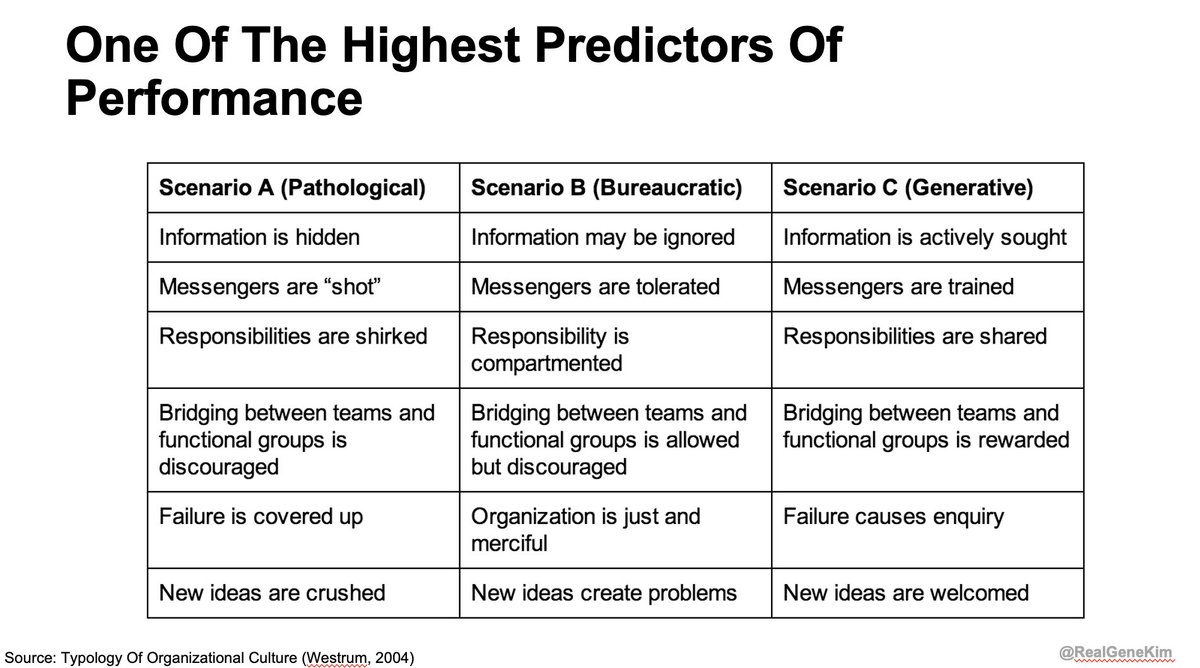
Thanks to Dr. @nicolefv, I was able to interview him for an upcoming episode of the Idealcast! 🤯
It was a very heady experience, and while preparing to interview him, I was startled to discover how much work he's done in healthcare, aviation, spaceflight, but also innovation.
I've read 4+ of his papers, so I thought I was familiar with his work. (Here's one paper: https://t.co/7X00O67VgS)
I was startled to learn he has also studied in depth what enables innovation. He wrote a wonderful book "Sidewinder: Creative Missile Development at China Lake"
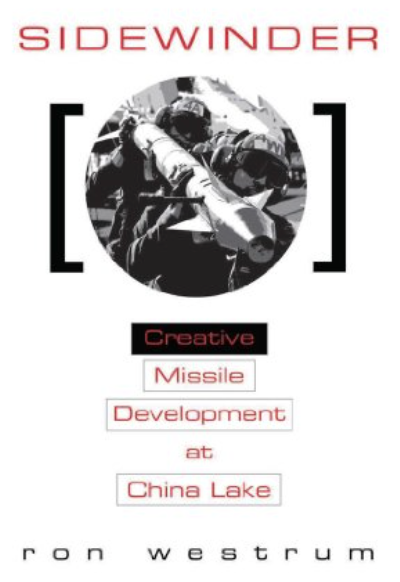
Dr. Westrum writes about China Lake Research Labs: "its design and structure had one purpose: to foster technical creativity. It did; China Lake operated far outside the normal envelope... Sidewinder & others were "impossible" accomplishments,
I love this book because it describes traits of organizations that routinely create and maintain greatness: US space program (Mercury, Gemini, Apollo), US Naval Reactors, Toyota, Team of Teams, Tesla, the tech giants (Amazon, Google, Netflix, Google)
This model was created Dr. Ron Westrum, a widely-cited sociologist who studied the impact of culture on safety
Thanks to Dr. @nicolefv, I was able to interview him for an upcoming episode of the Idealcast! 🤯
It was a very heady experience, and while preparing to interview him, I was startled to discover how much work he's done in healthcare, aviation, spaceflight, but also innovation.
I've read 4+ of his papers, so I thought I was familiar with his work. (Here's one paper: https://t.co/7X00O67VgS)
I was startled to learn he has also studied in depth what enables innovation. He wrote a wonderful book "Sidewinder: Creative Missile Development at China Lake"
Dr. Westrum writes about China Lake Research Labs: "its design and structure had one purpose: to foster technical creativity. It did; China Lake operated far outside the normal envelope... Sidewinder & others were "impossible" accomplishments,
I love this book because it describes traits of organizations that routinely create and maintain greatness: US space program (Mercury, Gemini, Apollo), US Naval Reactors, Toyota, Team of Teams, Tesla, the tech giants (Amazon, Google, Netflix, Google)