
Am sharing my journey on how I started trading 15 years before when there was very limited resource. If you are a beginner who is looking to get started with Stock Market, this thread would be helpful.\U0001f9f5
— Kirubakaran Rajendran (@kirubaakaran) April 26, 2022
I have shared multiple information related to trading and investing through my historical data analysis by writing various articles, here's the master thread that contains all my work in one place.🧵
Many of my friends who work at Corporate culture are fed up with their work life, one question they keep asking me is how much money do I need to retire and live comfortably? Here\u2019s a short thread \U0001f9f5 pic.twitter.com/gNEOFOChlh
— Kirubakaran Rajendran (@kirubaakaran) May 24, 2022
Year 2022 has been disastrous for many asset classes, the world economy is at 40 year high inflation. Are we headed for another stock market crash? Here's a detailed analysis. \U0001f9f5 pic.twitter.com/ZYch9yBHEq
— Kirubakaran Rajendran (@kirubaakaran) May 19, 2022
I have closely observed FinNifty for couple of weeks and then started trading live since last 4 expiry. If you are looking to start trading with FinNifty weekly option then this thread might be of great help to you. \U0001f9f5
— Kirubakaran Rajendran (@kirubaakaran) July 12, 2022
Here's a detailed analysis of 920 Straddle with 25% SL using @stockmock_in platform. This analysis would show which days are max profitable, how it behaves on gap days and how it behaves on different VIX days. \U0001f9f5
— Kirubakaran Rajendran (@kirubaakaran) May 8, 2022
Every time after I make a SIP investment, market tends to go down in next couple of days. I always wondered I would have made higher returns with my SIP if I waited for market correction. Does making SIP during market correction generates higher returns. Here\u2019s the details \U0001f9f5 pic.twitter.com/bsnz9ySi96
— Kirubakaran Rajendran (@kirubaakaran) June 29, 2022
What is Rakesh Jhunjhunwala's Investing Strategy, is there a way where we retail investors can follow his strategy and generate similar returns like him? We did an extensive research and this is what we found. A short thread pic.twitter.com/2gq9vNqv22
— Kirubakaran Rajendran (@kirubaakaran) September 29, 2021
A small thread on Mindset of a successful trader. What differentiates best traders from the bad ones? Why 95% of the traders don\u2019t make money? Trading is an unpredictable game, how could one win in that? 1/n pic.twitter.com/ZHMZ2wZXxK
— Kirubakaran Rajendran (@kirubaakaran) March 25, 2021
A short thread on The 80/20 rule for Trading and Investing. If you really want to improve your trading result, follow this one simple approach which can immediately show you the reason why you weren\u2019t able to make profits in the stock market. pic.twitter.com/2clnYVzahE
— Kirubakaran Rajendran (@kirubaakaran) May 4, 2021
In general, making money from trading is real hard than any other business. And I believe discretionary trading is even more harder. Why do many beginners go bust within 90 days of their trading career? Here's a short thread on why discretionary trading is hard? pic.twitter.com/4av9E0YSkm
— Kirubakaran Rajendran (@kirubaakaran) November 18, 2021
Most beginners when building a trading strategy simply use current info and test with it, they don't know How to Get Historical Stock Futures lot size, list of stocks that are part of index like Nifty 50, Nifty 500 historically, I will share all such info in this thread
— Kirubakaran Rajendran (@kirubaakaran) September 9, 2021
Russian stock market crashed more than 70%, many investors are worried on what would happen if such things happen to Indian markets? Here's couple of important lesson you need to keep in mind before you start your SIP journey. A short thread pic.twitter.com/m0QQ1aGnsN
— Kirubakaran Rajendran (@kirubaakaran) March 8, 2022
Are you a trader who did an extensive backtest of your trading strategy only to witness a worst performance when you traded live? Wondering why your real live results are not matching with your backtest results? Then this short thread is for you. pic.twitter.com/sx8WsGeejJ
— Kirubakaran Rajendran (@kirubaakaran) February 24, 2022
Should you buy stocks that gets added to #Nifty50. A short thread with detailed analysis from 25+ years of Historical data. Nifty 50 is widely tracked index, all stocks that are being included/excluded with Nifty 50 will have an impact towards the stock returns for next one year pic.twitter.com/XUtYSUl0mm
— Kirubakaran Rajendran (@kirubaakaran) June 13, 2021
Investing for long term is always projected as a complex task, reading about the nature of company business, balance sheets, Profit and loss statements etc. Is there any easy way to find the best stocks to invest for long term? That's what this thread is all about. pic.twitter.com/DJw06FMfw2
— Kirubakaran Rajendran (@kirubaakaran) March 21, 2022
Many beginners give utmost importance to trading strategy but least bothered about position sizing. Knowing how much is too much in a trade? This information is very crucial which determines the long term success of a trader. In this thread will explain what is position sizing pic.twitter.com/tkuOJ3JQ6L
— Kirubakaran Rajendran (@kirubaakaran) March 1, 2022
Here's a thread on complete data analysis of #NSE500 stocks, to start with, first checked the momentum factor, what was the last 12 months returns of all sectors of NSE 500. IT sector stocks top the list with average returns of 90% in last one year. 1/n pic.twitter.com/3VwS5XY11Z
— Kirubakaran Rajendran (@kirubaakaran) March 2, 2021
A thread on Position Sizing #Trading is the only profession where you can see Doctors, Engineers, and many other successful professionals try their luck with stock market, these people excel in their own respective field but struggle a lot when it comes to trading.1/n
— Kirubakaran Rajendran (@kirubaakaran) February 16, 2021
Nifty 14500 CE trade which made day low price of 0.15 and day high price of 2139, due to erroneous order by a broker who lost 250 crores. Some ppl claim few others brokers made 50 to 75 crores profits. But what really happened? Here's the tick data analysis that shows true info\U0001f9f5
— Kirubakaran Rajendran (@kirubaakaran) June 3, 2022
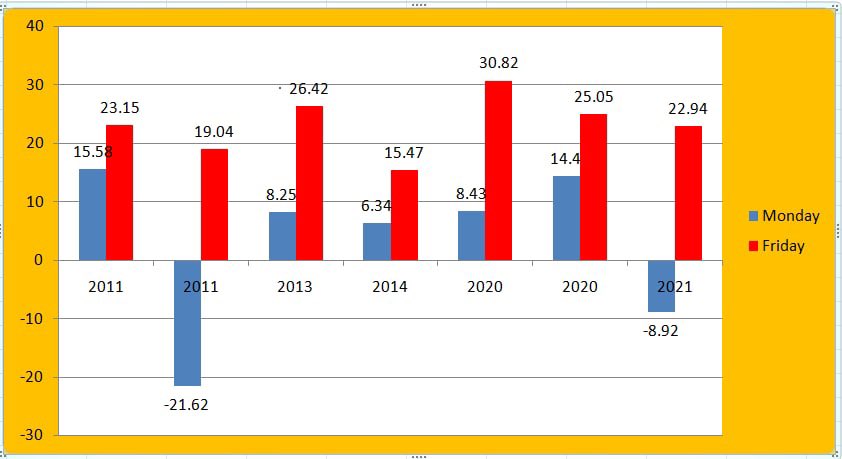
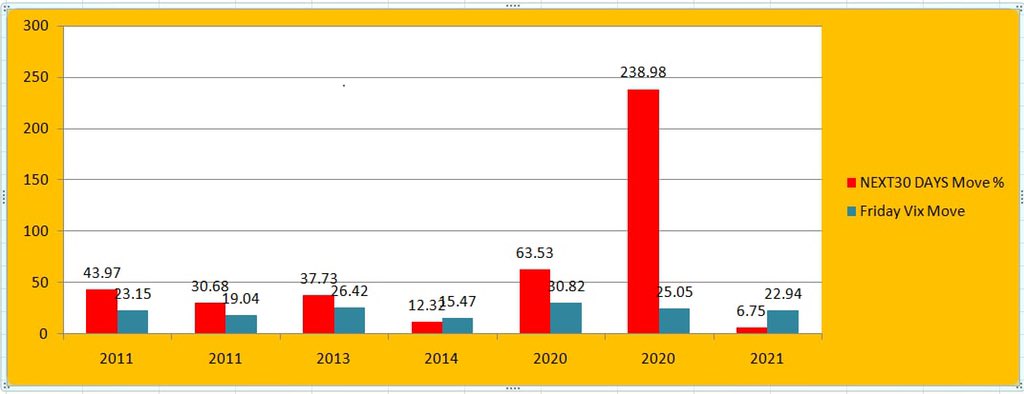
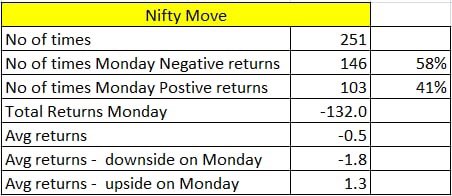
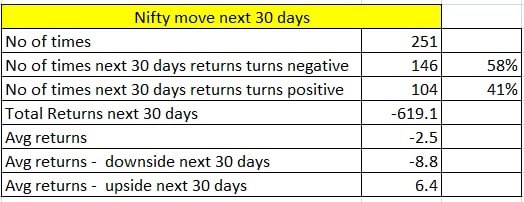
Whenever #Nifty & #BankNifty closes less than -1% on Fridays, what happens on Monday and what happens on next 30 days. Interesting analysis, will be sharing the details shortly.
— Kirubakaran Rajendran (@kirubaakaran) November 27, 2021
What happens if we buy a stock in cash segment that gets added to F&O ban list and sell that stock once it comes of F&O ban list. Tested this #TradingStrategy with last 5 years of historical data, here's the details. pic.twitter.com/dcFLkX49jY
— Kirubakaran Rajendran (@kirubaakaran) October 20, 2021
When it comes to investing, most beginners who want to get started with stock market investing opt for mutual funds. But do you know how many mutual funds there are in India? There are more than 2,500\xa0mutual fund schemes.
— Kirubakaran Rajendran (@kirubaakaran) June 8, 2022
How do we decide which one to invest?Here\u2019s a short \U0001f9f5 pic.twitter.com/tIp14488hE
Monthly SIP is one most underrated investment option many people tend to ignore during their early stage of professional career. You really don\u2019t need to invest lot of money, in fact just investing Rs.5000 every month at the Age of 25 can you fetch you almost 2 Crores corpus. \U0001f9f5
— Kirubakaran Rajendran (@kirubaakaran) June 20, 2022
\u201cWhenever I enter into a trade, I end up losing money. Should I stop trading and start investing?\u201d This is a common question that comes in our mind very often during our early phase. Here\u2019s a short thread that explains what we are doing wrong and how to correct it?
— Kirubakaran Rajendran (@kirubaakaran) May 11, 2022
More from Kirubakaran Rajendran


Most beginners when building a trading strategy simply use current info and test with it, they don't know How to Get Historical Stock Futures lot size, list of stocks that are part of index like Nifty 50, Nifty 500 historically, I will share all such info in this thread
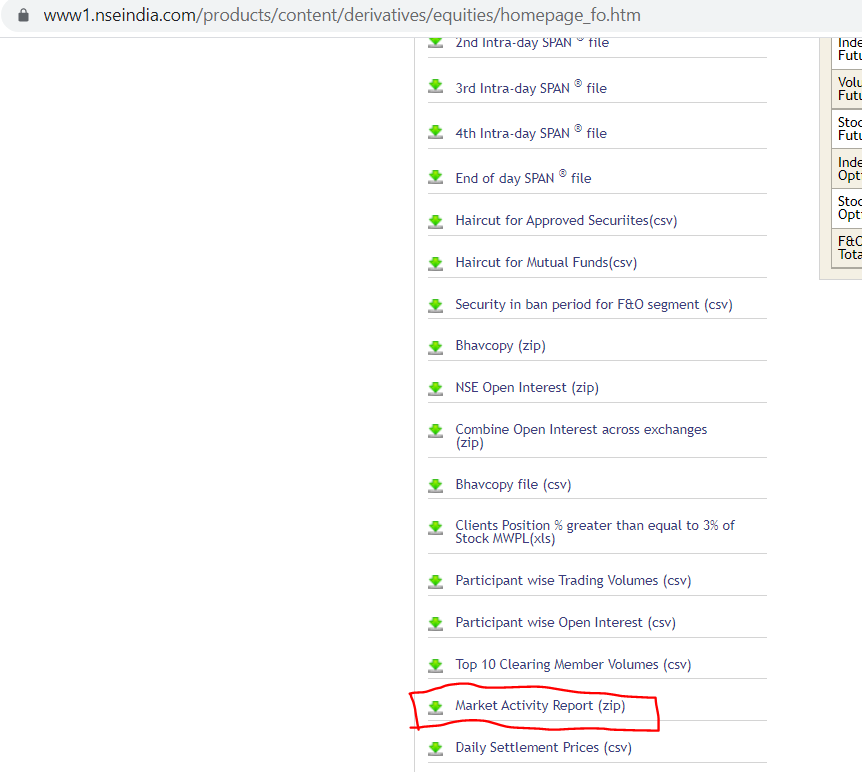
Please note that there is no way to get the historical lot size of stocks futures, NSE don't publish it directly, so we need to do some calculated steps to get that data. Download Market Activity report https://t.co/HKLkSVtXEI
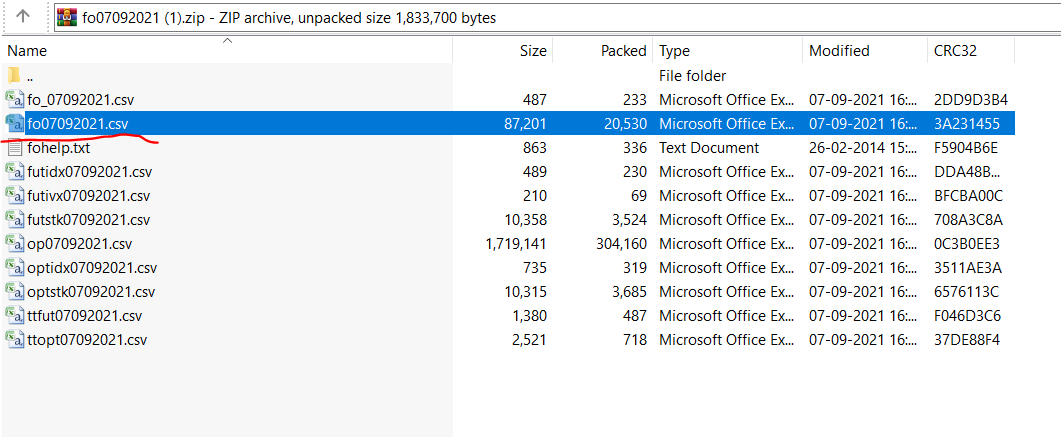
The zip file contains multiple files, open the second file.
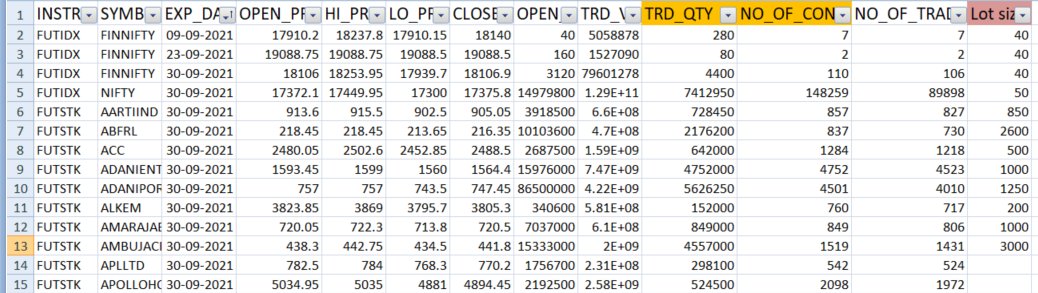
The file will contain stock symbol, expiry date, OHLC data, along with that you get traded quantity and No of contracts traded, using this data we can calculate the lot size of every stock symbol. Simply divide Traded QTY / NO of contracts gives you the lot size.
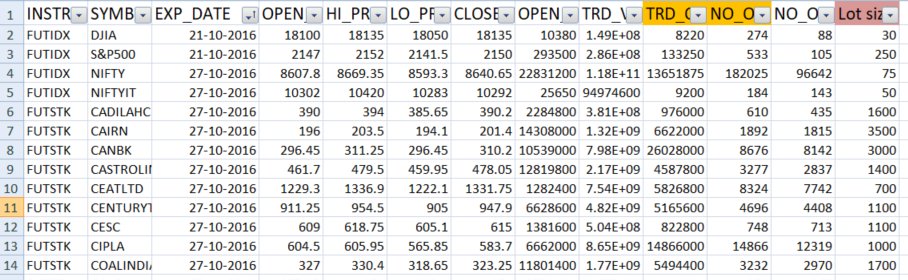
So to get the historical stock futures data, all you need to do is change the date in the below link
https://t.co/xIBXsPpIVt For an example, to get the historical stock futures lot size data for Sep 2016, use https://t.co/Criu7S3Fi5
Please note that there is no way to get the historical lot size of stocks futures, NSE don't publish it directly, so we need to do some calculated steps to get that data. Download Market Activity report https://t.co/HKLkSVtXEI
The zip file contains multiple files, open the second file.
The file will contain stock symbol, expiry date, OHLC data, along with that you get traded quantity and No of contracts traded, using this data we can calculate the lot size of every stock symbol. Simply divide Traded QTY / NO of contracts gives you the lot size.
So to get the historical stock futures data, all you need to do is change the date in the below link
https://t.co/xIBXsPpIVt For an example, to get the historical stock futures lot size data for Sep 2016, use https://t.co/Criu7S3Fi5





More from Thread




This is a result of credit fueled big ticket purchases of which buying a home is a big component. No amount of saving will cover the housing EMIs payable over one year. To this, add EMIs of 1 or 2 cars, and you've monthly EMIs running into 1 Lakh+. Now, add monthly house-hold +
+ expense, school fee and other sundry expenses and suddenly, you'll find a family unable to sustain itself w/o cash-flow for even 3-4 months. And most important of them all -
HAVING ASSETS IS NOT SAME AS HAVING CASH.
+
+ From personal experience, I think this is what you need to do:
- Maintain between Rs 1-2 Lakhs in emergency cash at all times.
- Use your Credit Cards wisely. They can be good source of large credit in an emergency.
- Work out your monthly house-hold expenses and EMIs
+
- Build a cash-reserve to cover your household expenses for a 6-month or 1-year period.
- Consider food, electricity, mobile/internet, your kids school fee, fuel, rent etc.
- Then work out your EMI obligations and see what level of reserves you can create for them.
- Maintain+
+ this back-up fund in cash/near cash assets.
- So, that you can utilize them as per requirement and are not subject to market forces.
One thing I\u2019ve learnt from the Covid catastrophe is that the so many batch mates from engineering (and maybe b school) have no savings. So many people with like 20 years of really affluent work experience are two month\u2019s salary away from crowd funding to feed their families.
— Sidin (@sidin) July 9, 2021
+ expense, school fee and other sundry expenses and suddenly, you'll find a family unable to sustain itself w/o cash-flow for even 3-4 months. And most important of them all -
HAVING ASSETS IS NOT SAME AS HAVING CASH.
+
+ From personal experience, I think this is what you need to do:
- Maintain between Rs 1-2 Lakhs in emergency cash at all times.
- Use your Credit Cards wisely. They can be good source of large credit in an emergency.
- Work out your monthly house-hold expenses and EMIs
+
- Build a cash-reserve to cover your household expenses for a 6-month or 1-year period.
- Consider food, electricity, mobile/internet, your kids school fee, fuel, rent etc.
- Then work out your EMI obligations and see what level of reserves you can create for them.
- Maintain+
+ this back-up fund in cash/near cash assets.
- So, that you can utilize them as per requirement and are not subject to market forces.
You May Also Like






Oh my Goodness!!!
I might have a panic attack due to excitement!!
Read this thread to the end...I just had an epiphany and my mind is blown. Actually, more than blown. More like OBLITERATED! This is the thing! This is the thing that will blow the entire thing out of the water!
Has this man been concealing his true identity?
Is this man a supposed 'dead' Seal Team Six soldier?
Witness protection to be kept safe until the right moment when all will be revealed?!
Who ELSE is alive that may have faked their death/gone into witness protection?

Were "golden tickets" inside the envelopes??

Are these "golden tickets" going to lead to their ultimate undoing?
Review crumbs on the board re: 'gold'.

#SEALTeam6 Trump re-tweeted this.

I might have a panic attack due to excitement!!
Read this thread to the end...I just had an epiphany and my mind is blown. Actually, more than blown. More like OBLITERATED! This is the thing! This is the thing that will blow the entire thing out of the water!
Tik Tok pic.twitter.com/8X3oMxvncP
— Scotty Mar10 (@Allenma15086871) December 29, 2020
Has this man been concealing his true identity?
Is this man a supposed 'dead' Seal Team Six soldier?
Witness protection to be kept safe until the right moment when all will be revealed?!
Who ELSE is alive that may have faked their death/gone into witness protection?
Were "golden tickets" inside the envelopes??
Are these "golden tickets" going to lead to their ultimate undoing?
Review crumbs on the board re: 'gold'.
#SEALTeam6 Trump re-tweeted this.

THREAD PART 1.
On Sunday 21st June, 14 year old Noah Donohoe left his home to meet his friends at Cave Hill Belfast to study for school. #RememberMyNoah💙

He was on his black Apollo mountain bike, fully dressed, wearing a helmet and carrying a backpack containing his laptop and 2 books with his name on them. He also had his mobile phone with him.
On the 27th of June. Noah's naked body was sadly discovered 950m inside a storm drain, between access points. This storm drain was accessible through an area completely unfamiliar to him, behind houses at Northwood Road. https://t.co/bpz3Rmc0wq
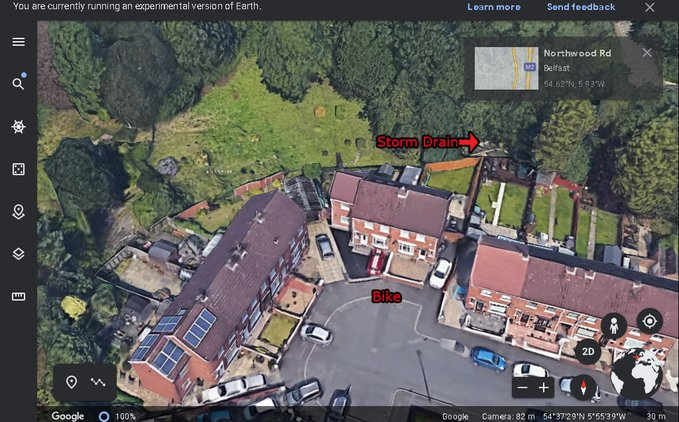
"Noah's body was found by specially trained police officers between two drain access points within a section of the tunnel running under the Translink access road," said Mr McCrisken."
Noah's bike was also found near a house, behind a car, in the same area. It had been there for more than 24 hours before a member of public who lived in the street said she read reports of a missing child and checked the bike and phoned the police.
On Sunday 21st June, 14 year old Noah Donohoe left his home to meet his friends at Cave Hill Belfast to study for school. #RememberMyNoah💙
He was on his black Apollo mountain bike, fully dressed, wearing a helmet and carrying a backpack containing his laptop and 2 books with his name on them. He also had his mobile phone with him.
On the 27th of June. Noah's naked body was sadly discovered 950m inside a storm drain, between access points. This storm drain was accessible through an area completely unfamiliar to him, behind houses at Northwood Road. https://t.co/bpz3Rmc0wq
"Noah's body was found by specially trained police officers between two drain access points within a section of the tunnel running under the Translink access road," said Mr McCrisken."
Noah's bike was also found near a house, behind a car, in the same area. It had been there for more than 24 hours before a member of public who lived in the street said she read reports of a missing child and checked the bike and phoned the police.
