So Salesforce is the grandperson of SaaS software

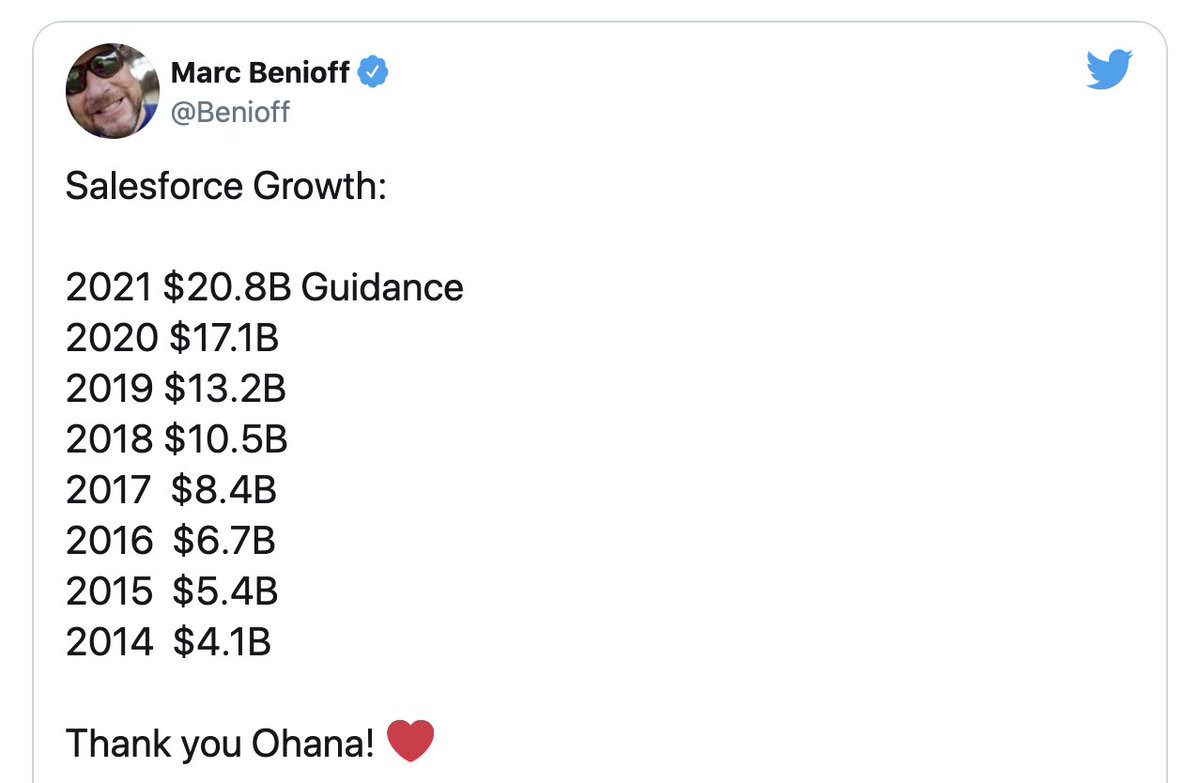
The first to hit $100B in market cap
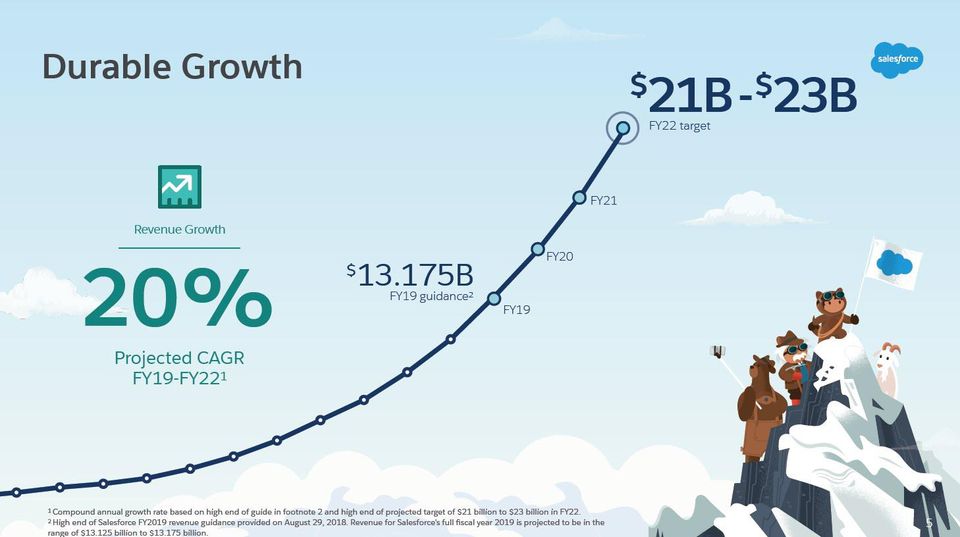
The first to do $10B+ in ARR (and only so far)

And yet, in many ways we know >less< about Salesforce that we used to

It's not just a CRM anymore

5 Interesting Learnings:

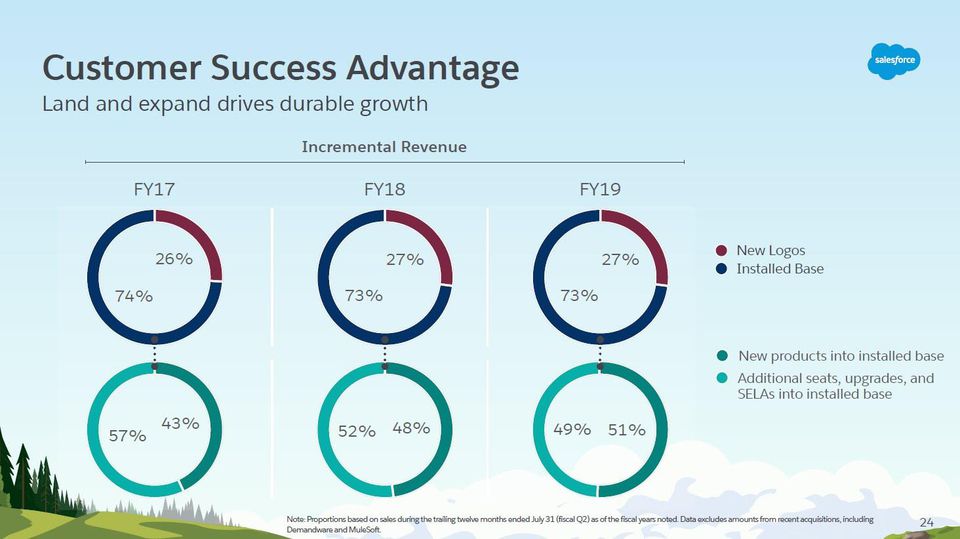
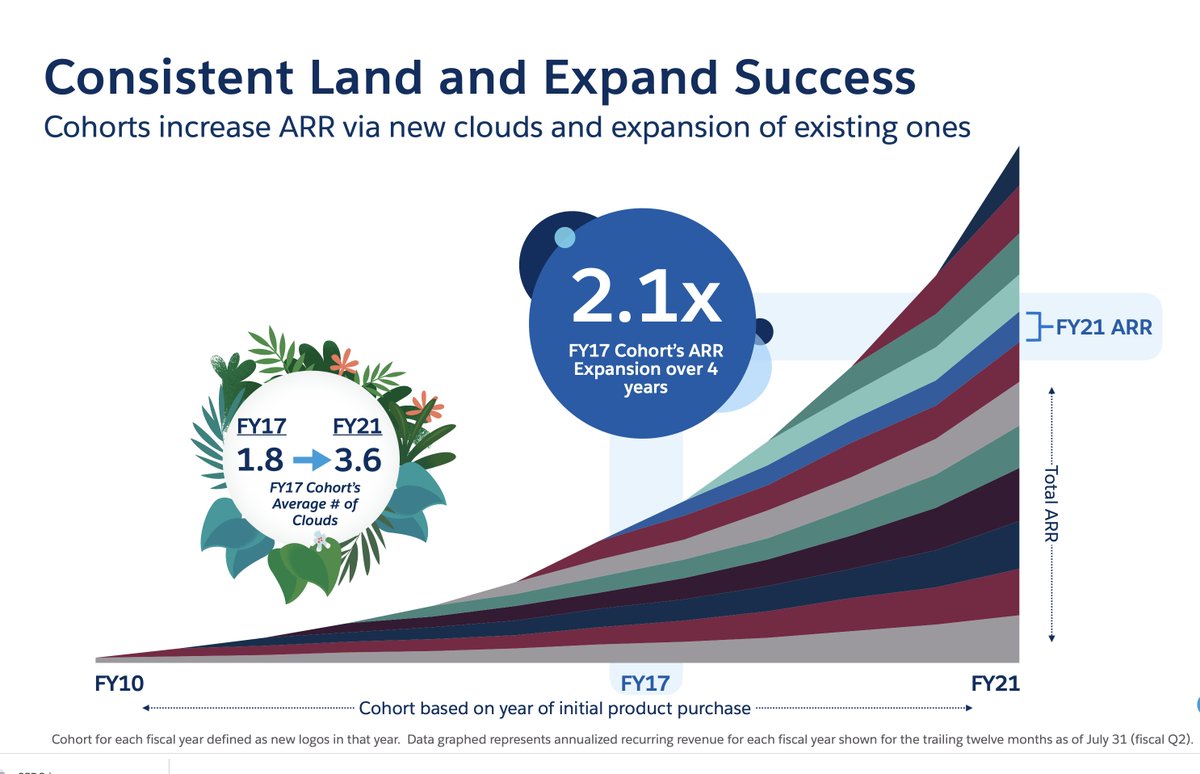
#1. 73% of Salesforce’s customers come from the installed base. Let that sink in.

This is why in the end, Net Revenue Retention is the #1 most important metric in SaaS.

This also means that Salesforce could basically still hit 73% of its plan with 0 new customers.
Put differently, their 2017 customers have, as a cohort, grown 2.1x
#2. Salesforce’s upsell is split about 50/50 between new seats and new products.

In the early days, you’ll probably only have new seats to sell.

But eventually, you’ll probably need a second or third product to sell. We talked about this re: Veeva, Twilio and more here:
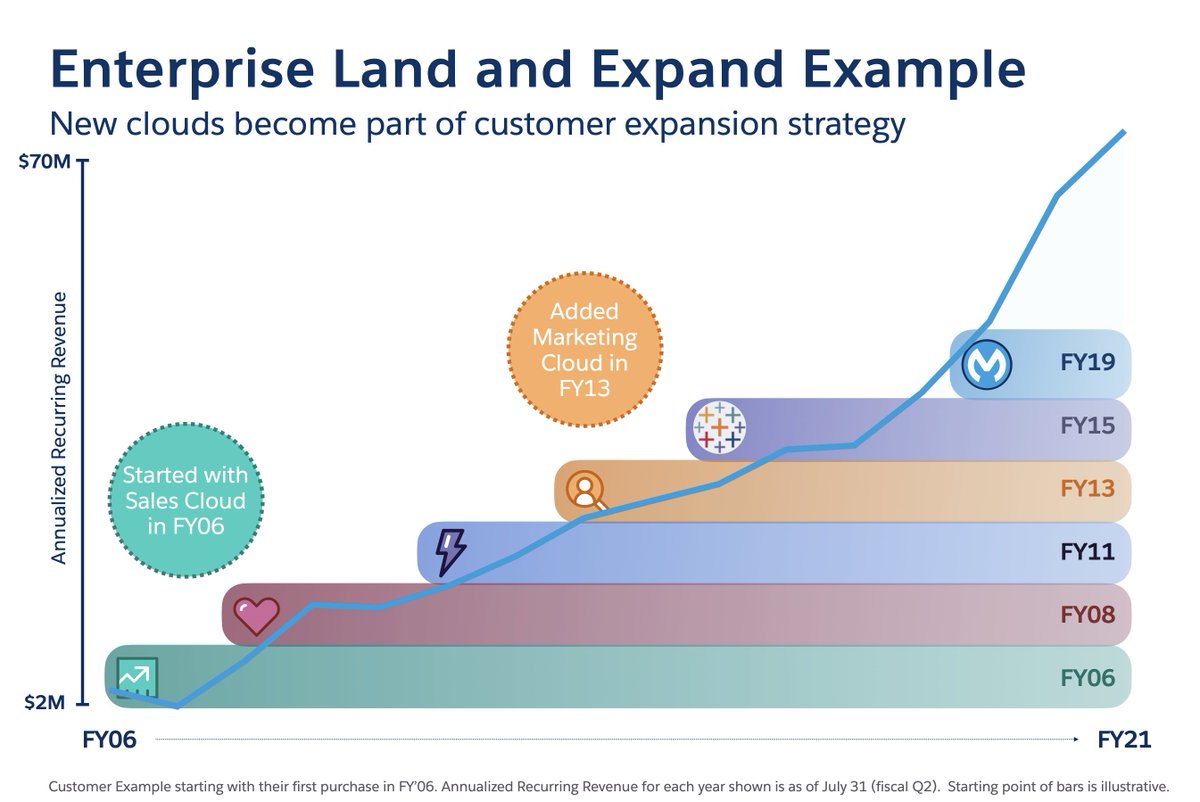
#3. The more products you sell, really, the more problems you solve — the more you make.

This is something a bit non-obvious. Salesforce’s customers that buy > 1 product overall, spend a stunning 10x more.
This skews a lot b/c the customers that buy more “Clouds” from Salesforce are bigger companies. Still, the more big problems you solve, the much more you make.

We also saw this Box, where NRR was >profoundly< higher when customers bought 2-3+ products beyond core Box product
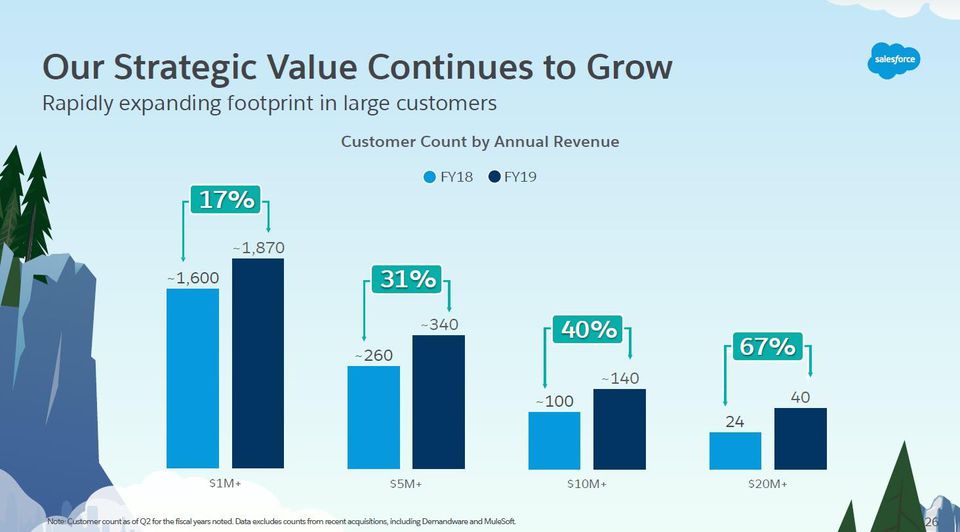
#4. Salesforce has >2,000+ customers that spend $1m annually.

That’s a lot more than the 500 in the “Fortune 500”. As you begin to go upmarket ... assume you have at least 2000+ mega-accounts to target.

No excuses.
#5. Salesforce’s largest customers are growing the fastest.

Salesforce also has 200+ Customers that spend $10m+ and ~40 spending $20m+ annually.

So when you start to go upmarket, lean in here. It can last for decades
And finally, bonus point:

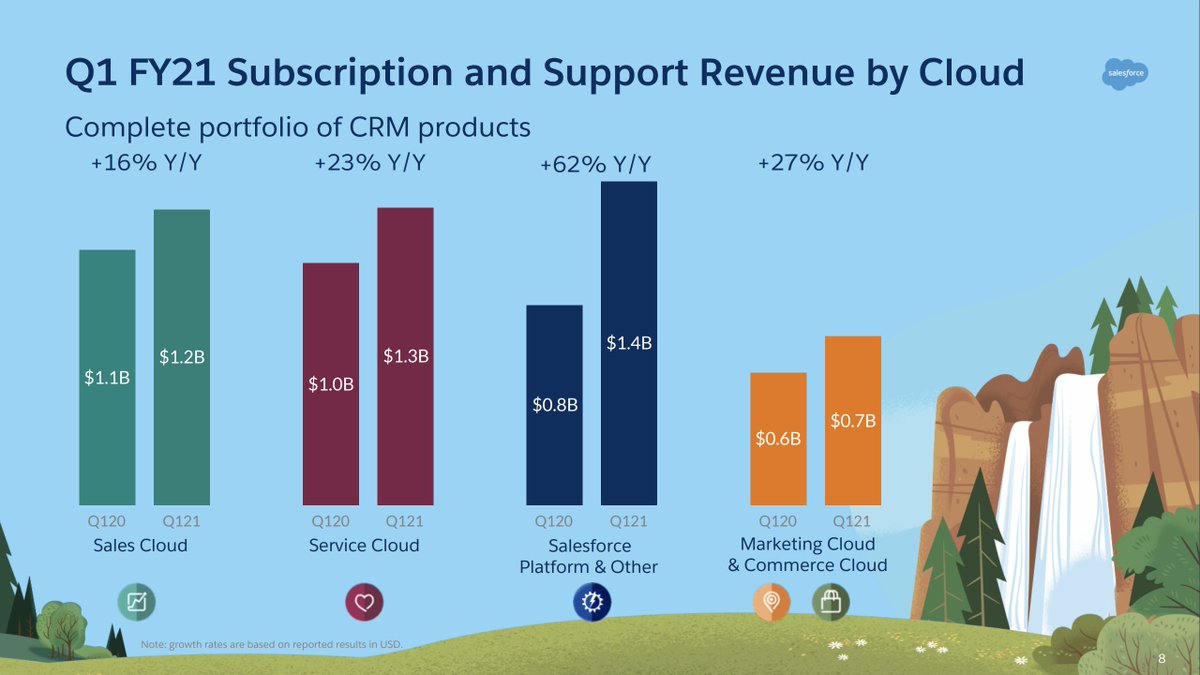
"Sales" is only Salesforce's #3 product line. And it's slowest growing at +16% YoY.

Your TAM over time is what you make of it, folks.
A deeper dive here on how to build your own $100B+ SaaS company:

https://t.co/UFwOSD85WZ
SaaS.

If you invest in it ...

It Compounds

More from Tech

"I really want to break into Product Management"

make products.

"If only someone would tell me how I can get a startup to notice me."

Make Products.

"I guess it's impossible and I'll never break into the industry."

MAKE PRODUCTS.

Courtesy of @edbrisson's wonderful thread on breaking into comics –
https://t.co/TgNblNSCBj – here is why the same applies to Product Management, too.


There is no better way of learning the craft of product, or proving your potential to employers, than just doing it.

You do not need anybody's permission. We don't have diplomas, nor doctorates. We can barely agree on a single standard of what a Product Manager is supposed to do.

But – there is at least one blindingly obvious industry consensus – a Product Manager makes Products.

And they don't need to be kept at the exact right temperature, given endless resource, or carefully protected in order to do this.

They find their own way.
I think about this a lot, both in IT and civil infrastructure. It looks so trivial to “fix” from the outside. In fact, it is incredibly draining to do the entirely crushing work of real policy changes internally. It’s harder than drafting a blank page of how the world should be.


I’m at a sort of career crisis point. In my job before, three people could contain the entire complexity of a nation-wide company’s IT infrastructure in their head.

Once you move above that mark, it becomes exponentially, far and away beyond anything I dreamed, more difficult.

And I look at candidates and know-everything’s who think it’s all so easy. Or, people who think we could burn it down with no losses and start over.

God I wish I lived in that world of triviality. In moments, I find myself regretting leaving that place of self-directed autonomy.

For ten years I knew I could build something and see results that same day. Now I’m adjusting to building something in my mind in one day, and it taking a year to do the due-diligence and edge cases and documentation and familiarization and roll-out.

That’s the hard work. It’s not technical. It’s not becoming a rockstar to peers.
These people look at me and just see another self-important idiot in Security who thinks they understand the system others live. Who thinks “bad” designs were made for no reason.
Who wasn’t there.

You May Also Like

I’m torn on how to approach the idea of luck. I’m the first to admit that I am one of the luckiest people on the planet. To be born into a prosperous American family in 1960 with smart parents is to start life on third base. The odds against my very existence are astronomical.


I’ve always felt that the luckiest people I know had a talent for recognizing circumstances, not of their own making, that were conducive to a favorable outcome and their ability to quickly take advantage of them.
In other words, dumb luck was just that, it required no awareness on the person’s part, whereas “smart” luck involved awareness followed by action before the circumstances changed.

So, was I “lucky” to be born when I was—nothing I had any control over—and that I came of age just as huge databases and computers were advancing to the point where I could use those tools to write “What Works on Wall Street?” Absolutely.

Was I lucky to start my stock market investments near the peak of interest rates which allowed me to spend the majority of my adult life in a falling rate environment? Yup.