(2/)
I was sent a copy of the so-called Super League document earlier today and have spent the afternoon doing some number crunching on it.
A few key takeaways
(1/)
(2/)
(3/)
(4/)
(5/)
(7/)
More from Sport

When thinking about who to play in DM for Leeds the word "role" is important. Let's have a think about the role:
A lot of people think Struijk isn't good enough in the build-up phase. Well, what does the DM do in build-up?
Here's a passing network from last season:
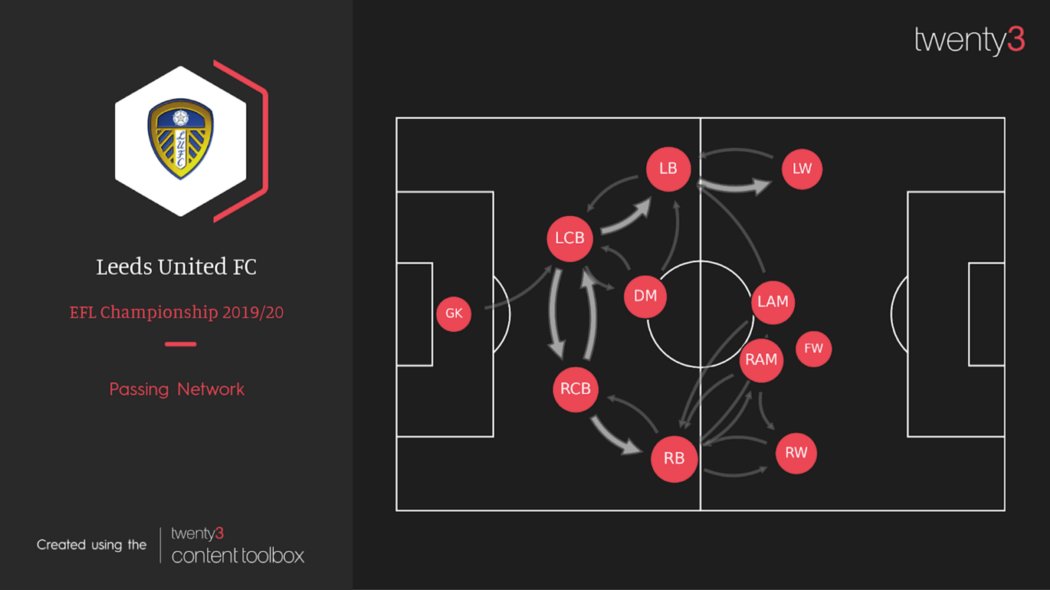
As you can see, Phillips' role in the Championship last season was largely facilitating build up in the wide area (on the left interestingly).
Per Wyscout, Phillips is putting up a figure of 7.03 long passes per 90 minutes and completes around 59%. Last season he was making 6.94 long passes per 90 mins at around 52%.
Per dribbles he's putting up similar numbers across both seasons (between 1 and 1.5 p90) and per duels he's putting up the same number (20 p90).
All of this suggests his role hasn't changed much over the last couple of seasons.
This exactly. I think the 8 and fullback roles in this system share quite a lot of common attributes, even forgetting how Bielsa looks to hybrid them in 3-3-1-3. No wonder that we've seen Dallas, Shackleton, Gotts etc play both. And these roles play to Dallas' strengths.
— Jacob Standbridge (@PocketTrumpeter) February 13, 2021
A lot of people think Struijk isn't good enough in the build-up phase. Well, what does the DM do in build-up?
Here's a passing network from last season:
As you can see, Phillips' role in the Championship last season was largely facilitating build up in the wide area (on the left interestingly).
Per Wyscout, Phillips is putting up a figure of 7.03 long passes per 90 minutes and completes around 59%. Last season he was making 6.94 long passes per 90 mins at around 52%.
Per dribbles he's putting up similar numbers across both seasons (between 1 and 1.5 p90) and per duels he's putting up the same number (20 p90).
All of this suggests his role hasn't changed much over the last couple of seasons.




You May Also Like


**Thread on Bravery of Sikhs**
(I am forced to do this due to continuous hounding of Sikh Extremists since yesterday)
Rani Jindan Kaur, wife of Maharaja Ranjit Singh had illegitimate relations with Lal Singh (PM of Ranjit Singh). Along with Lal Singh, she attacked Jammu, burnt - https://t.co/EfjAq59AyI

Hindu villages of Jasrota, caused rebellion in Jammu, attacked Kishtwar.
Ancestors of Raja Ranjit Singh, The Sansi Tribe used to give daughters as concubines to Jahangir.

The Ludhiana Political Agency (Later NW Fronties Prov) was formed by less than 4000 British soldiers who advanced from Delhi and reached Ludhiana, receiving submissions of all sikh chiefs along the way. The submission of the troops of Raja of Lahore (Ranjit Singh) at Ambala.
Dabistan a contemporary book on Sikh History tells us that Guru Hargobind broke Naina devi Idol Same source describes Guru Hargobind serving a eunuch
YarKhan. (ref was proudly shared by a sikh on twitter)
Gobind Singh followed Bahadur Shah to Deccan to fight for him.

In Zafarnama, Guru Gobind Singh states that the reason he was in conflict with the Hill Rajas was that while they were worshiping idols, while he was an idol-breaker.
And idiot Hindus place him along Maharana, Prithviraj and Shivaji as saviours of Dharma.

(I am forced to do this due to continuous hounding of Sikh Extremists since yesterday)
Rani Jindan Kaur, wife of Maharaja Ranjit Singh had illegitimate relations with Lal Singh (PM of Ranjit Singh). Along with Lal Singh, she attacked Jammu, burnt - https://t.co/EfjAq59AyI
Tomorrow again same thing happens bcoz fudus like you are creating a narrative oh Khalistan. when farmers are asking MSP. (RSS ki tatti khane wale Kerni sena ke kutte).
— Ancient Economist (@_stock_tips) December 5, 2020
U kill sikhs in 1984 just politics. To BC low IQ fudu Saale entire history was politics.
Hindu villages of Jasrota, caused rebellion in Jammu, attacked Kishtwar.
Ancestors of Raja Ranjit Singh, The Sansi Tribe used to give daughters as concubines to Jahangir.
The Ludhiana Political Agency (Later NW Fronties Prov) was formed by less than 4000 British soldiers who advanced from Delhi and reached Ludhiana, receiving submissions of all sikh chiefs along the way. The submission of the troops of Raja of Lahore (Ranjit Singh) at Ambala.
Dabistan a contemporary book on Sikh History tells us that Guru Hargobind broke Naina devi Idol Same source describes Guru Hargobind serving a eunuch
YarKhan. (ref was proudly shared by a sikh on twitter)
Gobind Singh followed Bahadur Shah to Deccan to fight for him.
In Zafarnama, Guru Gobind Singh states that the reason he was in conflict with the Hill Rajas was that while they were worshiping idols, while he was an idol-breaker.
And idiot Hindus place him along Maharana, Prithviraj and Shivaji as saviours of Dharma.