Lewis was 131-122-3 with 7 playoff appearances.
I'm starting to think Marvin Lewis is one of the more underappreciated NFL coaches of the past couple decades. Staying 16 years in one place is TOUGH, and I feel like people have forgotten a lot of context along the way.
Lewis was 131-122-3 with 7 playoff appearances.
He got his QB in Year 2 in Carson Palmer and reached the playoffs in Year 3. But on his very first throw, Palmer tore his knee.
Jon Kitna after 1 throw
Carson Palmer
Andy Dalton
Andy Dalton
Andy Dalton
Andy Dalton
AJ McCarron
Do any of those scream, "Time to go win us a playoff game"?
To win consistently despite shenanigans, you need the respect of your players, and everyone will tell you Lewis had it.
Marvin Lewis hired Jay Gruden and Mike Zimmer as his coordinators and created a beautifully streamlined system
I imagine what Lewis could do as a coach with a real GM and scouting department. I hope he gets a shot.
Unless you're an organization saying, "We're tired of losing in the playoffs every year," you probably shouldn't thumb your nose.
Again and again, coaches get fired while awful GMs keep plugging away.
More from Sport

Watching this play sent me down a memory hole that gave me goosebumps as well as a pang of guilt. Let me explain. A THREAD!
In 2011, I was hosting the ESPYs. Marshawn’s run was nominated for Best Play, an award that was voted on by fans online. It was considered a front runner if not a lock.
Two days before the show, we're all watching the US/Brazil game in the Women’s World Cup. In the 122 minute Abby Wambach scored a header from a brilliant cross via Megan Rapinoe. I asked ESPN’s estimable producer, the late, great Maura Mandt if we could add it to the nominees.
The best thing about the ESPYs is, unlike other award shows that take themselves too seriously, there is a “fuck it, why not” attitude so Maura just made it happen. Maura was great at making things happen. Want another example?
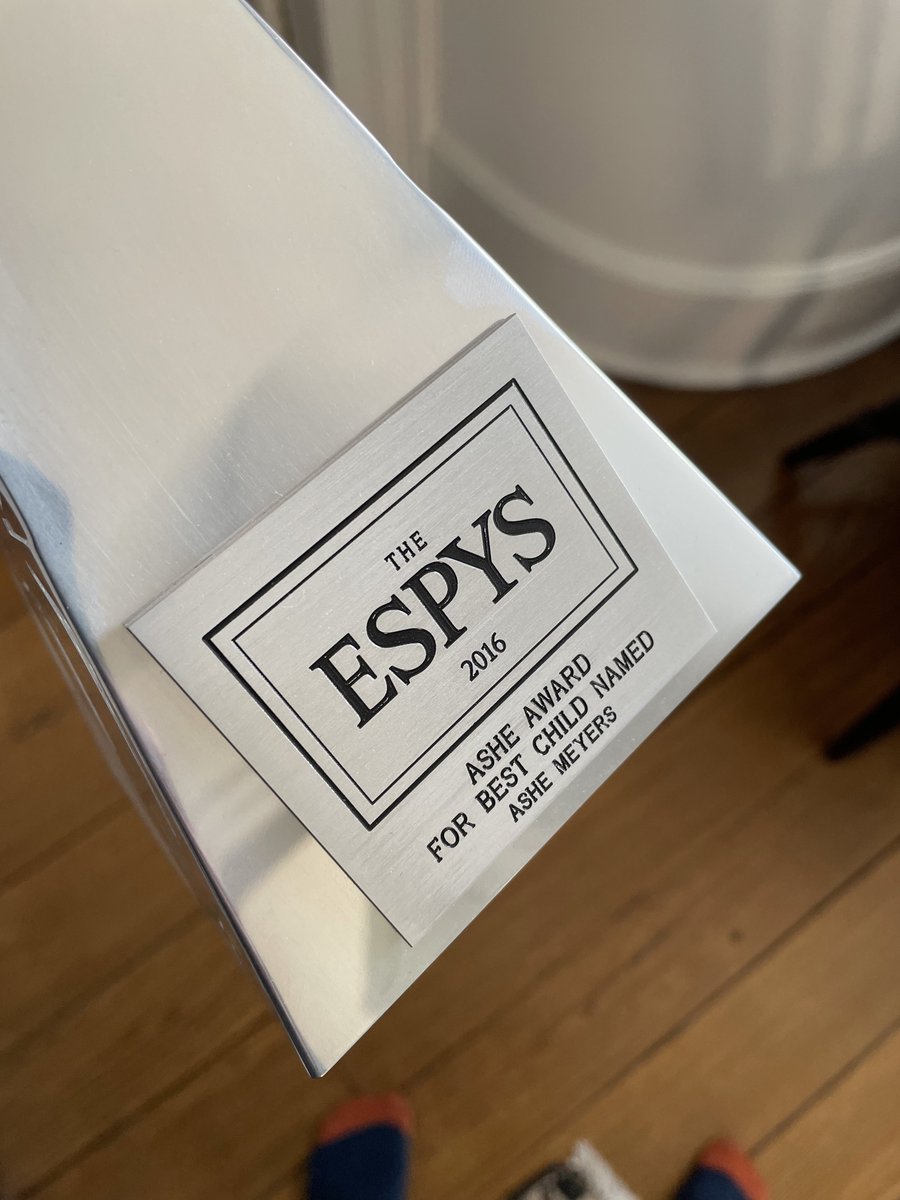
One of the highlights of the ESPYs is the Arthur Ashe Courage Award. When my son Ashe was born Maura gifted him this fake ESPY for BEST CHILD NAMED ASHE. I am confident this is the only ESPY anyone related to me will ever win.
Exactly a decade ago today, Marshawn Lynch caused a Beast Quake.
— Field Yates (@FieldYates) January 8, 2021
One of the most memorable runs in NFL history. pic.twitter.com/VBb8Lc0yGW
In 2011, I was hosting the ESPYs. Marshawn’s run was nominated for Best Play, an award that was voted on by fans online. It was considered a front runner if not a lock.
Two days before the show, we're all watching the US/Brazil game in the Women’s World Cup. In the 122 minute Abby Wambach scored a header from a brilliant cross via Megan Rapinoe. I asked ESPN’s estimable producer, the late, great Maura Mandt if we could add it to the nominees.
The best thing about the ESPYs is, unlike other award shows that take themselves too seriously, there is a “fuck it, why not” attitude so Maura just made it happen. Maura was great at making things happen. Want another example?
One of the highlights of the ESPYs is the Arthur Ashe Courage Award. When my son Ashe was born Maura gifted him this fake ESPY for BEST CHILD NAMED ASHE. I am confident this is the only ESPY anyone related to me will ever win.



You May Also Like


1/x Fort Detrick History
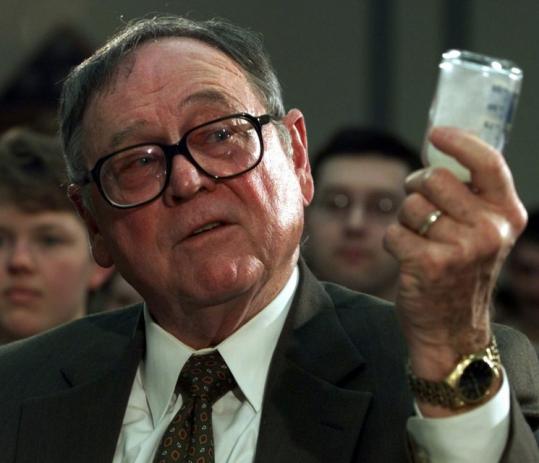
Mr. Patrick, one of the chief scientists at the Army Biological Warfare Laboratories at Fort Detrick in Frederick, Md., held five classified US patents for the process of weaponizing anthrax.
2/x
Under Mr. Patrick’s direction, scientists at Fort Detrick developed a tularemia agent that, if disseminated by airplane, could cause casualties & sickness over 1000s mi². In a 10,000 mi² range, it had 90% casualty rate & 50% fatality rate
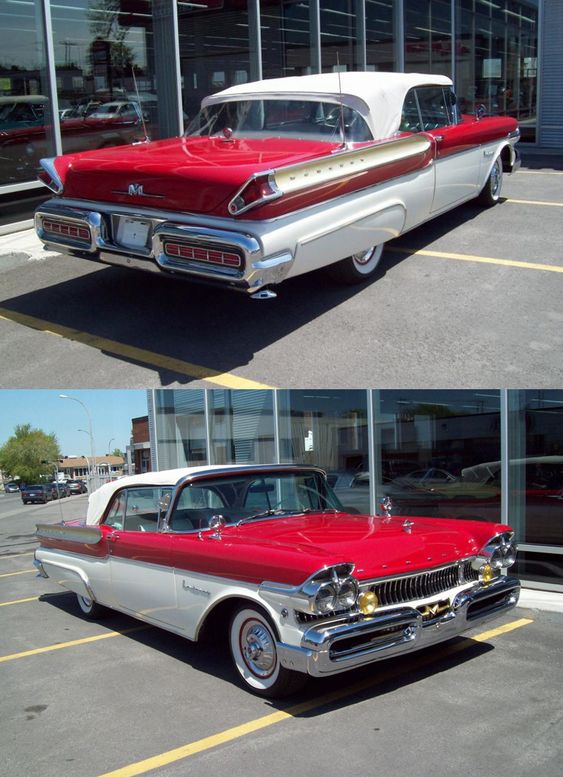
3/x His team explored Q fever, plague, & Venezuelan equine encephalitis, testing more than 20 anthrax strains to discern most lethal variety. Fort Detrick scientists used aerosol spray systems inside fountain pens, walking sticks, light bulbs, & even in 1953 Mercury exhaust pipes
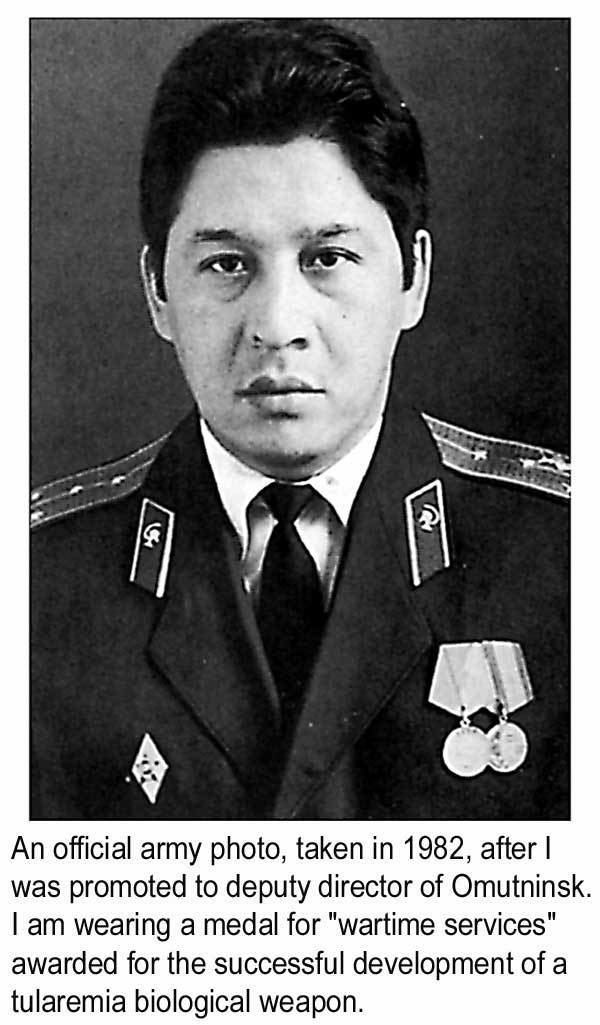
4/x After retiring in 1986, Mr. Patrick remained one of the world’s foremost specialists on biological warfare & was a consultant to the CIA, FBI, & US military. He debriefed Soviet defector Ken Alibek, the deputy chief of the Soviet biowarfare program
https://t.co/sHqSaTSqtB
5/x Back in Time
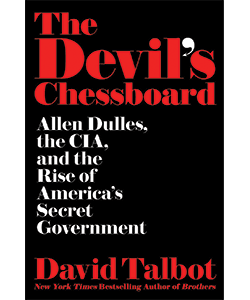
In 1949 the Army created a small team of chemists at "Camp Detrick" called Special Operations Division. Its assignment was to find military uses for toxic bacteria. The coercive use of toxins was a new field, which fascinated Allen Dulles, later head of the CIA
Mr. Patrick, one of the chief scientists at the Army Biological Warfare Laboratories at Fort Detrick in Frederick, Md., held five classified US patents for the process of weaponizing anthrax.
2/x
Under Mr. Patrick’s direction, scientists at Fort Detrick developed a tularemia agent that, if disseminated by airplane, could cause casualties & sickness over 1000s mi². In a 10,000 mi² range, it had 90% casualty rate & 50% fatality rate
3/x His team explored Q fever, plague, & Venezuelan equine encephalitis, testing more than 20 anthrax strains to discern most lethal variety. Fort Detrick scientists used aerosol spray systems inside fountain pens, walking sticks, light bulbs, & even in 1953 Mercury exhaust pipes
4/x After retiring in 1986, Mr. Patrick remained one of the world’s foremost specialists on biological warfare & was a consultant to the CIA, FBI, & US military. He debriefed Soviet defector Ken Alibek, the deputy chief of the Soviet biowarfare program
https://t.co/sHqSaTSqtB
5/x Back in Time
In 1949 the Army created a small team of chemists at "Camp Detrick" called Special Operations Division. Its assignment was to find military uses for toxic bacteria. The coercive use of toxins was a new field, which fascinated Allen Dulles, later head of the CIA