
The Great Software Stagnation is real, but we have to understand it to fight it. The CAUSE of the TGSS is not "teh interwebs". The cause is the "direct manipulation" paradigm : the "worst idea in computer science" \1
The Great Software\xa0Stagnation https://t.co/A6peSPERaU
— Jonathan Edwards (@jonathoda) January 1, 2021
More from Software





forgive my indulgence but 2020's been a big year for @shmuplations, so here's a look back at everything that went up over the last twelve months—there's a lot of stuff I'm sure you all read & other things you'd be forgiven for missing, so let's recap (thread)
the year kicked off with shmuplations' first big video project: a subtitled translation of a 2016 NHK documentary on the 30th anniversary of Dragon Quest which features interviews with Yuji Horii, Koichi Nakamura, Akira Toriyama, and Koichi Sugiyama https://t.co/JCWA15RTlx

following DQ30 was one of the most popular articles of the year: an assortment of interviews with composers Yuzo Koshiro and Motohiro Kawashima concerning the music of Streets of Rage 1, 2 & 3 https://t.co/QUtyC9W12Z their comments on SoR3 in particular were full of gems

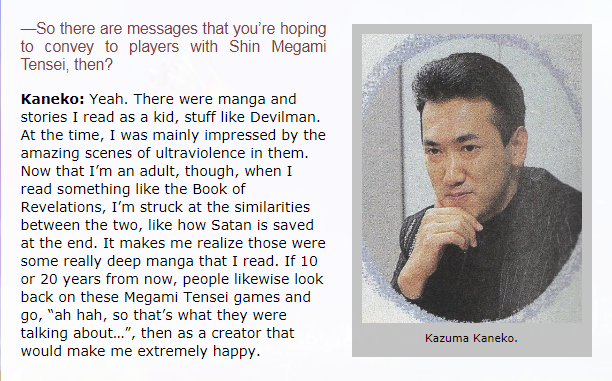
Game Designers: The Next Generation profiled six potential successors to the likes of Shigeru Miyamoto & Hironobu Sakaguchi, some of who you may recognise: Kazuma Kaneko, Takeshi Miyaji (1966-2011), Noboru Harada, Kan Naitou, Takashi Tokita & Ryoji Amano https://t.co/lWZU3PLvwX
from the 2010 Akumajou Dracula Best Music Collections Box, a subbed video feature on long-time Castlevania composer Michiru Yamane https://t.co/NMJe4ROozR sadly, Chiruru has since passed; Yamane wrote these albums in his honor
https://t.co/orlgPTDsKK
https://t.co/QnQl8KI9IX

the year kicked off with shmuplations' first big video project: a subtitled translation of a 2016 NHK documentary on the 30th anniversary of Dragon Quest which features interviews with Yuji Horii, Koichi Nakamura, Akira Toriyama, and Koichi Sugiyama https://t.co/JCWA15RTlx
following DQ30 was one of the most popular articles of the year: an assortment of interviews with composers Yuzo Koshiro and Motohiro Kawashima concerning the music of Streets of Rage 1, 2 & 3 https://t.co/QUtyC9W12Z their comments on SoR3 in particular were full of gems
Game Designers: The Next Generation profiled six potential successors to the likes of Shigeru Miyamoto & Hironobu Sakaguchi, some of who you may recognise: Kazuma Kaneko, Takeshi Miyaji (1966-2011), Noboru Harada, Kan Naitou, Takashi Tokita & Ryoji Amano https://t.co/lWZU3PLvwX
from the 2010 Akumajou Dracula Best Music Collections Box, a subbed video feature on long-time Castlevania composer Michiru Yamane https://t.co/NMJe4ROozR sadly, Chiruru has since passed; Yamane wrote these albums in his honor
https://t.co/orlgPTDsKK
https://t.co/QnQl8KI9IX





You May Also Like




Took me 5 years to get the best Chartink scanners for Stock Market, but you’ll get it in 5 mminutes here ⏰
Do Share the above tweet 👆
These are going to be very simple yet effective pure price action based scanners, no fancy indicators nothing - hope you liked it.
https://t.co/JU0MJIbpRV
52 Week High
One of the classic scanners very you will get strong stocks to Bet on.
https://t.co/V69th0jwBr
Hourly Breakout
This scanner will give you short term bet breakouts like hourly or 2Hr breakout
Volume shocker
Volume spurt in a stock with massive X times
Do Share the above tweet 👆
These are going to be very simple yet effective pure price action based scanners, no fancy indicators nothing - hope you liked it.
https://t.co/JU0MJIbpRV
52 Week High
One of the classic scanners very you will get strong stocks to Bet on.
https://t.co/V69th0jwBr
Hourly Breakout
This scanner will give you short term bet breakouts like hourly or 2Hr breakout
Volume shocker
Volume spurt in a stock with massive X times