At the outset, I want to make this clear. Declining to prosecute sex work DOES NOT mean we won’t vigorously pursue—& prosecute—human trafficking, pimping, those who engage in sexual/physical assault against sex workers, or those who try to purchase sex from minors.
We will. /2
Indeed, a key reason for today’s policy directive is that the criminalization of sex work *increases* violence & sexual assault—and makes it less likely to be reported.
If you fear that you’d face prosecution if you report an assault to police, you’re less likely to do so. /3
We’re making this policy very public because I want sex workers to know: Please. Report violence. Report sexual assault. Report human trafficking.
We will go after those who engage in those activities. We won’t prosecute you. /4
But there are other reasons for today’s policy directive. First, as a fundamental matter, I do not believe it is appropriate for people to be prosecuted because of what they do with their own bodies.
At bottom, that’s what the criminalization of sex work does. /5
Second, as noted, the criminalization of sex work—as with other prohibitionist policies—increases violence & coercion.
We see this repeatedly (as with drugs & alcohol). Criminalization creates black markets. Black markets encourage violence. Violence leads to victims. Enough. /6
Third, we're protecting public health. When sex workers fear prosecution, they lack leverage to insist on condoms. That’s why a series of papers in one of the world’s leading medical journals concluded that decriminalization is *the* single best thing to do to stop HIV spread. /7
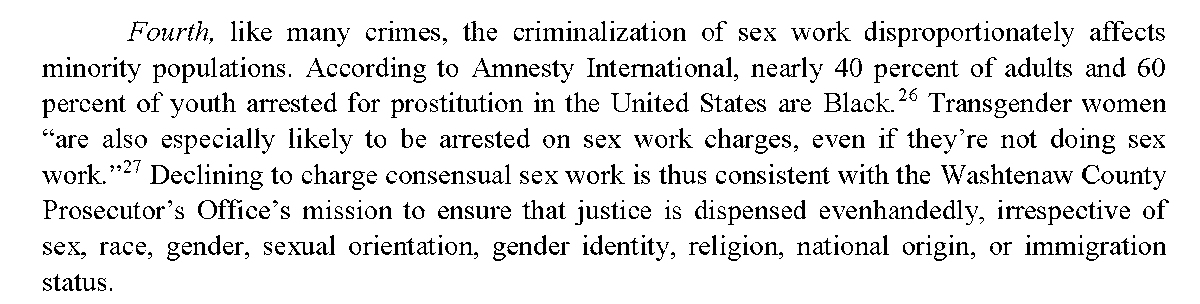
Fourth: we need to look at equities. The people charged with prostitution in America are predominantly Black. Transgender people are also particularly likely to be arrested and charged—even if they’re not actually engaged in sex work. That’s unacceptable. /8
Finally: without stigmatizing the choice to engage in sex work, the truth is that many people would prefer to leave the industry, and to do something else.
Criminalization gives sex workers a criminal record, which can make it difficult to find non-sex work employment. /9
Perversely, then, laws which seek to *discourage* people from sex work often end up *trapping* them in sex work.
To paraphrase words most famously associated with the late Justice Ginsburg, these “paternalistic” laws place sex workers “not on a pedestal, but in a cage.” /10
The truth of the matter is, criminalization of sex work has not discouraged people from engaging in it. It’s called “the world’s oldest profession” for a reason.
And sex work is legal, to some extent, in around 100 countries across the globe. /11
It’s past time to stop criminalizing the choices people make with their bodies—and time to start focusing on public health, public safety, and fighting the scourge of trafficking and child exploitation.
That’s what we’re doing today. /12
As always, we didn’t create this policy on our own. I’m grateful for the many subject-matter experts & community members who provided guidance and counsel on this policy.
We’re building a safer, healthier, and more equitable Washtenaw, together. /fin