https://t.co/Po8mcrENnz
I've been trying to think that through - not just legally, but judicially.
The more thinking I do the less serious - and more ludicrous - the entire thing looks. And the more obvious it becomes that this is the proposal of deeply unwell individuals who are not thinking clearly.
Can you game out where it would go it theoretically Trump did enact some EO demanding the impounding of voting machines? As that\u2019s clearly the game. Like he signs it, then what? Do marshals listen or refuse? Do states sue and get an emergency injunction and that\u2019s the end?
— Bryan Duva (@duva60) December 21, 2020
https://t.co/Po8mcrENnz
That's the easy part. Now for the nuttier side - the logistics.
1: Who? Who does the seizing. Where do the needed people come from? This is not a small undertaking. Even if we're just talking Dominion, that's tens of thousands of machines spread out over hundreds of jurisdictions.
Where are they going to put everything, for starters. You're talking about warehouses worth of electronics, all of which needs to be stored carefully and safely. Where are they going to do - whatever it is they're going to do?
6a: How are they going to pay for this? From what money?
6b: How are they actually going to figure out the answers to the other 5 questions when they're running with Lin, Sidney, MyPillow and Overstock - when this is too nuts for even Rudy?
1: Make Sidney Powell a special counsel.
2: ????
3: Trump stays President.
More from Mike Dunford

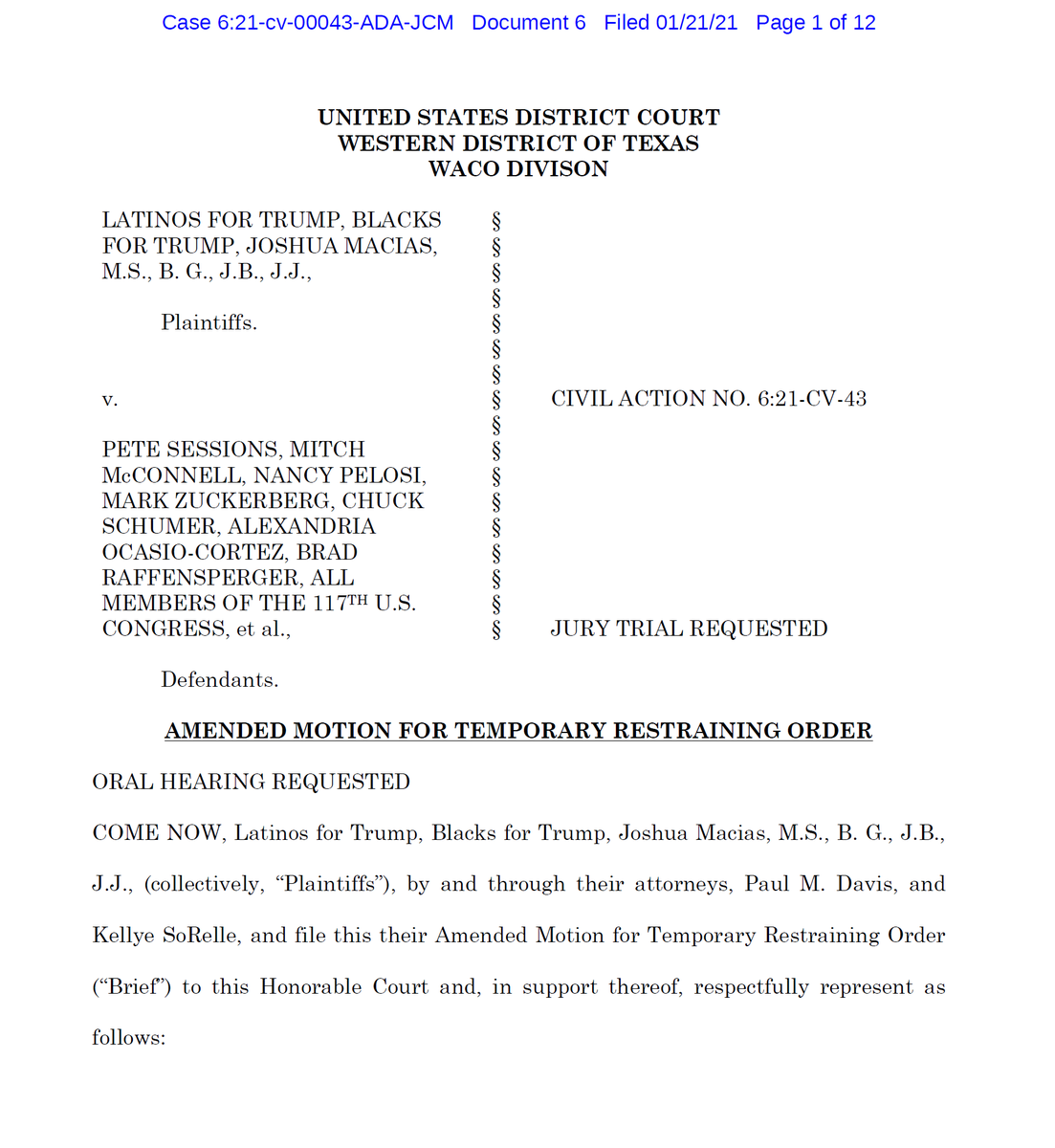
OK. The Teams meeting that I unsuccessfully evaded (and which was actually a lot of fun and I'm really genuinely happy I was reminded to attend) is over, so let's take another swing at looking at the latest filings from in re Gondor.
As far as I can tell from the docket, this is the FOURTH attempt in a week to get a TRO; the question the judge will ask if they ever figure out how to get the judge's attention will be "couldn't you have served by now;" and this whole thing is a
The memorandum in support of this one is 9 pages, and should go pretty quick.
But they still haven't figured out widow/orphan issues.
https://t.co/l7EDatDudy

It appears that the opening of this particular filing is going to proceed on the theme of "we are big mad at @SollenbergerRC" which is totally something relevant when you are asking a District Court to temporarily annihilate the US Government on an ex parte basis.

Also, if they didn't want their case to be known as "in re Gondor" they really shouldn't have gone with the (non-literary) "Gondor has no king" quote.

Oh myyyyyyyyyy
— Mike Dunford (@questauthority) January 25, 2021
Good morning, followers of frivolous election-related litigation - new filings in Seditionists v 117th Congress et al. (aka in re Gondor)
I've really got to get stuff done, but there's time for a really quick overview.
As far as I can tell from the docket, this is the FOURTH attempt in a week to get a TRO; the question the judge will ask if they ever figure out how to get the judge's attention will be "couldn't you have served by now;" and this whole thing is a
The memorandum in support of this one is 9 pages, and should go pretty quick.
But they still haven't figured out widow/orphan issues.
https://t.co/l7EDatDudy
It appears that the opening of this particular filing is going to proceed on the theme of "we are big mad at @SollenbergerRC" which is totally something relevant when you are asking a District Court to temporarily annihilate the US Government on an ex parte basis.
Also, if they didn't want their case to be known as "in re Gondor" they really shouldn't have gone with the (non-literary) "Gondor has no king" quote.
More from Society

So, as the #MegaMillions jackpot reaches a record $1.6B and #Powerball reaches $620M, here's my advice about how to spend the money in a way that will truly set you, your children and their kids up for life.
Ready?
Create a private foundation and give it all away. 1/
Let's stipulate first that lottery winners often have a hard time. Being publicly identified makes you a target for "friends" and "family" who want your money, as well as for non-family grifters and con men. 2/
The stress can be damaging, even deadly, and Uncle Sam takes his huge cut. Plus, having a big pool of disposable income can be irresistible to people not accustomed to managing wealth. https://t.co/fiHsuJyZwz 3/
Meanwhile, the private foundation is as close as we come to Downton Abbey and the landed aristocracy in this country. It's a largely untaxed pot of money that grows significantly over time, and those who control them tend to entrench their own privileges and those of their kin. 4
Here's how it works for a big lotto winner:
1. Win the prize.
2. Announce that you are donating it to the YOUR NAME HERE Family Foundation.
3. Receive massive plaudits in the press. You will be a folk hero for this decision.
4. Appoint only trusted friends/family to board. 5/
Ready?
Create a private foundation and give it all away. 1/
Let's stipulate first that lottery winners often have a hard time. Being publicly identified makes you a target for "friends" and "family" who want your money, as well as for non-family grifters and con men. 2/
The stress can be damaging, even deadly, and Uncle Sam takes his huge cut. Plus, having a big pool of disposable income can be irresistible to people not accustomed to managing wealth. https://t.co/fiHsuJyZwz 3/
Meanwhile, the private foundation is as close as we come to Downton Abbey and the landed aristocracy in this country. It's a largely untaxed pot of money that grows significantly over time, and those who control them tend to entrench their own privileges and those of their kin. 4
Here's how it works for a big lotto winner:
1. Win the prize.
2. Announce that you are donating it to the YOUR NAME HERE Family Foundation.
3. Receive massive plaudits in the press. You will be a folk hero for this decision.
4. Appoint only trusted friends/family to board. 5/