When I was 25, I worked as a legislative assistant in the Missouri General Assembly.

It was a dream job, honestly.

But that dream dissipated the day the #MoLeg decided to name Rush Limbaugh as an “honorable Missourian” and place his bust in the “Hall of Famous Missourians.”

1/

The Hall of Famous Missourians sits in the Missouri State Capitol.

There are busts of Mark Twain, Dred Scott, Josephine Baker, Harry Truman and other legends of history.

The day I learned Rush Limbaugh would join their ranks, I thought it was a joke.

2/
We received phone calls from constituents appalled that Missouri would honor a man who had become infamous that year for calling a college student a “slut.”

And who just that week had continued spreading the racist birtherism lie about our then-President, Barack Obama.

3/
What I learned that day is that it wasn’t *despite* his racism, but because of it that he received this award.

It’s because he created a universe where it was permissible to lynch with language America’s first black President.

4/
Several State Representatives and their staffers intended to protest the vote and the selection.

By the time we made it to the doors of the House Floor, we weren’t allowed in. It was Republicans only. The doors were locked and secured by the Highway Patrol.

5/
There had been contentious fights before. Debates over important issues happened frequently.

It was highly unusual.

We learned later—it was an “invitation only” event. And despite being elected officials, Democratic State Reps didn’t make the cut.

6/
In fact, part of the reason for the mobilization by staff was that constituents couldn’t be here—and that’s because the entire event was kept under wraps until about an hour before it happened.

They intended to give Rush Limbaugh this great honor in darkness.

7/
Later—because I was not willing to fight the armed guard at the door—I learned that Limbaugh said this:

"They literally are deranged, our friends, so-called friends on the other side of the aisle, are deranged...” in response to the vehement protest against him that day.

8/
The Missouri Republicans forced him on us, against our will, without our knowledge or consent.

And they giggled while they did it. Proud of their superiority. Proud of the force they could exert.

That’s what I remember about Rush Limbaugh.

He empowered + encouraged hate.

9/9

More from Lindsey Simmons

Dear Senator Hawley's Staff--

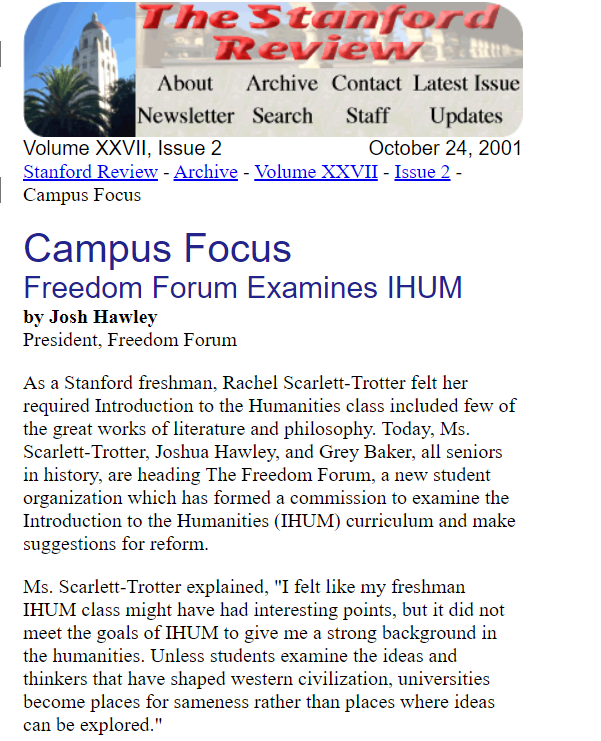
I'm sure you're loyal to your boss, but this man incited violence and you helped him. There is no "following orders" defense that will save you. You are part of this now.

And it is so much more serious than him simply "raising concerns."

🧵


Prior to November 3rd, Joshua had nothing to say about Pennsylvania's vote by mail legislation.

2/


In fact, Joshua didn't have squat to say about election integrity either.

3/


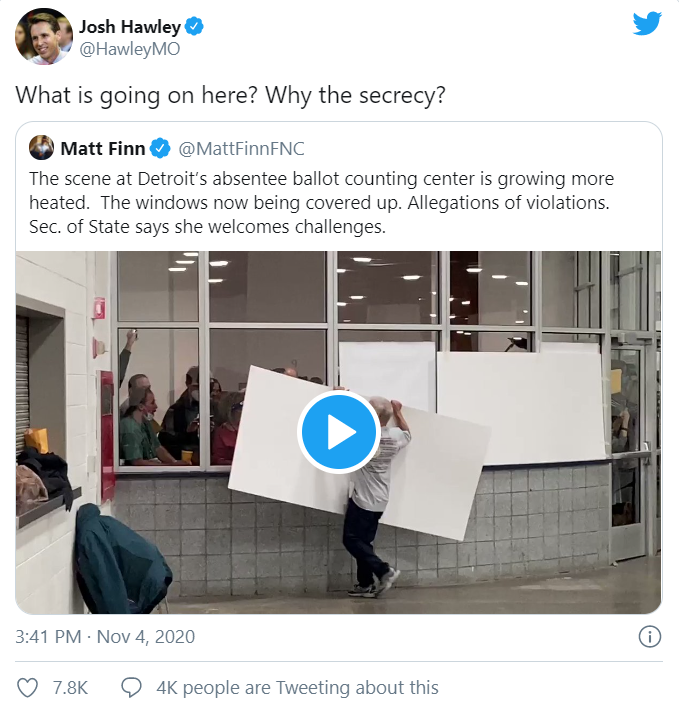
By November 4th, when it was apparent that Trump would likely lose the election, Joshua--as a sitting US Senator--started tweeting out that Michigan was hiding secrets from the public.

Sowing doubt. Fanning the flames.

4/


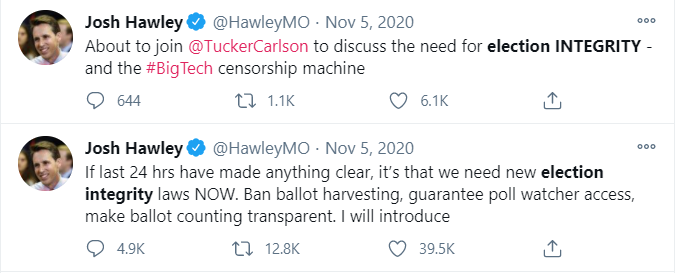
So Joshua started this fake call for election integrity--a call he'd never made before.

At first he threw the whole kitchen sink out there--BigTech, ballot harvesting, poll watchers, counting, etc.

Sowing doubt. Fanning the flames.

5/

More from Society

You May Also Like

This is NONSENSE. The people who take photos with their books on instagram are known to be voracious readers who graciously take time to review books and recommend them to their followers. Part of their medium is to take elaborate, beautiful photos of books. Die mad, Guardian.


THEY DO READ THEM, YOU JUDGY, RACOON-PICKED TRASH BIN


If you come for Bookstagram, i will fight you.

In appreciation, here are some of my favourite bookstagrams of my books: (photos by lit_nerd37, mybookacademy, bookswrotemystory, and scorpio_books)
I’m torn on how to approach the idea of luck. I’m the first to admit that I am one of the luckiest people on the planet. To be born into a prosperous American family in 1960 with smart parents is to start life on third base. The odds against my very existence are astronomical.


I’ve always felt that the luckiest people I know had a talent for recognizing circumstances, not of their own making, that were conducive to a favorable outcome and their ability to quickly take advantage of them.

In other words, dumb luck was just that, it required no awareness on the person’s part, whereas “smart” luck involved awareness followed by action before the circumstances changed.

So, was I “lucky” to be born when I was—nothing I had any control over—and that I came of age just as huge databases and computers were advancing to the point where I could use those tools to write “What Works on Wall Street?” Absolutely.

Was I lucky to start my stock market investments near the peak of interest rates which allowed me to spend the majority of my adult life in a falling rate environment? Yup.
I just finished Eric Adler's The Battle of the Classics, and wanted to say something about Joel Christiansen's review linked below. I am not sure what motivates the review (I speculate a bit below), but it gives a very misleading impression of the book. 1/x


The meat of the criticism is that the history Adler gives is insufficiently critical. Adler describes a few figures who had a great influence on how the modern US university was formed. It's certainly critical: it focuses on the social Darwinism of these figures. 2/x

Other insinuations and suggestions in the review seem wildly off the mark, distorted, or inappropriate-- for example, that the book is clickbaity (it is scholarly) or conservative (hardly) or connected to the events at the Capitol (give me a break). 3/x

The core question: in what sense is classics inherently racist? Classics is old. On Adler's account, it begins in ancient Rome and is revived in the Renaissance. Slavery (Christiansen's primary concern) is also very old. Let's say classics is an education for slaveowners. 4/x

It's worth remembering that literacy itself is elite throughout most of this history. Literacy is, then, also the education of slaveowners. We can honor oral and musical traditions without denying that literacy is, generally, good. 5/x