
THREAD: Understanding pivot. Growing pressure from world population life-style will reach a point where it is damaging the capacity of Earth systems to an extent where life support will be challenged. It is simply a question of at what stage governments act. 1/X


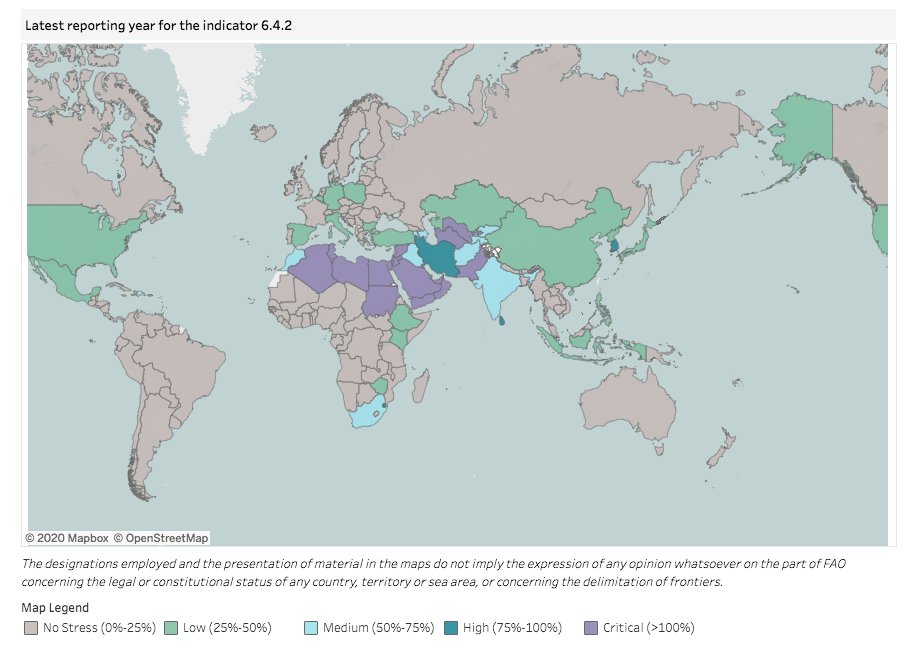
-which societal services and Earth systems are involved?
-how well is the societal system performing now?
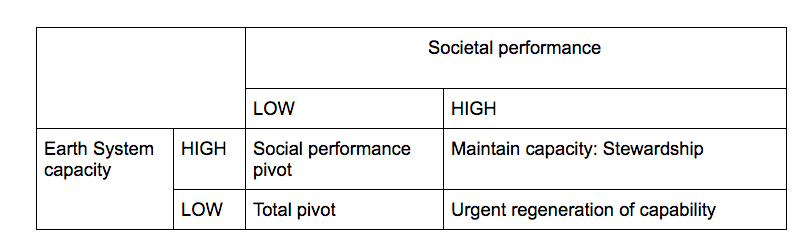
-what drawdown stage has been reached? For example: 4/x
-Stewardship of current societal and Earth systems
- Increase societal performance whilst stewarding systems
- regenerate Earth system whilst ensuring society system continues to perform
- Full pivot 7/x

More from Science





You May Also Like




Following @BAUDEGS I have experienced hateful and propagandist tweets time after time. I have been shocked that an academic community would be so reckless with their publications. So I did some research.
The question is:
Is this an official account for Bahcesehir Uni (Bau)?

Bahcesehir Uni, BAU has an official website https://t.co/ztzX6uj34V which links to their social media, leading to their Twitter account @Bahcesehir
BAU’s official Twitter account

BAU has many departments, which all have separate accounts. Nowhere among them did I find @BAUDEGS
@BAUOrganization @ApplyBAU @adayBAU @BAUAlumniCenter @bahcesehirfbe @baufens @CyprusBau @bauiisbf @bauglobal @bahcesehirebe @BAUintBatumi @BAUiletisim @BAUSaglik @bauebf @TIPBAU
Nowhere among them was @BAUDEGS to find

The question is:
Is this an official account for Bahcesehir Uni (Bau)?
Bahcesehir Uni, BAU has an official website https://t.co/ztzX6uj34V which links to their social media, leading to their Twitter account @Bahcesehir
BAU’s official Twitter account
BAU has many departments, which all have separate accounts. Nowhere among them did I find @BAUDEGS
@BAUOrganization @ApplyBAU @adayBAU @BAUAlumniCenter @bahcesehirfbe @baufens @CyprusBau @bauiisbf @bauglobal @bahcesehirebe @BAUintBatumi @BAUiletisim @BAUSaglik @bauebf @TIPBAU
Nowhere among them was @BAUDEGS to find


