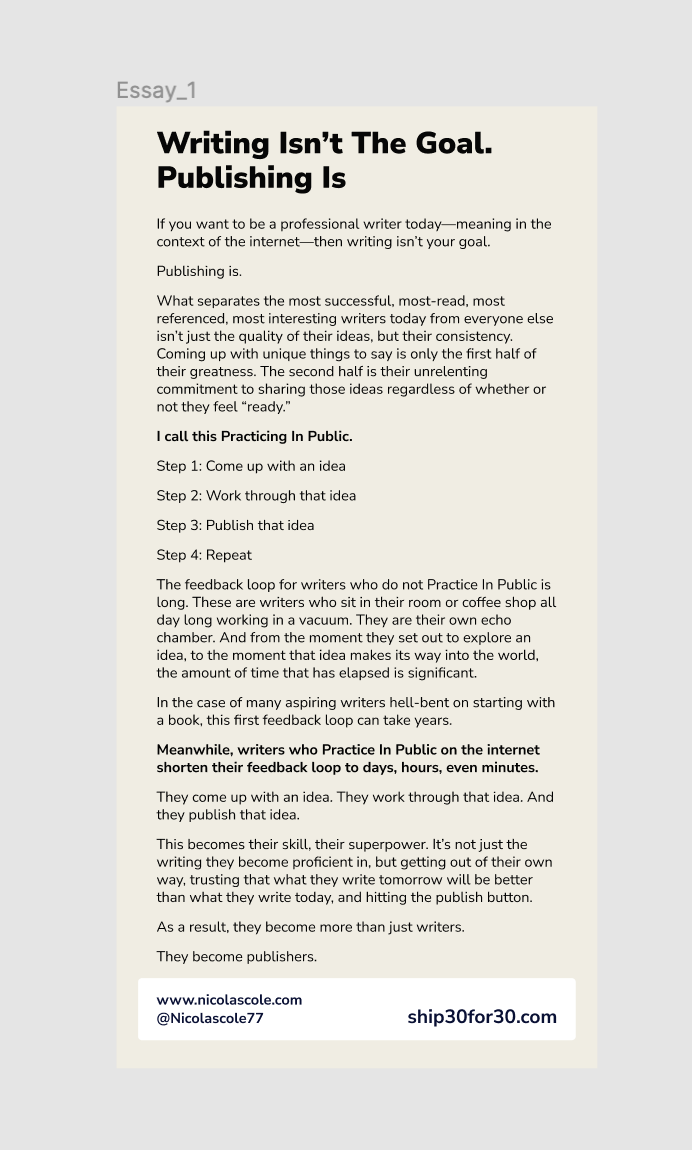
MICROBIOME AERODYNAMICS & SEDIMENTATION RATES are studied & known. Who would have guessed that studies would uncover cloud formation & precipitation phenomenon as function of bacteria ubiquity & size.
Falling bacterial communities from the atmosphere | Environmental Microbiome | Full Text https://t.co/sXCeAJ7Ba7
— Laurence Badgley (@BadgleyLaurence) December 11, 2020
More from Laurence Badgley
A video for people to test for hypermobility.
An experience I have with patients who have stigmata of hypermobility is that I will comment on their widespread joint Hypermobility & their rejoinder commonly is, “of course I do Yoga”.
When patients tell me that my heart sinks. I was excited to tell them that I think that I have an explanation for several of their seemingly disparate symptoms in several of the dysautonomia & MCAS spheres.
Instead, disheartening disappointment takes over as I realize that their yoga devotion has now forestalled my ability to teach them about hypermobility & many attendant dysfunctions they suffer.
When I examine women with hypermobility I sometimes say, “you would be great in yoga”. Often they tell me, “well, that is why I can bend like this, it is because I take yoga”.
the prevalence of dancers, gymnasts, and cheerleading is extremely high in the EDS community. :) I was, too. Here's a video, if you're interested, to test yourself with the Beighton scale: https://t.co/Klrh05MKM7
— Christine Clifton (@NoShoutStandOut) November 29, 2020
An experience I have with patients who have stigmata of hypermobility is that I will comment on their widespread joint Hypermobility & their rejoinder commonly is, “of course I do Yoga”.
When patients tell me that my heart sinks. I was excited to tell them that I think that I have an explanation for several of their seemingly disparate symptoms in several of the dysautonomia & MCAS spheres.
Instead, disheartening disappointment takes over as I realize that their yoga devotion has now forestalled my ability to teach them about hypermobility & many attendant dysfunctions they suffer.
When I examine women with hypermobility I sometimes say, “you would be great in yoga”. Often they tell me, “well, that is why I can bend like this, it is because I take yoga”.
The exercise program is only for persons with less severe forms of Hypermobility (those who are still physically active) & who have not advanced to Fibromyalgia/ wasting disorders (who should begin an exercise only in warm water & until they are ready for walking on land).
My theory how persons with Fibromyalgia, wasting diseases & severe fatigue should exercise is that they should start with very gentle activities whereat gravity is negated & then through gradations of activities whereby exposure to gravity is gradually increased.
The first phase of exercise for persons with Fibromyalgia & wasting diseases should be similar to what was done with polio in the 1900’s: Warm water relaxes spastic muscles & enables joint range of motion exercises with gravity relatively negated.
During warm water physical therapy, efforts include specific exercises to strengthen muscles supporting a body tower able to stand on land; the goal. Trapezium, Serratus ant., Rhomboids, Rectus abd., Transversus, para-lumbars, Glutes, & all leg muscles must be strengthened.
Once standing on land has been achieved, then moving on land is the next goal. Moving would include crawling & walking. During this phase, people might need extra support of a sacroiliac joint belt &/or perhaps even knee supporters in the beginning. Walking sticks might help.
Seems like very drastic measures for a very unproven theory.. \U0001f928 Not to mention a lot of this advice would be unsafe or lead to further issues for those with #EhlersDanlos or Hypermobility https://t.co/s88MHnnrRx
— Cortney Gensemer \U0001f52c\U0001f9ec (@CortDoesScience) December 28, 2020
My theory how persons with Fibromyalgia, wasting diseases & severe fatigue should exercise is that they should start with very gentle activities whereat gravity is negated & then through gradations of activities whereby exposure to gravity is gradually increased.
The first phase of exercise for persons with Fibromyalgia & wasting diseases should be similar to what was done with polio in the 1900’s: Warm water relaxes spastic muscles & enables joint range of motion exercises with gravity relatively negated.
During warm water physical therapy, efforts include specific exercises to strengthen muscles supporting a body tower able to stand on land; the goal. Trapezium, Serratus ant., Rhomboids, Rectus abd., Transversus, para-lumbars, Glutes, & all leg muscles must be strengthened.
Once standing on land has been achieved, then moving on land is the next goal. Moving would include crawling & walking. During this phase, people might need extra support of a sacroiliac joint belt &/or perhaps even knee supporters in the beginning. Walking sticks might help.
BOTOX FOR MIGRAINES: Key to success is depositing the Botox in the best tissue: mid-body & occipital insertion site of the most spastic Superior trapezius muscle; chronic spasm of which induces chronic muscle tension headaches and reflexive Migraine.
Way to discern spastic unilateral Superior trapezius muscle: look in mirror, view your auto driver license photo, & to pinch leading edge of each Superior trapezius to determine which leading edge is painful to pressure & also thicker; from supporting a chronically tilted head.
Looking in the mirror enables the person to view which shoulder is lower. The head usually tilts toward the lower shoulder side; causing Superior trapezius muscle on the higher shoulder side to be spastic from chronically supporting a tilted head (weighs about 10#).
The drivers license photo often confirms which shoulder is lower and provides clue as to which direction the head usually & chronically tilts. Some people pick a posed posture & straighten up when they pose for a photo. Therefore, other and more candid photos might be examined.
Often, especially in hyper-mobile women, the spine is curved with a functional scoliosis (straightens when reclined), and this is explanation for the asymmetric shoulders and tilted head.
Have you tried Botox for Migraine? Did it help? https://t.co/a29gDd65mT
— Migraine Again (@MigraineAgain) December 30, 2020
Way to discern spastic unilateral Superior trapezius muscle: look in mirror, view your auto driver license photo, & to pinch leading edge of each Superior trapezius to determine which leading edge is painful to pressure & also thicker; from supporting a chronically tilted head.
Looking in the mirror enables the person to view which shoulder is lower. The head usually tilts toward the lower shoulder side; causing Superior trapezius muscle on the higher shoulder side to be spastic from chronically supporting a tilted head (weighs about 10#).
The drivers license photo often confirms which shoulder is lower and provides clue as to which direction the head usually & chronically tilts. Some people pick a posed posture & straighten up when they pose for a photo. Therefore, other and more candid photos might be examined.
Often, especially in hyper-mobile women, the spine is curved with a functional scoliosis (straightens when reclined), and this is explanation for the asymmetric shoulders and tilted head.
HYPERMOBILE YES! These are exact postures chosen by hypermobile patients with unilateral sacroiliac joint disorder & low back pain on that side. One leg bolsters the other so as to hold up the hemi-pelvis on side the SIJ is subluxing; because it hurts to sit on that buttock.
Another posture that attends unilateral sacroiliac joint disorder in hypermobile people is the Trendelenberg posture. This is to sit flexed forward with elbows on both knees. When brought to their attention, many are apologetic, “I know I shouldn’t slouch”.
The Trendelenberg posture is in fact the wisdom of the body finding the most comfortable position; in this seated bent over position the femurs leverage each sacroiliac joint into an anatomical neutral station; so joint ligaments are not stretched.
Standing posture liked in low back pain due to unilateral sacroiliac joint (SIJ) disorder: keep same-side leg straight & slightly flex knee on stable SIJ side; posture that lowers normal hemi-pelvis down & horizontal with loose sagging side. Body likes horizontal pelvis platform
People with sacroiliac joint (SIJ) disorder sleep restlessly like “rotisserie chicken”, but favored sleeping posture is on the non-subluxing-SIJ side; whereby injured loose SIJ floats upward; better if subluxing-SIJ-side leg is thrown up & over husband, dog, or large body pillow.
You might also be hypermobile, just sayin'... \U0001f609
— Oh TWIST! (@H2OhTwist) December 8, 2020
Another posture that attends unilateral sacroiliac joint disorder in hypermobile people is the Trendelenberg posture. This is to sit flexed forward with elbows on both knees. When brought to their attention, many are apologetic, “I know I shouldn’t slouch”.
The Trendelenberg posture is in fact the wisdom of the body finding the most comfortable position; in this seated bent over position the femurs leverage each sacroiliac joint into an anatomical neutral station; so joint ligaments are not stretched.
Standing posture liked in low back pain due to unilateral sacroiliac joint (SIJ) disorder: keep same-side leg straight & slightly flex knee on stable SIJ side; posture that lowers normal hemi-pelvis down & horizontal with loose sagging side. Body likes horizontal pelvis platform
People with sacroiliac joint (SIJ) disorder sleep restlessly like “rotisserie chicken”, but favored sleeping posture is on the non-subluxing-SIJ side; whereby injured loose SIJ floats upward; better if subluxing-SIJ-side leg is thrown up & over husband, dog, or large body pillow.
More from Science







You May Also Like


So it's now October 10, 2018 and....Rod Rosenstein is STILL not fired.
He's STILL in charge of the Mueller investigation.
He's STILL refusing to hand over the McCabe memos.
He's STILL holding up the declassification of the #SpyGate documents & their release to the public.
I love a good cover story.......
The guy had a face-to-face with El Grande Trumpo himself on Air Force One just 2 days ago. Inside just about the most secure SCIF in the world.
And Trump came out of AF1 and gave ol' Rod a big thumbs up!
And so we're right back to 'that dirty rat Rosenstein!' 2 days later.
At this point it's clear some members of Congress are either in on this and helping the cover story or they haven't got a clue and are out in the cold.
Note the conflicting stories about 'Rosenstein cancelled meeting with Congress on Oct 11!"
First, rumors surfaced of a scheduled meeting on Oct. 11 between Rosenstein & members of Congress, and Rosenstein just cancelled it.
He's STILL in charge of the Mueller investigation.
He's STILL refusing to hand over the McCabe memos.
He's STILL holding up the declassification of the #SpyGate documents & their release to the public.
I love a good cover story.......
The guy had a face-to-face with El Grande Trumpo himself on Air Force One just 2 days ago. Inside just about the most secure SCIF in the world.
And Trump came out of AF1 and gave ol' Rod a big thumbs up!
And so we're right back to 'that dirty rat Rosenstein!' 2 days later.
At this point it's clear some members of Congress are either in on this and helping the cover story or they haven't got a clue and are out in the cold.
Note the conflicting stories about 'Rosenstein cancelled meeting with Congress on Oct 11!"
First, rumors surfaced of a scheduled meeting on Oct. 11 between Rosenstein & members of Congress, and Rosenstein just cancelled it.
Rep. Andy Biggs and Rep. Matt Gaetz say DAG Rod Rosenstein cancelled an Oct. 11 appearance before the judiciary and oversight committees. They are now calling for a subpoena. pic.twitter.com/TknVHKjXtd
— Ivan Pentchoukov \U0001f1fa\U0001f1f8 (@IvanPentchoukov) October 10, 2018

The entire discussion around Facebook’s disclosures of what happened in 2016 is very frustrating. No exec stopped any investigations, but there were a lot of heated discussions about what to publish and when.
In the spring and summer of 2016, as reported by the Times, activity we traced to GRU was reported to the FBI. This was the standard model of interaction companies used for nation-state attacks against likely US targeted.
In the Spring of 2017, after a deep dive into the Fake News phenomena, the security team wanted to publish an update that covered what we had learned. At this point, we didn’t have any advertising content or the big IRA cluster, but we did know about the GRU model.
This report when through dozens of edits as different equities were represented. I did not have any meetings with Sheryl on the paper, but I can’t speak to whether she was in the loop with my higher-ups.
In the end, the difficult question of attribution was settled by us pointing to the DNI report instead of saying Russia or GRU directly. In my pre-briefs with members of Congress, I made it clear that we believed this action was GRU.
The story doesn\u2019t say you were told not to... it says you did so without approval and they tried to obfuscate what you found. Is that true?
— Sarah Frier (@sarahfrier) November 15, 2018
In the spring and summer of 2016, as reported by the Times, activity we traced to GRU was reported to the FBI. This was the standard model of interaction companies used for nation-state attacks against likely US targeted.
In the Spring of 2017, after a deep dive into the Fake News phenomena, the security team wanted to publish an update that covered what we had learned. At this point, we didn’t have any advertising content or the big IRA cluster, but we did know about the GRU model.
This report when through dozens of edits as different equities were represented. I did not have any meetings with Sheryl on the paper, but I can’t speak to whether she was in the loop with my higher-ups.
In the end, the difficult question of attribution was settled by us pointing to the DNI report instead of saying Russia or GRU directly. In my pre-briefs with members of Congress, I made it clear that we believed this action was GRU.