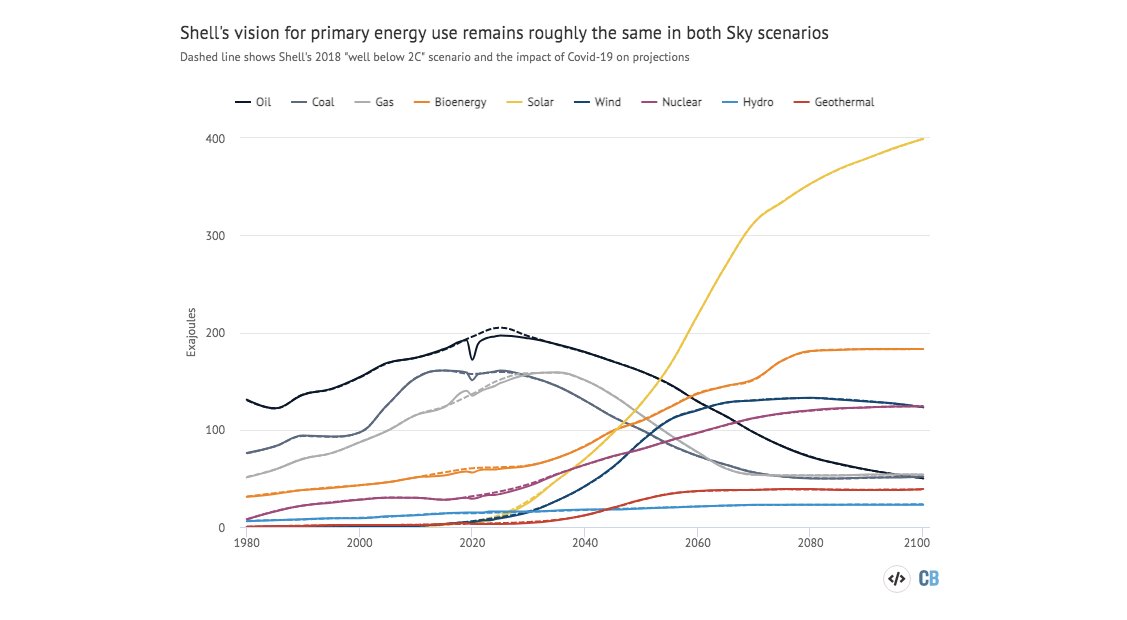
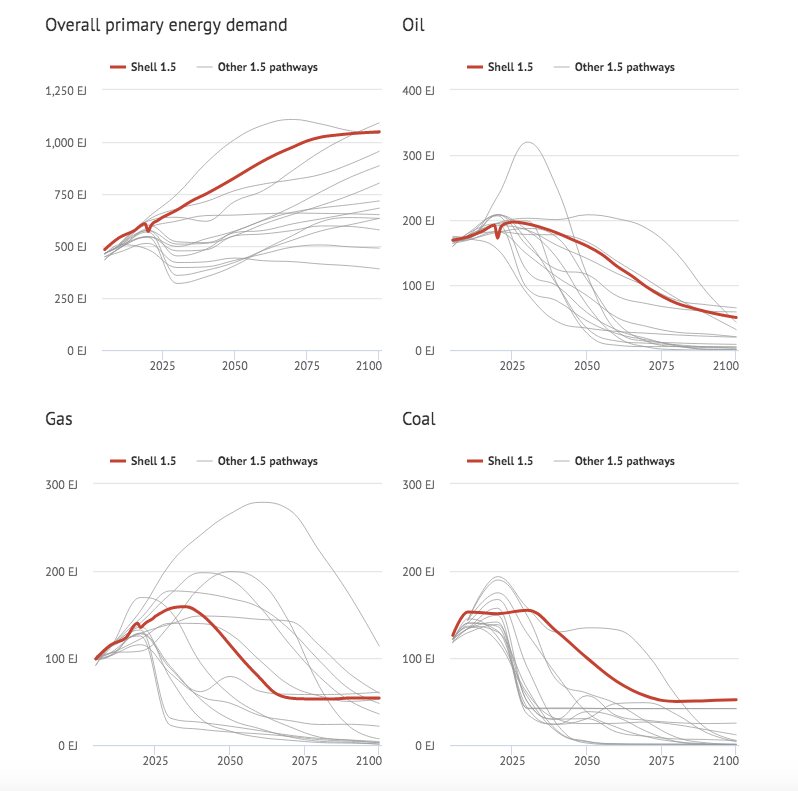
I took a look at Shell's first ever 1.5C scenario and found that it is... remarkably similar to its “well-below 2C” scenario.

Oil, gas, coal, solar.... all basically unchanged.

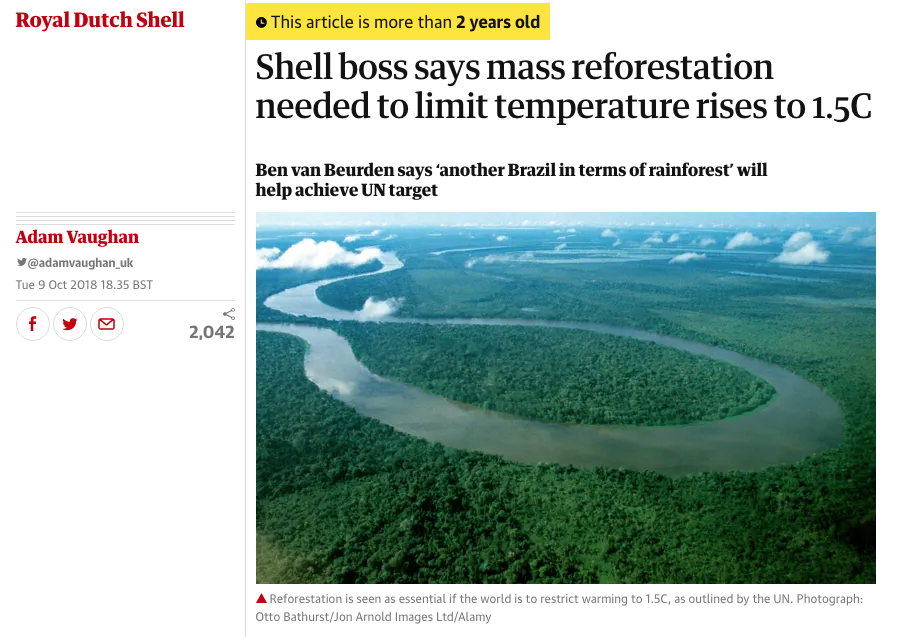
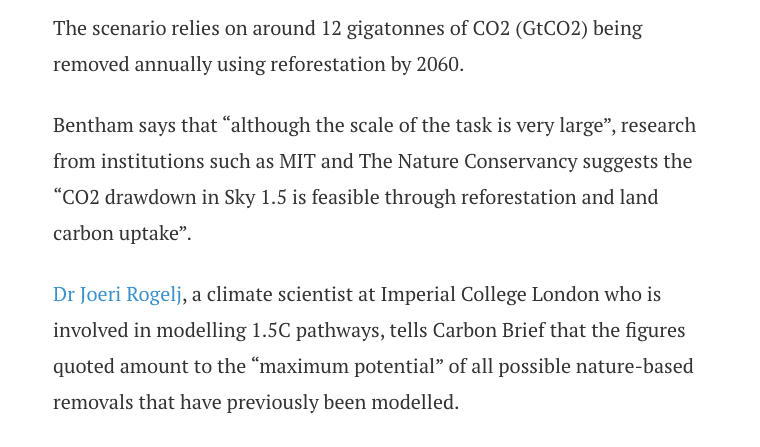
The key difference: A new forest the size of Brazil to suck up the extra CO2.

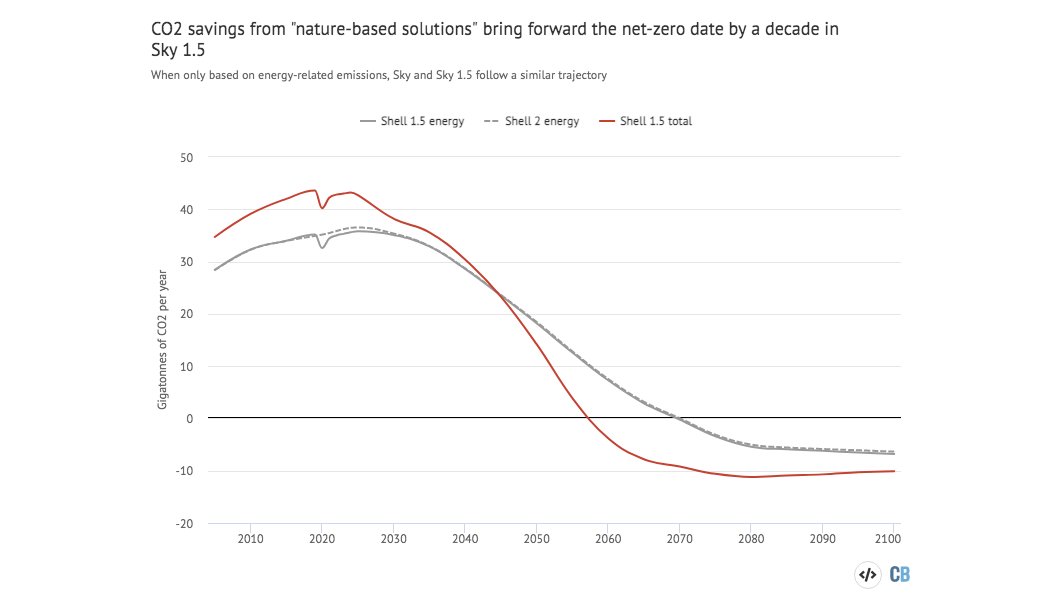
Including "nature-based solutions" in the outlook brings forward the date for net-zero emissions to 2058.

Without them their pathway for CO2 emissions is the same as the previous one.

(It's also towards the higher end of 1.5C emissions pathways.)
The "Brazil-sized" forest idea isn't actually new, it has been kicking around for a couple of years.

It was referenced in the "well-below 2C" scenario although not formally included in it, and Shell's CEO has been framing it as the only viable way of getting to 1.5C.
Fine, but who is going to plant all those trees? Well... Shell says it will plant some of them.

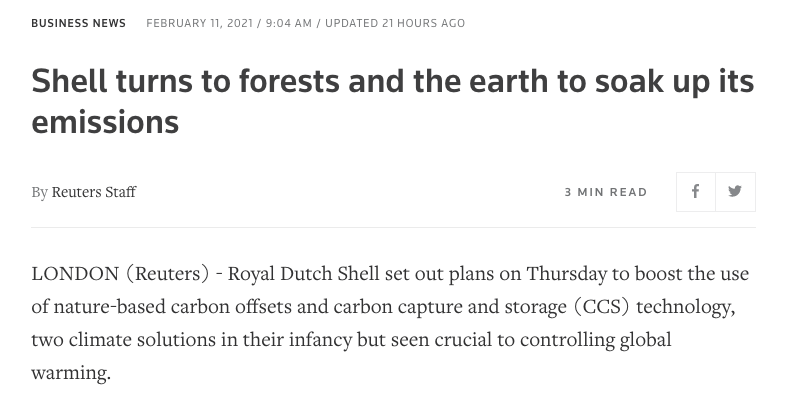
Only yesterday Shell said forests were a key part of its net-zero strategy.

Not everyone is convinced though

https://t.co/RaJm7tOHxb
Given that Shell's 1.5C scenario also sees a big scaling up of bioenergy, the question remains: where are all those trees and bioenergy crops going to go?
Shell's scenario sits towards the higher end of 1.5C scenarios that scientists have come up with for energy use, oil, coal and solar

For emissions removed using carbon capture technology, it actually sits at the lower end. 1.5C scenarios rely _a lot_ on (largely untested) CCS
So getting to 1.5C is hard and most estimates say it will rely on lots of carbon removal.

Of course, the more fossil fuels are burned, the harder it gets.

Shell says oil and gas, “will remain significant for decades” and “there needs to be continued investment in…supply”.
Finally, Shell says it makes these scenarios not as forecasts or to reflect a business plan, but rather as “a useful tool for exploring future possibilities”.

A legal disclaimer adds:

“Ultimately, whether society meets its goals to decarbonise is not within Shell’s control.”
For more details on all of this, check out my analysis of Shells "Sky 1.5 scenario" in this piece >>>>

https://t.co/Ngj6MRMMTk

More from Science

An interesting thing about carp is that they can go into anoxic hibernation and switch to an anaerobic metabolism based on converting glycogen to ethanol.

The waste ethanol is diffused out the gills

https://t.co/V3D1umHf04

Carp can switch over to an anaerobic metabolism and quietly exhale booze until the situation gets better.

They basically evolved the same metabolic pathway as yeast, independently.

In theory, if you spent a few thousand years breeding carp for it, you could use them to make booze.

They'd be enormous, almost entirely glycogen deposits with a fish added as an afterthought.

The really interesting thing about anaerobic carp, is that they can go 4-5 months without oxygen by relying on liver glycogen.

You, a human, have only about 100 grams of glycogen in your liver, about 400 more grams in your skeletal muscles. Call it 500 grams total.

In humans, glycogen is also burned for energy. This is where the marathon runner's bonk comes from: you only have about 2,000 calories worth, and running a marathon burns those 2,000 calories.

You May Also Like