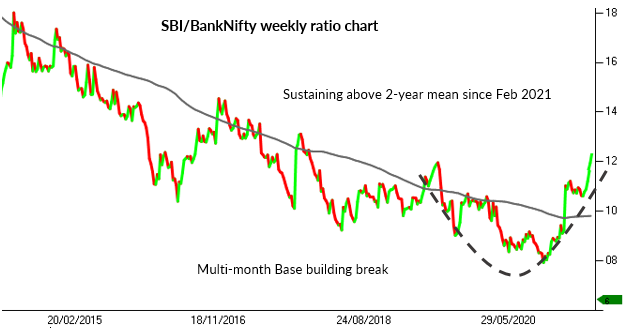
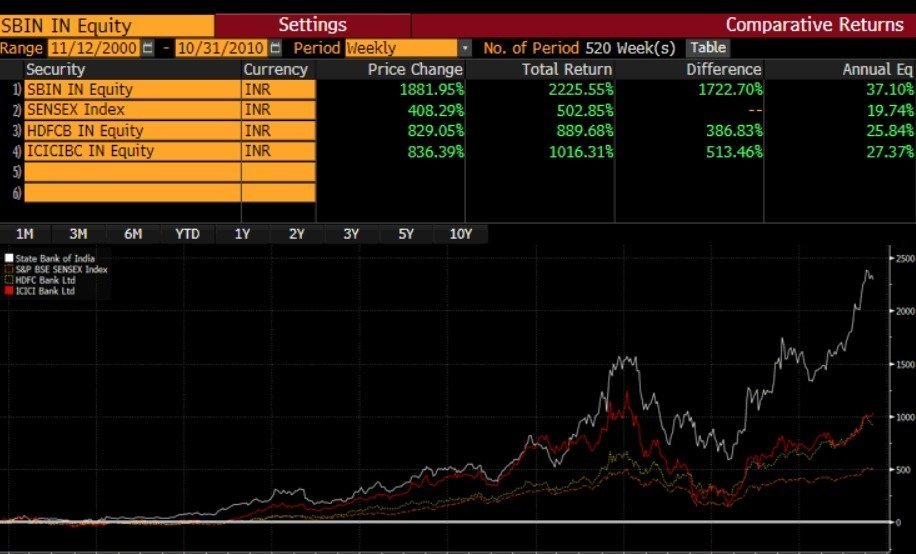
When SBI starts outshining #banknifty, pay attention. Ratio of SBI vs BankNifty shows a multi-month base break, further outperformance is expected from #SBIN #nifty50 Ratio is sustaining abve 2-yr mean since Feb 2021. Such strength has not been at display since 2015
More from Sbin

#SBIN
#SBILife
Probable #SuperPattern Bullish
@shivaji_1983 https://t.co/8e8YvbpWW7
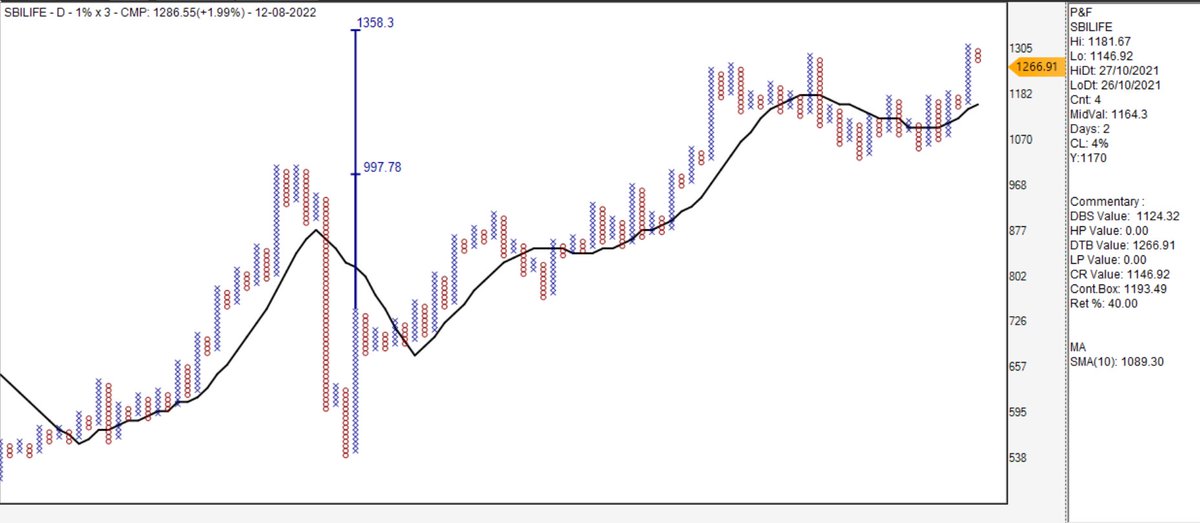
#SBILife
Probable #SuperPattern Bullish
@shivaji_1983 https://t.co/8e8YvbpWW7
Multi Chart Scanner #Nifty500
— Vithal (@srvithal388) August 13, 2022
Box 1% EOD
Price Scanner - Probable Super Pattern stocks
Relative Strength Scanner - Price above MA - Moving Average and ST - Super Trend in Relative Strength
Denominator - #Nifty500 pic.twitter.com/FFIRInUGIs



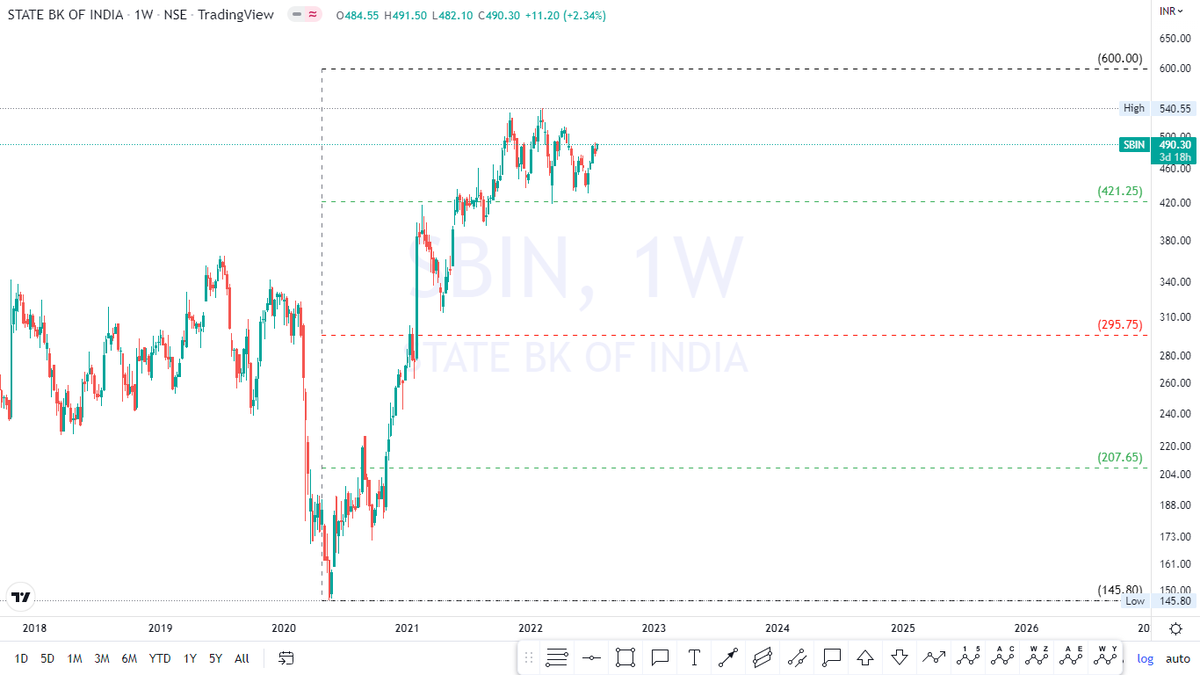
A thread on OI and Options charts for SBI - why it stopped rising at 420 and how one could have identified that.
Why I am talking abt SBI so much?
After the results, almost every brokerage came out with upgrades giving trgts of 500-600-700 on SBI, and it is easy for retail to buy CEs immdly; It might rise later, but the pause in the last 2 days ensured that the CEs fall sharply
For those who missed ithttps://t.co/gb1PpJKQdY
— AP (@ap_pune) May 25, 2021
Why I am talking abt SBI so much?
After the results, almost every brokerage came out with upgrades giving trgts of 500-600-700 on SBI, and it is easy for retail to buy CEs immdly; It might rise later, but the pause in the last 2 days ensured that the CEs fall sharply

You May Also Like


This is a pretty valiant attempt to defend the "Feminist Glaciology" article, which says conventional wisdom is wrong, and this is a solid piece of scholarship. I'll beg to differ, because I think Jeffery, here, is confusing scholarship with "saying things that seem right".
The article is, at heart, deeply weird, even essentialist. Here, for example, is the claim that proposing climate engineering is a "man" thing. Also a "man" thing: attempting to get distance from a topic, approaching it in a disinterested fashion.

Also a "man" thing—physical courage. (I guess, not quite: physical courage "co-constitutes" masculinist glaciology along with nationalism and colonialism.)

There's criticism of a New York Times article that talks about glaciology adventures, which makes a similar point.

At the heart of this chunk is the claim that glaciology excludes women because of a narrative of scientific objectivity and physical adventure. This is a strong claim! It's not enough to say, hey, sure, sounds good. Is it true?
Imagine for a moment the most obscurantist, jargon-filled, po-mo article the politically correct academy might produce. Pure SJW nonsense. Got it? Chances are you're imagining something like the infamous "Feminist Glaciology" article from a few years back.https://t.co/NRaWNREBvR pic.twitter.com/qtSFBYY80S
— Jeffrey Sachs (@JeffreyASachs) October 13, 2018
The article is, at heart, deeply weird, even essentialist. Here, for example, is the claim that proposing climate engineering is a "man" thing. Also a "man" thing: attempting to get distance from a topic, approaching it in a disinterested fashion.
Also a "man" thing—physical courage. (I guess, not quite: physical courage "co-constitutes" masculinist glaciology along with nationalism and colonialism.)
There's criticism of a New York Times article that talks about glaciology adventures, which makes a similar point.
At the heart of this chunk is the claim that glaciology excludes women because of a narrative of scientific objectivity and physical adventure. This is a strong claim! It's not enough to say, hey, sure, sounds good. Is it true?