Animal Sacrifice in Yajñas
Read this thread to know how animal sacrifice got started in Yajñas and what Rishis thought about it.

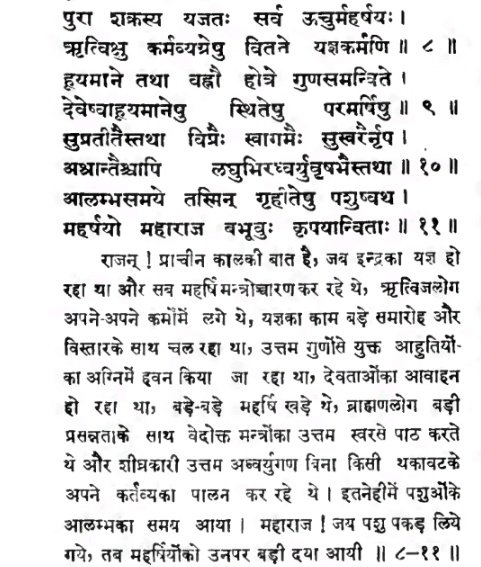
K!lling animals in Yajñas is against Dharma, hence please allow Brahmins to perform it according to shastras

But Imdra had a Big ego, he refused to follow Dharma

(Mahabharata AshwamedhikaParva adhyay 91)

Devtas wanted to k!ll Goat in Yajña, Rishis told them that Aja means seed, K!lling animals in Yajña is not allowed
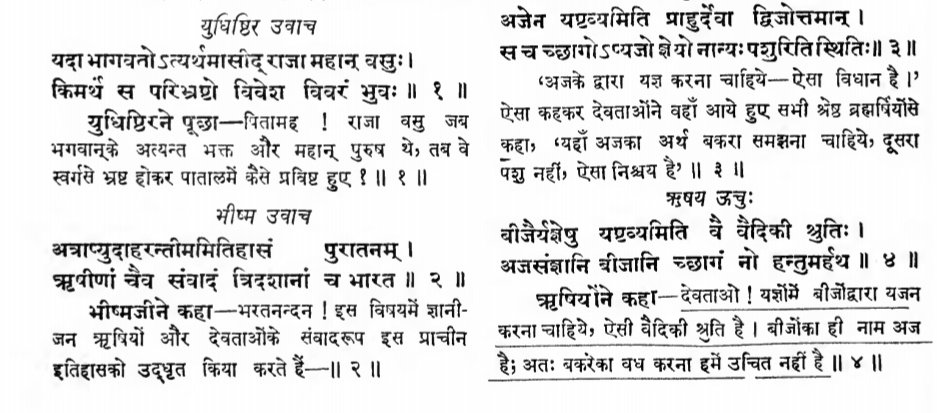
"If Shastras allow animal sacrifice then we will fall down, But if shastras prohibit animal sacrifice then you will fall down"
Because 9f this King Vasu fell down proving Rishis were right.

Hence according to him too, It is not allowed

I will make separate threads explaining about Pashu Yajñas, Pashubandh Yajñas and how animals were not harmed there and what was role of animals in Rituals.
नमो नारायणाय
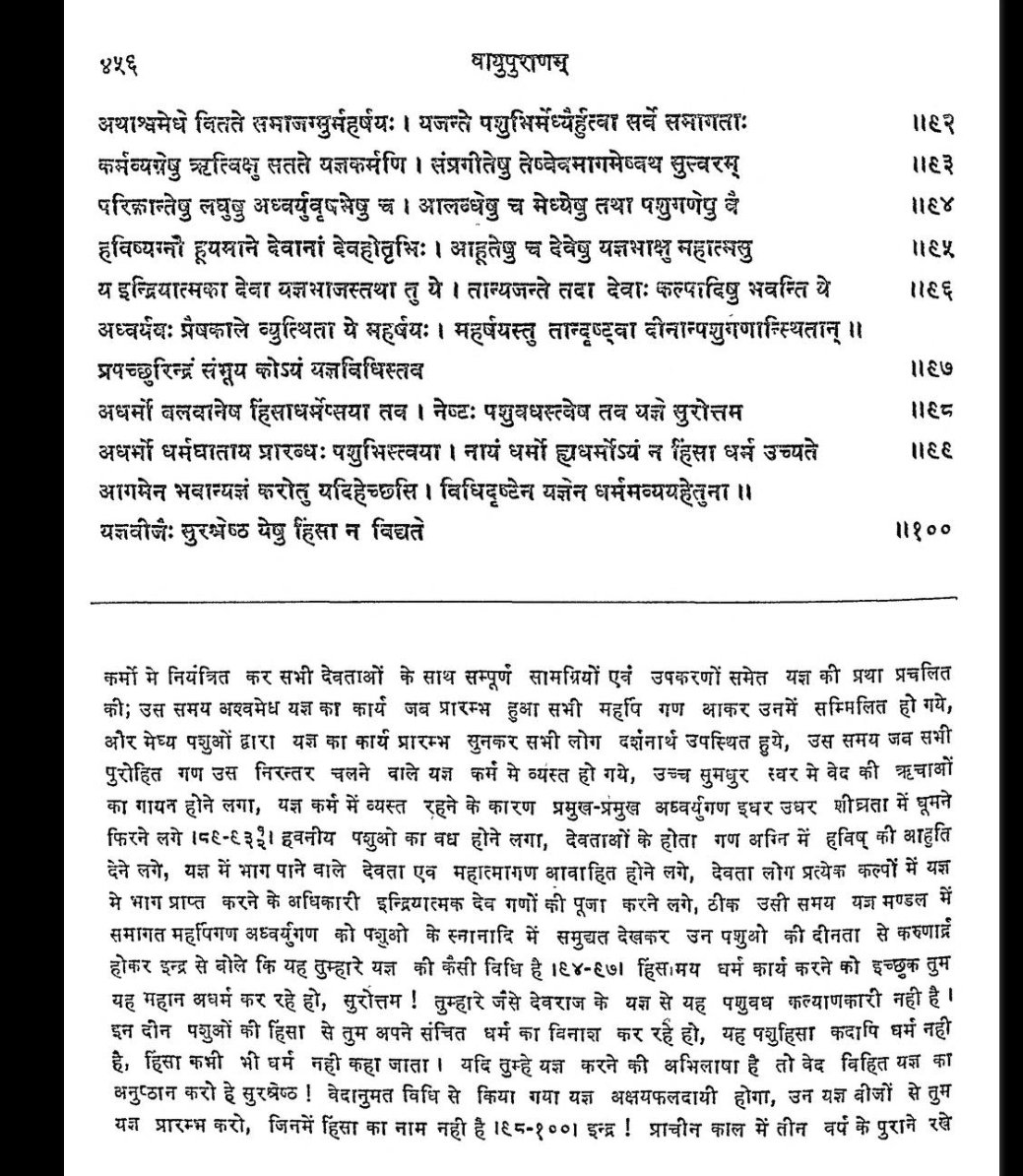
Rishis clearly declared K!lling animals in Yajña is Adharma amd must not be done,
They Said it is GREAT ADHARMA to harm any animals in Yajñas and not in accordance with Vedas

Rishis clearly said Vedas do not allow K!lling of animals in Yajñas, and also that this is Great Adharma, One must follow Vedas for Yajña hence do it with seeds


More from Religion







You May Also Like

I just finished Eric Adler's The Battle of the Classics, and wanted to say something about Joel Christiansen's review linked below. I am not sure what motivates the review (I speculate a bit below), but it gives a very misleading impression of the book. 1/x
The meat of the criticism is that the history Adler gives is insufficiently critical. Adler describes a few figures who had a great influence on how the modern US university was formed. It's certainly critical: it focuses on the social Darwinism of these figures. 2/x
Other insinuations and suggestions in the review seem wildly off the mark, distorted, or inappropriate-- for example, that the book is clickbaity (it is scholarly) or conservative (hardly) or connected to the events at the Capitol (give me a break). 3/x
The core question: in what sense is classics inherently racist? Classics is old. On Adler's account, it begins in ancient Rome and is revived in the Renaissance. Slavery (Christiansen's primary concern) is also very old. Let's say classics is an education for slaveowners. 4/x
It's worth remembering that literacy itself is elite throughout most of this history. Literacy is, then, also the education of slaveowners. We can honor oral and musical traditions without denying that literacy is, generally, good. 5/x
As someone\u2019s who\u2019s read the book, this review strikes me as tremendously unfair. It mostly faults Adler for not writing the book the reviewer wishes he had! https://t.co/pqpt5Ziivj
— Teresa M. Bejan (@tmbejan) January 12, 2021
The meat of the criticism is that the history Adler gives is insufficiently critical. Adler describes a few figures who had a great influence on how the modern US university was formed. It's certainly critical: it focuses on the social Darwinism of these figures. 2/x
Other insinuations and suggestions in the review seem wildly off the mark, distorted, or inappropriate-- for example, that the book is clickbaity (it is scholarly) or conservative (hardly) or connected to the events at the Capitol (give me a break). 3/x
The core question: in what sense is classics inherently racist? Classics is old. On Adler's account, it begins in ancient Rome and is revived in the Renaissance. Slavery (Christiansen's primary concern) is also very old. Let's say classics is an education for slaveowners. 4/x
It's worth remembering that literacy itself is elite throughout most of this history. Literacy is, then, also the education of slaveowners. We can honor oral and musical traditions without denying that literacy is, generally, good. 5/x