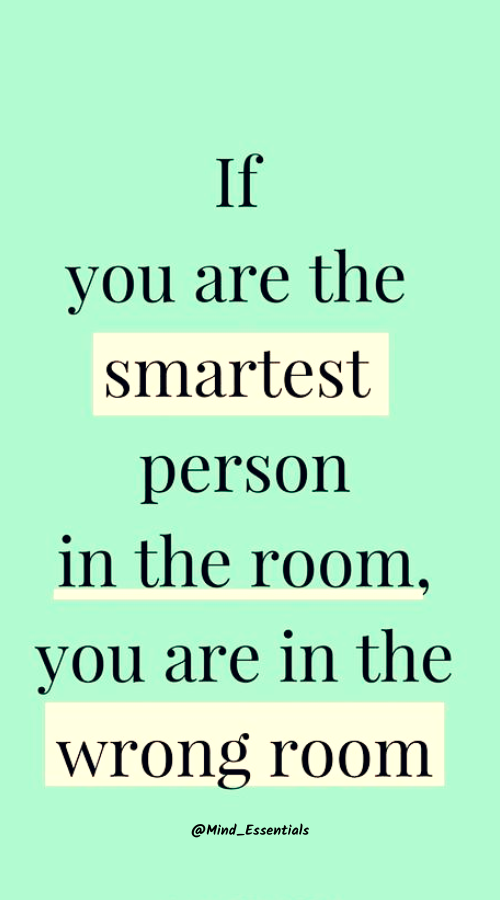
Study physics to understand chemistry
Study chemistry to understand biology
Study biology to understand psychology
Study psychology to understand economics
Study economics and philosophy to be free
Buy Now👇
https://t.co/oUbZmLxQJt
If you enjoyed it, please RT the first tweet and follow
@Mind_Essentials for more content like this.
More from Principles
How to find (and operate in) your Zone of Genius:
A few weeks ago, I shared a thread—How to Win (without talent or luck)—that got a lot of attention.
One of the most popular insights I shared was the idea of operating in your Zone of Genius.
But I got a lot of questions about how to practically achieve that...
Your Zone of Genius is where your interests, passions and skills align.
Operating in it means you stop playing *their* games and start playing *yours*.
This thread shares my framework—built through personal struggle—for finding and operating in your Zone of Genius:
First, let's get one thing straight.
Everyone has a Zone of Genius.
"Genius" here is a relative term, not an absolute.
It's not about being top 1% at something—it's about the unique space where your relative strengths are accentuated (and relative weaknesses masked).
Furthermore, everyone’s Zone of Genius is different and unique to them as an individual.
The goal of a founder, startup, or organization, therefore, is to build a team with complementary—not conflicting—Zones of Genius.
This is where 1+1=3!
A few weeks ago, I shared a thread—How to Win (without talent or luck)—that got a lot of attention.
One of the most popular insights I shared was the idea of operating in your Zone of Genius.
But I got a lot of questions about how to practically achieve that...
How to Win (without talent or luck):
— Sahil Bloom (@SahilBloom) October 16, 2021
Your Zone of Genius is where your interests, passions and skills align.
Operating in it means you stop playing *their* games and start playing *yours*.
This thread shares my framework—built through personal struggle—for finding and operating in your Zone of Genius:
First, let's get one thing straight.
Everyone has a Zone of Genius.
"Genius" here is a relative term, not an absolute.
It's not about being top 1% at something—it's about the unique space where your relative strengths are accentuated (and relative weaknesses masked).
Furthermore, everyone’s Zone of Genius is different and unique to them as an individual.
The goal of a founder, startup, or organization, therefore, is to build a team with complementary—not conflicting—Zones of Genius.
This is where 1+1=3!
You May Also Like
Keep dwelling on this:
Further Examination of the Motif near PRRA Reveals Close Structural Similarity to the SEB Superantigen as well as Sequence Similarities to Neurotoxins and a Viral SAg.
The insertion PRRA together with 7 sequentially preceding residues & succeeding R685 (conserved in β-CoVs) form a motif, Y674QTQTNSPRRAR685, homologous to those of neurotoxins from Ophiophagus (cobra) and Bungarus genera, as well as neurotoxin-like regions from three RABV strains
(20) (Fig. 2D). We further noticed that the same segment bears close similarity to the HIV-1 glycoprotein gp120 SAg motif F164 to V174.
https://t.co/EwwJOSa8RK
In (B), the segment S680PPRAR685 including the PRRA insert and highly conserved cleavage site *R685* is shown in van der Waals representation (black labels) and nearby CDR residues of the TCRVβ domain are labeled in blue/white
https://t.co/BsY8BAIzDa
Sequence Identity %
https://t.co/BsY8BAIzDa
Y674 - QTQTNSPRRA - R685
Similar to neurotoxins from Ophiophagus (cobra) & Bungarus genera & neurotoxin-like regions from three RABV strains
T678 - NSPRRA- R685
Superantigenic core, consistently aligned against bacterial or viral SAgs
Further Examination of the Motif near PRRA Reveals Close Structural Similarity to the SEB Superantigen as well as Sequence Similarities to Neurotoxins and a Viral SAg.
The insertion PRRA together with 7 sequentially preceding residues & succeeding R685 (conserved in β-CoVs) form a motif, Y674QTQTNSPRRAR685, homologous to those of neurotoxins from Ophiophagus (cobra) and Bungarus genera, as well as neurotoxin-like regions from three RABV strains
(20) (Fig. 2D). We further noticed that the same segment bears close similarity to the HIV-1 glycoprotein gp120 SAg motif F164 to V174.
https://t.co/EwwJOSa8RK
In (B), the segment S680PPRAR685 including the PRRA insert and highly conserved cleavage site *R685* is shown in van der Waals representation (black labels) and nearby CDR residues of the TCRVβ domain are labeled in blue/white
https://t.co/BsY8BAIzDa
Sequence Identity %
https://t.co/BsY8BAIzDa
Y674 - QTQTNSPRRA - R685
Similar to neurotoxins from Ophiophagus (cobra) & Bungarus genera & neurotoxin-like regions from three RABV strains
T678 - NSPRRA- R685
Superantigenic core, consistently aligned against bacterial or viral SAgs