Rewritten in simple language, translated into every state language, and made available as original sources online, so people can access them and understand laws themselves instead of being dependent on self-appointed custodians.
100%. Need clear separation of powers.
With direct elections for an executive President, who appoints the Cabinet of Ministers and sets government policy.
In parliament, the Speaker to be seen as the leader of the legislature. MPs responsible only for laws, amendments, repeals.
Westminster model is so bizarre that we elect legislators to form Executive Govts.
— M. Nageswara Rao IPS (@MNageswarRaoIPS) December 27, 2020
Most problems are due to interference of MLAs/MPs in governance who legally can't but people expect them to.
Hence, new model to elect Govts &MLAs/MPs separately has to evolve [avoiding US defects] https://t.co/Oyujk365IE
Rewritten in simple language, translated into every state language, and made available as original sources online, so people can access them and understand laws themselves instead of being dependent on self-appointed custodians.
Dissolve the current states and upgrade 740 districts into elected Janapadas/Prefectures, to improve policy outcomes on the ground.
No more MLAs and DMs acting like local feudal lords. Bottom-up, accessible institutions.
Assign law and order, crime investigation, counter-terrorism to a new central police force, independent of executive. Like the armed forces, with parliamentary oversight.
Give each Janapada a system a decentralised system of courts and alternative dispute resolution mechanisms, working in local languages and jargon-free.
The current unelected and unaccountable bureaucratic and judicial institutions suffer from a "democratic deficit" and are all designed to thwart any aspirations of the people that can challenge the status quo.
But in India, the police is not answerable or accountable to the local people whose lives and properties it is supposed to protect." - @MNageswarRaoIPS
https://t.co/g9timGDlWX
Police Reforms: Repose More Trust In Elected Heads Of Local Bodies, Make Police Accountable To The People Through Them\xa0 https://t.co/3LYvSz0qYl@IPS_Association@IASassociation@HMOIndia
— M. Nageswara Rao IPS (@MNageswarRaoIPS) December 29, 2020
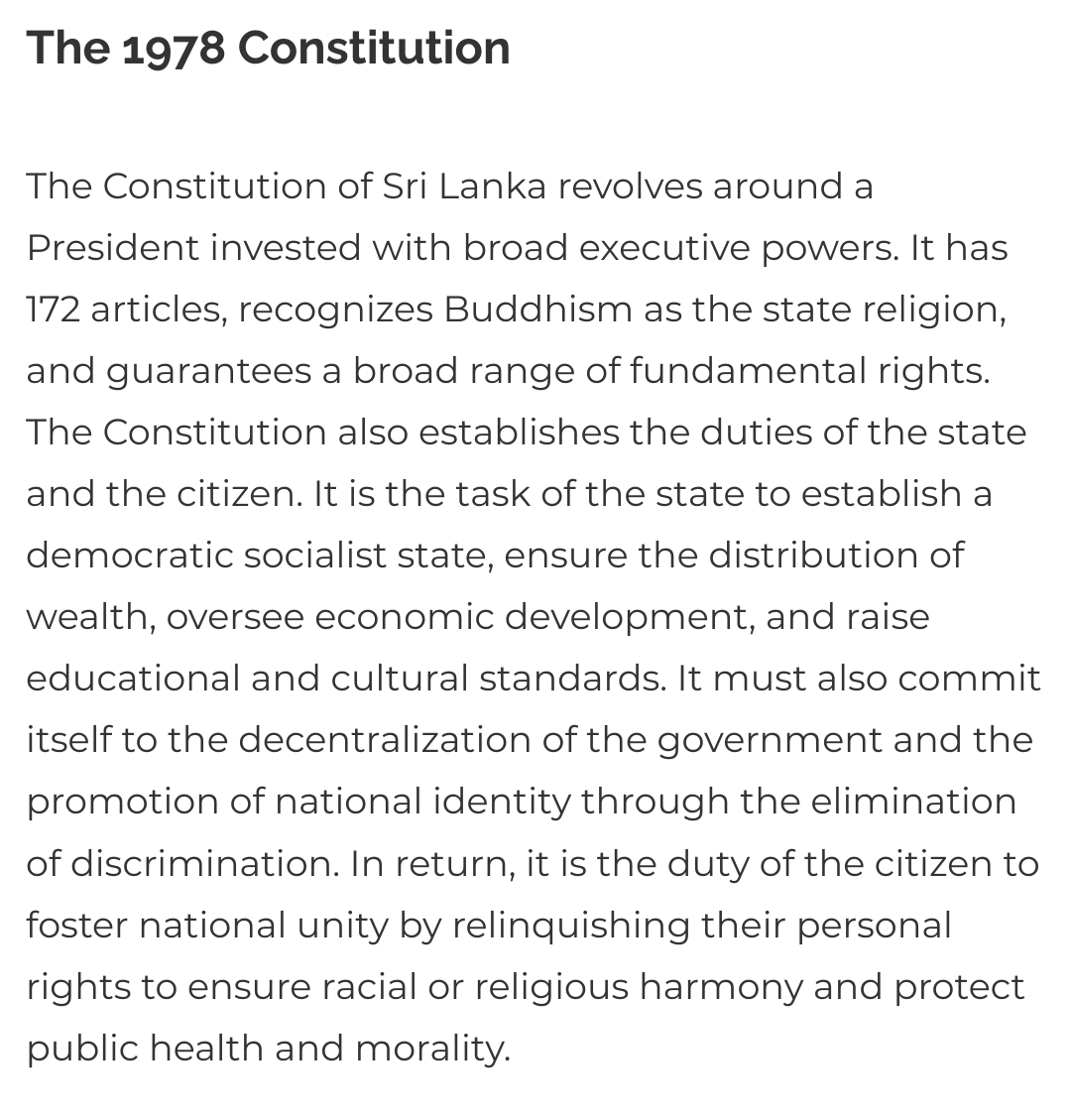
Sri Lanka being an example, which enacted such reforms despite similar levels of religious diversity and colonial administrative legacy.
https://t.co/ECRjzl7vto
More from Politics


You May Also Like

One of the most successful stock trader with special focus on cash stocks and who has a very creative mind to look out for opportunities in dark times
Covering one of the most unique set ups: Extended moves & Reversal plays
Time for a 🧵 to learn the above from @iManasArora
What qualifies for an extended move?
30-40% move in just 5-6 days is one example of extended move
How Manas used this info to book
Post that the plight of the
Example 2: Booking profits when the stock is extended from 10WMA
10WMA =
Another hack to identify extended move in a stock:
Too many green days!
Read
Covering one of the most unique set ups: Extended moves & Reversal plays
Time for a 🧵 to learn the above from @iManasArora
What qualifies for an extended move?
30-40% move in just 5-6 days is one example of extended move
How Manas used this info to book
The stock exploded & went up as much as 63% from my price.
— Manas Arora (@iManasArora) June 22, 2020
Closed my position entirely today!#BroTip pic.twitter.com/CRbQh3kvMM
Post that the plight of the
What an extended (away from averages) move looks like!!
— Manas Arora (@iManasArora) June 24, 2020
If you don't learn to sell into strength, be ready to give away the majority of your gains.#GLENMARK pic.twitter.com/5DsRTUaGO2
Example 2: Booking profits when the stock is extended from 10WMA
10WMA =
#HIKAL
— Manas Arora (@iManasArora) July 2, 2021
Closed remaining at 560
Reason: It is 40+% from 10wma. Super extended
Total revenue: 11R * 0.25 (size) = 2.75% on portfolio
Trade closed pic.twitter.com/YDDvhz8swT
Another hack to identify extended move in a stock:
Too many green days!
Read
When you see 15 green weeks in a row, that's the end of the move. *Extended*
— Manas Arora (@iManasArora) August 26, 2019
Simple price action analysis.#Seamecltd https://t.co/gR9xzgeb9K


Took me 5 years to get the best Chartink scanners for Stock Market, but you’ll get it in 5 mminutes here ⏰
Do Share the above tweet 👆
These are going to be very simple yet effective pure price action based scanners, no fancy indicators nothing - hope you liked it.
https://t.co/JU0MJIbpRV
52 Week High
One of the classic scanners very you will get strong stocks to Bet on.
https://t.co/V69th0jwBr
Hourly Breakout
This scanner will give you short term bet breakouts like hourly or 2Hr breakout
Volume shocker
Volume spurt in a stock with massive X times
Do Share the above tweet 👆
These are going to be very simple yet effective pure price action based scanners, no fancy indicators nothing - hope you liked it.
https://t.co/JU0MJIbpRV
52 Week High
One of the classic scanners very you will get strong stocks to Bet on.
https://t.co/V69th0jwBr
Hourly Breakout
This scanner will give you short term bet breakouts like hourly or 2Hr breakout
Volume shocker
Volume spurt in a stock with massive X times