
"Red wall voters will not forgive Boris Johnson if he sells out to get a trade deal with Brussels, polls show"
It's in The Sun. Harry Cole wrote it...
So let's dig a
If this 'no deal' scenario occurs, to what extent would you be
more or less likely to vote Conservative at the next General Election?
+ likely, total: 20%
no difference: 41%
- likely, total: 32%
I don't actually know what these questions mean
"The UK establishes a new relationship with the EU that is based on EU law" What *is* that?

"The UK cannot pass its own laws and ensure its courts enforce them" Oh come on.


Jeez. WTO constrains what tariffs the UK can set. Do we mean tariffs on goods to/from the EU, or generally?
The UK *has already* done a trade deal with Japan. No variant of Brexit now available stops this. This is 🤪
And yes, fishing. "Full control". At least that one is sort of understandable.
More from Jon Worth
Next week is shaping up to be one hell of a week in 🇬🇧 politics
It all revolves around parliamentary sovereignty, Tory party shenanigans, and Johnson's need to survive and if that contradicts with doing the right thing
Bear with me - this is messy but important
1/12
Why will it be hellish?
We *know* that there will be a vote on Coronavirus Tier system on Tue 1 Dec, with the system to come into force from the end of 2 Dec
There *might* be a Brexit Deal at the start of next week as well, and Johnson having to OK it or not
2/12
Coronavirus first
I am not well placed to judge whether the Tier system is right (don't @ - reply me about that), but it's enough to say there are 3 grounds for critique
- do lockdowns work?
- does THIS lockdown system work?
- has my town/region been harshly treated?
3/12
Those are enough grounds for plenty of parliamentary opposition on the Tory benches, and on opposition benches too.
Labour could easily justify voting against in that some of the judgments on Tiers are not strictly based on the science
But what does voting *against* mean?
4/12
Were the vote lost, there would be little or no actual practical consequence regarding the Coronavirus restrictions - as discussed with Adam Wagner the government would almost certainly table Regulations using its emergency powers
It all revolves around parliamentary sovereignty, Tory party shenanigans, and Johnson's need to survive and if that contradicts with doing the right thing
Bear with me - this is messy but important
1/12
Why will it be hellish?
We *know* that there will be a vote on Coronavirus Tier system on Tue 1 Dec, with the system to come into force from the end of 2 Dec
There *might* be a Brexit Deal at the start of next week as well, and Johnson having to OK it or not
2/12
Coronavirus first
I am not well placed to judge whether the Tier system is right (don't @ - reply me about that), but it's enough to say there are 3 grounds for critique
- do lockdowns work?
- does THIS lockdown system work?
- has my town/region been harshly treated?
3/12
Those are enough grounds for plenty of parliamentary opposition on the Tory benches, and on opposition benches too.
Labour could easily justify voting against in that some of the judgments on Tiers are not strictly based on the science
But what does voting *against* mean?
4/12
Were the vote lost, there would be little or no actual practical consequence regarding the Coronavirus restrictions - as discussed with Adam Wagner the government would almost certainly table Regulations using its emergency powers
Yes they could table new regulations and could use the emergency procedure so that parliament doesn't have to vote on them until 4 weeks later. So the govt has a lot of leeway (legally if not politically)
— Adam Wagner (@AdamWagner1) November 27, 2020
To those saying that those who have got their public health advice wrong earlier in the pandemic should put up their hands and apologise... a little cautionary lesson from another sector
A short 🧵
1/
Public health is not my thing
But Brexit is
And throughout 2019 and 2020 I have been trying to make predictions as to what will happen in that story. Lives do not depend on this, only my professional reputation (marginally) does
2/12
The three series of #BrexitDiagram I made in 2019 were extraordinarily accurate
Series 1/2
https://t.co/wOSzIXxJ2M
Series 3
https://t.co/E4fKeGoa5n
Series 4
https://t.co/yRsQ8mLGj1
Each series got that stage of Brexit right
3/12
The 2020 series was nowhere near as good - at one stage I had No Deal Brexit at 78% chance in early December - and that was not what
I own this error - I was wrong
I know *why* I was wrong - I thought the European Parliament would fight more on Provisional Application, and I thought agreeing everything in a week wouldn't work. I wasn't right
The Manston crisis / borders closing changed something too
5/12
A short 🧵
1/
Public health is not my thing
But Brexit is
And throughout 2019 and 2020 I have been trying to make predictions as to what will happen in that story. Lives do not depend on this, only my professional reputation (marginally) does
2/12
The three series of #BrexitDiagram I made in 2019 were extraordinarily accurate
Series 1/2
https://t.co/wOSzIXxJ2M
Series 3
https://t.co/E4fKeGoa5n
Series 4
https://t.co/yRsQ8mLGj1
Each series got that stage of Brexit right
3/12
The 2020 series was nowhere near as good - at one stage I had No Deal Brexit at 78% chance in early December - and that was not what
I own this error - I was wrong
I know *why* I was wrong - I thought the European Parliament would fight more on Provisional Application, and I thought agreeing everything in a week wouldn't work. I wasn't right
The Manston crisis / borders closing changed something too
5/12
More from Politics


Here's why I bother to do the search, and even take the time to check.
This is part of a pattern that as detailed by Mueller, and has been proven by reputable studies since then. Here are parts of an Oxford report on the goals of the ongoing social media operations of Russia. https://t.co/qapD8Eh2SQ
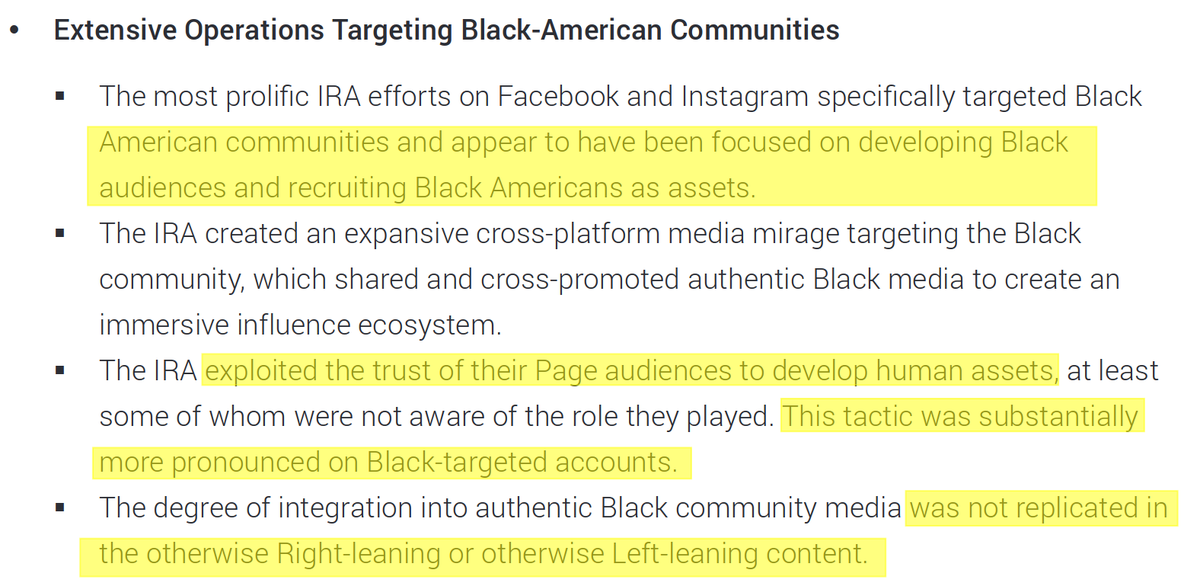
https://t.co/nJPPOwF1MA
The full report can be found here.
https://t.co/1q525xWYZE
Excertps from the 2019 Senate Intelligence Committee Report on Russian Actove Measures Campaigns and Interference:
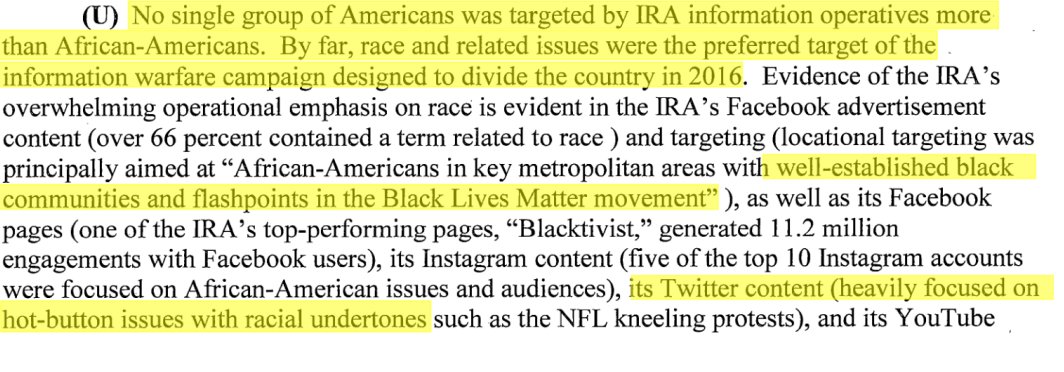
Also form the Senate Intelligence Committee report
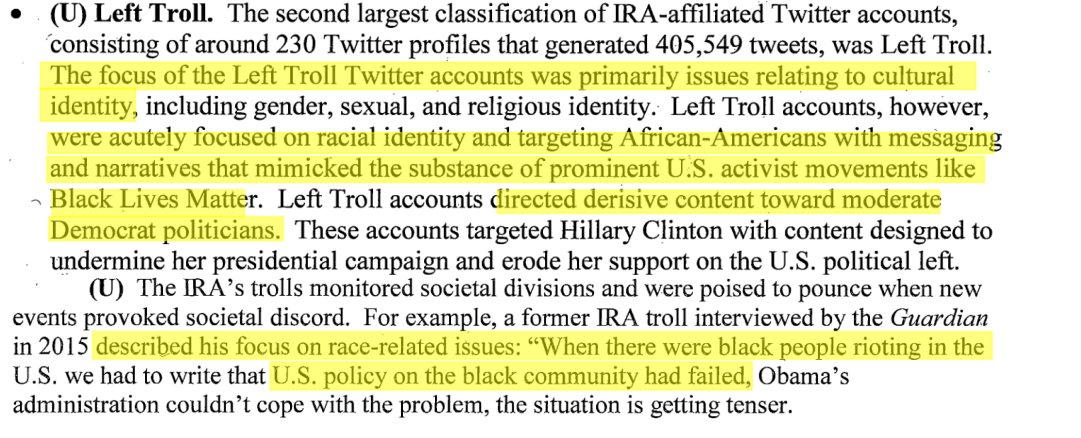
This is part of a pattern that as detailed by Mueller, and has been proven by reputable studies since then. Here are parts of an Oxford report on the goals of the ongoing social media operations of Russia. https://t.co/qapD8Eh2SQ
Here's some from a search of your TL
— \U0001d679\U0001d698\U0001d691\U0001d697 \U0001d686\U0001d68e\U0001d69c\U0001d695\U0001d68e\U0001d6a2 (@thepalemoonlt) April 21, 2021
Uses of the word prison before today: 13.
Tweets for specifically suggesting abolishing prison prior to today: 1 on 06/03/2020
Mentions of prison and abolishing it today: 8
Of all the times to speak out, Why did you choose to now? https://t.co/kl7gx7ky2H
https://t.co/nJPPOwF1MA
The full report can be found here.
https://t.co/1q525xWYZE
Excertps from the 2019 Senate Intelligence Committee Report on Russian Actove Measures Campaigns and Interference:
Also form the Senate Intelligence Committee report
You May Also Like

“We don’t negotiate salaries” is a negotiation tactic.
Always. No, your company is not an exception.
A tactic I don’t appreciate at all because of how unfairly it penalizes low-leverage, junior employees, and those loyal enough not to question it, but that’s negotiation for you after all. Weaponized information asymmetry.
Listen to Aditya
And by the way, you should never be worried that an offer would be withdrawn if you politely negotiate.
I have seen this happen *extremely* rarely, mostly to women, and anyway is a giant red flag. It suggests you probably didn’t want to work there.
You wish there was no negotiating so it would all be more fair? I feel you, but it’s not happening.
Instead, negotiate hard, use your privilege, and then go and share numbers with your underrepresented and underpaid colleagues. […]
Always. No, your company is not an exception.
A tactic I don’t appreciate at all because of how unfairly it penalizes low-leverage, junior employees, and those loyal enough not to question it, but that’s negotiation for you after all. Weaponized information asymmetry.
Listen to Aditya
"we don't negotiate salaries" really means "we'd prefer to negotiate massive signing bonuses and equity grants, but we'll negotiate salary if you REALLY insist" https://t.co/80k7nWAMoK
— Aditya Mukerjee, the Otterrific \U0001f3f3\ufe0f\u200d\U0001f308 (@chimeracoder) December 4, 2018
And by the way, you should never be worried that an offer would be withdrawn if you politely negotiate.
I have seen this happen *extremely* rarely, mostly to women, and anyway is a giant red flag. It suggests you probably didn’t want to work there.
You wish there was no negotiating so it would all be more fair? I feel you, but it’s not happening.
Instead, negotiate hard, use your privilege, and then go and share numbers with your underrepresented and underpaid colleagues. […]


fascinated by this man, mario cortellucci, and his outsized influence on ontario and GTA politics. cortellucci, who lives in vaughan and ran as a far-right candidate for the italian senate back in 2018 - is a major ford donor...
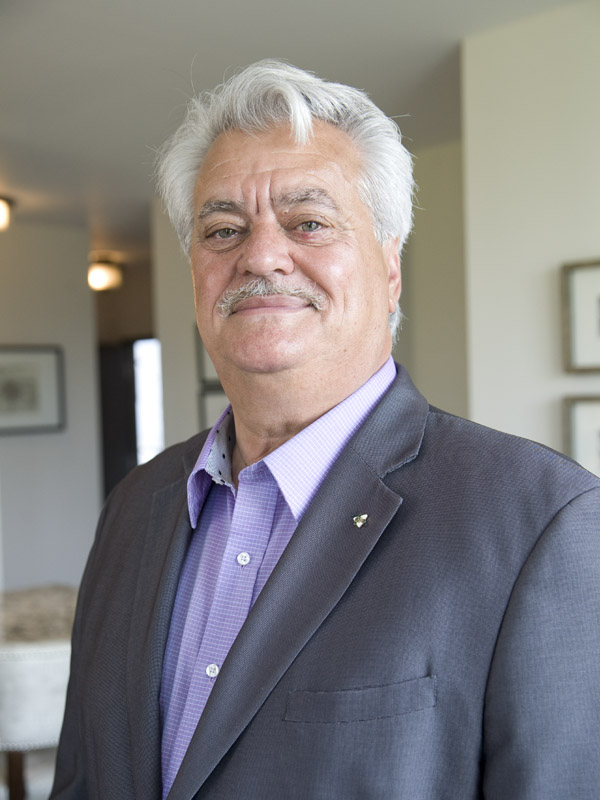
his name might sound familiar because the new cortellucci vaughan hospital at mackenzie health, the one doug ford has been touting lately as a covid-centric facility, is named after him and his family
but his name also pops up in a LOT of other ford projects. for instance - he controls the long term lease on big parts of toronto's portlands... where doug ford once proposed building an nfl stadium and monorail... https://t.co/weOMJ51bVF
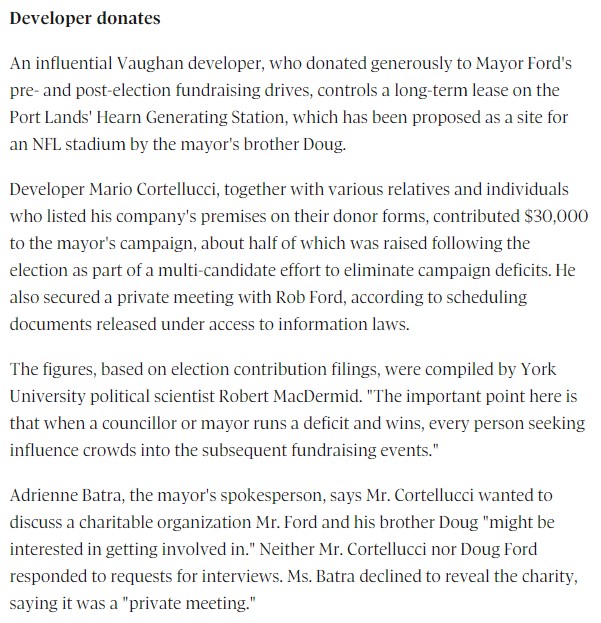
cortellucci, who is a developer, also owns a large chunk of the greenbelt. doug ford's desire to develop the greenbelt has been
and late last year he rolled back the mandate of conservation authorities there, prompting the resignations of several members of the greenbelt advisory
his name might sound familiar because the new cortellucci vaughan hospital at mackenzie health, the one doug ford has been touting lately as a covid-centric facility, is named after him and his family
but his name also pops up in a LOT of other ford projects. for instance - he controls the long term lease on big parts of toronto's portlands... where doug ford once proposed building an nfl stadium and monorail... https://t.co/weOMJ51bVF
cortellucci, who is a developer, also owns a large chunk of the greenbelt. doug ford's desire to develop the greenbelt has been
and late last year he rolled back the mandate of conservation authorities there, prompting the resignations of several members of the greenbelt advisory







First update to https://t.co/lDdqjtKTZL since the challenge ended – Medium links!! Go add your Medium profile now 👀📝 (thanks @diannamallen for the suggestion 😁)

Just added Telegram links to https://t.co/lDdqjtKTZL too! Now you can provide a nice easy way for people to message you :)

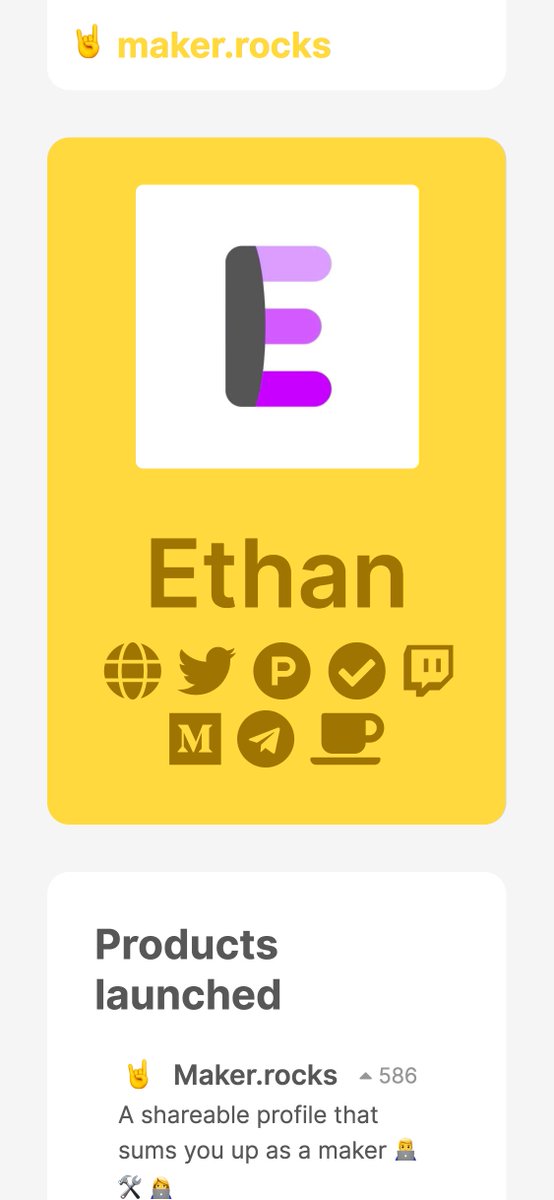
Less than 1 hour since I started adding stuff to https://t.co/lDdqjtKTZL again, and profile pages are now responsive!!! 🥳 Check it out -> https://t.co/fVkEL4fu0L
Accounts page is now also responsive!! 📱✨
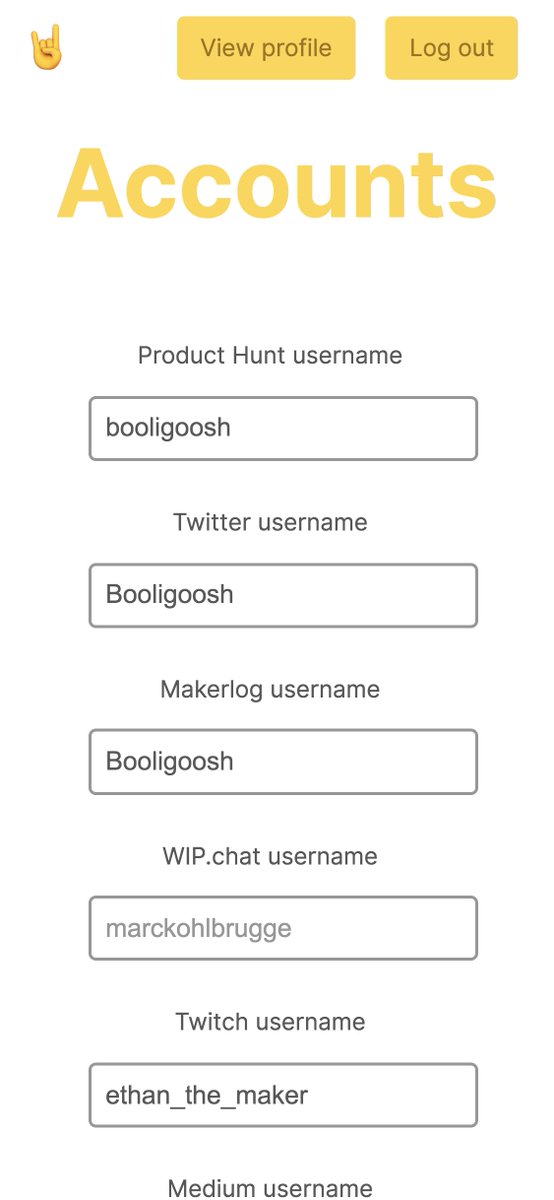
💪 I managed to make the whole site responsive in about an hour. On my roadmap I had it down as 4-5 hours!!! 🤘🤠🤘
Just added Telegram links to https://t.co/lDdqjtKTZL too! Now you can provide a nice easy way for people to message you :)
Less than 1 hour since I started adding stuff to https://t.co/lDdqjtKTZL again, and profile pages are now responsive!!! 🥳 Check it out -> https://t.co/fVkEL4fu0L
Accounts page is now also responsive!! 📱✨
💪 I managed to make the whole site responsive in about an hour. On my roadmap I had it down as 4-5 hours!!! 🤘🤠🤘