
So I've been reporting a story about how you'd fix the impeachment process. It doesn't work for removal, as currently designed. Impeachment was built for a political system without parties. It fails in a system with polarized parties.
I spent a long time talking to @LilyMasonPhD about this and basically talked myself out of the idea this is fixable.
Impeachment is not, historically, a way we convict and remove wayward presidents, and it never reliably will be.
More from Ezra Klein
What we're seeing from Trump and his allies today is an autocratic attempt. It's not a competent one, and it probably won't be an effective one. But that's what it is. And far worse would follow if it succeeded.
As @mashagessen explained in this interview, using Balint Magyar's framework, an autocratic attempt is "the first stage when autocracy is still reversible by electoral means."
The point is to make the regime's rule irreversible by electoral means, which is explicitly what Trump, et al, are trying right now.
"Then, at some point, there comes the autocratic breakthrough when you can no longer use electoral means to reverse that autocracy."
"Then autocratic consolidation, where it’s just consolidating ever more power and money, making it ever less possible to change."
There is an element of farce to Trump's tweets, his actions, his cronies. It makes it easy for many to discount what he's actually saying, and trying. https://t.co/GwC3KGbpkC
It's fitting for the internet era, when the worst ideas and figures come layered in irony.
STOP THE COUNT!
— Donald J. Trump (@realDonaldTrump) November 5, 2020
As @mashagessen explained in this interview, using Balint Magyar's framework, an autocratic attempt is "the first stage when autocracy is still reversible by electoral means."
The point is to make the regime's rule irreversible by electoral means, which is explicitly what Trump, et al, are trying right now.
"Then, at some point, there comes the autocratic breakthrough when you can no longer use electoral means to reverse that autocracy."
"Then autocratic consolidation, where it’s just consolidating ever more power and money, making it ever less possible to change."
There is an element of farce to Trump's tweets, his actions, his cronies. It makes it easy for many to discount what he's actually saying, and trying. https://t.co/GwC3KGbpkC
It's fitting for the internet era, when the worst ideas and figures come layered in irony.
— Brian Beutler (@brianbeutler) November 5, 2020
This is a good @mattyglesias post about techno-politics but I want to quibble with the part of it that’s about my essay on the policy feedback loops you can build by Just Helping People Fast. Matt writes: https://t.co/MuBlgQV6LW
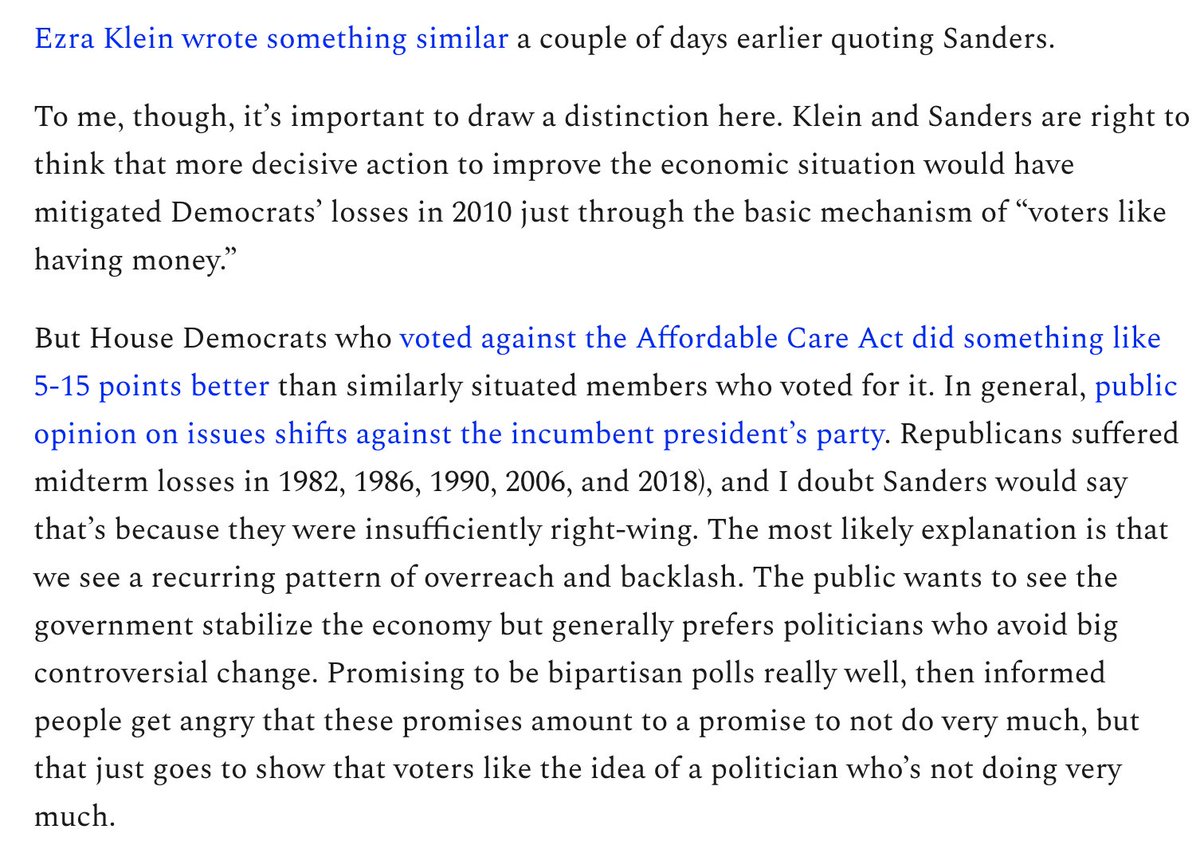
Over at Mischiefs of Faction, @Smotus makes a similar point: https://t.co/al6fS5tZXP
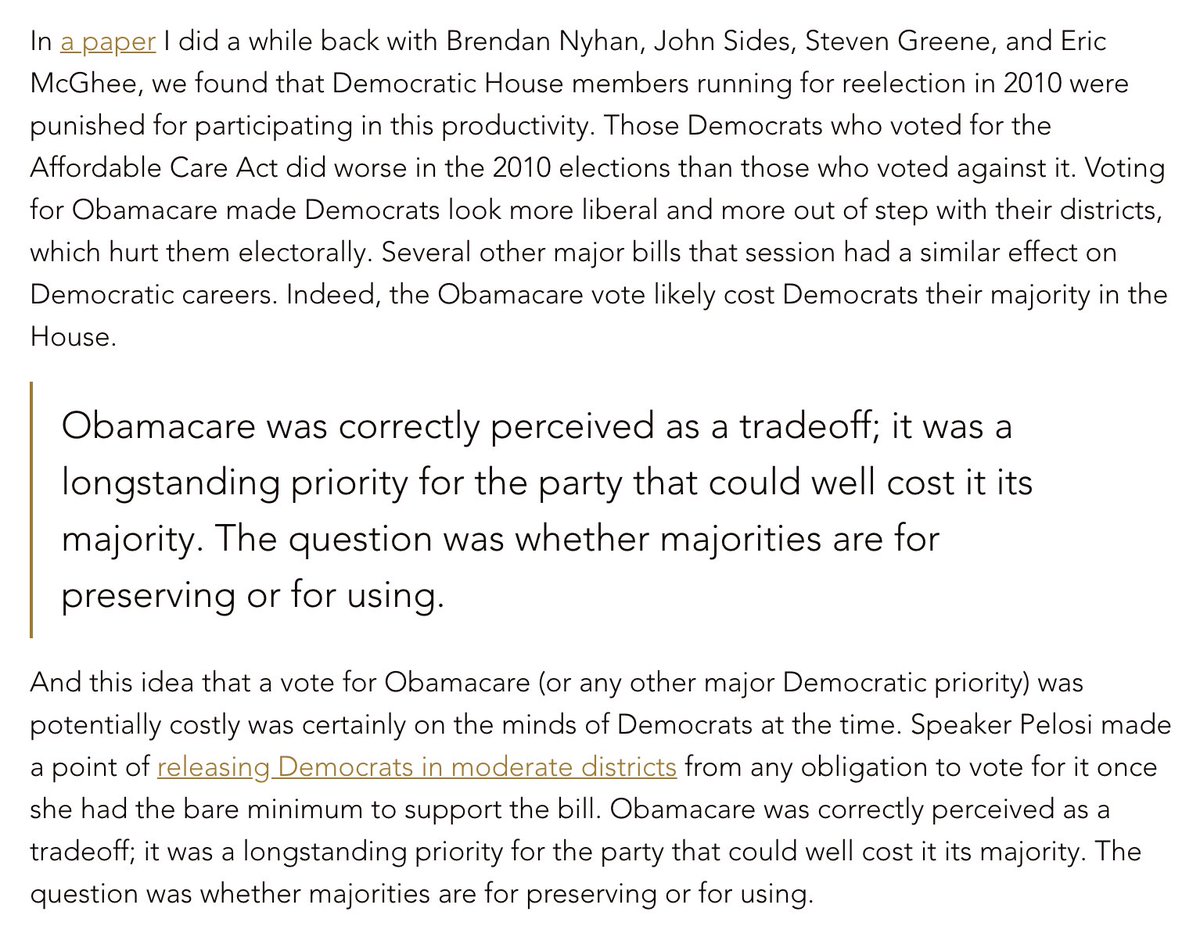
I want to be clear here: I’m saying that the Affordable Care act was, from a political perspective, badly designed, and that *a different health care plan* might’ve led to a better Dem performance in 2010. But these arguments don't grapple with that.
To @Smotus’s point, Pelosi released those House Democrats at the end, not the beginning. Having covered the beginning of this, I can tell you a lot of those Democrats thought a bipartisan health care bill would be great politics for them!
But they didn’t get that.
This is key. The ACA was built on the political theory that:
1. Bipartisan policy is easier to pass — and more popular once passed.
2. Working off of the Heritage Foundation/Romney template could get you a bipartisan health bill.
1 was probably right. 2 was utterly wrong.
Over at Mischiefs of Faction, @Smotus makes a similar point: https://t.co/al6fS5tZXP
I want to be clear here: I’m saying that the Affordable Care act was, from a political perspective, badly designed, and that *a different health care plan* might’ve led to a better Dem performance in 2010. But these arguments don't grapple with that.
To @Smotus’s point, Pelosi released those House Democrats at the end, not the beginning. Having covered the beginning of this, I can tell you a lot of those Democrats thought a bipartisan health care bill would be great politics for them!
But they didn’t get that.
This is key. The ACA was built on the political theory that:
1. Bipartisan policy is easier to pass — and more popular once passed.
2. Working off of the Heritage Foundation/Romney template could get you a bipartisan health bill.
1 was probably right. 2 was utterly wrong.
So I'd recommend reading this thread from Dave, but I thought about some of these policies, and how they fit into the whole, a lot, and want to offer a different interpretation.
I think California is world leading on progressivism that doesn't ask anyone to give anything up, or accept any major change, right now.
That's what I mean by symbolically progressive, operationally conservative.
Take the 100% renewable energy standard. As @leahstokes has written, these policies often fail in practice. I note our leadership on renewable energy in the piece, but the kind of politics we see on housing and transportation are going foil that if they don't change.
Creating a statewide consumer financial protection agency is great! But again, you're not asking most voters to give anything up or accept any actual changes.
I don't see that as balancing the scales on, say, high-speed rail.
CA is willing to vote for higher taxes, new agencies, etc. It was impressive when LA passed Measure H, a new sales tax to fund homeless shelters. And depressing to watch those same communities pour into the streets to protest shelters being placed near them. That's the rub.
It's very in vogue to bash California and this doesn't even reach to some things that deserve scorn, like the continuing control of the Western States Petroleum Association and the state Chamber of Commerce in policymaking. And yet-https://t.co/vHZ6GM7QF8
— David Dayen (@ddayen) February 11, 2021
I think California is world leading on progressivism that doesn't ask anyone to give anything up, or accept any major change, right now.
That's what I mean by symbolically progressive, operationally conservative.
Take the 100% renewable energy standard. As @leahstokes has written, these policies often fail in practice. I note our leadership on renewable energy in the piece, but the kind of politics we see on housing and transportation are going foil that if they don't change.
Creating a statewide consumer financial protection agency is great! But again, you're not asking most voters to give anything up or accept any actual changes.
I don't see that as balancing the scales on, say, high-speed rail.
CA is willing to vote for higher taxes, new agencies, etc. It was impressive when LA passed Measure H, a new sales tax to fund homeless shelters. And depressing to watch those same communities pour into the streets to protest shelters being placed near them. That's the rub.
More from Politics




You May Also Like


I hate when I learn something new (to me) & stunning about the Jeff Epstein network (h/t MoodyKnowsNada.)
Where to begin?
So our new Secretary of State Anthony Blinken's stepfather, Samuel Pisar, was "longtime lawyer and confidant of...Robert Maxwell," Ghislaine Maxwell's Dad.
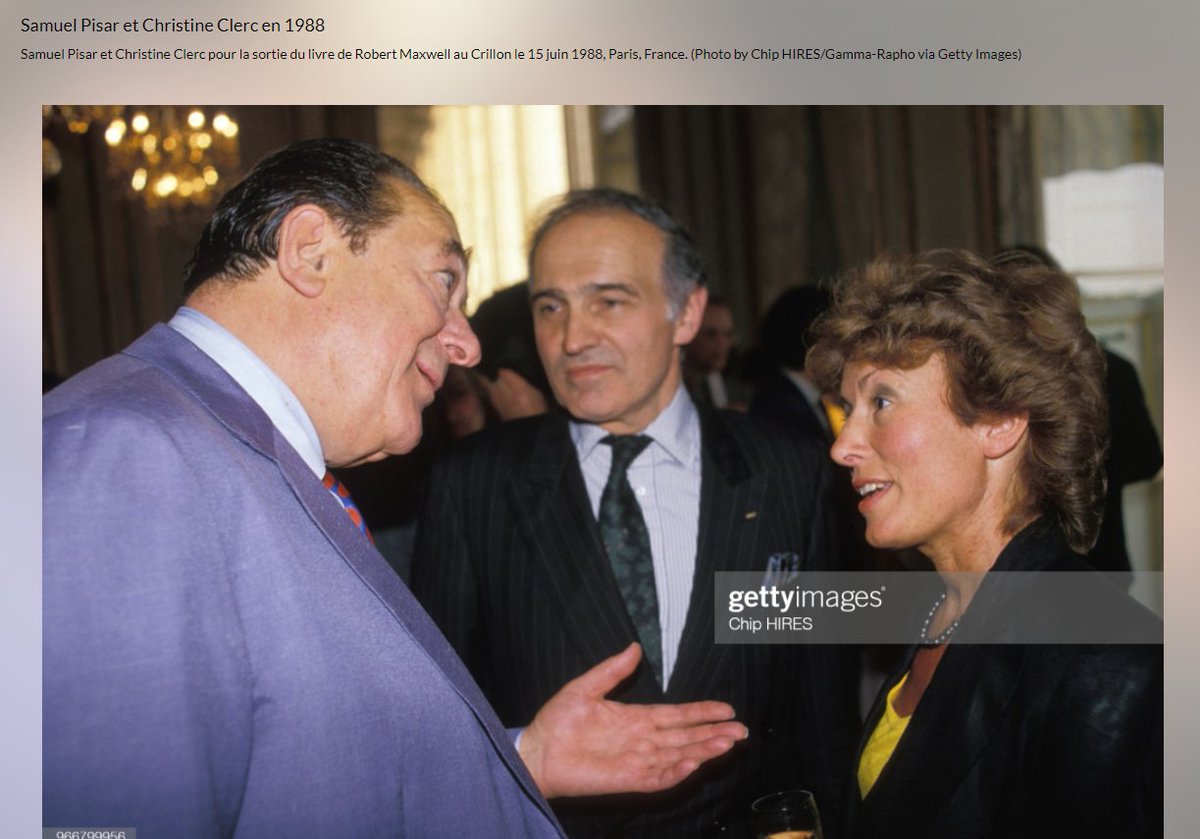
"Pisar was one of the last people to speak to Maxwell, by phone, probably an hour before the chairman of Mirror Group Newspapers fell off his luxury yacht the Lady Ghislaine on 5 November, 1991." https://t.co/DAEgchNyTP

OK, so that's just a coincidence. Moving on, Anthony Blinken "attended the prestigious Dalton School in New York City"...wait, what? https://t.co/DnE6AvHmJg
Dalton School...Dalton School...rings a
Oh that's right.
The dad of the U.S. Attorney General under both George W. Bush & Donald Trump, William Barr, was headmaster of the Dalton School.
Donald Barr was also quite a
I'm not going to even mention that Blinken's stepdad Sam Pisar's name was in Epstein's "black book."
Lots of names in that book. I mean, for example, Cuomo, Trump, Clinton, Prince Andrew, Bill Cosby, Woody Allen - all in that book, and their reputations are spotless.

Where to begin?
So our new Secretary of State Anthony Blinken's stepfather, Samuel Pisar, was "longtime lawyer and confidant of...Robert Maxwell," Ghislaine Maxwell's Dad.
"Pisar was one of the last people to speak to Maxwell, by phone, probably an hour before the chairman of Mirror Group Newspapers fell off his luxury yacht the Lady Ghislaine on 5 November, 1991." https://t.co/DAEgchNyTP
OK, so that's just a coincidence. Moving on, Anthony Blinken "attended the prestigious Dalton School in New York City"...wait, what? https://t.co/DnE6AvHmJg
Dalton School...Dalton School...rings a
Oh that's right.
The dad of the U.S. Attorney General under both George W. Bush & Donald Trump, William Barr, was headmaster of the Dalton School.
Donald Barr was also quite a
Donald Barr had a way with words. pic.twitter.com/JdRBwXPhJn
— Rudy Havenstein, listening to Nas all day. (@RudyHavenstein) September 17, 2020
I'm not going to even mention that Blinken's stepdad Sam Pisar's name was in Epstein's "black book."
Lots of names in that book. I mean, for example, Cuomo, Trump, Clinton, Prince Andrew, Bill Cosby, Woody Allen - all in that book, and their reputations are spotless.







![Peter McCormack [Jan/3\u279e\u20bf \U0001f511\u220e]](https://pbs.twimg.com/profile_images/1524287442307723265/_59ITDbJ_normal.jpg)