
What we're seeing from Trump and his allies today is an autocratic attempt. It's not a competent one, and it probably won't be an effective one. But that's what it is. And far worse would follow if it succeeded.
STOP THE COUNT!
— Donald J. Trump (@realDonaldTrump) November 5, 2020
"Then, at some point, there comes the autocratic breakthrough when you can no longer use electoral means to reverse that autocracy."
It's fitting for the internet era, when the worst ideas and figures come layered in irony.
— Brian Beutler (@brianbeutler) November 5, 2020
There are no good answers when the worst people hold power.
More from Ezra Klein
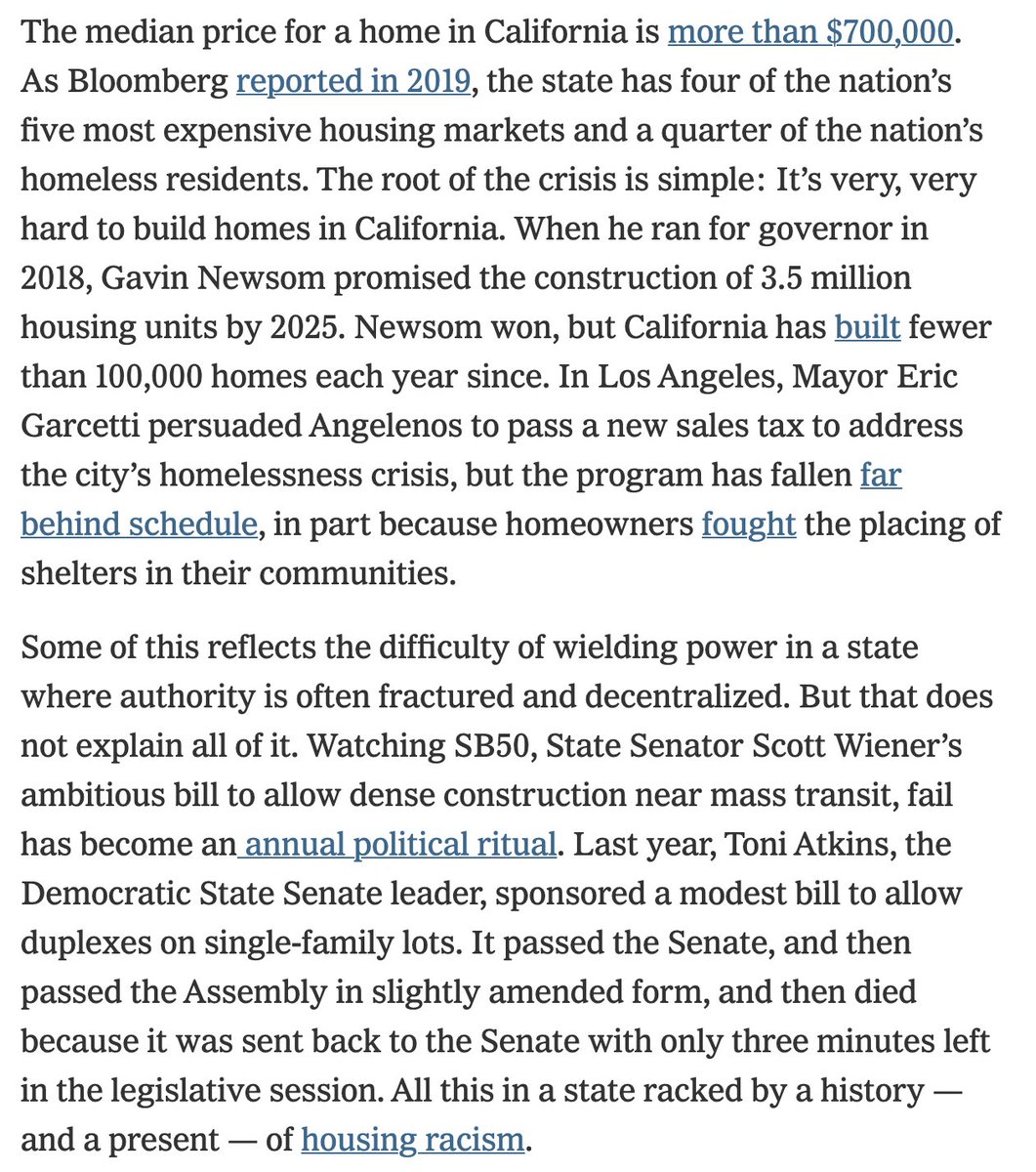
This is a piece I've been thinking about for a long time. One of the most dominant policy ideas in Washington is that policy should, always and everywhere, move parents into paid labor. But what if that's wrong?
My reporting here convinced me that there's no large effect in either direction on labor force participation from child allowances. Canada has a bigger one than either Romney or Biden are considering, and more labor force participation among women.
But what if that wasn't true?
Forcing parents into low-wage, often exploitative, jobs by threatening them and their children with poverty may be counted as a success by some policymakers, but it’s a sign of a society that doesn’t value the most essential forms of labor.
The problem is in the very language we use. If I left my job as a New York Times columnist to care for my 2-year-old son, I’d be described as leaving the labor force. But as much as I adore him, there is no doubt I’d be working harder. I wouldn't have stopped working!
I tried to render conservative objections here fairly. I appreciate that @swinshi talked with me, and I'm sorry I couldn't include everything he said. I'll say I believe I used his strongest arguments, not more speculative ones, in the piece.
My reporting here convinced me that there's no large effect in either direction on labor force participation from child allowances. Canada has a bigger one than either Romney or Biden are considering, and more labor force participation among women.
But what if that wasn't true?
Forcing parents into low-wage, often exploitative, jobs by threatening them and their children with poverty may be counted as a success by some policymakers, but it’s a sign of a society that doesn’t value the most essential forms of labor.
The problem is in the very language we use. If I left my job as a New York Times columnist to care for my 2-year-old son, I’d be described as leaving the labor force. But as much as I adore him, there is no doubt I’d be working harder. I wouldn't have stopped working!
I tried to render conservative objections here fairly. I appreciate that @swinshi talked with me, and I'm sorry I couldn't include everything he said. I'll say I believe I used his strongest arguments, not more speculative ones, in the piece.
I appreciate his intellectual curiosity and effort. I have quibbles. But my big disappointment is there was no mention of unintended consequences, which we discussed and which are kind of THE core conservative concern on this issue.
— \U0001d682\U0001d68c\U0001d698\U0001d69d\U0001d69d \U0001d686\U0001d692\U0001d697\U0001d69c\U0001d691\U0001d692\U0001d699 (@swinshi) February 18, 2021
This is a good @mattyglesias post about techno-politics but I want to quibble with the part of it that’s about my essay on the policy feedback loops you can build by Just Helping People Fast. Matt writes: https://t.co/MuBlgQV6LW
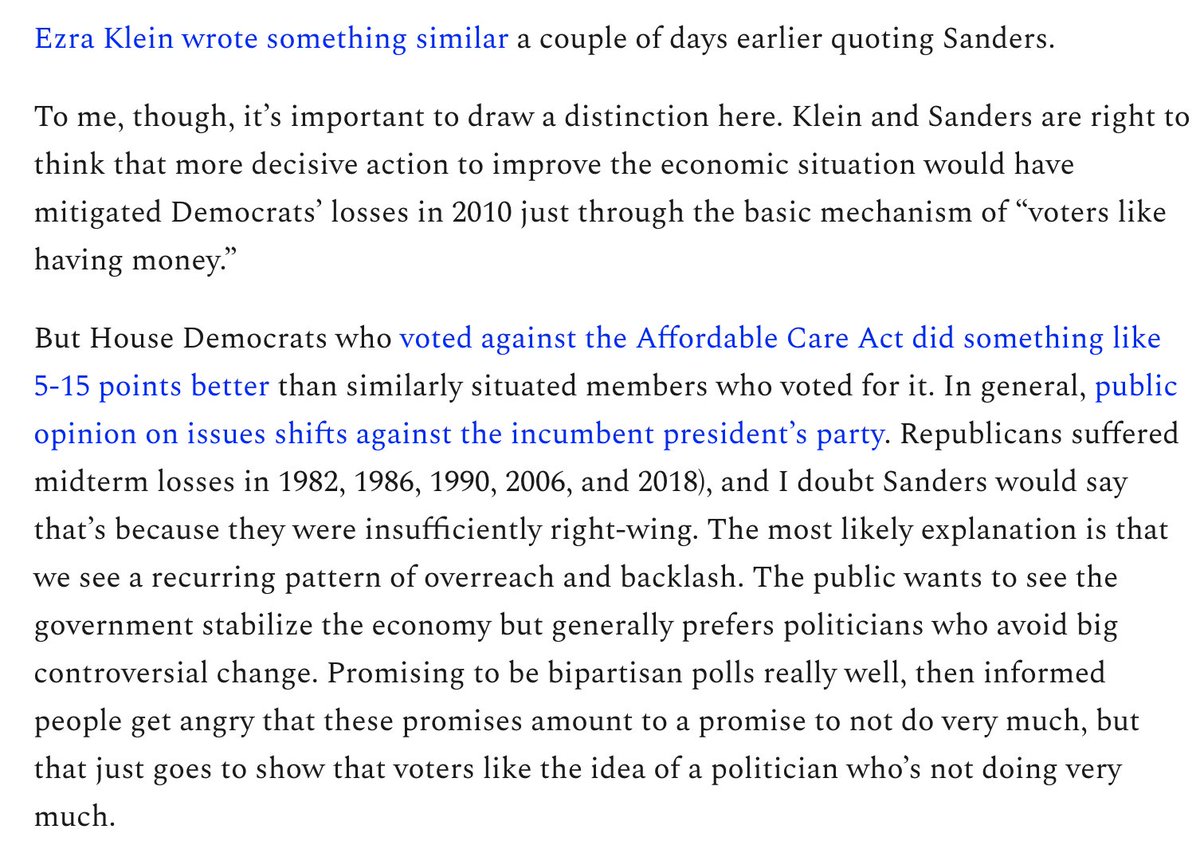
Over at Mischiefs of Faction, @Smotus makes a similar point: https://t.co/al6fS5tZXP
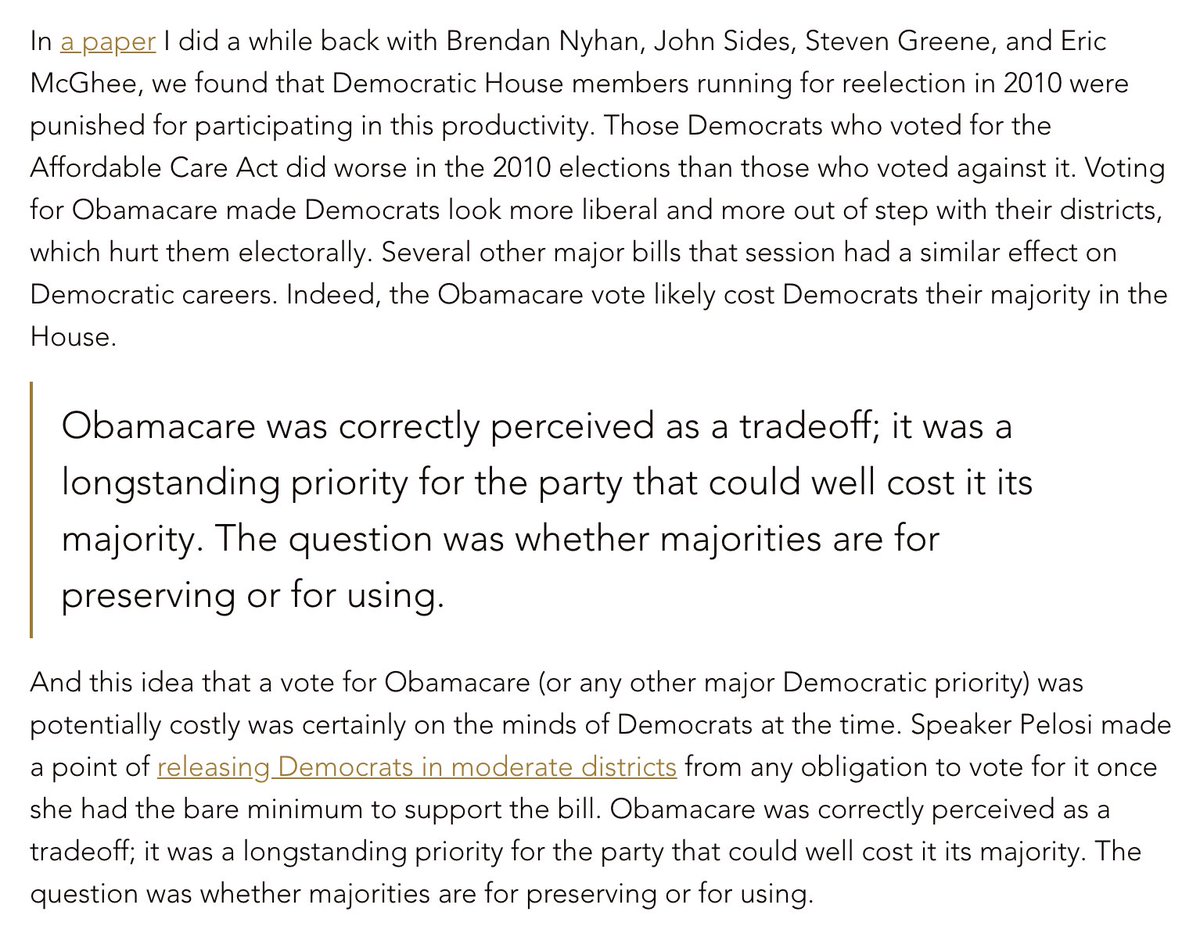
I want to be clear here: I’m saying that the Affordable Care act was, from a political perspective, badly designed, and that *a different health care plan* might’ve led to a better Dem performance in 2010. But these arguments don't grapple with that.
To @Smotus’s point, Pelosi released those House Democrats at the end, not the beginning. Having covered the beginning of this, I can tell you a lot of those Democrats thought a bipartisan health care bill would be great politics for them!
But they didn’t get that.
This is key. The ACA was built on the political theory that:
1. Bipartisan policy is easier to pass — and more popular once passed.
2. Working off of the Heritage Foundation/Romney template could get you a bipartisan health bill.
1 was probably right. 2 was utterly wrong.
Over at Mischiefs of Faction, @Smotus makes a similar point: https://t.co/al6fS5tZXP
I want to be clear here: I’m saying that the Affordable Care act was, from a political perspective, badly designed, and that *a different health care plan* might’ve led to a better Dem performance in 2010. But these arguments don't grapple with that.
To @Smotus’s point, Pelosi released those House Democrats at the end, not the beginning. Having covered the beginning of this, I can tell you a lot of those Democrats thought a bipartisan health care bill would be great politics for them!
But they didn’t get that.
This is key. The ACA was built on the political theory that:
1. Bipartisan policy is easier to pass — and more popular once passed.
2. Working off of the Heritage Foundation/Romney template could get you a bipartisan health bill.
1 was probably right. 2 was utterly wrong.
More from Politics


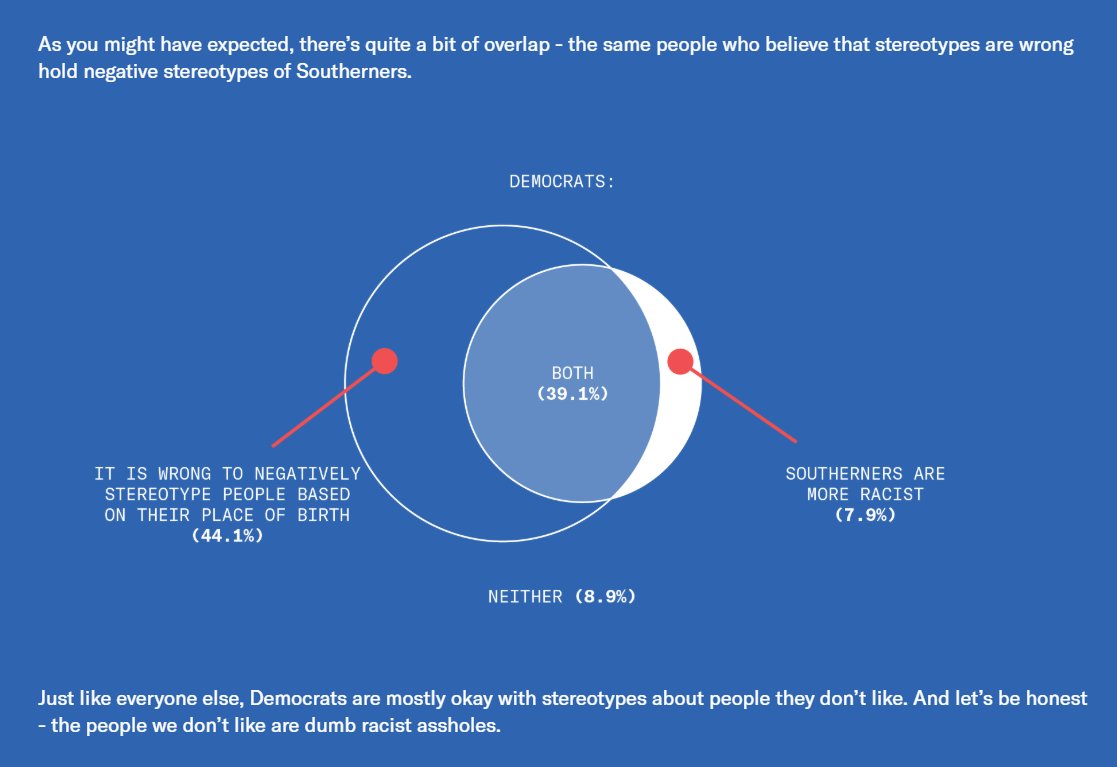
39.1% of Democrats think that it's wrong to negatively stereotype people based on their place of birth... AND that Southerners are more racist. https://t.co/yp1hviLuBB
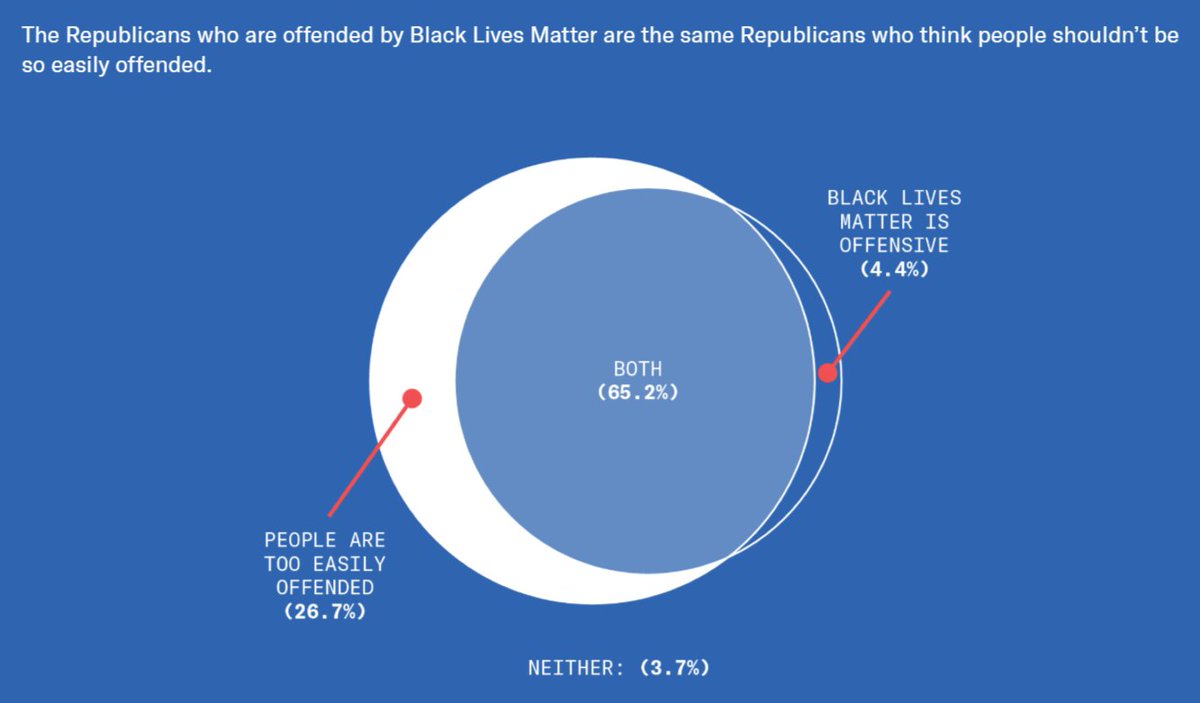
65.2% of Republicans think that people shouldn't be so easily offended... AND that Black Lives Matter is offensive. https://t.co/znmVhqIaL8
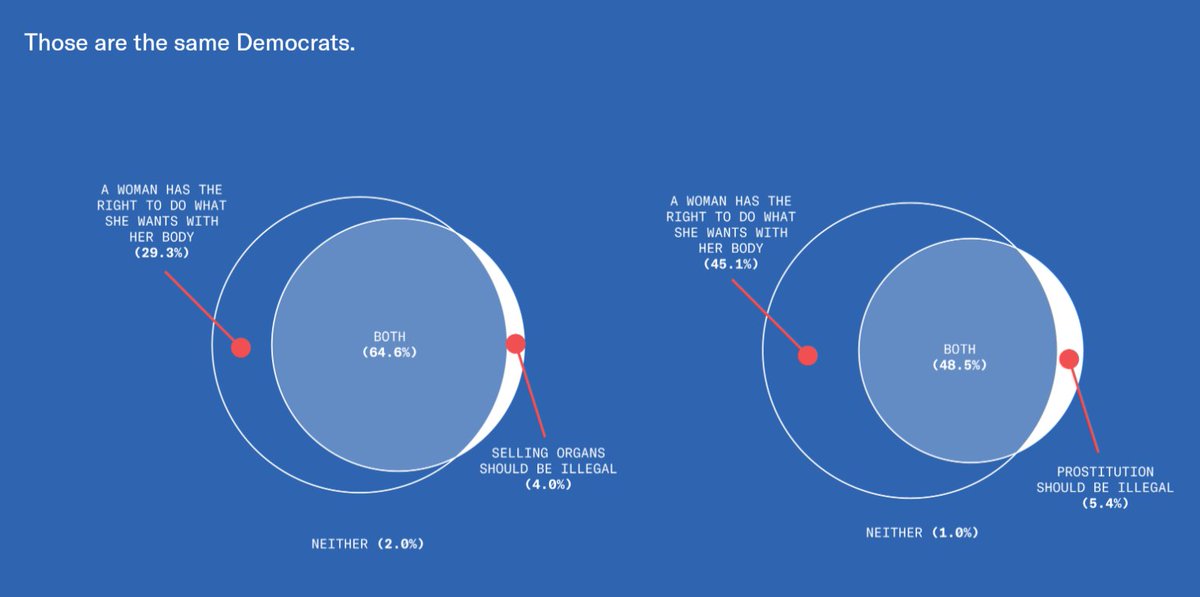
64.6% of Democrats think that a woman has the right to do what she wants with her body... AND that selling organs should be illegal.
48.5% of Democrats think that a woman has the right to do what she wants with her body... AND that prostitution should be illegal.
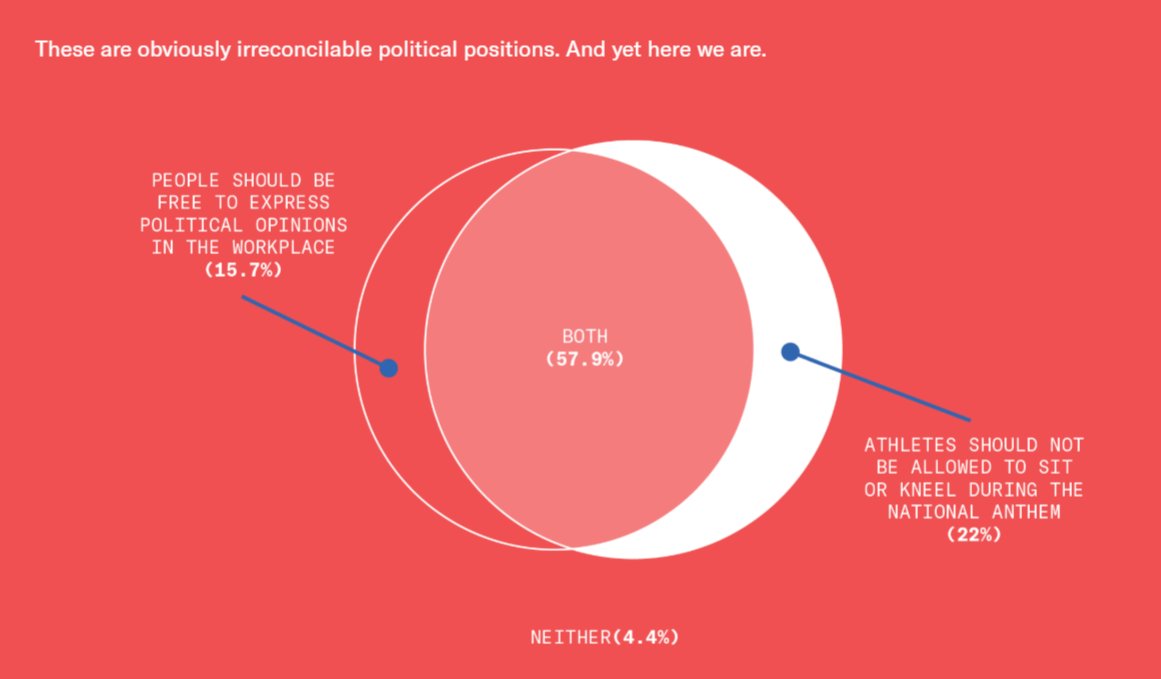
57.9% of Republicans think that people should be free to express their opinions in the workplace... AND that athletes should not be allowed to sit or kneel during the national anthem. https://t.co/ds2ig1NJFr
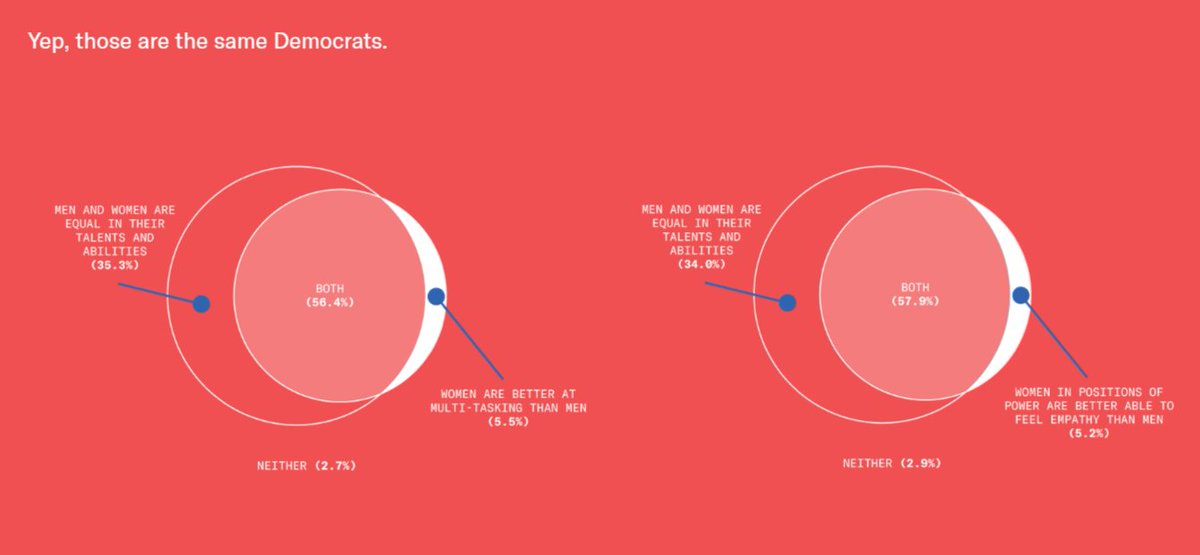
Democrats: Men and women are equal in their talents and abilities. Also, women are superior. https://t.co/bEFSmqQguo
65.2% of Republicans think that people shouldn't be so easily offended... AND that Black Lives Matter is offensive. https://t.co/znmVhqIaL8
64.6% of Democrats think that a woman has the right to do what she wants with her body... AND that selling organs should be illegal.
48.5% of Democrats think that a woman has the right to do what she wants with her body... AND that prostitution should be illegal.
57.9% of Republicans think that people should be free to express their opinions in the workplace... AND that athletes should not be allowed to sit or kneel during the national anthem. https://t.co/ds2ig1NJFr
Democrats: Men and women are equal in their talents and abilities. Also, women are superior. https://t.co/bEFSmqQguo





You May Also Like





Ivor Cummins has been wrong (or lying) almost entirely throughout this pandemic and got paid handsomly for it.
He has been wrong (or lying) so often that it will be nearly impossible for me to track every grift, lie, deceit, manipulation he has pulled. I will use...

... other sources who have been trying to shine on light on this grifter (as I have tried to do, time and again:
Example #1: "Still not seeing Sweden signal versus Denmark really"... There it was (Images attached).
19 to 80 is an over 300% difference.
Tweet: https://t.co/36FnYnsRT9

Example #2 - "Yes, I'm comparing the Noridcs / No, you cannot compare the Nordics."
I wonder why...
Tweets: https://t.co/XLfoX4rpck / https://t.co/vjE1ctLU5x

Example #3 - "I'm only looking at what makes the data fit in my favour" a.k.a moving the goalposts.
Tweets: https://t.co/vcDpTu3qyj / https://t.co/CA3N6hC2Lq

He has been wrong (or lying) so often that it will be nearly impossible for me to track every grift, lie, deceit, manipulation he has pulled. I will use...
... other sources who have been trying to shine on light on this grifter (as I have tried to do, time and again:
Ivor Cummins BE (Chem) is a former R&D Manager at HP (sourcre: https://t.co/Wbf5scf7gn), turned Content Creator/Podcast Host/YouTube personality. (Call it what you will.)
— Steve (@braidedmanga) November 17, 2020
Example #1: "Still not seeing Sweden signal versus Denmark really"... There it was (Images attached).
19 to 80 is an over 300% difference.
Tweet: https://t.co/36FnYnsRT9
Example #2 - "Yes, I'm comparing the Noridcs / No, you cannot compare the Nordics."
I wonder why...
Tweets: https://t.co/XLfoX4rpck / https://t.co/vjE1ctLU5x
Example #3 - "I'm only looking at what makes the data fit in my favour" a.k.a moving the goalposts.
Tweets: https://t.co/vcDpTu3qyj / https://t.co/CA3N6hC2Lq