
#MaithanAlloy
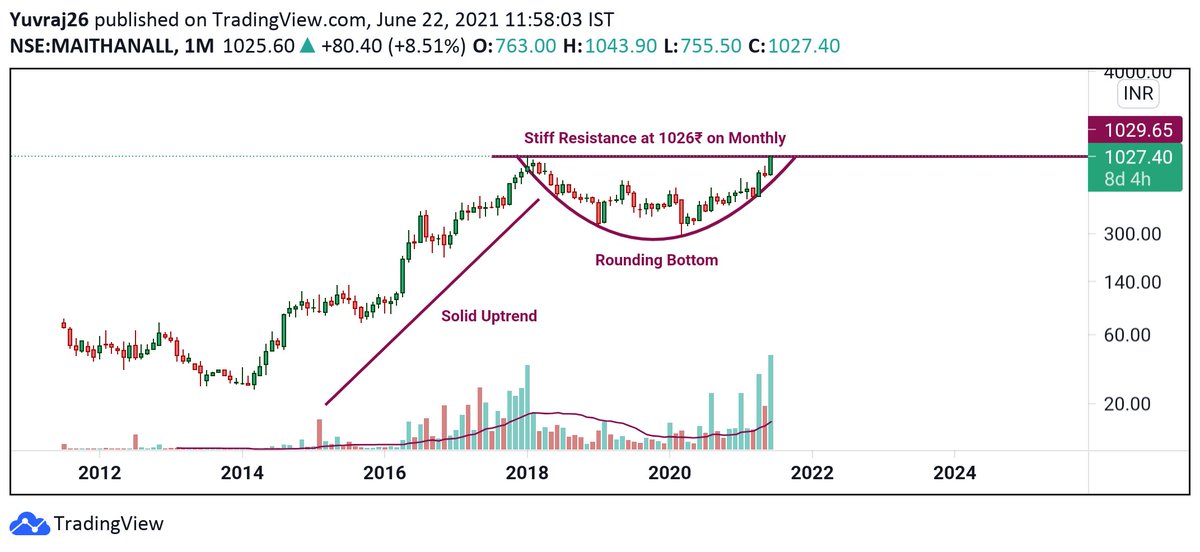
@nishkumar1977 Sir it's just a Starting, if we see from Chopper View it has a long way to go.
If we consider Rounding Bottom depth for Target then upside Target comes around 3500₹.
But remember it's a monthly chart it may take few years
More from Maithanalloys


Will post charts of next potential movers tomorrow. Interested?
#Dare2Drm
#HindCopper Stock is coming out of a big consolidation. A move above 147, stock could be headed to 165 (next resistance). If #BseMetals index breaks out, i am expecting levels of 196 again and if that gets taken out, levels of 220. lets see - one step at a time
#Dare2Drm

#Dare2Drm
Will post charts of next potential movers tomorrow. Interested.#Dare2Drm
— Dare2Dream (@Dare2Dr10109801) July 9, 2021
#HindCopper Stock is coming out of a big consolidation. A move above 147, stock could be headed to 165 (next resistance). If #BseMetals index breaks out, i am expecting levels of 196 again and if that gets taken out, levels of 220. lets see - one step at a time
#Dare2Drm


#Maithanalloys #dailychart https://t.co/9TEjF684f3
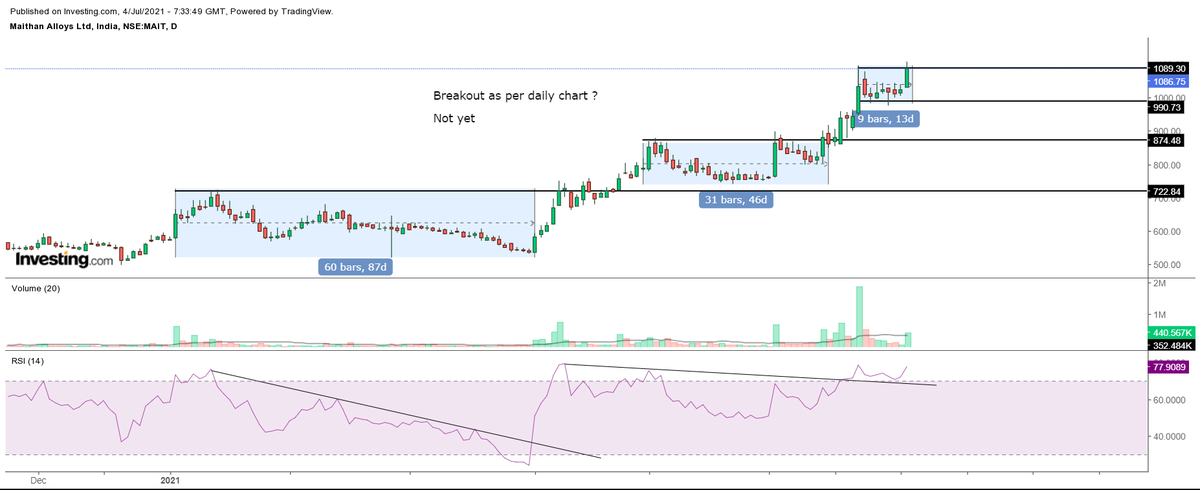
#Maithanalloys #Publicdemand\U0001f600
— Pranay Prasun (@PranayPrasun) July 4, 2021
Highlighted at 560\U0001f525 level and i'm going to cover all major timeframes \U0001f447
~ What next ?
~ When to add ?
~ Immediate target
~ stop loss https://t.co/v1qWY5TrYQ
You May Also Like





So it's now October 10, 2018 and....Rod Rosenstein is STILL not fired.
He's STILL in charge of the Mueller investigation.
He's STILL refusing to hand over the McCabe memos.
He's STILL holding up the declassification of the #SpyGate documents & their release to the public.
I love a good cover story.......
The guy had a face-to-face with El Grande Trumpo himself on Air Force One just 2 days ago. Inside just about the most secure SCIF in the world.
And Trump came out of AF1 and gave ol' Rod a big thumbs up!
And so we're right back to 'that dirty rat Rosenstein!' 2 days later.
At this point it's clear some members of Congress are either in on this and helping the cover story or they haven't got a clue and are out in the cold.
Note the conflicting stories about 'Rosenstein cancelled meeting with Congress on Oct 11!"
First, rumors surfaced of a scheduled meeting on Oct. 11 between Rosenstein & members of Congress, and Rosenstein just cancelled it.
He's STILL in charge of the Mueller investigation.
He's STILL refusing to hand over the McCabe memos.
He's STILL holding up the declassification of the #SpyGate documents & their release to the public.
I love a good cover story.......
The guy had a face-to-face with El Grande Trumpo himself on Air Force One just 2 days ago. Inside just about the most secure SCIF in the world.
And Trump came out of AF1 and gave ol' Rod a big thumbs up!
And so we're right back to 'that dirty rat Rosenstein!' 2 days later.
At this point it's clear some members of Congress are either in on this and helping the cover story or they haven't got a clue and are out in the cold.
Note the conflicting stories about 'Rosenstein cancelled meeting with Congress on Oct 11!"
First, rumors surfaced of a scheduled meeting on Oct. 11 between Rosenstein & members of Congress, and Rosenstein just cancelled it.
Rep. Andy Biggs and Rep. Matt Gaetz say DAG Rod Rosenstein cancelled an Oct. 11 appearance before the judiciary and oversight committees. They are now calling for a subpoena. pic.twitter.com/TknVHKjXtd
— Ivan Pentchoukov \U0001f1fa\U0001f1f8 (@IvanPentchoukov) October 10, 2018