This is not an original anecdote. But is thought provoking neverthless.

A young woman went to her mother, told her about her life and how things were so hard for her. She did not know how she was going to make it and wanted to give up. 1/n

She was tired of fighting and struggling. It seemed as one problem was solved, a new one arose.

Her wise mother did not say anything but led her to the kitchen. She filled three pots with water and placed each on the stove. 2/n
And the pots were brought to boil. In the first pot she put a carrot, in the second she carefully dropped an egg, and in the last she put a spoon of ground coffee beans. She let them boil for a while, without saying a word. 3/n
After twenty minutes she turned off the burners. She stained both the pots containing carrot and egg, which she placed on separate bowls. She poured the pot that contained the coffee powder and water into a third bowl. 4/n
Turning to her daughter, she asked, ' Tell me what you see.'

'Carrots, eggs, and coffee,' she replied.

Her mother asked her to feel the carrots. She did and noted that they were soft. The mother then asked the daughter to take an egg and break its shell. 5/n
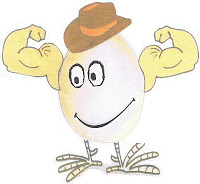
After pulling off the shell, she observed that the egg has now become hard boiled.

Finally, the mother asked the daughter to sip the coffee. The daughter smiled as she tasted its rich aroma.

The daughter asked, 'What does this mean, mother?' 6/n
Her mother explained that each of these objects had faced the same adversity: boiling water. Each reacted differently.

The carrot went in strong, hard, and unrelenting. However, after being subjected to the boiling water, it softened and became weak. 7/n
The egg had been fragile. Its thin outer shell had protected its liquid interior, but after being boiled in water, its inside became hardened. 8/n
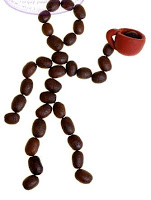
The ground coffee beans were unique, however. After they were in the boiling water, they had changed the water to a rich aromatic enjoyable coffee. 9/n
Which are you?' she asked her daughter. 'When adversity knocks on your door, how do you respond? Are you a carrot, an egg or a coffee bean?" 10/n
By the way which are YOU?

Are you the carrot that seems strong, but with pain and adversity you wilt, become soft and lose your strength? 11/n
Are you the egg that starts with a malleable heart, but changes when the heat is really on? Do you have a fragile demeanour, but after a death, a breakup, a financial hardship or some other hardship, you come out hardened and stronger? 12/n
Or are you the coffee bean? The bean actually changes the hot water, the very circumstance that brings the pain. When the boiling is over, it adds fragrance and flavor to even the water. 13/n
If you are like the bean, when things are at their worst, you get better and change the situation around you. When the hour is the darkest and trials are their greatest you elevate yourself to another level. You also have the habit of turning adversity into an opportunity. 14/n
What are you, then, and more importantly, What do you want to be? n/n

More from Rajan Venkateswaran (സ്വാമി)

More from Life

1/“What would need to be true for you to….X”

Why is this the most powerful question you can ask when attempting to reach an agreement with another human being or organization?

A thread, co-written by @deanmbrody:


2/ First, “X” could be lots of things. Examples: What would need to be true for you to

- “Feel it's in our best interest for me to be CMO"
- “Feel that we’re in a good place as a company”
- “Feel that we’re on the same page”
- “Feel that we both got what we wanted from this deal

3/ Normally, we aren’t that direct. Example from startup/VC land:

Founders leave VC meetings thinking that every VC will invest, but they rarely do.

Worse over, the founders don’t know what they need to do in order to be fundable.

4/ So why should you ask the magic Q?

To get clarity.

You want to know where you stand, and what it takes to get what you want in a way that also gets them what they want.

It also holds them (mentally) accountable once the thing they need becomes true.

5/ Staying in the context of soliciting investors, the question is “what would need to be true for you to want to invest (or partner with us on this journey, etc)?”

Multiple responses to this question are likely to deliver a positive result.
1/ Some initial thoughts on personal moats:

Like company moats, your personal moat should be a competitive advantage that is not only durable—it should also compound over time.

Characteristics of a personal moat below:


2/ Like a company moat, you want to build career capital while you sleep.

As Andrew Chen noted:


3/ You don’t want to build a competitive advantage that is fleeting or that will get commoditized

Things that might get commoditized over time (some longer than


4/ Before the arrival of recorded music, what used to be scarce was the actual music itself — required an in-person artist.

After recorded music, the music itself became abundant and what became scarce was curation, distribution, and self space.

5/ Similarly, in careers, what used to be (more) scarce were things like ideas, money, and exclusive relationships.

In the internet economy, what has become scarce are things like specific knowledge, rare & valuable skills, and great reputations.

You May Also Like

A brief analysis and comparison of the CSS for Twitter's PWA vs Twitter's legacy desktop website. The difference is dramatic and I'll touch on some reasons why.

Legacy site *downloads* ~630 KB CSS per theme and writing direction.

6,769 rules
9,252 selectors
16.7k declarations
3,370 unique declarations
44 media queries
36 unique colors
50 unique background colors
46 unique font sizes
39 unique z-indices

https://t.co/qyl4Bt1i5x


PWA *incrementally generates* ~30 KB CSS that handles all themes and writing directions.

735 rules
740 selectors
757 declarations
730 unique declarations
0 media queries
11 unique colors
32 unique background colors
15 unique font sizes
7 unique z-indices

https://t.co/w7oNG5KUkJ


The legacy site's CSS is what happens when hundreds of people directly write CSS over many years. Specificity wars, redundancy, a house of cards that can't be fixed. The result is extremely inefficient and error-prone styling that punishes users and developers.

The PWA's CSS is generated on-demand by a JS framework that manages styles and outputs "atomic CSS". The framework can enforce strict constraints and perform optimisations, which is why the CSS is so much smaller and safer. Style conflicts and unbounded CSS growth are avoided.