..imagine a supersized energizer bunny. Because he's inarticulate, he uses alternative communication. However, it happens that he just runs out of what he could form out as words in his mouth or utilize a way to communicate his intent. He can grow frustrated at not being
1/15
This is a long post. Triggered. Our son is 24 years old. He has autism (diagnosed at the age of 19 months, and NOT by Google). Among others, his ability to speak is limited. When he's happy, he jumps up & down & claps his hands, laughing out loudly & like a ball of energy..
..imagine a supersized energizer bunny. Because he's inarticulate, he uses alternative communication. However, it happens that he just runs out of what he could form out as words in his mouth or utilize a way to communicate his intent. He can grow frustrated at not being
able to get his meaning across. So, he yells and yells. At times, it isn't easy to stop it even though we have established key words that ought to help him simmer down. If not, I just let him blow that steam off until he cries. He cries like someone has died...howling even
He cries out of that frustration until he gets tired and stops. It is upsetting and breaks my heart each time.
I admit that when he was younger, we didn't bring him out as much because we didn't want him to make others uncomfortable. But now, I take the view that this is just wrong. This behavior does not define who he is. He is obedient (the most out of my three kids),
has a ready smile & smooch, considerate & hearty. I'll not deny my son his pursuit of happiness (he loves the mall & eating out). He's already limited, why would I set more boundaries? As his family, we do our best to protect him. We do this out of love, not because of pride
Please allow me to just debunk what has been said that "one word from a responsible parent is enough to make a child quiet down". This statement rolled off someone's tongue who either has no kids or likely was indifferent to his own.
Even a "normal" child, in certain situations, would be hard to quiet down. As for our son, since he was diagnosed, to the best of our abilities, we have not stopped in tapping resources to optimize his ability to communicate (both ways, to be on the giving and receiving end)
How could we not? Any parent would give anything to have lucid conversation with their child. But the reality is, there are cases in which this is not attainable in the conventional way. So we adjust, we accommodate.
Our society is governed by rules of convention, how this and that should be done. If one acts outside of these, knowing glances and snide comments abound. The result: intolerance, bias, discrimination, even hate. This happens in a non-inclusive environment, meaning,
there is no consideration, no empathy for those who may be differently abled or situated. I wonder, did even-handedness in applying policy mean exercising equality or equity? That difference is huge. This is what #PlantationBay does not get. Call a spade a spade.
#PlantationBay is NOT supportive of the community of parents with children who have special needs. But in the off chance they really want to be supportive, learn more about the differently abled. Huwag lang Gu-gelin. Katamaran yan and most insincere.
Sit down and consult with experts, with the families. See and appreciate our situation by trying to even stand in our own shoes. Then talk to us about equitable application of policies. That is real even-handedness.
Lastly, what happened here was not an isolated case at all. It happens everyday and everywhere. I am not glad at all that Fin and his mom got to experience this and what should have been a fun memorable time made forgettable.
More from Life


THREAD: 12 Things Everyone Should Know About IQ
1. IQ is one of the most heritable psychological traits – that is, individual differences in IQ are strongly associated with individual differences in genes (at least in fairly typical modern environments). https://t.co/3XxzW9bxLE
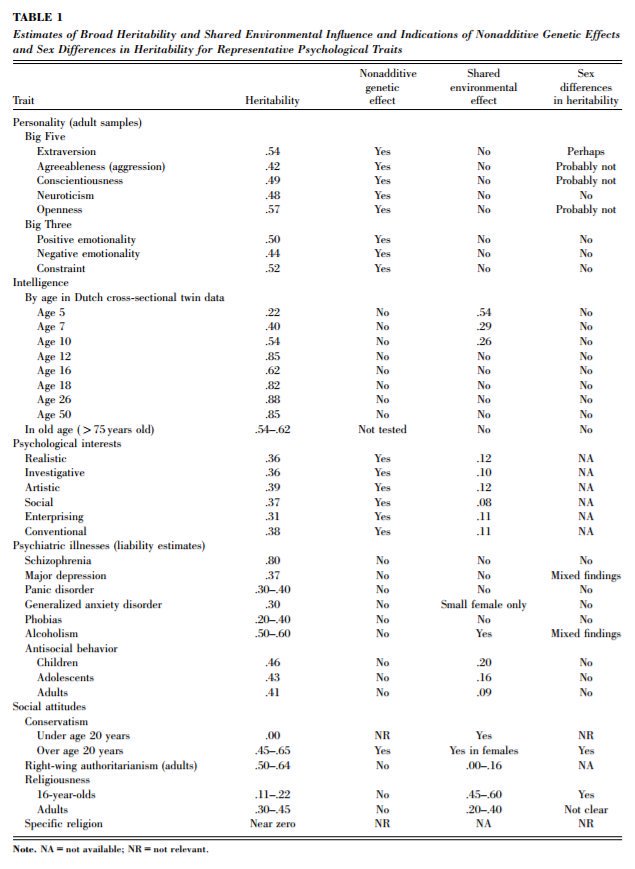
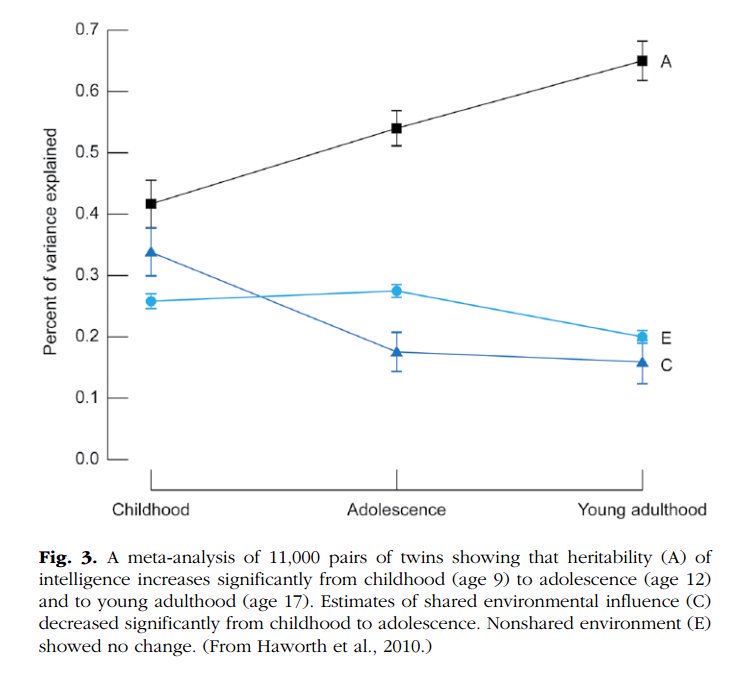
2. The heritability of IQ *increases* from childhood to adulthood. Meanwhile, the effect of the shared environment largely fades away. In other words, when it comes to IQ, nature becomes more important as we get older, nurture less. https://t.co/UqtS1lpw3n
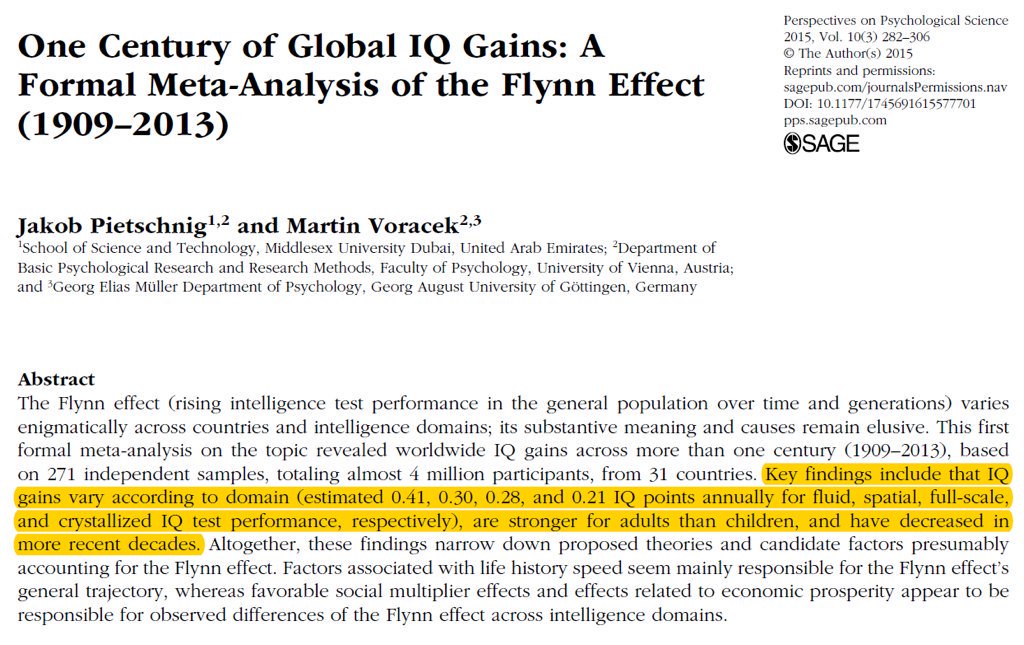
3. IQ scores have been increasing for the last century or so, a phenomenon known as the Flynn effect. https://t.co/sCZvCst3hw (N ≈ 4 million)
(Note that the Flynn effect shows that IQ isn't 100% genetic; it doesn't show that it's 100% environmental.)
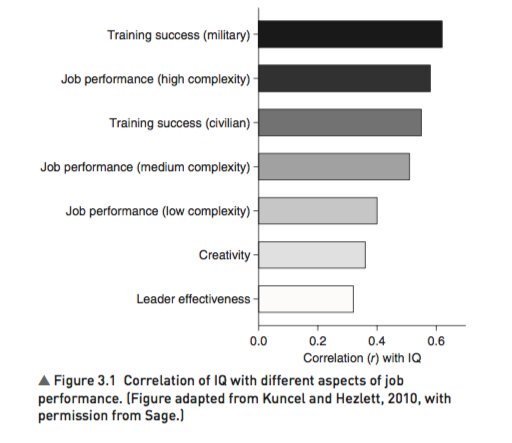
4. IQ predicts many important real world outcomes.
For example, though far from perfect, IQ is the single-best predictor of job performance we have – much better than Emotional Intelligence, the Big Five, Grit, etc. https://t.co/rKUgKDAAVx https://t.co/DWbVI8QSU3
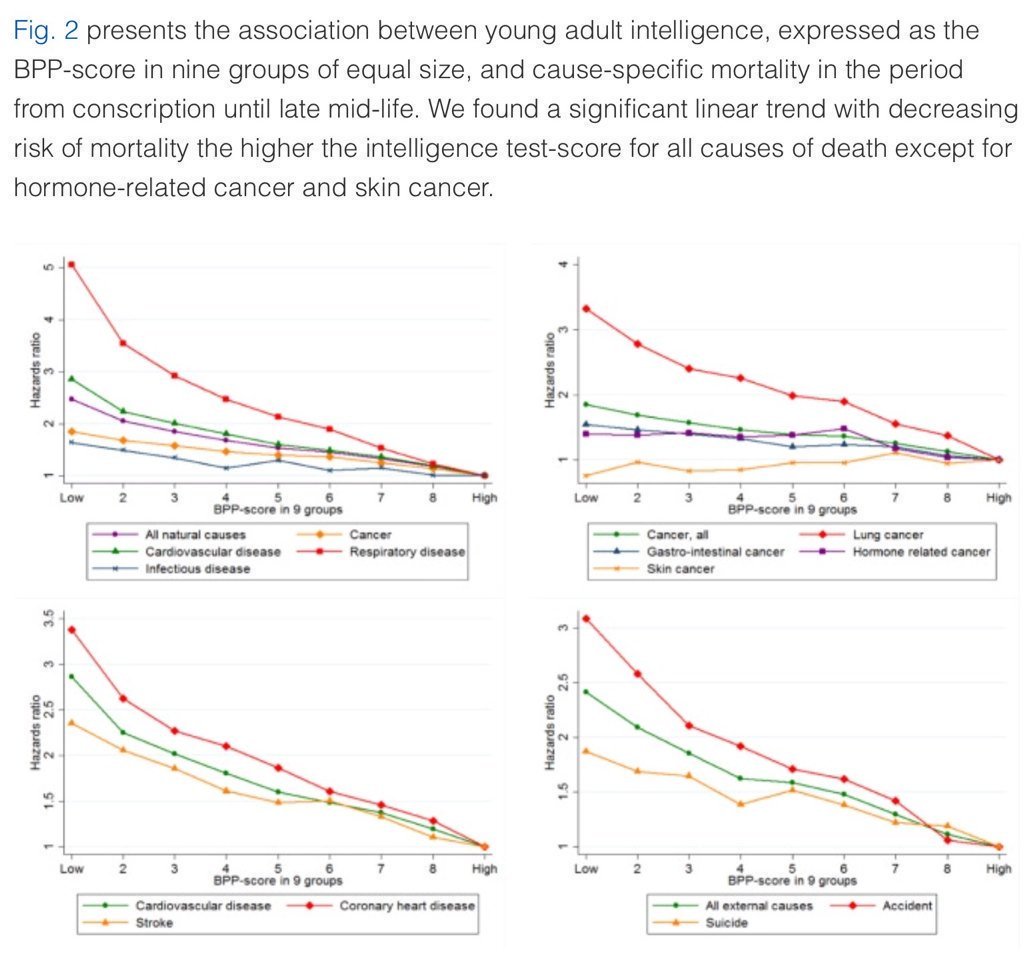
5. Higher IQ is associated with a lower risk of death from most causes, including cardiovascular disease, respiratory disease, most forms of cancer, homicide, suicide, and accident. https://t.co/PJjGNyeQRA (N = 728,160)
1. IQ is one of the most heritable psychological traits – that is, individual differences in IQ are strongly associated with individual differences in genes (at least in fairly typical modern environments). https://t.co/3XxzW9bxLE
2. The heritability of IQ *increases* from childhood to adulthood. Meanwhile, the effect of the shared environment largely fades away. In other words, when it comes to IQ, nature becomes more important as we get older, nurture less. https://t.co/UqtS1lpw3n
3. IQ scores have been increasing for the last century or so, a phenomenon known as the Flynn effect. https://t.co/sCZvCst3hw (N ≈ 4 million)
(Note that the Flynn effect shows that IQ isn't 100% genetic; it doesn't show that it's 100% environmental.)
4. IQ predicts many important real world outcomes.
For example, though far from perfect, IQ is the single-best predictor of job performance we have – much better than Emotional Intelligence, the Big Five, Grit, etc. https://t.co/rKUgKDAAVx https://t.co/DWbVI8QSU3
5. Higher IQ is associated with a lower risk of death from most causes, including cardiovascular disease, respiratory disease, most forms of cancer, homicide, suicide, and accident. https://t.co/PJjGNyeQRA (N = 728,160)


Okay hope everyone having a lovely weekend. Lots of love today. Feeling very blessed 🥰 Going through NNOX tweets from last week. Time to compile threads and bring you highlights. No need to go digging old tweets if I do for you 🤗 FDA, Secondary, and 3P510k. Let’s review..
The NNOX news flow been exceptionally good. I tweet about Fear Uncertainty Doubt and how short sellers leverage friction in news flow to mine some of your gains. NNOX published Form F-1/A to remove friction. Investors have answers.
Form F-1/A Link:
Form F-1 is over 200 detailed pages. Very concentrated. Everything you need for rest of this month in the document. A few notes for you. NNOX FDA approval uses a third party review organization in 510k process. This is abbreviated to 3P510k.
I covered the 3P510K in thread here: https://t.co/w7zE882CVk
Reference to Eagle eyes: https://t.co/gT779MFX82
We discover in F-1 that 3P510K recommended clearance of Nanox Source. This triggers a 30 day timeline to approval by FDA. However ...
Look at you favorite broker news for NNOX. I look at 3 different broker none of them comment NNOX from 60 to 80 on news that 3P510k recommended FDA approve NNOX device. NNOX get a letter and slide 10% we get headline. But no headline for big pop 🤷♂️ that’s the friction.
The NNOX news flow been exceptionally good. I tweet about Fear Uncertainty Doubt and how short sellers leverage friction in news flow to mine some of your gains. NNOX published Form F-1/A to remove friction. Investors have answers.
Form F-1/A Link:
Form F-1 is over 200 detailed pages. Very concentrated. Everything you need for rest of this month in the document. A few notes for you. NNOX FDA approval uses a third party review organization in 510k process. This is abbreviated to 3P510k.
I covered the 3P510K in thread here: https://t.co/w7zE882CVk
Reference to Eagle eyes: https://t.co/gT779MFX82
We discover in F-1 that 3P510K recommended clearance of Nanox Source. This triggers a 30 day timeline to approval by FDA. However ...
Eagle-eyes \U0001f985 https://t.co/w1wF3Ysmt1
— Harvey \U0001f1fa\U0001f1f8 (@realharveymark) February 12, 2021
Look at you favorite broker news for NNOX. I look at 3 different broker none of them comment NNOX from 60 to 80 on news that 3P510k recommended FDA approve NNOX device. NNOX get a letter and slide 10% we get headline. But no headline for big pop 🤷♂️ that’s the friction.