
It was 4days before her due date but she just felt the urge to go to the hospital and she went...she was rushed in for surgery...
Soon to be mother, Mrs. Gemma Edwards was never a believer of miracles until it was time for her to deliver...
Gemma and her husband Craig Edwards had already chosen a name for their unborn child, they named her "SKYE"and she was truly a miracle from the sky...
#OdogwuTales

It was 4days before her due date but she just felt the urge to go to the hospital and she went...she was rushed in for surgery...
Baby Skye had rashes and bruises all over her body, she also had severe heart, blood and lung problems...
Her internal orgrans were practically shutting down!

Doctors worked hard to save Baby Skye but no one could figure out what was wrong, after a few hours...
Family members flocked to the hospital to say "Goodbye" to the little girl that had just arrived..BUT GOD WAS NOT DONE!
Baby Skye took to the sky and was airlifted 170miles to another hospital...
Her parents drove down scared as they didn't know if she would survive the flight...

It was only then that her mother, Gemma was able to hold her for the first time...
Baby Skye was in coma for 2days and on ventilator for 1week...

Her system was just shutting down!
Her mother was given a strand of Baby Skye's hair which she kept inside a tube...
The doctors too had already given up hope on Skye's health condition...
Gemma who never be lived in miracle was praying for one now...

After 2 blood and 5 platelet transfusions, Skye got even better and later made a full recovery...
The doctors couldn't explain it..."NO ONE CAN EXPLAIN A MIRACLE"

"I've never been a believer in miracles, but Skye genuinely is a miracle. Now everyday we are looking at a miracle. She's still here and to be well and making full recovery is just astonishing"
GOD MADE HER A BELIEVER BY GIVING HER A MIRACLE!


More from Life





How to get smarter very fast:
Interact with smart people here on Twitter who have different world-views than you do.
And let them change your mind on something.
Here are the 30 people you should follow (along with my favorite tweet from each)👇👇
Twitter can be terrible if you follow negative people.
It can also be more valuable than a college degree if you follow (and network with) the right people.
You get to look right into their brain and read a daily narrative of HOW they think.
Ok lets go:
#1: @ShaanVP
You know he's all about venture capital based entrepreneurship. I'm about small (non-sexy) business. We disagree on a lot of stuff.
But he's done it and he's won. Bonus follow: @theSamParr (@myfirstmilpod podcast
#2: @fortworthchris
He is where I want to be in 15 years. Has built a massive real estate private equity firm from the ground up. Super grounded with what the way he does business and his podcast @theFORTpodcast is top
#3: @Julian
I'm a scattered thinker and procrastinator.
Julian is a master of clear thinking and simple but effective writing. A world class example of content marketing and
Interact with smart people here on Twitter who have different world-views than you do.
And let them change your mind on something.
Here are the 30 people you should follow (along with my favorite tweet from each)👇👇
Twitter can be terrible if you follow negative people.
It can also be more valuable than a college degree if you follow (and network with) the right people.
You get to look right into their brain and read a daily narrative of HOW they think.
Ok lets go:
#1: @ShaanVP
You know he's all about venture capital based entrepreneurship. I'm about small (non-sexy) business. We disagree on a lot of stuff.
But he's done it and he's won. Bonus follow: @theSamParr (@myfirstmilpod podcast
10 years ago, Netflix spent $0 on original content.
— Shaan Puri (@ShaanVP) January 14, 2021
This year:
Netflix: $11B
Apple: $6B
Disney: $1B
+ amazon, hulu HBO etc.
=
$20B+
Here's a crazy startup idea to take a swing at this $20B+ content pi\xf1ata. \U0001f447 Here's a quick business plan \U0001f914
#2: @fortworthchris
He is where I want to be in 15 years. Has built a massive real estate private equity firm from the ground up. Super grounded with what the way he does business and his podcast @theFORTpodcast is top
When buying a deal, every day that goes by, the potential for tunnel vision grows.
— Chris Powers (@fortworthchris) January 7, 2021
Obsessing over executing detailed Due Diligence early and efficiently is paramount to limiting this.
#3: @Julian
I'm a scattered thinker and procrastinator.
Julian is a master of clear thinking and simple but effective writing. A world class example of content marketing and
THREAD: 10 significant lies you're told about the world.
— Julian Shapiro (@Julian) January 9, 2021
On startups, writing, and your career:


You May Also Like



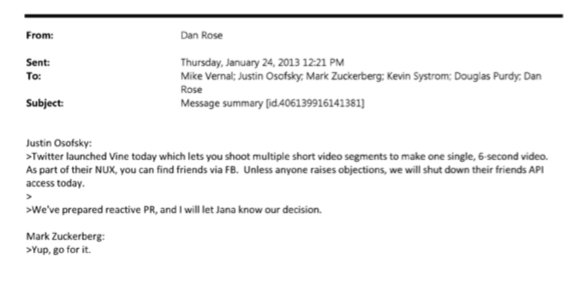
BREAKING: @CommonsCMS @DamianCollins just released previously sealed #Six4Three @Facebook documents:
Some random interesting tidbits:
1) Zuck approves shutting down platform API access for Twitter's when Vine is released #competition
2) Facebook engineered ways to access user's call history w/o alerting users:
Team considered access to call history considered 'high PR risk' but 'growth team will charge ahead'. @Facebook created upgrade path to access data w/o subjecting users to Android permissions dialogue.
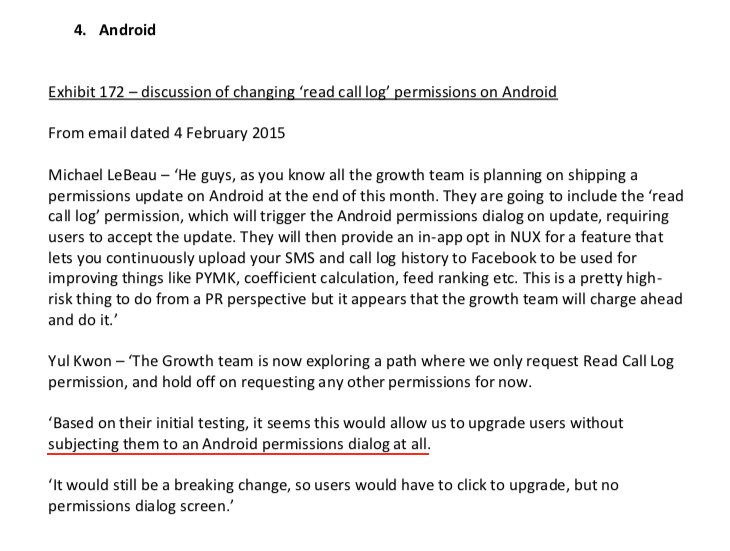
3) The above also confirms @kashhill and other's suspicion that call history was used to improve PYMK (People You May Know) suggestions and newsfeed rankings.
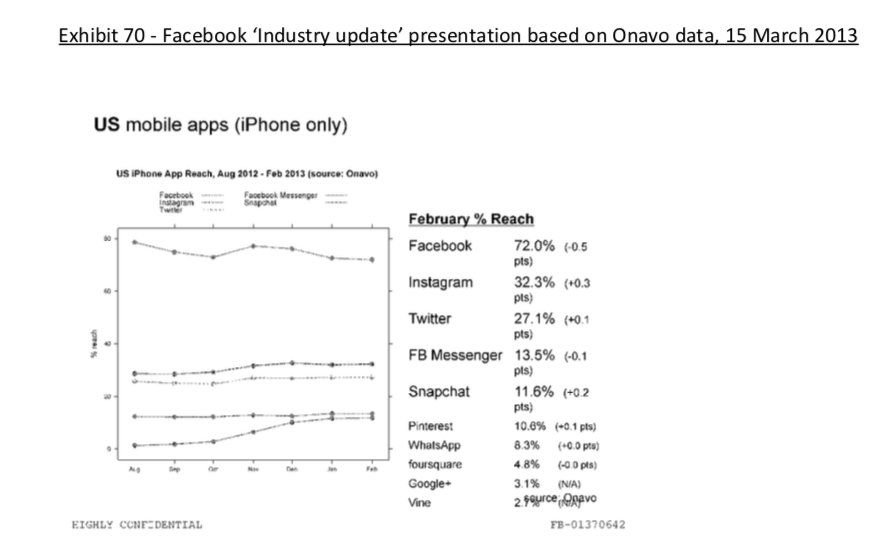
4) Docs also shed more light into @dseetharaman's story on @Facebook monitoring users' @Onavo VPN activity to determine what competitors to mimic or acquire in 2013.
https://t.co/PwiRIL3v9x
Some random interesting tidbits:
1) Zuck approves shutting down platform API access for Twitter's when Vine is released #competition
2) Facebook engineered ways to access user's call history w/o alerting users:
Team considered access to call history considered 'high PR risk' but 'growth team will charge ahead'. @Facebook created upgrade path to access data w/o subjecting users to Android permissions dialogue.
3) The above also confirms @kashhill and other's suspicion that call history was used to improve PYMK (People You May Know) suggestions and newsfeed rankings.
4) Docs also shed more light into @dseetharaman's story on @Facebook monitoring users' @Onavo VPN activity to determine what competitors to mimic or acquire in 2013.
https://t.co/PwiRIL3v9x



Fake chats claiming to be from the Irish African community are being disseminated by the far right in order to suggest that violence is imminent from #BLM supporters. This is straight out of the QAnon and Proud Boys playbook. Spread the word. Protest safely. #georgenkencho

There is co-ordination across the far right in Ireland now to stir both left and right in the hopes of creating a race war. Think critically! Fascists see the tragic killing of #georgenkencho, the grief of his community and pending investigation as a flashpoint for action.
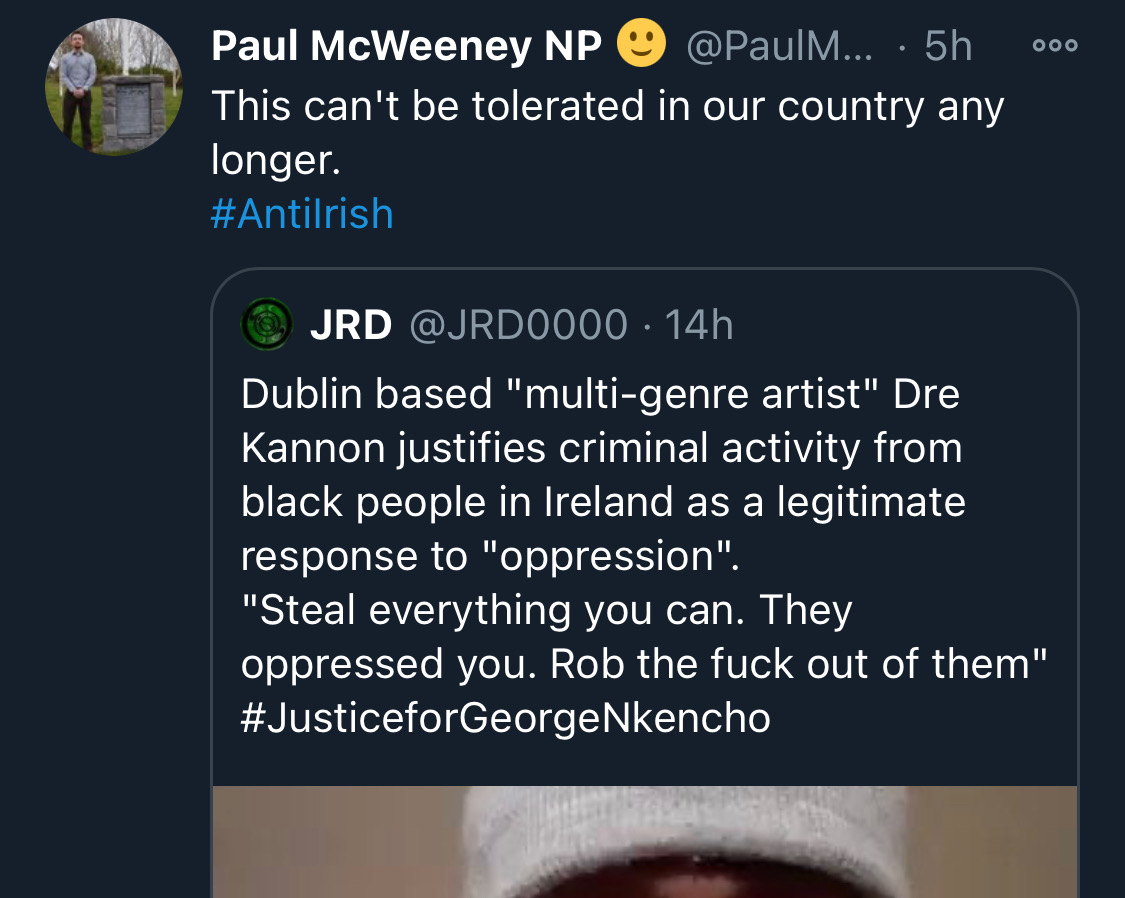
Across Telegram, Twitter and Facebook disinformation is being peddled on the back of these tragic events. From false photographs to the tactics ofwhite supremacy, the far right is clumsily trying to drive hate against minority groups and figureheads.
Declan Ganley’s Burkean group and the incel wing of National Party (Gearóid Murphy, Mick O’Keeffe & Co.) as well as all the usuals are concerted in their efforts to demonstrate their white supremacist cred. The quiet parts are today being said out loud.
The best thing you can do is challenge disinformation and report posts where engagement isn’t appropriate. Many of these are blatantly racist posts designed to drive recruitment to NP and other Nationalist groups. By all means protest but stay safe.
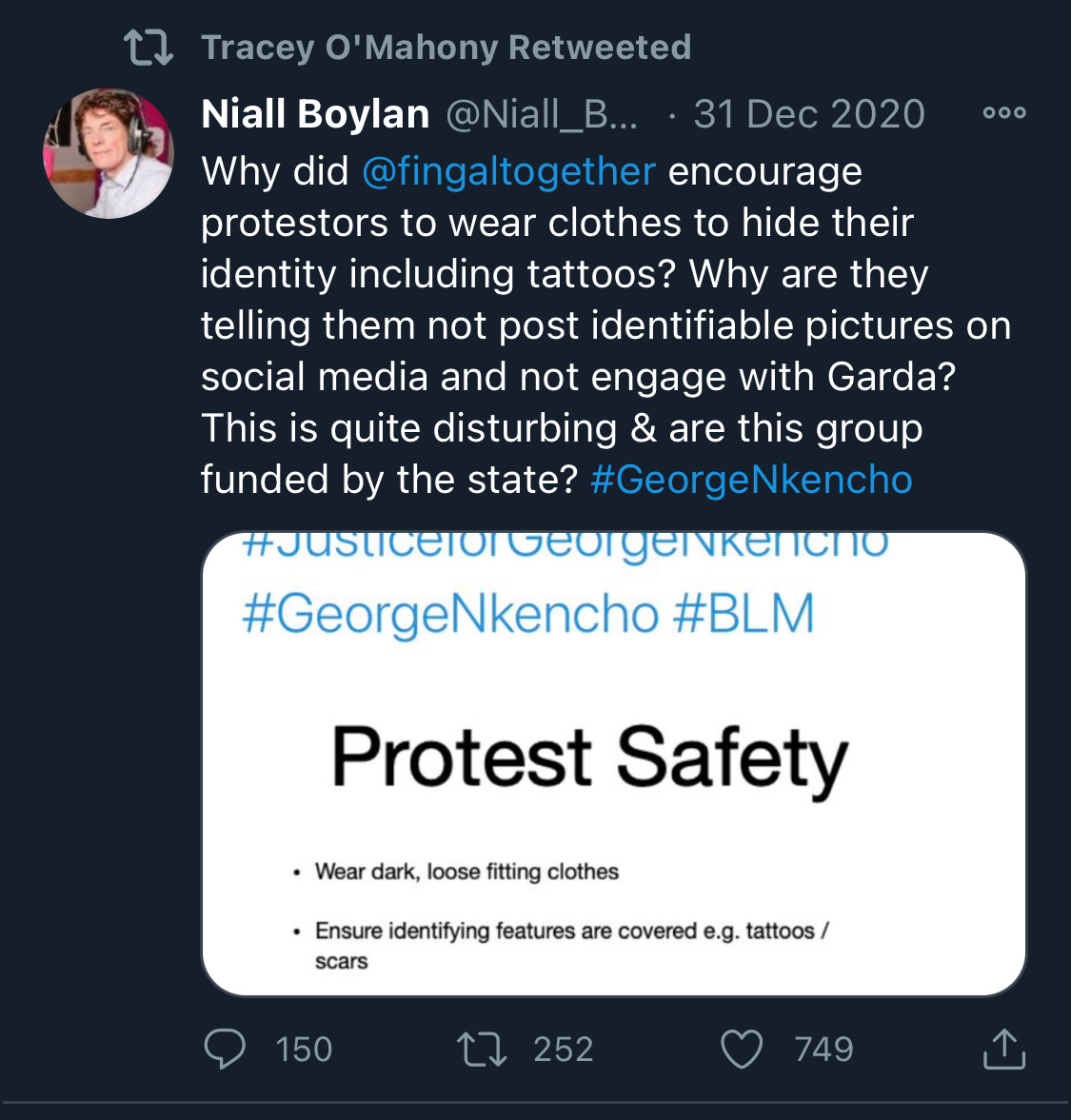
There is co-ordination across the far right in Ireland now to stir both left and right in the hopes of creating a race war. Think critically! Fascists see the tragic killing of #georgenkencho, the grief of his community and pending investigation as a flashpoint for action.
Across Telegram, Twitter and Facebook disinformation is being peddled on the back of these tragic events. From false photographs to the tactics ofwhite supremacy, the far right is clumsily trying to drive hate against minority groups and figureheads.
Be aware, the images the #farright are sharing in the hopes of starting a race war, are not of the SPAR employee that was punched. They\u2019re older photos of a Everton fan. Be aware of the information you\u2019re sharing and that it may be false. Always #factcheck #GeorgeNkencho pic.twitter.com/4c9w4CMk5h
— antifa.drone (@antifa_drone) December 31, 2020
Declan Ganley’s Burkean group and the incel wing of National Party (Gearóid Murphy, Mick O’Keeffe & Co.) as well as all the usuals are concerted in their efforts to demonstrate their white supremacist cred. The quiet parts are today being said out loud.
There is a concerted effort in far-right Telegram groups to try and incite violence on street by targetting people for racist online abuse following the killing of George Nkencho
— Mark Malone (@soundmigration) January 1, 2021
This follows on and is part of a misinformation campaign to polarise communities at this time.
The best thing you can do is challenge disinformation and report posts where engagement isn’t appropriate. Many of these are blatantly racist posts designed to drive recruitment to NP and other Nationalist groups. By all means protest but stay safe.