Categories Law
7 days
30 days
All time
Recent
Popular

This issue was repeatedly highlighted bu Judge Totenberg:
Dominion’s system “does not produce a voter-verifiable paper ballot or a paper ballot marked with the voter’s choices in a format readable by the voter because the votes are tabulated solely from the unreadable QR code.”
Judge also found that Dominion's QR codes are NOT encrypted:
“Evidence plainly contradicts any contention that the QR codes or digital signatures are encrypted,”
This was “ultimately conceded by Mr. Cobb and expressly acknowledged later by Dr. Coomer during his testimony.”
Judge Totenberg said there was “demonstrable evidence” that the implementation of Dominion’s systems by Georgia placed voters at an “imminent risk of deprivation of their fundamental right to cast an effective vote,” which she defined as a “vote that is accurately counted.”
Judge Totenberg found that Dominion Systems inherently could not be audited.
She noted that auditors are severely limited and “can only determine whether the BMD printout was tabulated accurately, not whether the election outcome is correct.“
Totenberg stated in her ruling that a BMD printout “is not trustworthy” and the application of an Risk-Limiting audit (RLA) to an election that used BMD printouts “does not yield a true risk-limiting audit.”
Georgia used RLAs to claim no fraud...
Dominion’s system “does not produce a voter-verifiable paper ballot or a paper ballot marked with the voter’s choices in a format readable by the voter because the votes are tabulated solely from the unreadable QR code.”
Witness explaining that on electronic ballots (QR code ballots), it's impossible to determine voter intent. The machine decides the intent, whereas, with paper ballots, a human can double-check the ballot. https://t.co/kkhamio2Je
— The Election Wizard (@Wizard_Predicts) December 30, 2020
Judge also found that Dominion's QR codes are NOT encrypted:
“Evidence plainly contradicts any contention that the QR codes or digital signatures are encrypted,”
This was “ultimately conceded by Mr. Cobb and expressly acknowledged later by Dr. Coomer during his testimony.”
Judge Totenberg said there was “demonstrable evidence” that the implementation of Dominion’s systems by Georgia placed voters at an “imminent risk of deprivation of their fundamental right to cast an effective vote,” which she defined as a “vote that is accurately counted.”
Judge Totenberg found that Dominion Systems inherently could not be audited.
She noted that auditors are severely limited and “can only determine whether the BMD printout was tabulated accurately, not whether the election outcome is correct.“
Totenberg stated in her ruling that a BMD printout “is not trustworthy” and the application of an Risk-Limiting audit (RLA) to an election that used BMD printouts “does not yield a true risk-limiting audit.”
Georgia used RLAs to claim no fraud...








There is a now-relevant parallel here to the difference here between matters before a judge & matters before a jury. Judges are far more reluctant to strike testimony or evidence if they are the only recipients of it, with the theory being that they are really smart about ...
law stuff & will know what they can & can't consider. For instance, there is a long-held rule that a fact witness can't make legal arguments, only a lawyer. So what will happen in a motion for summary judgment, where the entire proceeding is on paper, will play out like this:
1) Defendant makes a motion for summary judgment. It includes a sworn declaration from some fact witness.
2) The declaration includes all sorts of legal arguments about why the defendant should win. Often the declaration includes arguments the brief didn't even make.
Defendants (especially DOJ-represented ones) often do this to get around the word or page-limits placed on briefs.
3) Plaintiff moves to strike the declaration for its inclusion of inadmissible legal arguments.
4) Judge denies the motion to strike, on the grounds that a ...
judge is a sophisticated consumer of evidence & can choose what to consider & what to ignore, unlike a jury.
The legal fiction behind this impeachment exception is that Senators are also smart enough to know what to listen to & what to ignore. Now, that may not be ACCURATE, ...
To the extent that precedents matter in this trial, when hearsay has been challenged in past trials, it's been admitted if it's probative. And it's been noted that senators aren't *regular* jurors, but rather people of learning who can figure on their own how to weigh evidence.
— Ira Goldman \U0001f986\U0001f986\U0001f986 (@KDbyProxy) January 24, 2020
law stuff & will know what they can & can't consider. For instance, there is a long-held rule that a fact witness can't make legal arguments, only a lawyer. So what will happen in a motion for summary judgment, where the entire proceeding is on paper, will play out like this:
1) Defendant makes a motion for summary judgment. It includes a sworn declaration from some fact witness.
2) The declaration includes all sorts of legal arguments about why the defendant should win. Often the declaration includes arguments the brief didn't even make.
Defendants (especially DOJ-represented ones) often do this to get around the word or page-limits placed on briefs.
3) Plaintiff moves to strike the declaration for its inclusion of inadmissible legal arguments.
4) Judge denies the motion to strike, on the grounds that a ...
judge is a sophisticated consumer of evidence & can choose what to consider & what to ignore, unlike a jury.
The legal fiction behind this impeachment exception is that Senators are also smart enough to know what to listen to & what to ignore. Now, that may not be ACCURATE, ...


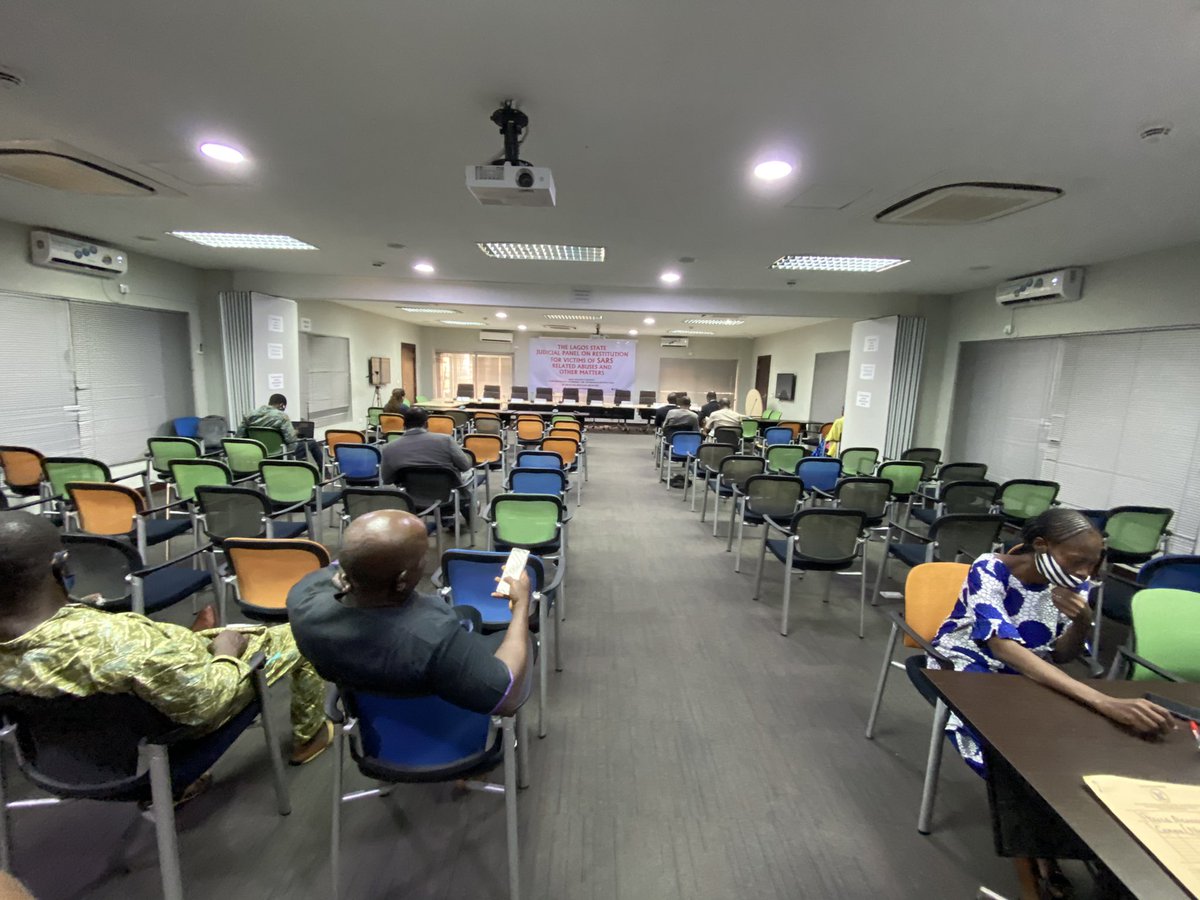
09:55 At the Lagos State #EndSARS Judicial Panel of Enquiry.
The #EndSARS conversation is back on #1 trend, following the police court case to invalidate state panels. https://t.co/SANuz62YMR
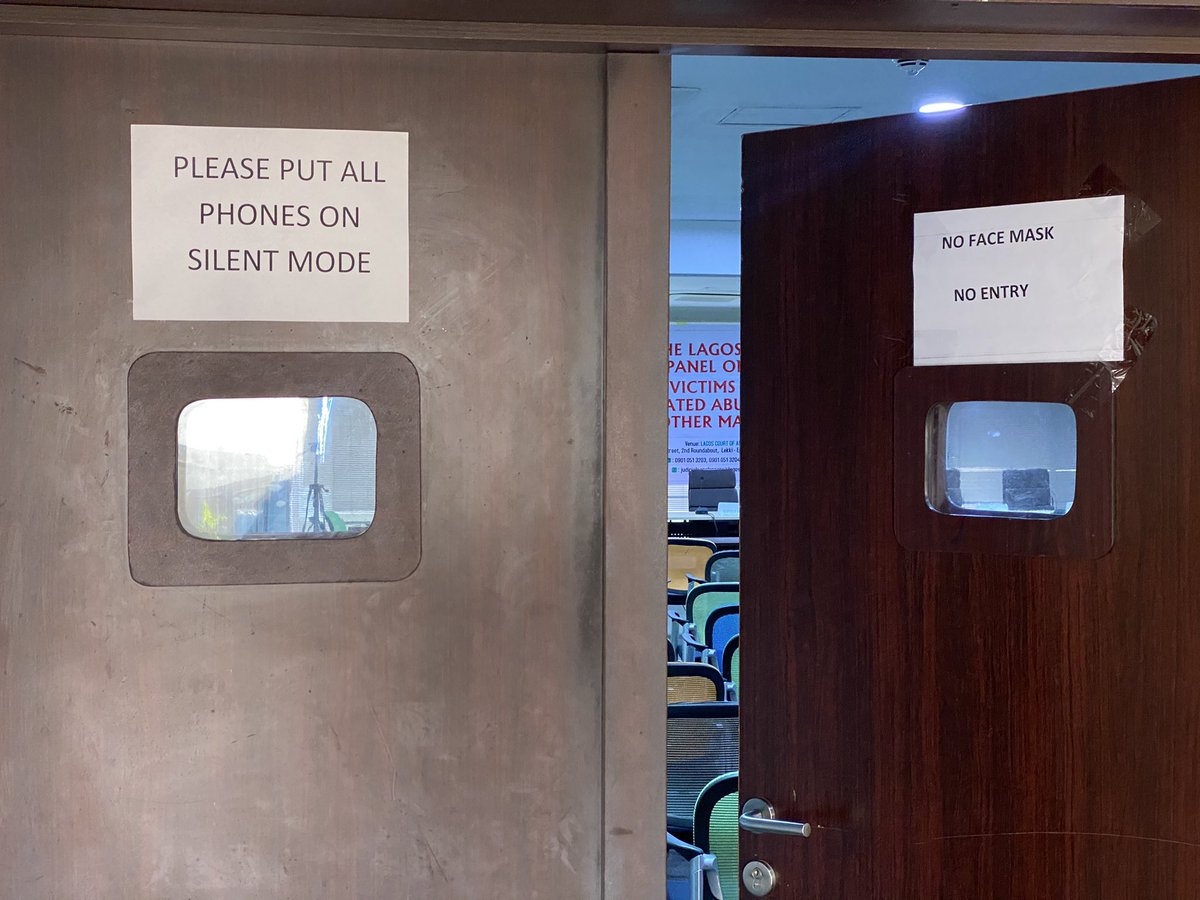
10:05 Of course you all want to know about “mischievous element” sturves.
Well, first of all, “Turn off your phones” signs are gone, replaced by friendlier ones.
“No phones beyond this point” sign also gone. I even got a special seat reserved, so I can be mischievous in peace.
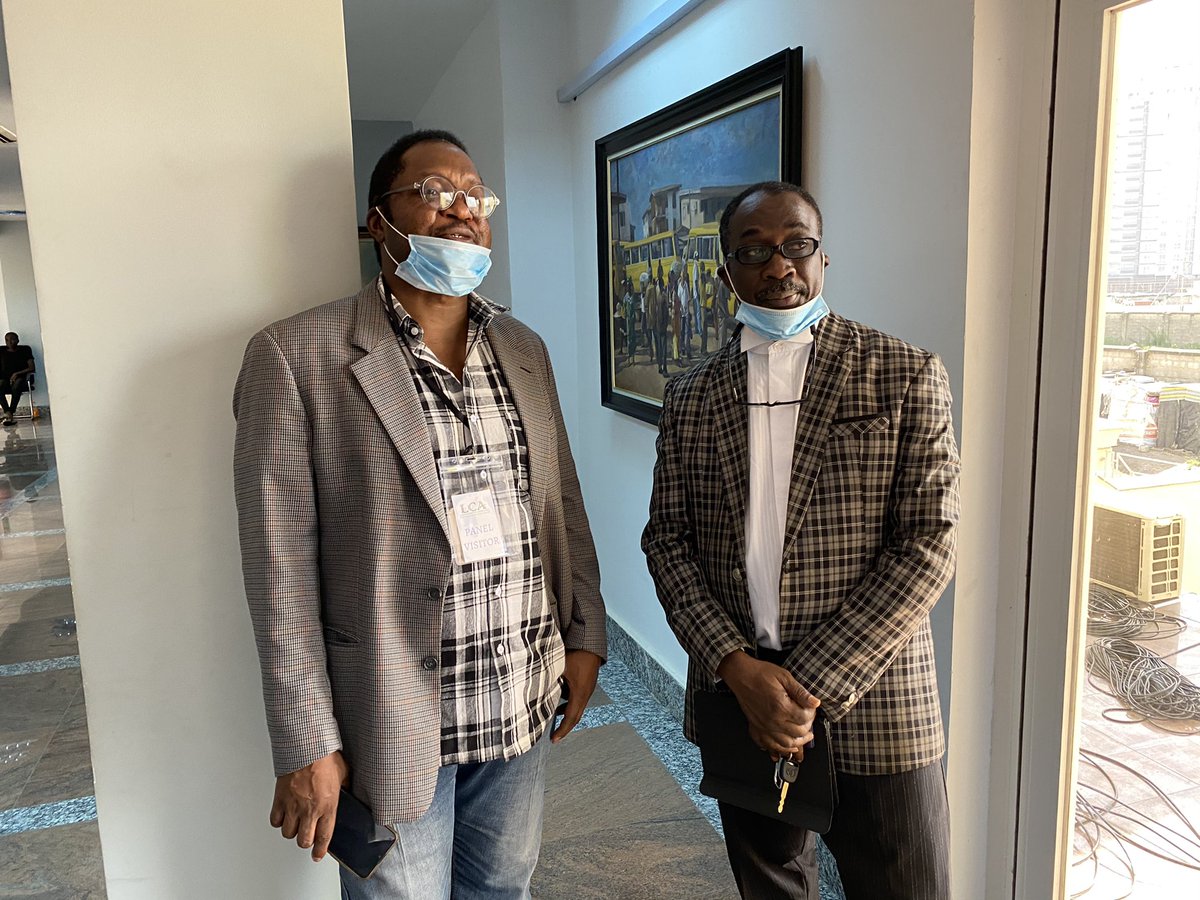
10:24 I saw Mr. O in the hall, but he was dressed differently. I wondered why. His posse didn’t look like they’re here for the panel either.
I just learned he’s planning a protest today, bringing victims of #EndSARS along.
Ghen ghen!
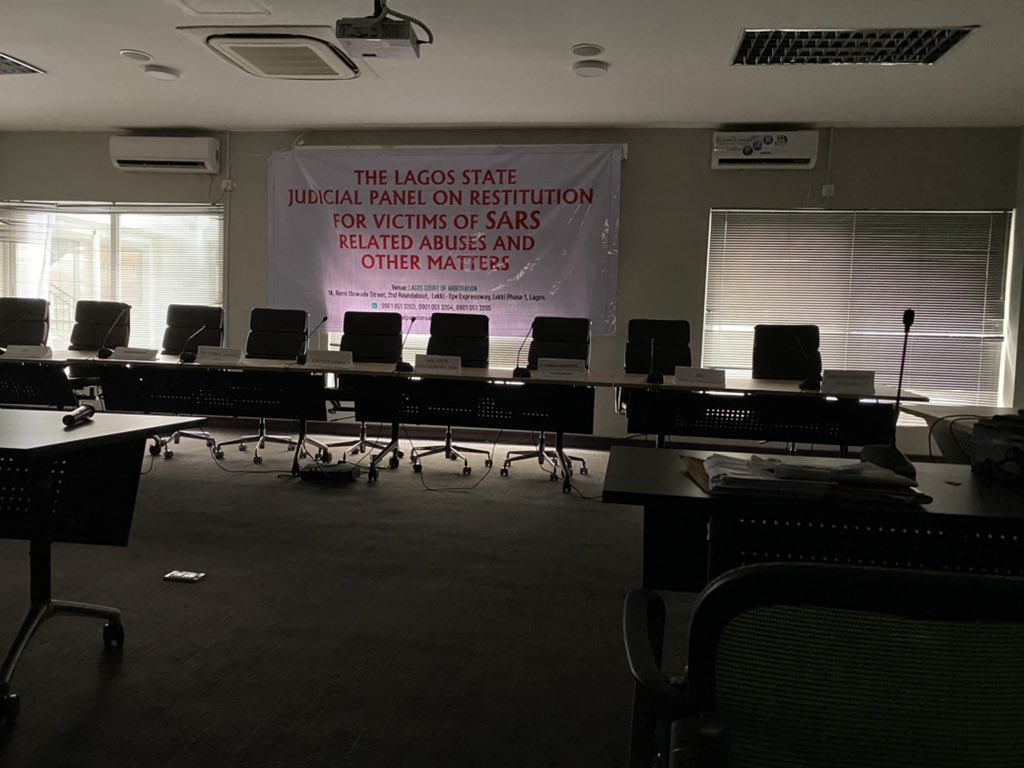
10:30 NEPAAAAA!!!!
Looks like a pre-emptive strike today, so we don’t get too comfortable.
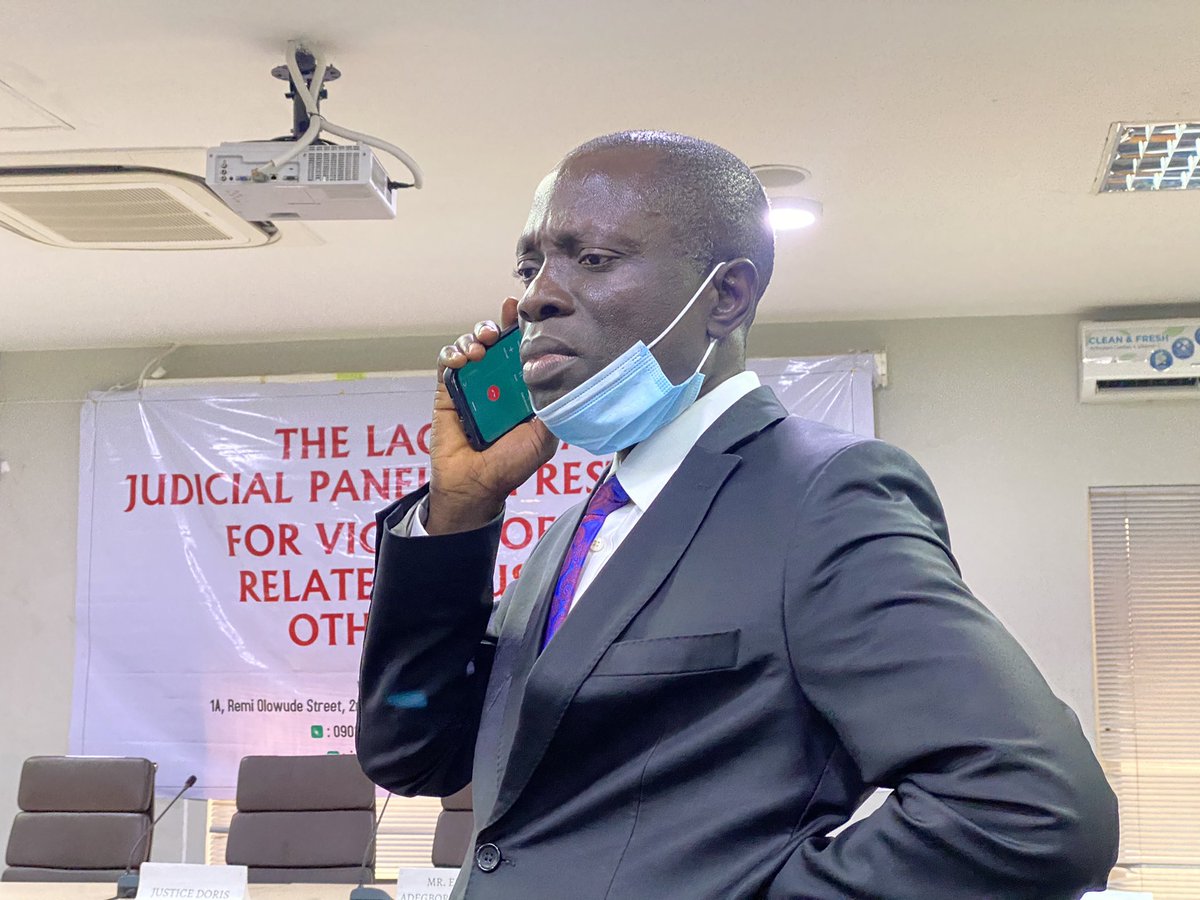
10:51 This is all of us waiting for the bag to come out
The #EndSARS conversation is back on #1 trend, following the police court case to invalidate state panels. https://t.co/SANuz62YMR
09:57 At the Lagos State #EndSARS Judicial Panel of Enquiry.
— Editi Effi\xf2ng (@EditiEffiong) December 1, 2020
Empty gallery so far. Looks like folks haven\u2019t woken up yet. The judiciary staff who handle the petitions have just arrived. https://t.co/gl2tMOpJZa pic.twitter.com/Kt1Ky1pktU
10:05 Of course you all want to know about “mischievous element” sturves.
Well, first of all, “Turn off your phones” signs are gone, replaced by friendlier ones.
“No phones beyond this point” sign also gone. I even got a special seat reserved, so I can be mischievous in peace.
10:24 I saw Mr. O in the hall, but he was dressed differently. I wondered why. His posse didn’t look like they’re here for the panel either.
I just learned he’s planning a protest today, bringing victims of #EndSARS along.
Ghen ghen!
10:30 NEPAAAAA!!!!
Looks like a pre-emptive strike today, so we don’t get too comfortable.
10:51 This is all of us waiting for the bag to come out