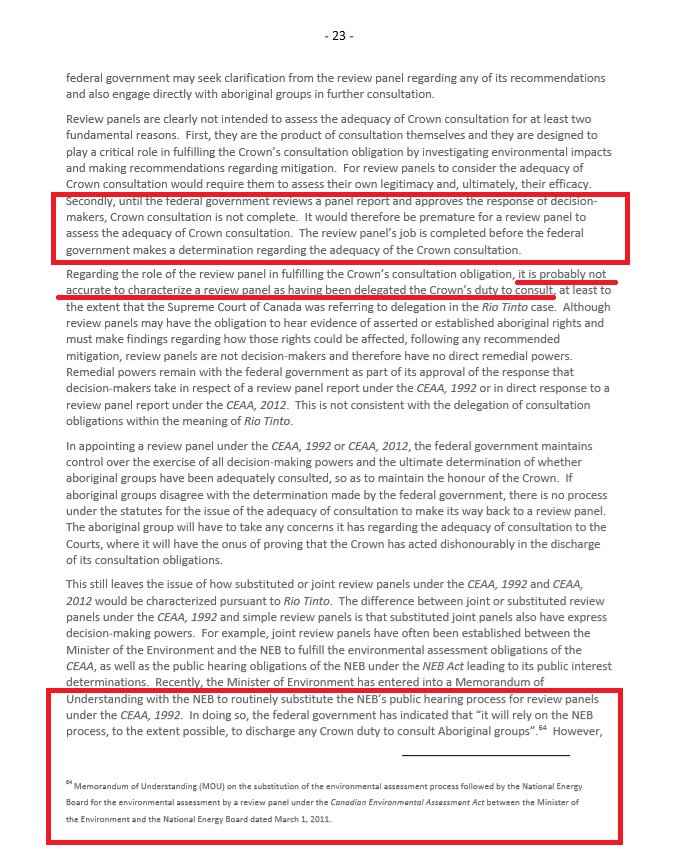
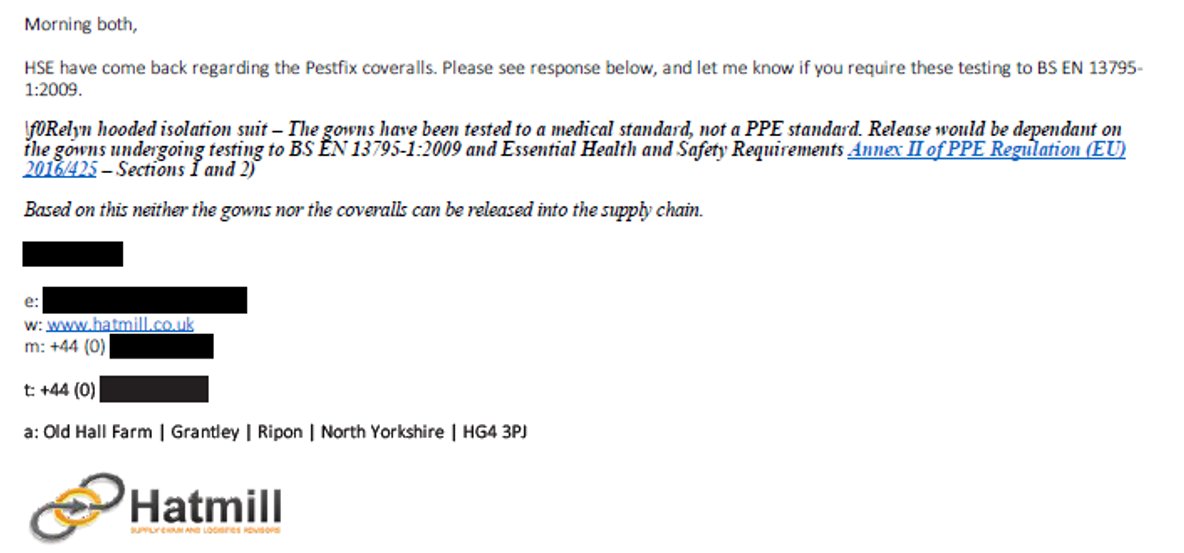
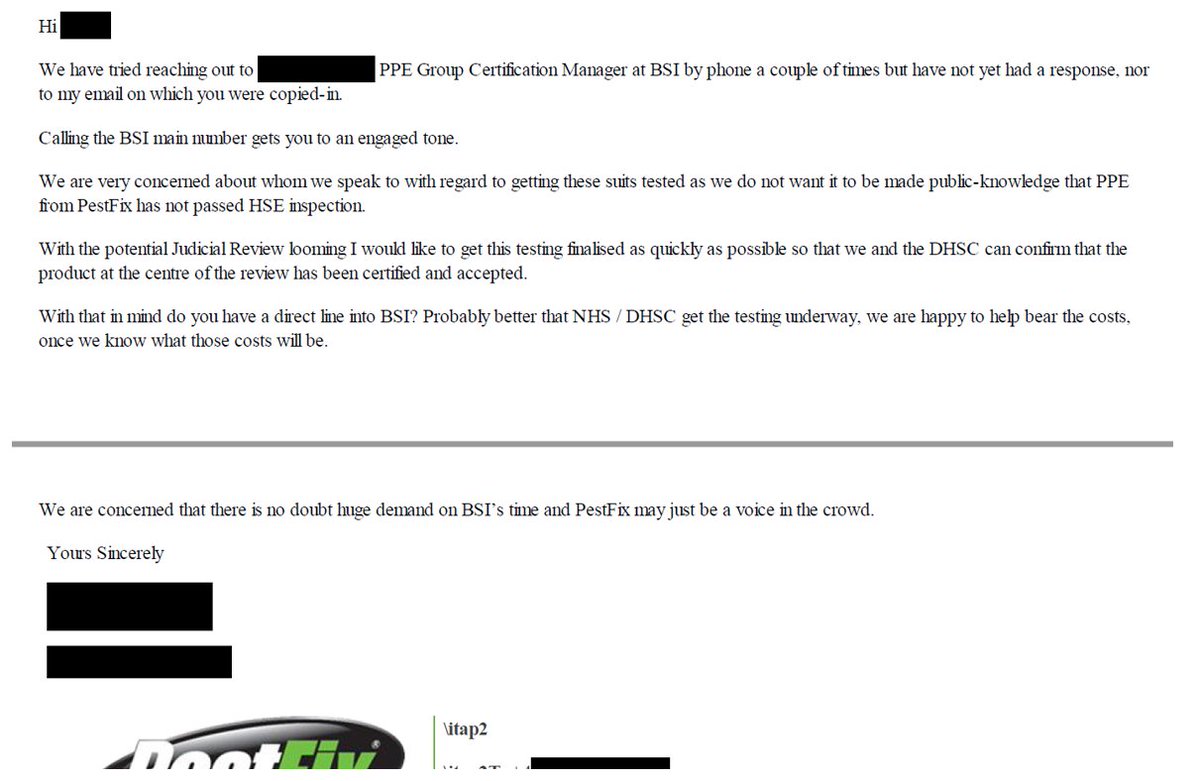
The High Court gave us 'permission' to bring some of our judicial review arguments in relation to the Government's odd PPE contracts. We are today asking again for permission to bring the others. You can read our (remarkable) Skeleton and Statement here.
But how can they not be cleared for use as gowns? And yet be "authorised for distribution... as part of the PPE ensemble"? It doesn't sound like what we got was gowns.


More from Jo Maugham
If you want to know what happens to populations living in austerity who trade with the US on WTO terms, take a look at Tonga. THREAD
I visited Tonga in 1981 and it was, like so many other Pacific Island nations, slowly adjusting to Westernisation. The people ate mostly fish and vegetables. /1
Now it has rates of Type 2 diabetes of up to 40%, life expectancy has fallen by 10 years and well over half the population is obese. So what happened? (stats https://t.co/1XQHdqL8o8) /2
What happened was that the US discovered that Tonga was a great dumping ground for a cheap and locally unsaleable product known as a Turkey 'tail', essentially a gland of 40-45% fat. /3
They were fatty and, because cheap, attractive to a poor population. By 2007, in another Pacific Island nation, Samoa, 20 kilos per person were being sold every year. But it banned them for public health reasons. https://t.co/2f1N8tuMp6 /4
I visited Tonga in 1981 and it was, like so many other Pacific Island nations, slowly adjusting to Westernisation. The people ate mostly fish and vegetables. /1
Now it has rates of Type 2 diabetes of up to 40%, life expectancy has fallen by 10 years and well over half the population is obese. So what happened? (stats https://t.co/1XQHdqL8o8) /2
What happened was that the US discovered that Tonga was a great dumping ground for a cheap and locally unsaleable product known as a Turkey 'tail', essentially a gland of 40-45% fat. /3
They were fatty and, because cheap, attractive to a poor population. By 2007, in another Pacific Island nation, Samoa, 20 kilos per person were being sold every year. But it banned them for public health reasons. https://t.co/2f1N8tuMp6 /4
We need to talk about the 'expert' witness statement evidence led by Ms Bell in her successful case before the Tavistock. THREAD
You can see who gave evidence in her support from these extracts from the Tavistock's Skeleton Argument.
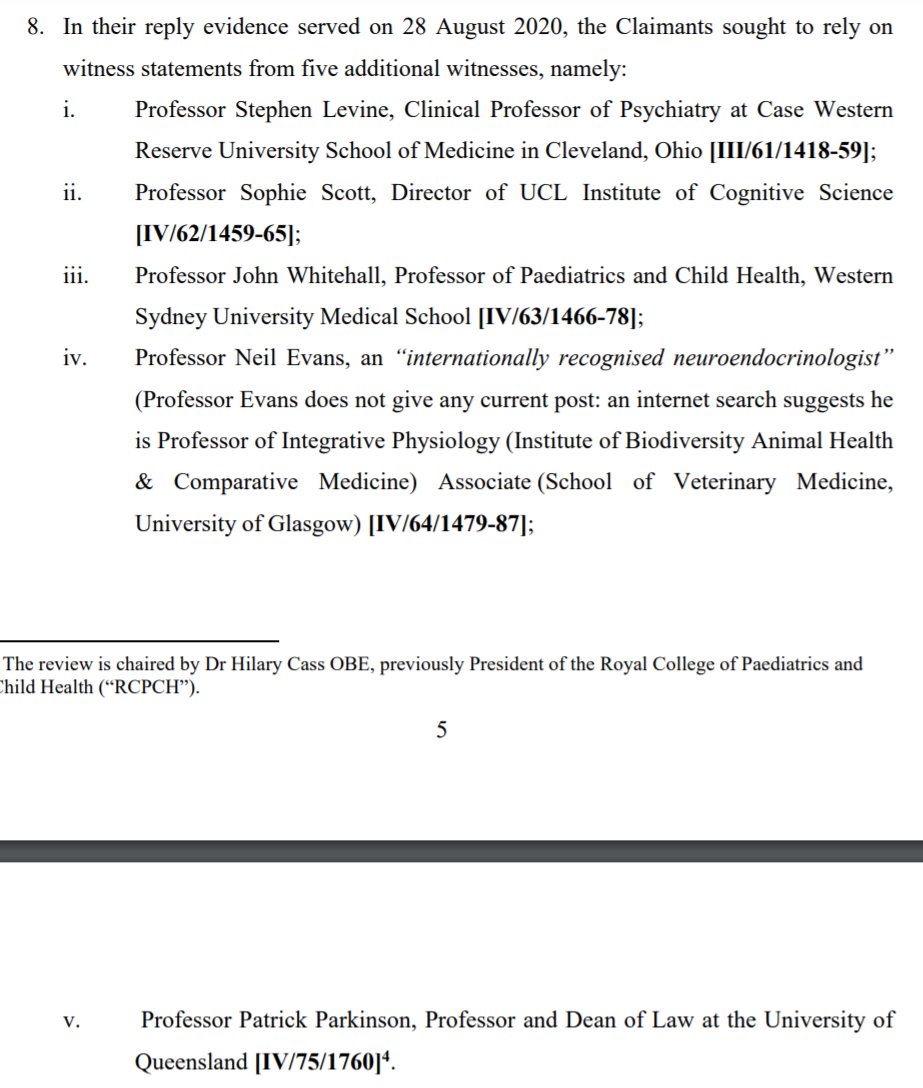
Helpful for you to bear in mind that her solicitor was a man called Paul Conrathe, who has a long association with the religious right in the US (I have talked about him a number of times but this is as good a starting point as any).
I am not going to address here other criticisms that might be made of the form in which that evidence was given or the timing of its service before the court. I am just going to address, in alphabetical order, the individuals whose evidence Mr Conrathe led on Ms Bell's behalf.
The first witness, alphabetically, was Associate Professor of Sociology at the University of Oxford, Michael Biggs.
Mr Biggs was exposed for posting transphobic statements online under a fake twitter handle: @MrHenryWimbush according to this report.
You can see who gave evidence in her support from these extracts from the Tavistock's Skeleton Argument.
Helpful for you to bear in mind that her solicitor was a man called Paul Conrathe, who has a long association with the religious right in the US (I have talked about him a number of times but this is as good a starting point as any).
In this thread, I noted the lawyer acting against the Tavistock, Paul Conrathe, is using very similar arguments (those under 18 cannot consent at all; or cannot lawfully consent without x conditions) as he has run/is running in a number of cases challenging abortion rights. https://t.co/gJk4c9bUED
— Jo Maugham (@JolyonMaugham) June 21, 2020
I am not going to address here other criticisms that might be made of the form in which that evidence was given or the timing of its service before the court. I am just going to address, in alphabetical order, the individuals whose evidence Mr Conrathe led on Ms Bell's behalf.
The first witness, alphabetically, was Associate Professor of Sociology at the University of Oxford, Michael Biggs.
Mr Biggs was exposed for posting transphobic statements online under a fake twitter handle: @MrHenryWimbush according to this report.
So, just before Christmas, Government what it called a "response" to this New York Times account of cronyism in pandemic spending.
And I said, when that "response" - which you can read here https://t.co/gLEJzuqoAx - was published that every single notional rebuttal by Government of a claim made by the New York Times was false, misleading or both.
And it's time for me to make good.
Here's the first "rebuttal" by Government to the New York Times' claim that: "The government handed out thousands of contracts to fight the virus, some of them in a secretive V.I.P. lane."

A number of points might be made.
(1) Government cannot say the NYT got it wrong. (2) the NAO found the VIP lane (later renamed the high-priority lane) "sat alongside" the normal lane. And I have shown elsewhere VIP contracts were handled by different teams all the way through.
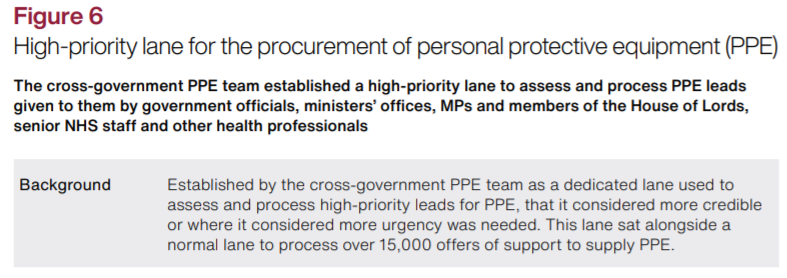
(3) Although Govt says "offers of support raised by Opposition MPs were dealt with expeditiously" the NAO report does not record any referrals made by an Opposition MP leading to a contract - and the Government response telling does not say any did.
And I said, when that "response" - which you can read here https://t.co/gLEJzuqoAx - was published that every single notional rebuttal by Government of a claim made by the New York Times was false, misleading or both.
And it's time for me to make good.
Here's the first "rebuttal" by Government to the New York Times' claim that: "The government handed out thousands of contracts to fight the virus, some of them in a secretive V.I.P. lane."
A number of points might be made.
(1) Government cannot say the NYT got it wrong. (2) the NAO found the VIP lane (later renamed the high-priority lane) "sat alongside" the normal lane. And I have shown elsewhere VIP contracts were handled by different teams all the way through.
(3) Although Govt says "offers of support raised by Opposition MPs were dealt with expeditiously" the NAO report does not record any referrals made by an Opposition MP leading to a contract - and the Government response telling does not say any did.
More from Law

This issue was repeatedly highlighted bu Judge Totenberg:
Dominion’s system “does not produce a voter-verifiable paper ballot or a paper ballot marked with the voter’s choices in a format readable by the voter because the votes are tabulated solely from the unreadable QR code.”
Judge also found that Dominion's QR codes are NOT encrypted:
“Evidence plainly contradicts any contention that the QR codes or digital signatures are encrypted,”
This was “ultimately conceded by Mr. Cobb and expressly acknowledged later by Dr. Coomer during his testimony.”
Judge Totenberg said there was “demonstrable evidence” that the implementation of Dominion’s systems by Georgia placed voters at an “imminent risk of deprivation of their fundamental right to cast an effective vote,” which she defined as a “vote that is accurately counted.”
Judge Totenberg found that Dominion Systems inherently could not be audited.
She noted that auditors are severely limited and “can only determine whether the BMD printout was tabulated accurately, not whether the election outcome is correct.“
Totenberg stated in her ruling that a BMD printout “is not trustworthy” and the application of an Risk-Limiting audit (RLA) to an election that used BMD printouts “does not yield a true risk-limiting audit.”
Georgia used RLAs to claim no fraud...
Dominion’s system “does not produce a voter-verifiable paper ballot or a paper ballot marked with the voter’s choices in a format readable by the voter because the votes are tabulated solely from the unreadable QR code.”
Witness explaining that on electronic ballots (QR code ballots), it's impossible to determine voter intent. The machine decides the intent, whereas, with paper ballots, a human can double-check the ballot. https://t.co/kkhamio2Je
— The Election Wizard (@Wizard_Predicts) December 30, 2020
Judge also found that Dominion's QR codes are NOT encrypted:
“Evidence plainly contradicts any contention that the QR codes or digital signatures are encrypted,”
This was “ultimately conceded by Mr. Cobb and expressly acknowledged later by Dr. Coomer during his testimony.”
Judge Totenberg said there was “demonstrable evidence” that the implementation of Dominion’s systems by Georgia placed voters at an “imminent risk of deprivation of their fundamental right to cast an effective vote,” which she defined as a “vote that is accurately counted.”
Judge Totenberg found that Dominion Systems inherently could not be audited.
She noted that auditors are severely limited and “can only determine whether the BMD printout was tabulated accurately, not whether the election outcome is correct.“
Totenberg stated in her ruling that a BMD printout “is not trustworthy” and the application of an Risk-Limiting audit (RLA) to an election that used BMD printouts “does not yield a true risk-limiting audit.”
Georgia used RLAs to claim no fraud...


Thread: This is Exhibit #19 in the MI case filed by @SidneyPowell1.
https://t.co/7dQtnTay5n
You can find all the affidavits
I don’t see how a court could ignore this evidence. Only corruption would explain ignoring it.
The affiant is an acknowledged expert in cyber security.

https://t.co/H7D5MIUzkI

https://t.co/PKwbBQWzXW

https://t.co/qo1l4kB7qt

https://t.co/7dQtnTay5n
You can find all the affidavits
I don’t see how a court could ignore this evidence. Only corruption would explain ignoring it.
The affiant is an acknowledged expert in cyber security.
https://t.co/H7D5MIUzkI
https://t.co/PKwbBQWzXW
https://t.co/qo1l4kB7qt