
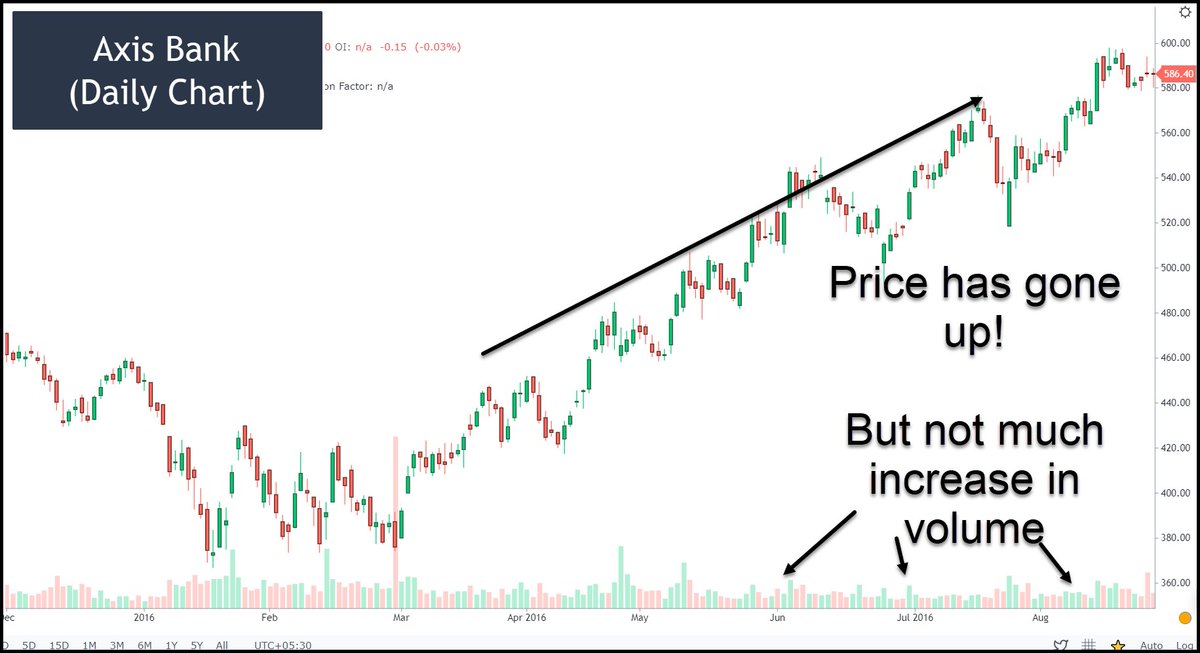
A few years back, I was so confused to relate "Volume" with "Price" and every time my prediction went wrong.
Later I discovered my own "Prime-Volume" relationship logic, and all the confusions dissolved.
Read the post to know that
More from Indrazith Shantharaj

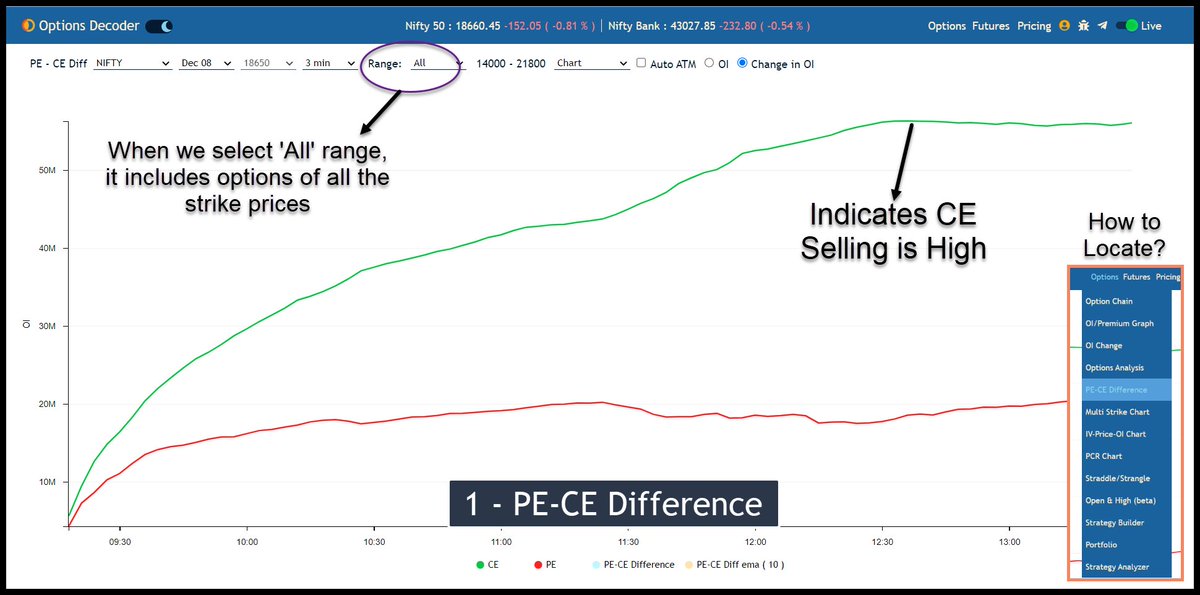


4 factors to measure the performance of a trading system:
1 - Accuracy
There is no such thing as 90% Accuracy without compromising on other factors (like profit factor, etc)
Fact - A good trading system will have only 35-60% accuracy without compromising other factors.
(1/n)
2 - Profit Factor (PF)
It is similar to risk-reward. It is derived using the below formula:
Profit Factor = Total Profit by winning trades / Total loss by losing trades
Fact - A trading system above 1.2 PF is good if it scores well with other factors.
(2/n)
3 - Maximum Drawdown
The maximum drawdown also plays a vital role psychologically while picking a trading system.
Fact - Maximum Drawdown in any trading system should not exceed 20%. I suggest picking only the techniques which have less than 10% maximum drawdown.
(3/n)
4 - Maximum Consecutive Losers
We all feel bad even if we lose only Rs.1,000 in a trade. Because it is not only about the money, it is emotionally difficult to accept the failure.
Fact - A good trading system will have less than 15 consecutive losing trades.
(4/n)
TRADE LIKE CRAZY
10 Profitable Intraday Trading Systems, which are backtested against 10-years of Banknifty Historical Data!
(n/n)
https://t.co/BuUie17Ish

1 - Accuracy
There is no such thing as 90% Accuracy without compromising on other factors (like profit factor, etc)
Fact - A good trading system will have only 35-60% accuracy without compromising other factors.
(1/n)
2 - Profit Factor (PF)
It is similar to risk-reward. It is derived using the below formula:
Profit Factor = Total Profit by winning trades / Total loss by losing trades
Fact - A trading system above 1.2 PF is good if it scores well with other factors.
(2/n)
3 - Maximum Drawdown
The maximum drawdown also plays a vital role psychologically while picking a trading system.
Fact - Maximum Drawdown in any trading system should not exceed 20%. I suggest picking only the techniques which have less than 10% maximum drawdown.
(3/n)
4 - Maximum Consecutive Losers
We all feel bad even if we lose only Rs.1,000 in a trade. Because it is not only about the money, it is emotionally difficult to accept the failure.
Fact - A good trading system will have less than 15 consecutive losing trades.
(4/n)
TRADE LIKE CRAZY
10 Profitable Intraday Trading Systems, which are backtested against 10-years of Banknifty Historical Data!
(n/n)
https://t.co/BuUie17Ish




You May Also Like









A brief analysis and comparison of the CSS for Twitter's PWA vs Twitter's legacy desktop website. The difference is dramatic and I'll touch on some reasons why.
Legacy site *downloads* ~630 KB CSS per theme and writing direction.
6,769 rules
9,252 selectors
16.7k declarations
3,370 unique declarations
44 media queries
36 unique colors
50 unique background colors
46 unique font sizes
39 unique z-indices
https://t.co/qyl4Bt1i5x

PWA *incrementally generates* ~30 KB CSS that handles all themes and writing directions.
735 rules
740 selectors
757 declarations
730 unique declarations
0 media queries
11 unique colors
32 unique background colors
15 unique font sizes
7 unique z-indices
https://t.co/w7oNG5KUkJ

The legacy site's CSS is what happens when hundreds of people directly write CSS over many years. Specificity wars, redundancy, a house of cards that can't be fixed. The result is extremely inefficient and error-prone styling that punishes users and developers.
The PWA's CSS is generated on-demand by a JS framework that manages styles and outputs "atomic CSS". The framework can enforce strict constraints and perform optimisations, which is why the CSS is so much smaller and safer. Style conflicts and unbounded CSS growth are avoided.
Legacy site *downloads* ~630 KB CSS per theme and writing direction.
6,769 rules
9,252 selectors
16.7k declarations
3,370 unique declarations
44 media queries
36 unique colors
50 unique background colors
46 unique font sizes
39 unique z-indices
https://t.co/qyl4Bt1i5x
PWA *incrementally generates* ~30 KB CSS that handles all themes and writing directions.
735 rules
740 selectors
757 declarations
730 unique declarations
0 media queries
11 unique colors
32 unique background colors
15 unique font sizes
7 unique z-indices
https://t.co/w7oNG5KUkJ
The legacy site's CSS is what happens when hundreds of people directly write CSS over many years. Specificity wars, redundancy, a house of cards that can't be fixed. The result is extremely inefficient and error-prone styling that punishes users and developers.
The PWA's CSS is generated on-demand by a JS framework that manages styles and outputs "atomic CSS". The framework can enforce strict constraints and perform optimisations, which is why the CSS is so much smaller and safer. Style conflicts and unbounded CSS growth are avoided.