THREAD: The story of the week in finance is how a group of retail traders at @wallstreetbets, with assists from @ElonMusk and @Chamath, took down the establishment short sellers at GameStop.

A thread on the underlying mechanics of the $GME saga...

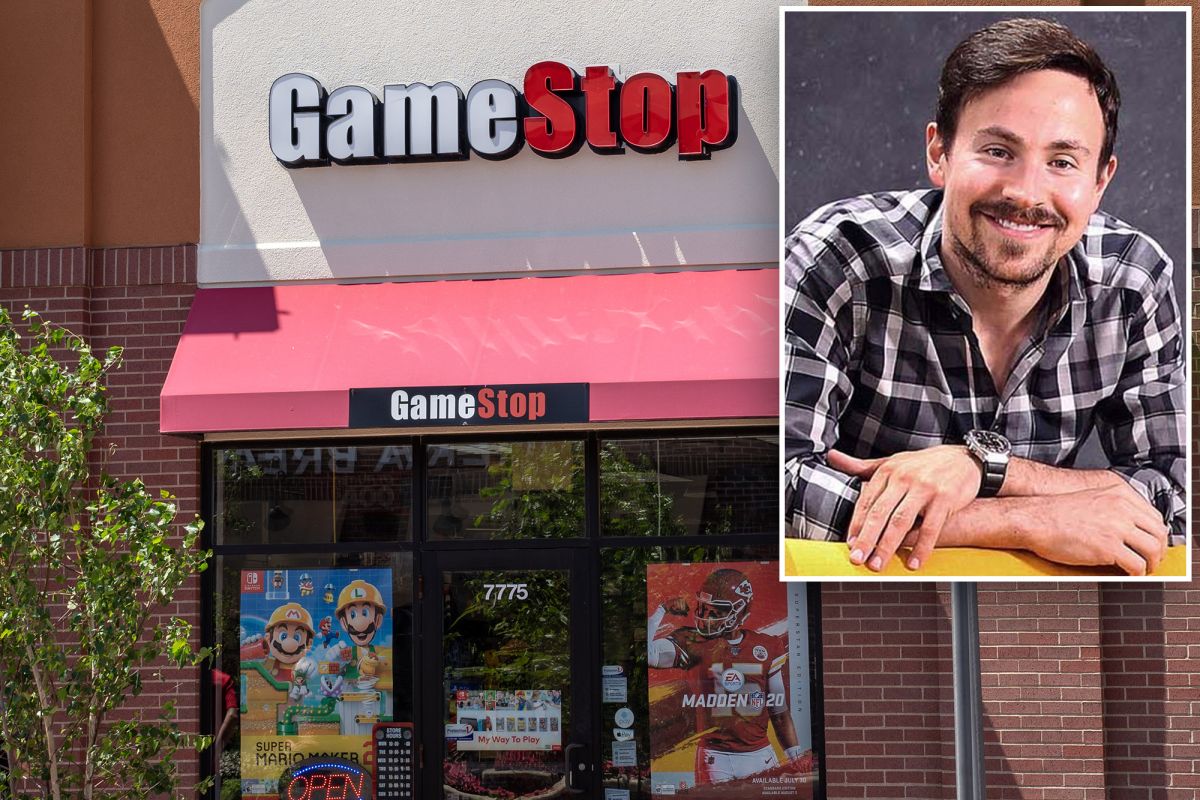
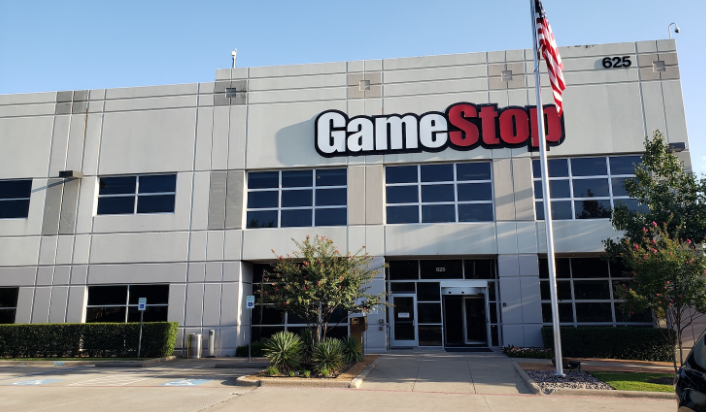
1/ First, for those unfamiliar with the business, GameStop is a videogame and merchandise retailer.

It has >5,000 stores, primarily in malls, across North America, Europe, and Australia.

The business has struggled to modernize, hurting its financial and stock performance.
2/ For a variety of business reasons, a bull (i.e. optimistic) case regarding its future performance has formed.

It really came to the forefront after RC Ventures, an entity managed by Chewy founder @ryancohen, disclosed a large position and assumed three board seats.
3/ @ryancohen summarized his case, stating:

"We are excited to bring our customer-obsessed mindset and technology experience to GameStop and its strategic assets...expanding the ways in which it delights customers and by becoming the ultimate destination for gamers."
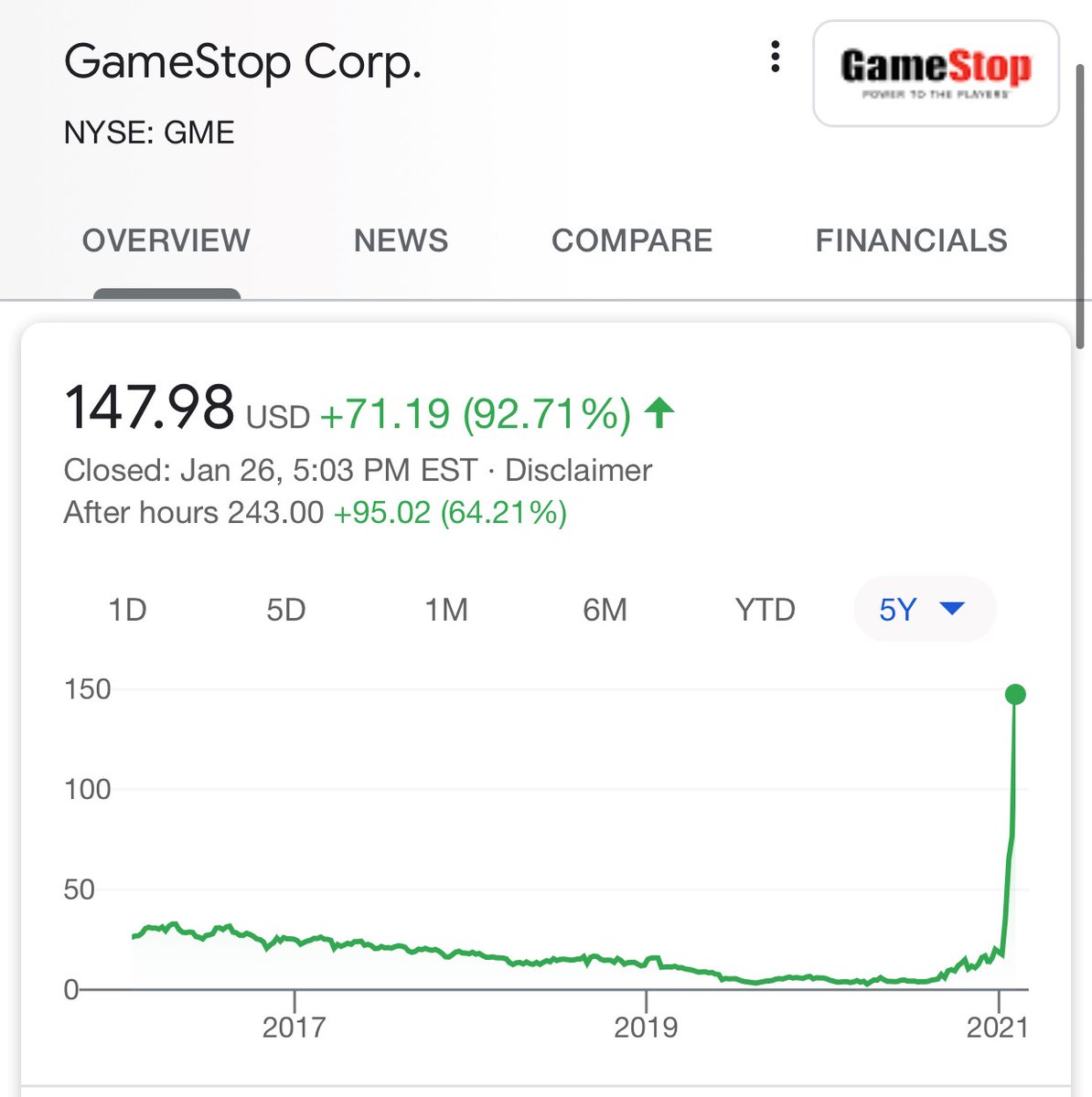
4/ At the time of that statement on January 11, $GME stock was trading at about ~$20 per share.

Since then, the stock has surged to ~$200 per share and captured the public imagination.

But how did it happen?

There are two dynamics at play: a short squeeze and a gamma squeeze.
5/ First, a short squeeze.

This occurs when short sellers (those betting against a stock, like Melvin Capital here), are forced to buy stock to exit/cover their shorts.

I wrote a primer on the short squeeze, which you can find below. https://t.co/xKDUscvQup
6/ The gamma squeeze is a bit more complicated.

As usual, let's simplify it here for everyone to understand.

A gamma squeeze is all about options contracts and their indirect impact on the underlying stock.

For a primer on options, see my thread below. https://t.co/jU7gEt9sf7
7/ When you buy a call option on $GME, someone has to sell you that option contract.

You pay them a bit of money (the premium) and they make a commitment to deliver you the underlying stock at a future date for the strike price of the option.

It's a pretty simple transaction.
8/ But in the background, the seller (often called a "market maker") has to think about their risk exposure.

If $GME rises above your strike price, they will have to buy the stock at the market price and sell it to you for the strike price, incurring a (potentially large!) loss.
9/ To hedge this risk, when the market maker sells you the option, she also goes into the market and buys a bit of the underlying stock.

The amount of stock she buys is based on the "Delta" - a ratio of how much the option price moves relative to a $1 move in the stock.
10/ "Gamma" is the rate of change of the "Delta" of the option.

As Delta and Gamma rise, the market maker gets more and more nervous!

She has to buy more stock to hedge the risk of the option being exercised in the money (i.e. with the underlying price above the strike price).
11/ So here we have the (simplified!) makings of the gamma squeeze.

As call option purchasing volumes suddenly surged (thanks to @wallstreetbets @chamath and @ElonMusk), market makers had to purchase a lot of $GME stock to hedge.

This set in motion a self-fulfilling prophecy…
12/ Market makers rushed to purchase $GME stock to hedge exposure. This drove the price of $GME up!

As the price of $GME went up, the Delta and Gamma of $GME call options rose.

This meant market makers had to buy more stock, further driving up the $GME price!

Reflexivity!
13/ So to summarize:

With $GME, we had both (1) a short squeeze - short-sellers frantically buying the stock to close/cover their shorts and (2) a gamma squeeze - call option market makers frantically buying the stock to hedge their exposure.

Result: 👇
14/ As always, I hope this thread was helpful and makes you feel more well-informed on what is happening in the crazy world of finance.

For more on this topic, I highly recommend reading @matt_levine's "Money Stuff" newsletter on the topic. https://t.co/5nxzRyTaee
15/ In addition, my friend @ShaanVP wrote an incredible/hilarious thread on the story dynamics behind the @wallstreetbets $GME moves. Check it out here! https://t.co/9z38w7fwTy
16/ If you enjoyed this, follow me for more educational threads on business, money, finance, and economics. You can find all of my threads in the meta-thread below. https://t.co/53UhhfzIcp
17/ And if you are less Twitter inclined, sign up for my newsletter here, where you can find all of my old threads and receive all of my new threads directly to your inbox. https://t.co/NEe1Tov0Xg

More from Sahil Bloom

Short Squeeze 101

If you follow financial markets (or if you watch Billions), you've heard the phrase "short squeeze" used quite frequently.

But what is a "short squeeze" and how does it work?

Here's Short Squeeze 101!

👇👇👇

1/ First, the basics.

The "short" in "short squeeze" refers to the concept of short selling.

The basics are covered in my thread below.

https://t.co/xecJYNCxMs

TL;DR - short selling is a way of betting against a stock - i.e. betting that its price will decline.


2/ "Short interest" is a measure of how heavily an asset is shorted by the market.

It is the total number of shares that have been sold short (borrowed and sold), but have not yet been covered (bought and returned).

It is usually measured as a % of the # of shares outstanding.

3/ A "short squeeze" occurs when a heavily-shorted asset experiences a rapid upward price movement.

When this happens, short sellers may be forced to close their short positions (i.e. buy the stock and return it to the broker), further accelerating the upward price movement.

4/ Let's look at a simple example to show this in action.

We will use Tesla, one of the most heavily-shorted stocks in the world.

Imagine the stock price is $1,000 per share. This seems crazy. Ricky Rational decides to short the stock at this level.

More from Business

You May Also Like

I just finished Eric Adler's The Battle of the Classics, and wanted to say something about Joel Christiansen's review linked below. I am not sure what motivates the review (I speculate a bit below), but it gives a very misleading impression of the book. 1/x


The meat of the criticism is that the history Adler gives is insufficiently critical. Adler describes a few figures who had a great influence on how the modern US university was formed. It's certainly critical: it focuses on the social Darwinism of these figures. 2/x

Other insinuations and suggestions in the review seem wildly off the mark, distorted, or inappropriate-- for example, that the book is clickbaity (it is scholarly) or conservative (hardly) or connected to the events at the Capitol (give me a break). 3/x

The core question: in what sense is classics inherently racist? Classics is old. On Adler's account, it begins in ancient Rome and is revived in the Renaissance. Slavery (Christiansen's primary concern) is also very old. Let's say classics is an education for slaveowners. 4/x

It's worth remembering that literacy itself is elite throughout most of this history. Literacy is, then, also the education of slaveowners. We can honor oral and musical traditions without denying that literacy is, generally, good. 5/x
Master Thread of all my threads!

Hello!! 👋

• I have curated some of the best tweets from the best traders we know of.

• Making one master thread and will keep posting all my threads under this.

• Go through this for super learning/value totally free of cost! 😃

1. 7 FREE OPTION TRADING COURSES FOR


2. THE ABSOLUTE BEST 15 SCANNERS EXPERTS ARE USING

Got these scanners from the following accounts:

1. @Pathik_Trader
2. @sanjufunda
3. @sanstocktrader
4. @SouravSenguptaI
5. @Rishikesh_ADX


3. 12 TRADING SETUPS which experts are using.

These setups I found from the following 4 accounts:

1. @Pathik_Trader
2. @sourabhsiso19
3. @ITRADE191
4.


4. Curated tweets on HOW TO SELL STRADDLES.

Everything covered in this thread.
1. Management
2. How to initiate
3. When to exit straddles
4. Examples
5. Videos on