Survivorship Bias
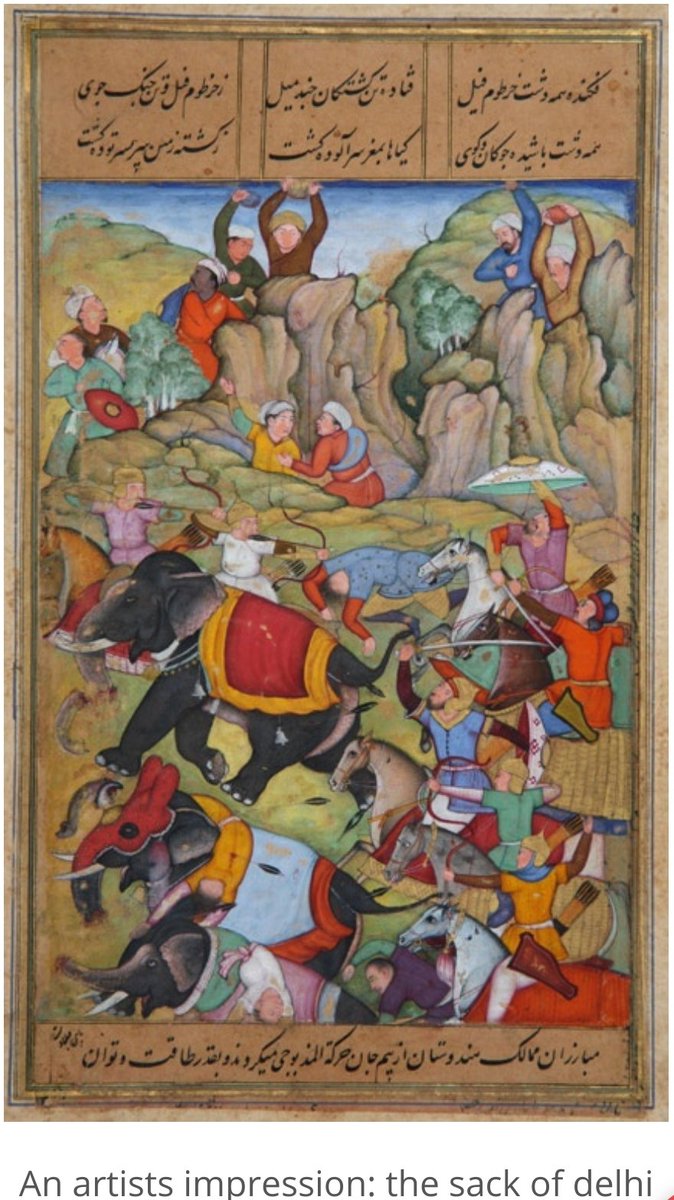
History is written by the victors.
But in studying and learning from "survivors”—and systematically ignoring "casualties”—we create material distortions in our conclusions.
We overestimate the odds of success because we only read about the successes!
Naïve Realism
Humans generally think very highly of themselves.
We tend to believe that we see the world with perfect objectivity.
We also assume that people who disagree with us must be ignorant, uninformed, or biased.
This error sits at the core of many societal problems.
The Dunning-Kruger Effect
Humans are notoriously incapable of objective evaluation of their own competency levels.
People with a low ability at a task are prone to systematically overestimate their ability at that task.
Example: Everyone is a genius in a bull market.
Loss Aversion
Humans tend to prefer avoiding losses vs. achieving gains—the pain of losing something is more powerful than the pleasure of winning it.
We will typically do more to avoid losses than we will to seek gains.
We systematically overvalue what we already have.
Confirmation Bias
Humans have a tendency to see and interpret information in a manner that supports previously held beliefs.
New data positive? This idea is a winner!
New data negative? Must have been an error in the experiment.
Very common and very dangerous.
Fundamental Attribution Error
Humans tend to:
(1) Attribute someone's actions to their character—and not to their situation or context.
(2) Attribute our actions to situation and context—and not to our character.
We cut ourselves a break, but hold others accountable.
Baader-Meinhof Phenomenon
New awareness of something creates an illusion that it's appearing more frequently.
We constantly notice what is top of mind.
Ever notice that something you just learned seems to pop up everywhere around you?
Like seeing 11:11 on your iPhone clock...
Anchoring
An "anchor" is a reference point of information—usually the first piece of information we receive on a topic.
All subsequent thinking or decisions are silently "anchored" to this point.
Anchoring has been proven by scientists (and used car salesmen) time and again.
Bandwagon Effect
Humans are a social species—this allowed us to survive and thrive.
It also creates a strong tendency to speak, act, and do things simply because a lot of other people are doing the same.
Our desire for conformity sways our decision-making.
The Curse of Knowledge
Experts—or generally intelligent people—tend to make the flawed assumption that others have the same background and knowledge on a topic as they do.
It makes them unable to teach or lead in an effective manner for those still coming up the learning curve.
Those are 10 common mental errors that derail decision-making.
Internalize them. Avoid them.
Follow me
@SahilBloom for more threads on growth & decision-making.
I write deep-dives on these topics in my newsletter. Join 53,000+ others and subscribe!
https://t.co/qMB8i60ney
And check out my new show with
@gregisenberg—Where It Happens—where we explore the most interesting topics and ideas in business and technology.
Subscribe and listen:
https://t.co/aZU12dSBIy https://t.co/XqMIiKUGxj https://t.co/r1DdufxL7q