THREAD - Who are Urban Naxals?

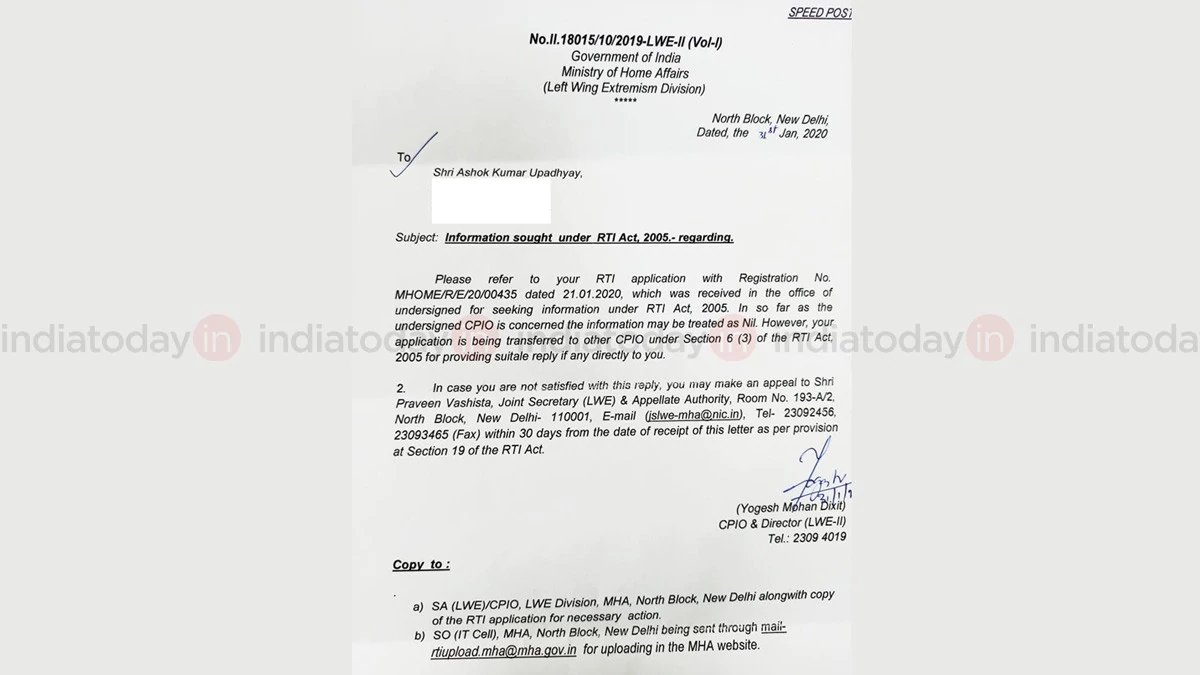
India Today TV filed an Right to Information (RTI) on 21st Jan 20, with Union Home Ministry seeking to know the official status of "Urban Naxals".

@PMOIndia @HMOIndia @NIA

The questions asked in the RTI application were as follows:

- Who are Urban Naxals? Where are they active?
- How many Urban Naxals have been arrested and how - many of them have been convicted?
- Has the government of India ever tried to ban Urban Naxals? If yes, when?
In response to the RTI query the Left Wing Extremism Division in the home ministry said:

"In so far as the undersigned CPIO is concerned, the information may be treated as Nil." The answer to the query was sent under the signature of Yogesh Mohan Dixit.
The term Urban Naxals is not clearly defined. The origin of the word can be traced to the book and a few essays by film-maker and social media opinion-maker @vivekagnihotri 's book, Urban Naxals: The Making of Buddha in a Traffic Jam.
The phrase of Urban Naxals is loosely attributed to the people with naxalite bent of mind residing in urban areas and working as activists, supporters and protectors of the ideology while the active Naxals battle it out in the jungles and vast swathes of Maoist-dominated areas.
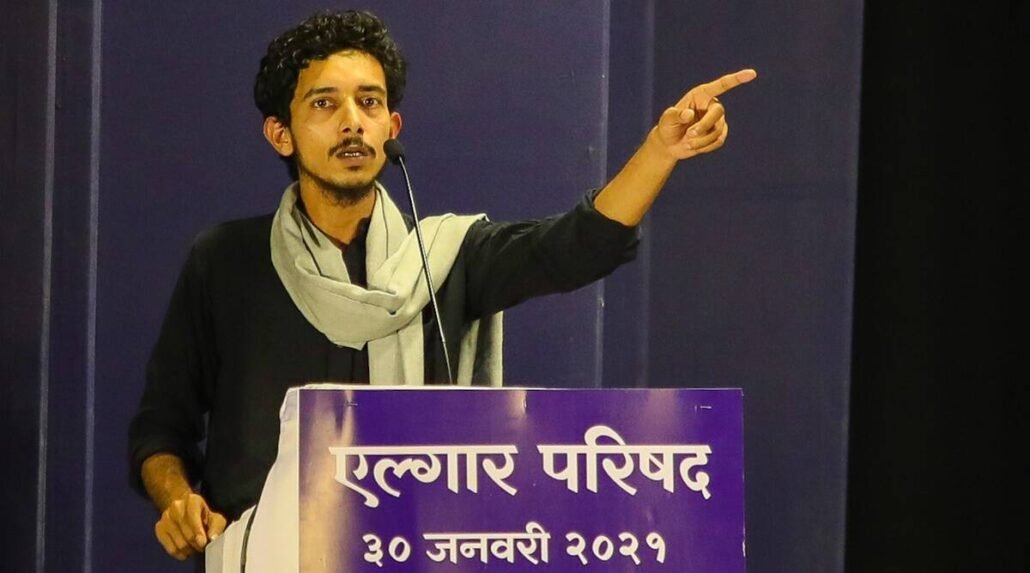
In 2018, Moists organized ‘Elgaar Parishad’ event to mark the 200th year of the Battle of Bhima Koregaon. The event was hit by violence and police recovered a letter that mentioned an alleged plan to assassinate Prime Minister Narendra Modi.
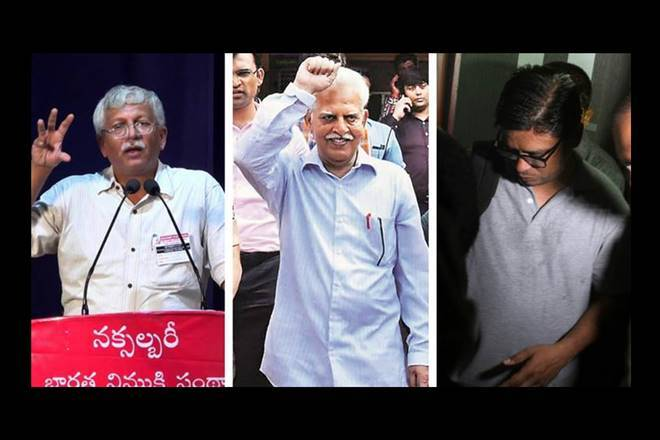
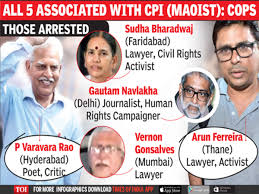
Following the recovery of the letter, police initiated a probe into the Naxal link in the matter, which led to the arrest of 6 activists for ‘Maoist links". Opposition parties & civil right activists condemned the police action, as an attempt suppress those who criticise the govt
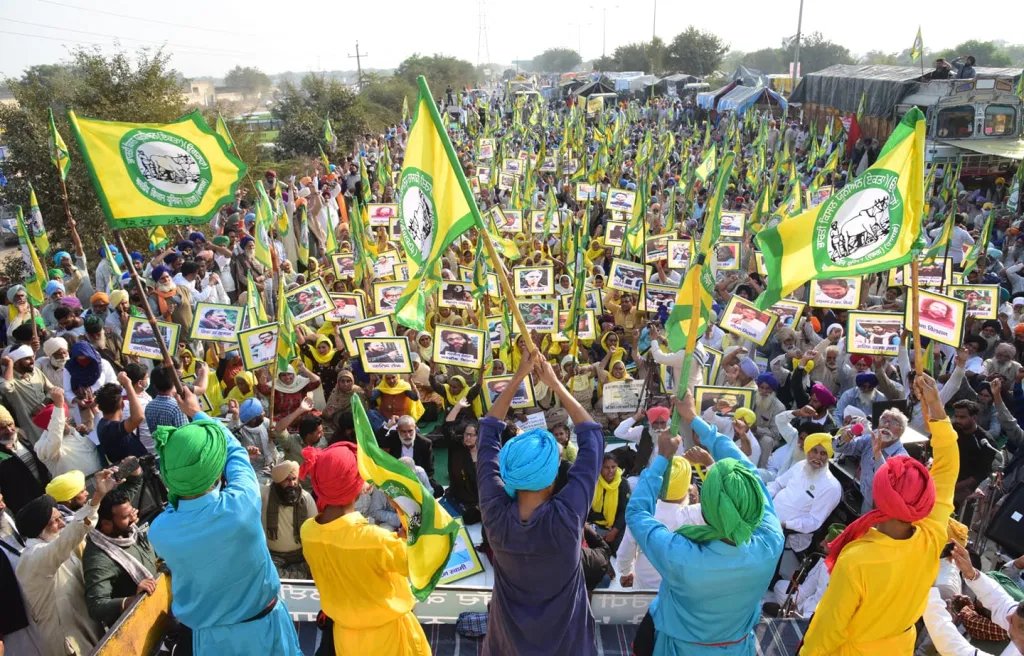
The Ekta Ugrahan of the Bharatiya Kisan Union represented group at Farmers protest. Almost 2/3 of those gathered were reportedly their members. It is same group calling for release of Urban Naxals involved in the Elgar Parishad case & Islamists arrested in the Delhi Riots case.
Recently Elgar Parishad was held in Pune in Jan 21 while the Farmers Protest was ongoing in Delhi. Trouble makers such as Sharjeel Usmani, Arundhati Roy and Prashant Kanojia made extremely controversial comments and crass Hinduphobic remarks.
New Age Urban Naxal

Greta Thunberg accidentally tweeted the 'toolkit' and feared that she might be booked under the stringent UAPA Act. This led to expose of "New Age Urban Naxals" like Disha Ravi, Nikita Jacob, Shantanu Muluk, Mo Dhaliwal and many others.
The Toolkit expose opened a Pandora box revealing deep-knitted nexus between international celebs, NGOs, Media Houses, & terr0rist org directly linked to Kh@listani movement.

Yet, why is GOI not recognizing these "Urban Naxals" officially ? @PMOIndia @HMOIndia @NIA_India
@StringReveals @ShefVaidya @desimojito @seriousfunnyguy @jkd18 @rose_k01 @Gurdeep15087618 @drmonika_langeh @AparBharat @VertigoWarrior @theskindoctor13 @desi_thug1 @BefittingFacts @MeghUpdates @moronhumor

More from India

Hindutva does not belong to Modi nor his party, it belongs to the people as a unifying, decolonial ideology similar to pan-Africanism or Yugoslavism.

His own brand of "positive secularism" is even milder - deepening special rights and welfare schemes for religious minorities.


After the disbanding of the Hindu Mahasabha and Jana Sangh, Hindutva as a political ideology does not even exist, except as a bogeyman in the minds of the Anglophone elite.

Even the BJP gave up Hindutva for civic nationalism, Gandhian socialism, and positive secularism in 1980s.

Under Modi, there has been compete policy continuity on minority rights and welfare from the Congress era, with little to no "Hindutva agenda" coming to see the light of day.

The most radical policy they can dream of is religion-neutral laws and equal rights for equal citizens.

Hindutva was essential in forming a national consciousness, but was abandoned with time. The modern BJP refuses to self-identify as a Hindutva movement, adopting moderates like Sardar Patel, Deendayal Upadhyay, and JP Narayan as their icons, rather than Savarkar or the Mahasabha.

When they say Hindu Rashtra, all they mean is an "Indic polity".

When British India was partitioned into a Muslim homeland and a Dharmic homeland, one state became a 'Ghazi' garrison state, and one the successor state to the Indic

You May Also Like

Recently, the @CNIL issued a decision regarding the GDPR compliance of an unknown French adtech company named "Vectaury". It may seem like small fry, but the decision has potential wide-ranging impacts for Google, the IAB framework, and today's adtech. It's thread time! 👇

It's all in French, but if you're up for it you can read:
• Their blog post (lacks the most interesting details):
https://t.co/PHkDcOT1hy
• Their high-level legal decision: https://t.co/hwpiEvjodt
• The full notification: https://t.co/QQB7rfynha

I've read it so you needn't!

Vectaury was collecting geolocation data in order to create profiles (eg. people who often go to this or that type of shop) so as to power ad targeting. They operate through embedded SDKs and ad bidding, making them invisible to users.

The @CNIL notes that profiling based off of geolocation presents particular risks since it reveals people's movements and habits. As risky, the processing requires consent — this will be the heart of their assessment.

Interesting point: they justify the decision in part because of how many people COULD be targeted in this way (rather than how many have — though they note that too). Because it's on a phone, and many have phones, it is considered large-scale processing no matter what.
I just finished Eric Adler's The Battle of the Classics, and wanted to say something about Joel Christiansen's review linked below. I am not sure what motivates the review (I speculate a bit below), but it gives a very misleading impression of the book. 1/x


The meat of the criticism is that the history Adler gives is insufficiently critical. Adler describes a few figures who had a great influence on how the modern US university was formed. It's certainly critical: it focuses on the social Darwinism of these figures. 2/x

Other insinuations and suggestions in the review seem wildly off the mark, distorted, or inappropriate-- for example, that the book is clickbaity (it is scholarly) or conservative (hardly) or connected to the events at the Capitol (give me a break). 3/x

The core question: in what sense is classics inherently racist? Classics is old. On Adler's account, it begins in ancient Rome and is revived in the Renaissance. Slavery (Christiansen's primary concern) is also very old. Let's say classics is an education for slaveowners. 4/x

It's worth remembering that literacy itself is elite throughout most of this history. Literacy is, then, also the education of slaveowners. We can honor oral and musical traditions without denying that literacy is, generally, good. 5/x