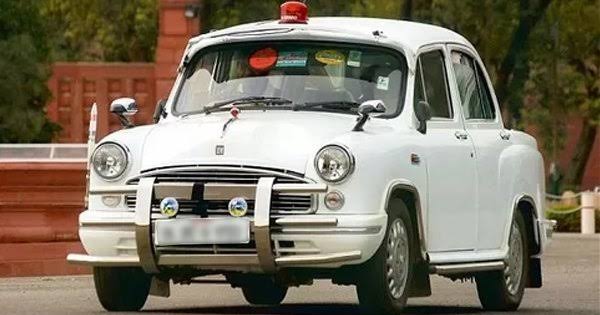
A car with a 12 month waiting period in the 80s ruled the Indian roads for over 3 decades

A thread on Ambassador cars 🧵

1/

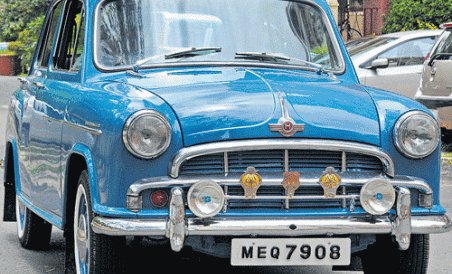
1956, UK - Morris Motors manufactured and sold 3 variants of Morris Oxford car

It sold the rights and tooling for these cars to Hindustan Motors, a subsidiary of CK Birla group to manufacture and sell these cars in India

2/
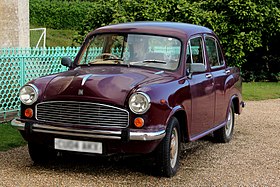
1956 - Morris Oxford Series 1 model was branded as Hindustan 10, Series 2 as Landmaster and Series 3 model as the Ambassador

3/
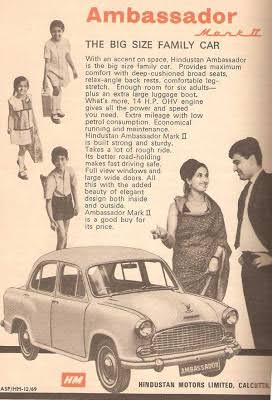
Out of the 3 cars, Ambassador was the best both in terms of looks, space and ruggedness required for Indian roads. It cost around 14000 Rs in 1958 when the production started

It was positioned as the family car given the kind of space available for bigger Indian families

4/
At that time, there were not many indian automobile brands. Standard 10 and Mahindra's Jeep were the only major car brands available.

The government controlled production and was encouraging domestic production. This helped all these 3 players

5/
But Ambassador took the lead right away capturing a large share of the market. It became very popular with the politicians & govt officers becoming their vehicle of choice

It became a symbol of esteem and power because of this. And began to be known as king of Indian roads

6/
The car also became popular with families because of good space. And even started getting used as taxis. And interestingly, its brand didn't get dilute because of this

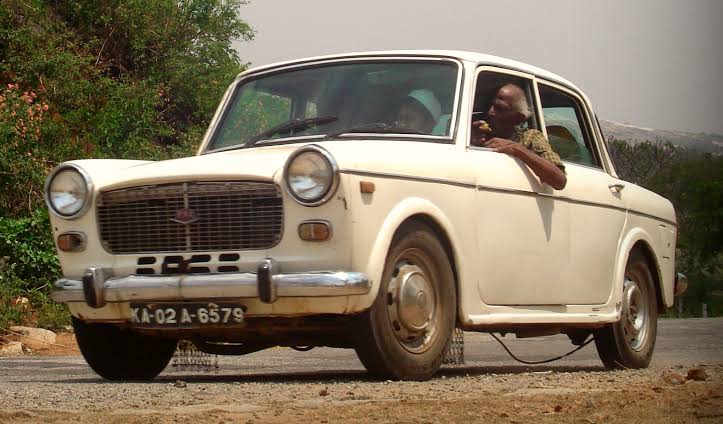
Though when Premier Padmini was launched in 1964, it became popular with families & took some market share

7/
But Ambassador remained most respected car brands in India. During the peak of its popularity in early 80s, it sold close to 24000 units per annum

And ranked 3rd after Mahindra and Premier Padmini in market share. In 80s it's waiting period after ordering was close to 1 year

8/
But in 80s, its problems started increasing. Government reduced protectionism and started allowing foreign JVs and entry of new players

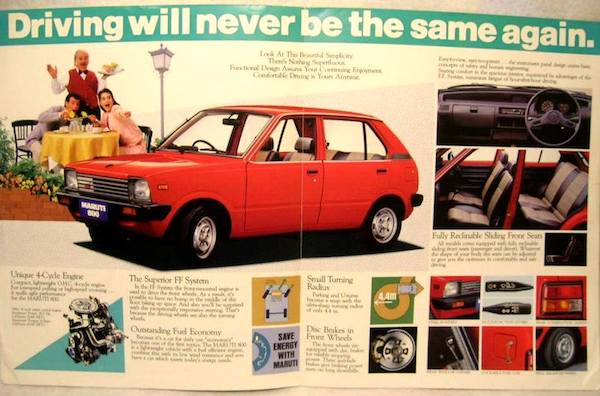
1981 - Indian Government created a PSU called Maruti Udyog. It signed a JV with Suzuki and started producing Maruti 800 in 1983

9/
Despite all the positives of Ambassador, it's mileage was very low and there was not much rework done on the design in past 2 decades

Maruti on the other hand looked more stylish, had a better mileage and cost only 50000 Rs, much lower than Ambassador

10/
After just 2 years of launch, Maruti stormed the Indian market taking away 34% of the market share with major contribution from 800

11/
Ambassador moved to 4th spot now as it didn't remain much popular with families any more who wanted more cost efficient vehicle. However it continued to be the vehicle of choice for government officials and politicians still

12/
Hindustan Motors tried fighting back introducing better versions of Ambassador

Launched Nova in 1990, classic in 1998 and Grand in 2003. However the design was almost the same. There was no way it could compete with the new stylish Indian and foreign cars

13/
In 89, Ambassador sold 35000 cars with a market share of 13% down from 17% in 85. And just 9% market share in 1995

With Tatas, Hyundai and Toyota entering the market, Ambassador was on its way out

14/
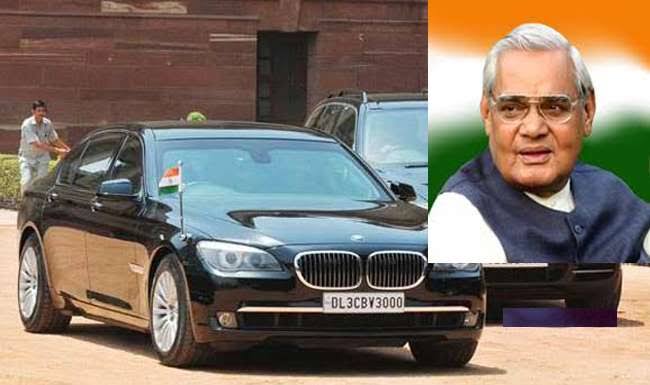
The final blow came from the government buyers in 2003. When the new PM Atal Ji opted for BMW over the Ambassador 1st time ever

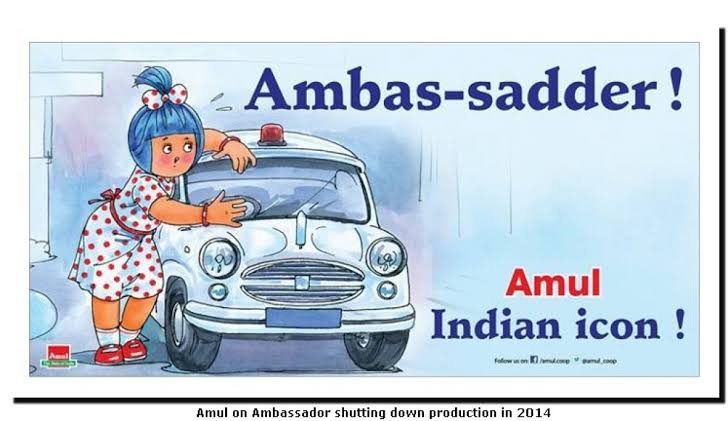
And in 2014, Government decided to start buying other brand cars for its officers. Fighting with losses, Ambassador decided to shut down production
15/
In 2014, Hindustan Motors manufactured the last Ambassador car.

The brand was sold to the French PSA group for just 80 crores INR in 2017

More than a car, Ambassador will remain as an emotion for many

16/16
References: https://t.co/Jt4qtqwBOv

https://t.co/Mq4f7sQO5A

https://t.co/XtMyH8sAmM
For more interesting brand stories and business concepts, do check https://t.co/z93wE0SEn9

More from India

"Busy Life Daily Puja & Neivedyas"

People would always have several doubts on what to offer bhagwan in their daily puja. For some it will be a million dollar question of how to do an express puja yet a satisfying one.


Upachara - "उपचार"

Refers to the offerings and services made to Bhagwan as part of worship. In shastras there are a count of upachara pujas we do.

पांच उपचार पूजा - 5 Upacharas
षोडशोपचार पूजा - 16 "
चतुःषष्ट्युपचार पूजा - 64 "

Out of these panch is used for daily puja.


Some use 16 upachras who are well versed with the way of doing it Effortlessly and have abhishekam at home daily. 64 is exclusively for festivals and special vrat. One can choose to do 5 upacharas daily and finish your puja peacefully.

How to start your Puja ?

1. Shudhikaran & Aachaman
2. Bhootashudhi & Pranayam
3. Sankalp
4. Choice of Upachara Puja
5. Aarti
6. Pradakshina
7. Mantra Pushpam
8. Bhoomi Sashtanga/Panchanga Namaskaram

Major pujas steps one should ideally follow

Shudhikaran & Aachaman

After bath and dressing with (washed clothes only) should arrange their requirements for puja.
Take water separately for Aachaman and Puja. Water shouldn't be used from same paatra ideally. Perform Aachaman as per your practice & for beginners - YouTube
In his letters describing the India Mission, Carey has given us an insight into how the society functioned then, of how the minds of the people worked and what methods the missionaries used to approach and brainwash the common people.


It is entirely possible that,Carey in his arrogance of being the white man and hence more civilized,his inability to under the Hindu scriptures and his natural disdain for the learned community coupled with his inherent hatred for the idolaters may have exaggerated the incidents.

In fact, considering the venom with which he has spoken about Hinduism and it's practices, it's likely that he has exaggerated these incidents. But it cannot be denied that these incidents did happen even if they may not have been on scale at which Carey has described.

One of his journal entry mentions a debate which happened in a temple in front of around 200 people. Carey describes having debated with two learned men and goes on to say when both learned men failed to answer his questions, he went on to preach the gospel to the assembled crowd


In a letter dated 30th June,1795 he goes on to gleefully narate how Hindus were unaware of their own scriptures and how an supposed expert named a grammar book when he was questioned as which scripture said that the Murti is God.
#LIVE Delhi High Court Women Lawyers Forum in Association with LiveLaw is conducting a Webinar on the topic 'Attack On Love Marriages And Freedom Of Choice'.

#FreedomOfChoice


Watch the Webinar live at :

YouTube link:
https://t.co/l074foe9RA

Facebook link:
https://t.co/d0m3h0Ut1w

Instagram Link:

Advocate Kajal Chandra begins the webinar and introduces the panelist Justice AP Shah, Delhi High Court’s Former Chief Justice. Advocate Gayatri Virmani introduces Human Rights Activist Jagmati Sangwan.

#FreedomOfChoice

The moderator Adv Chandra questions Justice Shah: Do the freedom of Religious ordinance of laws stand the test of Constitutionality and in your opinion, do they violate the fundamental right of liberty including the freedom to choose? #FreedomOfOpinion

Delhi High Court’s Former Chief Justice AP Shah: This topic cannot be discussed without referring to the Indian Constitution that guarantees Justice, Liberty, Equality and Fraternity and protects dignity of individual and Unity and integrity of the Nation. #FreedomOfChoice
Hindutva does not belong to Modi nor his party, it belongs to the people as a unifying, decolonial ideology similar to pan-Africanism or Yugoslavism.

His own brand of "positive secularism" is even milder - deepening special rights and welfare schemes for religious minorities.


After the disbanding of the Hindu Mahasabha and Jana Sangh, Hindutva as a political ideology does not even exist, except as a bogeyman in the minds of the Anglophone elite.

Even the BJP gave up Hindutva for civic nationalism, Gandhian socialism, and positive secularism in 1980s.

Under Modi, there has been compete policy continuity on minority rights and welfare from the Congress era, with little to no "Hindutva agenda" coming to see the light of day.

The most radical policy they can dream of is religion-neutral laws and equal rights for equal citizens.

Hindutva was essential in forming a national consciousness, but was abandoned with time. The modern BJP refuses to self-identify as a Hindutva movement, adopting moderates like Sardar Patel, Deendayal Upadhyay, and JP Narayan as their icons, rather than Savarkar or the Mahasabha.

When they say Hindu Rashtra, all they mean is an "Indic polity".

When British India was partitioned into a Muslim homeland and a Dharmic homeland, one state became a 'Ghazi' garrison state, and one the successor state to the Indic

You May Also Like