
12 things you should look out for before buying health insurance
A thread 🧵
You have to be a little wary of policies that come with co-pay. With co-pay, you need to pay a pre-decided amount from your own pocket whenever you make a claim.
The larger your expenses, the larger you’ll end up spending your own money, even with insurance.
This is something you need to be conscious of when making choices during hospitalization. Let’s deep dive into what will happen if your policy doesn’t have a room rent limit and when it does.
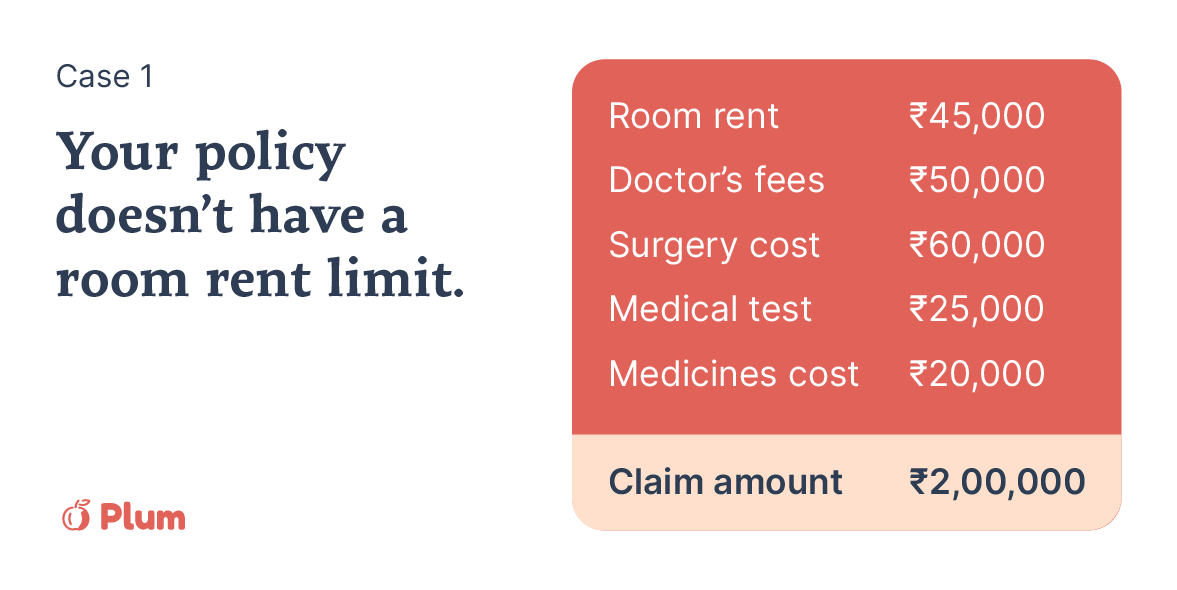
You have a health insurance cover of ₹15 lakhs, with *no room-rent limit*. You get treated for a condition that costs you ₹2 lakhs, and you paid ₹15,000 in room rent per day.
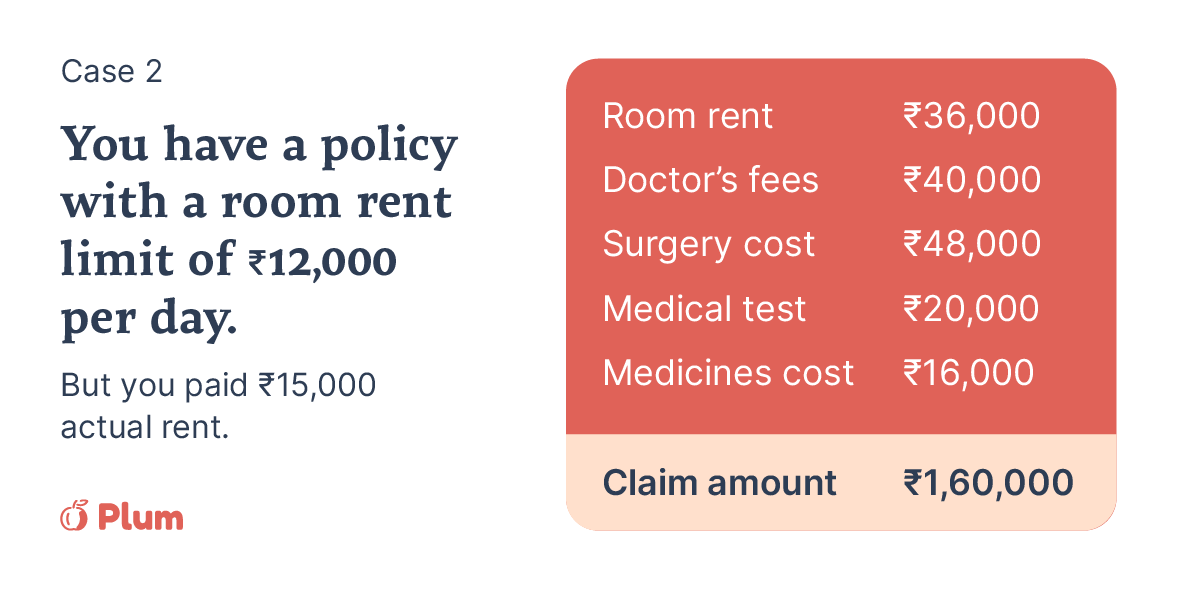
You have a health insurance cover of ₹15 lakhs, with a room rent limit of ₹12,000 per day. You get treated for a condition that costs you ₹2 lakhs, but you stayed in a room that costs you ₹15,000/day.
In this case, each component in your cost is proportionately deducted (12/15*cost), and therefore, you can only claim ₹1,60,000 of your total expenditure.
Check the attached image to understand how your claim amount gets reduced.
You might have thought the room rent doesn't matter as much - but it does.
During this period after you purchase a policy, you cannot make any claim. It’s typically between 30 to 90 days. This waiting period is waived in the event of an accident that leads to immediate hospitalization.
This applies to pre-existing diseases (like diabetes) present when a health insurance policy is bought. The insurer will accept your claims for treatment related to these diseases only if the waiting period you agreed upon has passed.
This means that the insurer applies a limit on the amount you can claim for treatments for specified conditions and diseases.
Save yourself that shock by going through the rest of this thread and also bookmarking it :)
After you buy a policy, you can cancel it within a certain free-look period, stating your reasons.
However, the insurer will not refund any medical tests, stamp duty charges done during this period.
The free-look period is typically 15 to 30 days.
This is the facility given by the insurer to you, for covering your pre and post-hospitalization expenses.
This will go a long way in saving you a lot of money (and stress!)
This means single-day treatments like eye surgery, etc. are covered by your health insurance policy.
Several common treatments require single day hospitalization, so you need to totally make sure that these are covered.
If you don't make any claim in a year, the insurer will reward you by increasing your coverage amount (with a max limit).
No claim bonuses are good-to-have on your policy.
If your policy has a domiciliary cover (quite some insurance-speak!), it means that you can claim money when you are treated at home.
This is great during these times because it’s really difficult to find hospital beds during the pandemic.
If you’ve completed 8 years of coverage, the insurer cannot reject an eligible claim, for any reason except for proven frauds and exclusions made in the policy documents.
If you spot these words, it means the insurance company provides you with a free health check-up.
More from Health

1/16
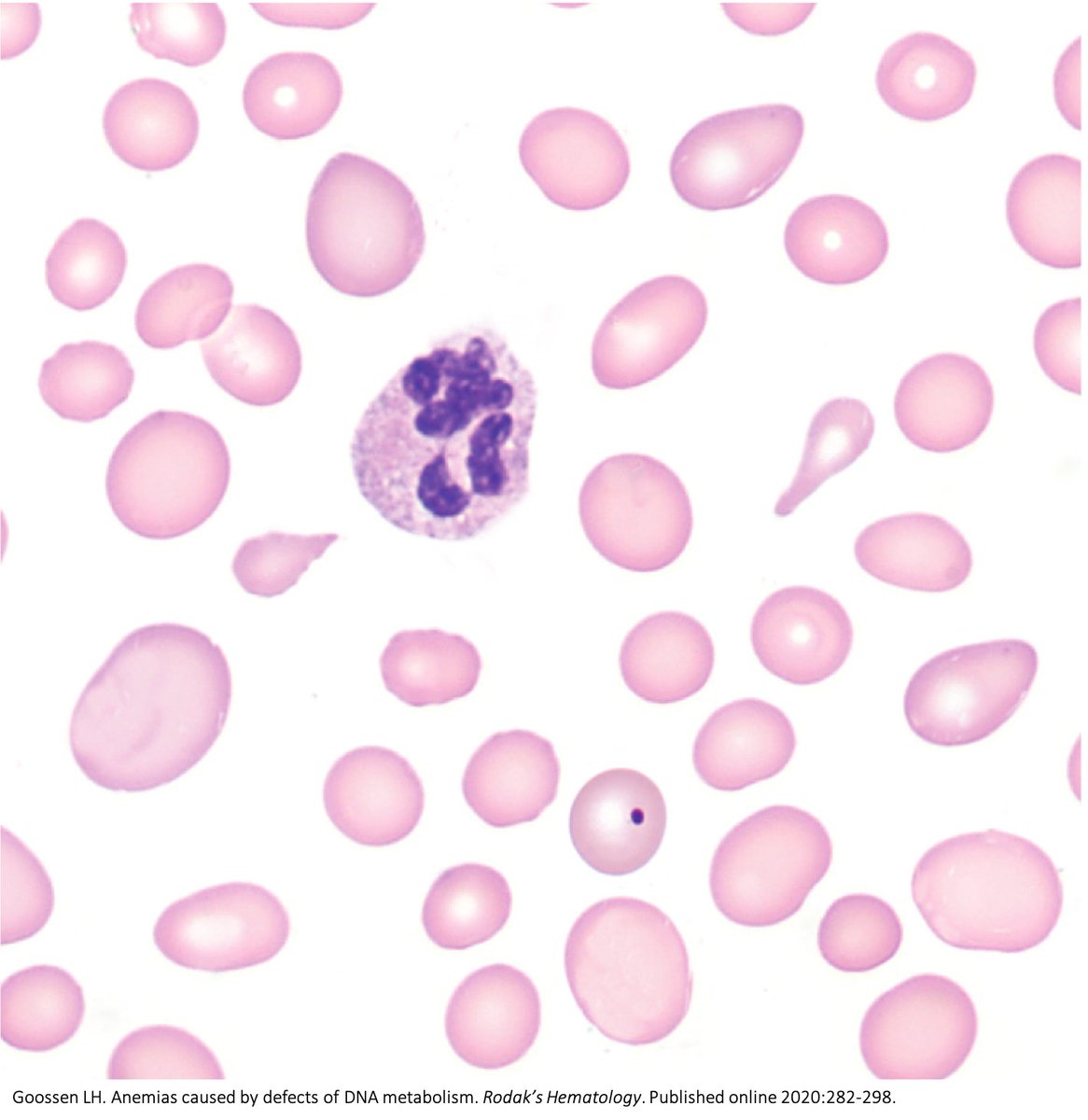
Why do B12 and folate deficiencies lead to HUGE red blood cells?
And, if the issue is DNA synthesis, why are red blood cells (which don't have DNA) the key cell line affected?
For answers, we'll have to go back a few billion years.
2/
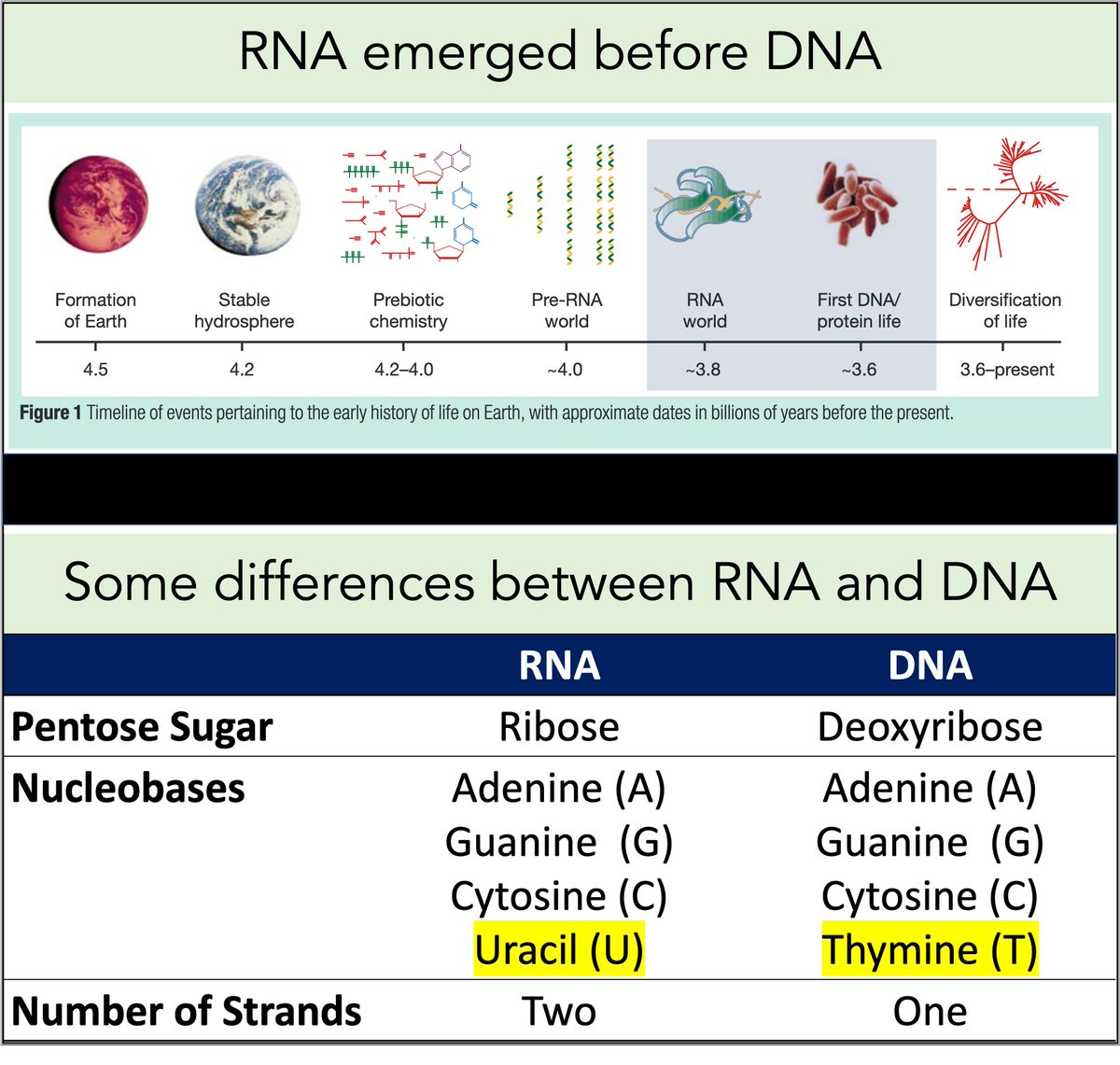
RNA came first. Then, ~3-4 billion years ago, DNA emerged.
Among their differences:
🔹RNA contains uracil
🔹DNA contains thymine
But why does DNA contains thymine (T) instead of uracil (U)?
https://t.co/XlxT6cLLXg
3/
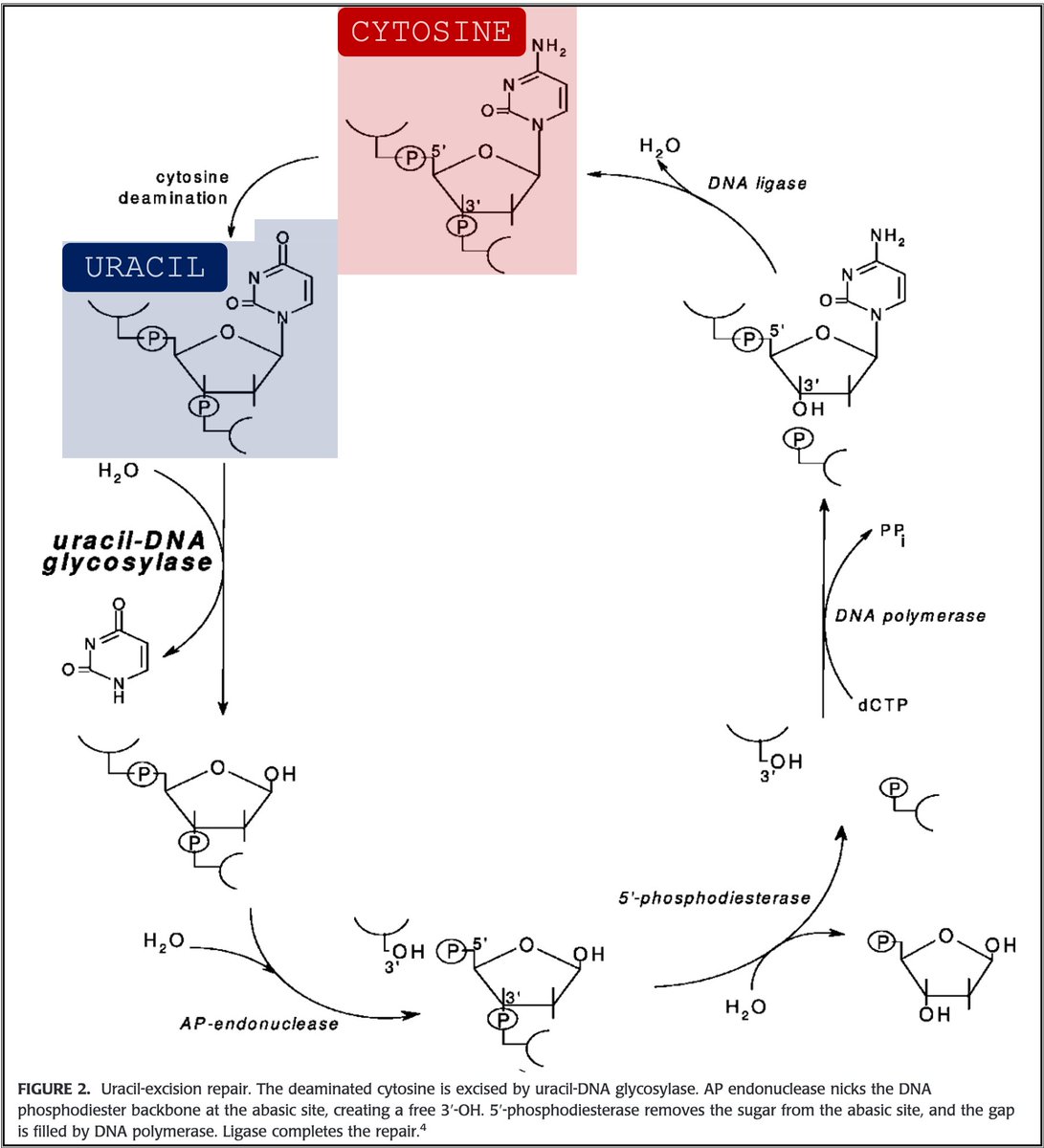
🔑Cytosine (C) can undergo spontaneous deamination to uracil (U).
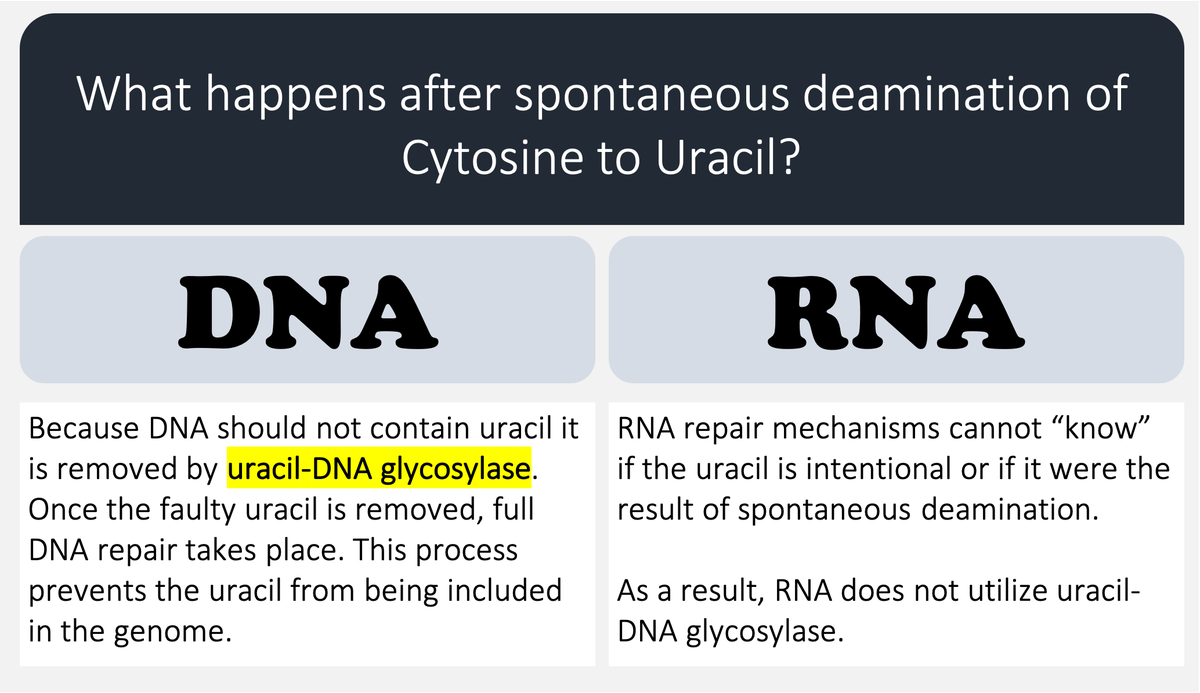
In the RNA world, this meant that U could appear intensionally or unintentionally. This is clearly problematic. How can you repair RNA when you can't tell if something is an error?
https://t.co/bIZGviHBUc
4/
DNA's use of T instead of U means that spontaneous C → U deamination can be corrected without worry that an intentional U is being removed.
DNA requires greater stability than RNA so the transition to a thymine-based structure was beneficial.
https://t.co/bIZGviHBUc
5/
Let's return to megaloblastic anemia secondary to B12 or folate deficiency.
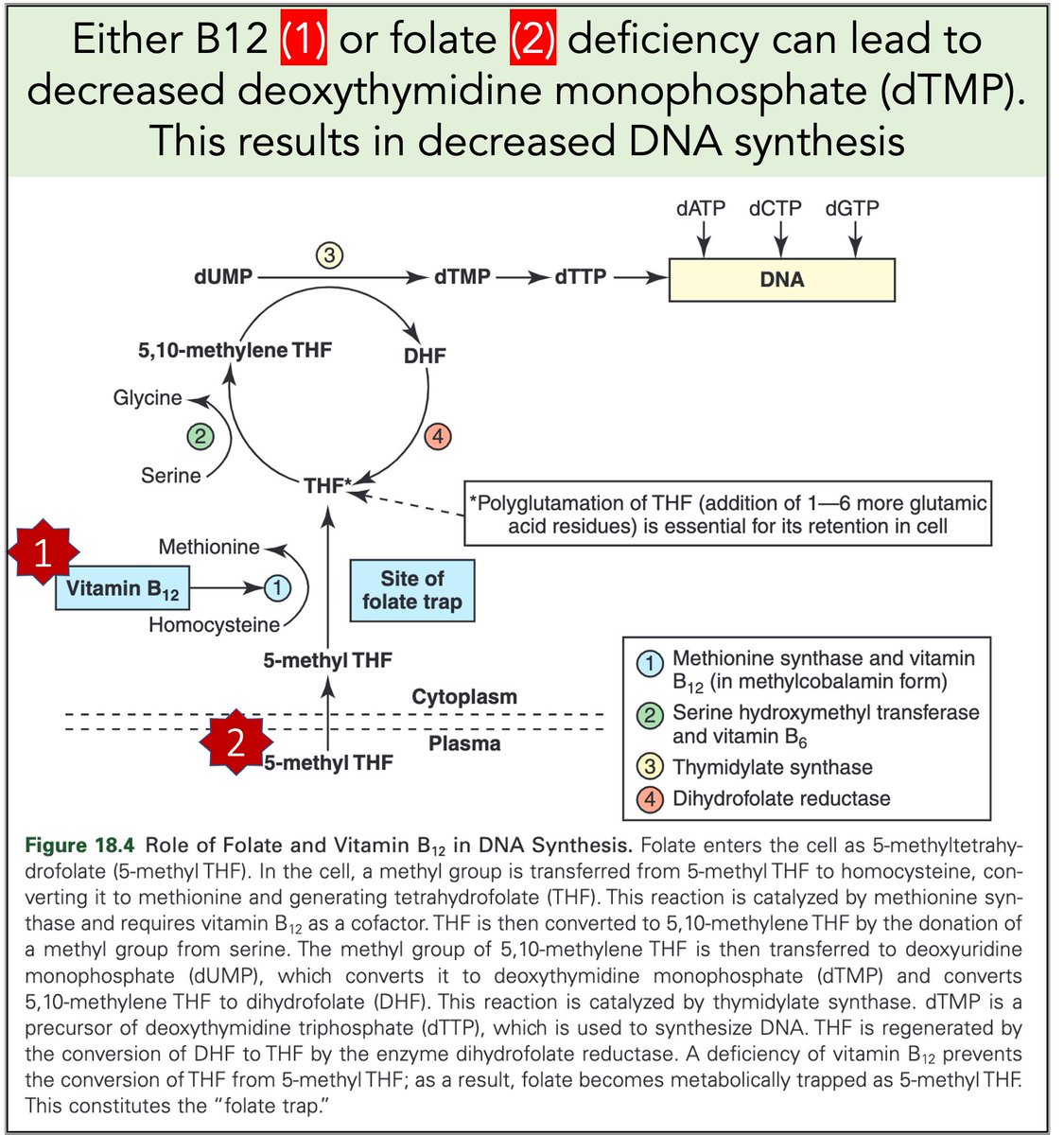
When either is severely deficient deoxythymidine monophosphate (dTMP*) production is hindered. With less dTMP, DNA synthesis is abnormal.
[*Note: thymine is the base in dTMP]
https://t.co/AnDUtKkbZh
Why do B12 and folate deficiencies lead to HUGE red blood cells?
And, if the issue is DNA synthesis, why are red blood cells (which don't have DNA) the key cell line affected?
For answers, we'll have to go back a few billion years.
2/
RNA came first. Then, ~3-4 billion years ago, DNA emerged.
Among their differences:
🔹RNA contains uracil
🔹DNA contains thymine
But why does DNA contains thymine (T) instead of uracil (U)?
https://t.co/XlxT6cLLXg
3/
🔑Cytosine (C) can undergo spontaneous deamination to uracil (U).
In the RNA world, this meant that U could appear intensionally or unintentionally. This is clearly problematic. How can you repair RNA when you can't tell if something is an error?
https://t.co/bIZGviHBUc
4/
DNA's use of T instead of U means that spontaneous C → U deamination can be corrected without worry that an intentional U is being removed.
DNA requires greater stability than RNA so the transition to a thymine-based structure was beneficial.
https://t.co/bIZGviHBUc
5/
Let's return to megaloblastic anemia secondary to B12 or folate deficiency.
When either is severely deficient deoxythymidine monophosphate (dTMP*) production is hindered. With less dTMP, DNA synthesis is abnormal.
[*Note: thymine is the base in dTMP]
https://t.co/AnDUtKkbZh

Now you know I love to sh-t in Harvard. But I also like accuracy. So I decided to go look at Harvard’s catalog to see its lack of military history that this article describes (they only teach history of pets it claims) and what I found shocked me! Shocked me! A thread: 1/
First off, Harvard students literally have multiple sections of military history that they can take listed. (It appears these ones are taught at MIT, so they might have to walk down the street for these) but... 2/

Say they want to stay on campus...they can only take numerous classes on war and diplomacy...3/
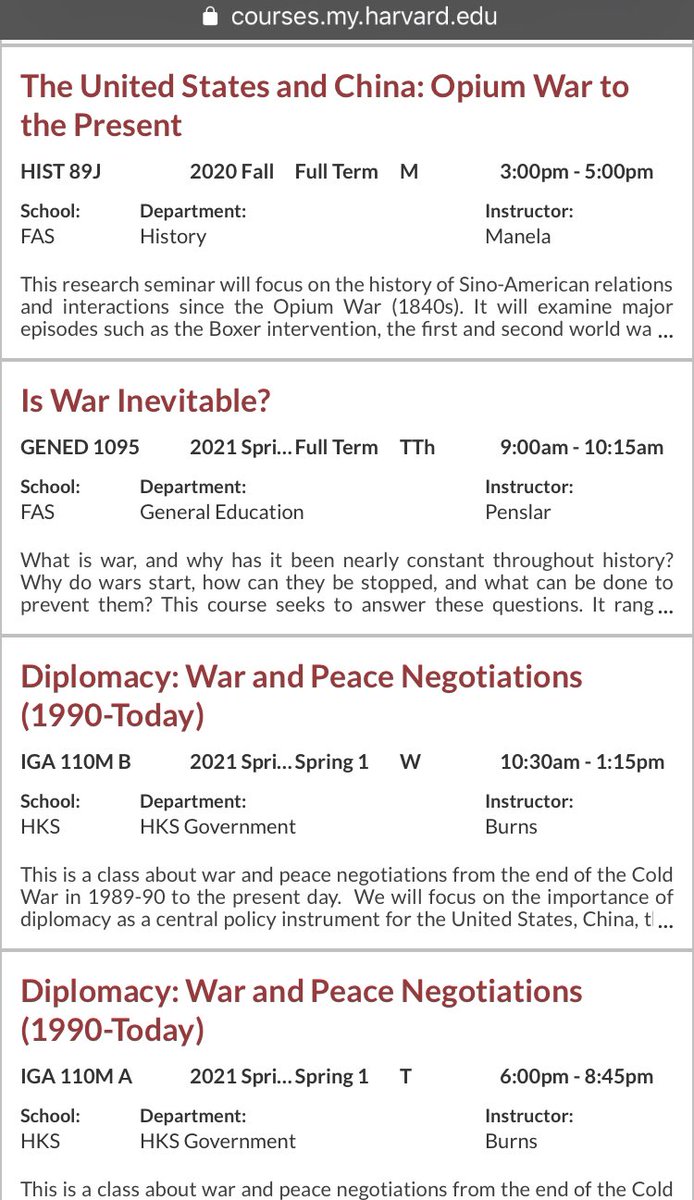
They have an entire class on Yalta. That’s right. An entire class on Yalta. 4/

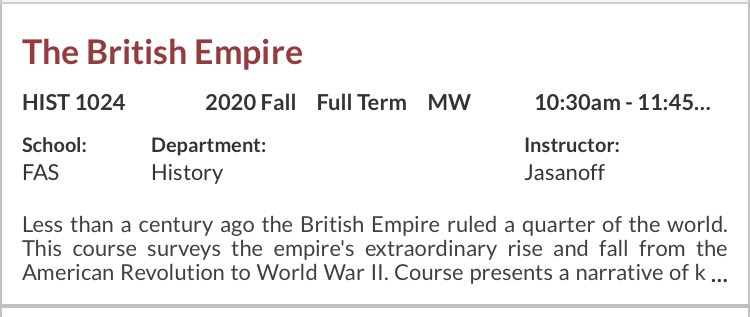
But wait! There is more! They can take the British Empire, The Fall of the Roman Empire for those wanting traditional topics... 5/
\u201cMilitary history\u201d is only in decline if you\u2014like the author & experts in this obnoxious piece\u2014see the subject as a narrowly defined, white dude-oriented, guns & bayonets approach. The field is 1000% better off w/today\u2019s diversity of topics & historians. https://t.co/dUf3OWyVpQ
— Jonathan S. Jones (@_jonathansjones) February 1, 2021
First off, Harvard students literally have multiple sections of military history that they can take listed. (It appears these ones are taught at MIT, so they might have to walk down the street for these) but... 2/
Say they want to stay on campus...they can only take numerous classes on war and diplomacy...3/
They have an entire class on Yalta. That’s right. An entire class on Yalta. 4/
But wait! There is more! They can take the British Empire, The Fall of the Roman Empire for those wanting traditional topics... 5/


You May Also Like










The UN just voted to condemn Israel 9 times, and the rest of the world 0.
View the resolutions and voting results here:
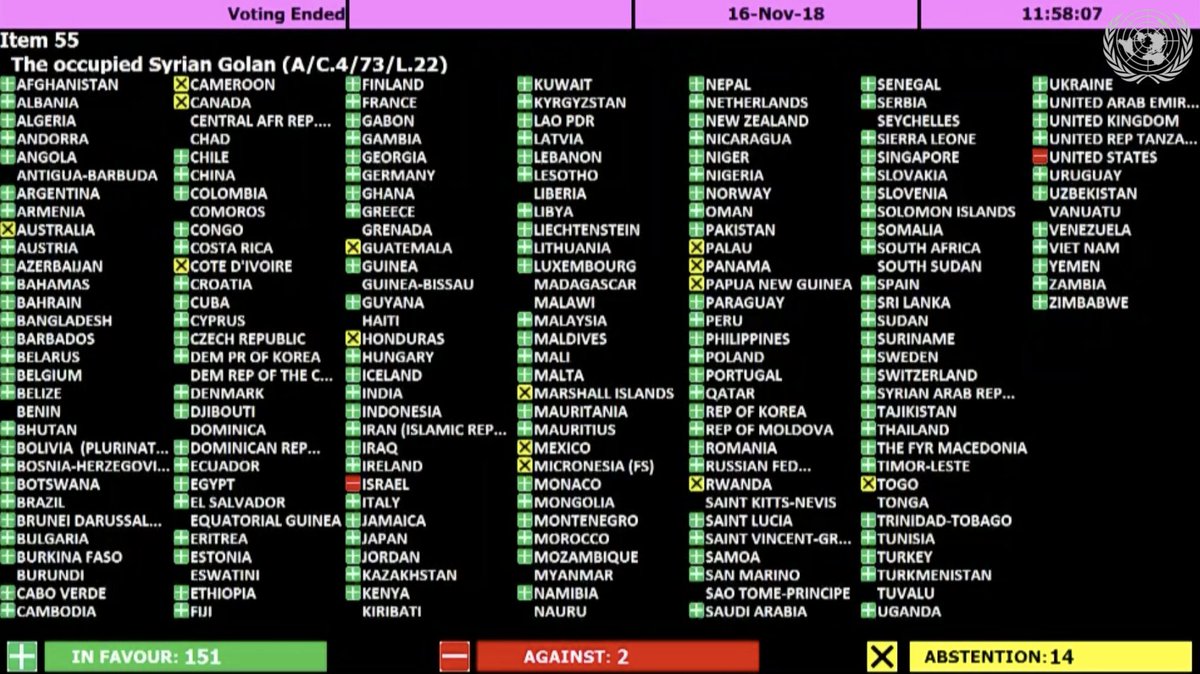
The resolution titled "The occupied Syrian Golan," which condemns Israel for "repressive measures" against Syrian citizens in the Golan Heights, was adopted by a vote of 151 - 2 - 14.
Israel and the U.S. voted 'No' https://t.co/HoO7oz0dwr
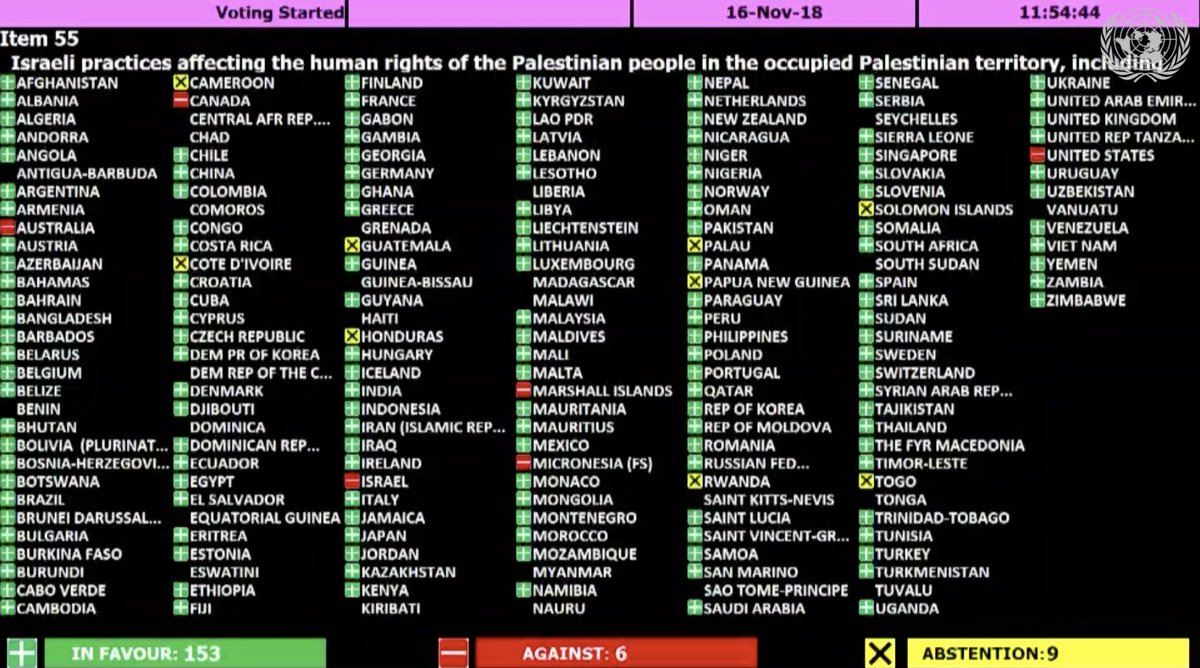
The resolution titled "Israeli practices affecting the human rights of the Palestinian people..." was adopted by a vote of 153 - 6 - 9.
Australia, Canada, Israel, Marshall Islands, Micronesia, and the U.S. voted 'No' https://t.co/1Ntpi7Vqab
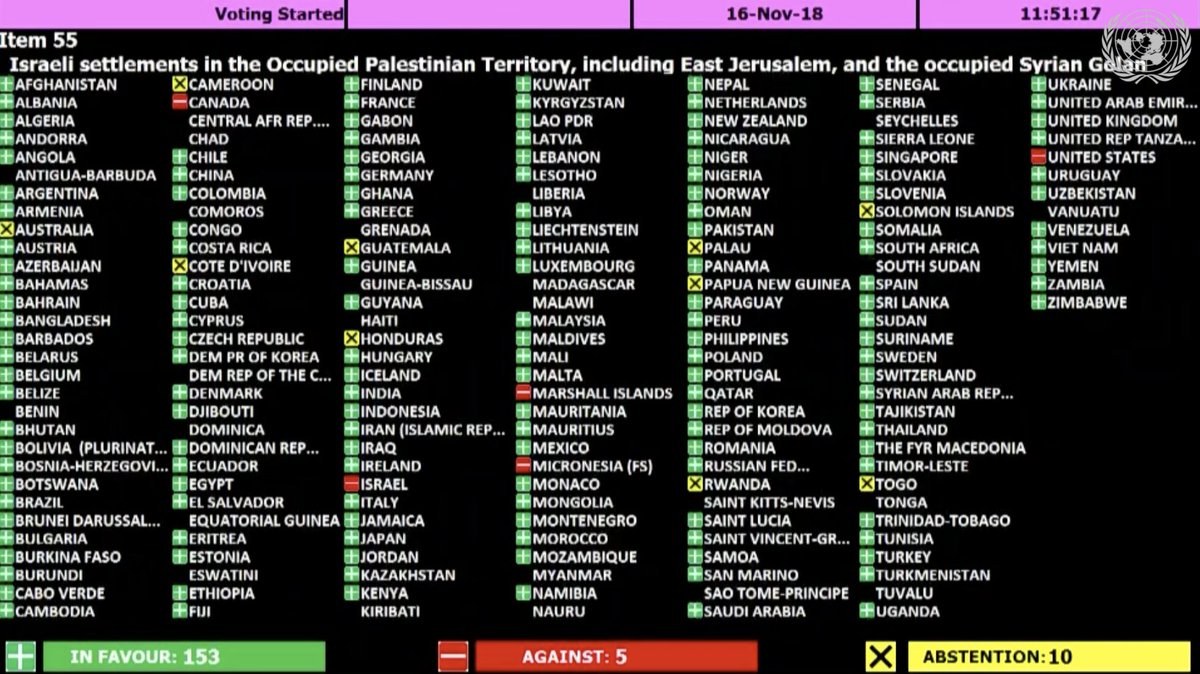
The resolution titled "Israeli settlements in the Occupied Palestinian Territory, including East Jerusalem, and the occupied Syrian Golan" was adopted by a vote of 153 – 5 – 10.
Canada, Israel, Marshall Islands, Micronesia, and the U.S. voted 'No'
https://t.co/REumYgyRuF
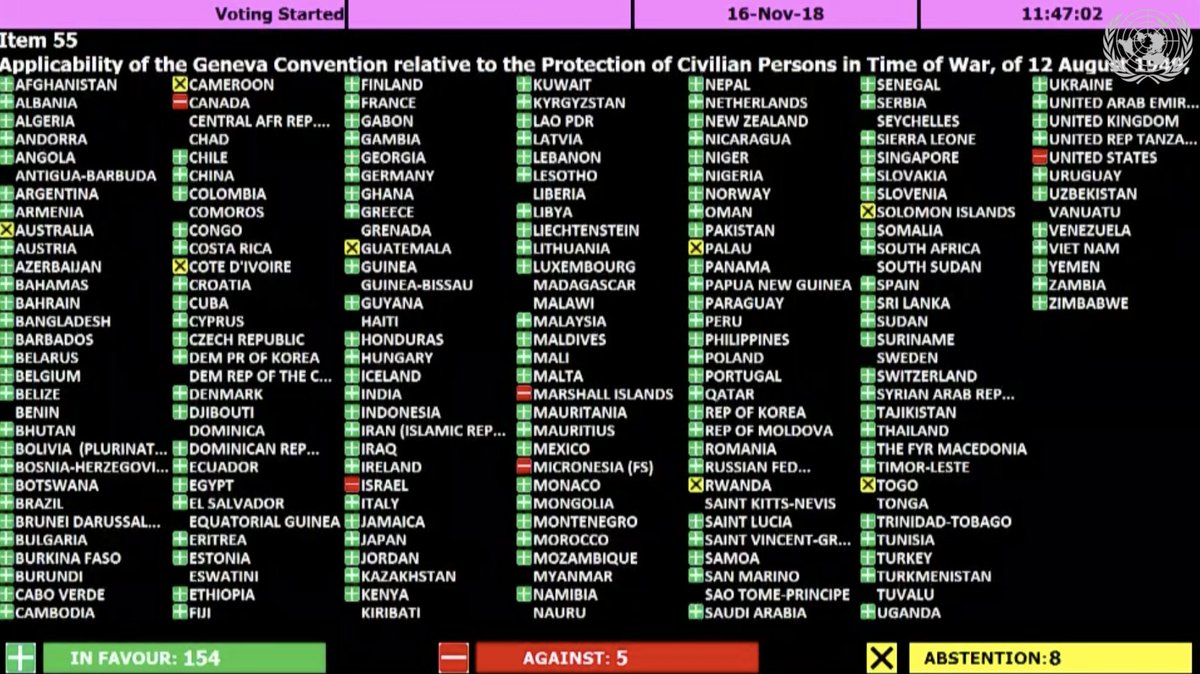
The resolution titled "Applicability of the Geneva Convention... to the
Occupied Palestinian Territory..." was adopted by a vote of 154 - 5 - 8.
Canada, Israel, Marshall Islands, Micronesia, and the U.S. voted 'No'
https://t.co/xDAeS9K1kW
View the resolutions and voting results here:
The resolution titled "The occupied Syrian Golan," which condemns Israel for "repressive measures" against Syrian citizens in the Golan Heights, was adopted by a vote of 151 - 2 - 14.
Israel and the U.S. voted 'No' https://t.co/HoO7oz0dwr
The resolution titled "Israeli practices affecting the human rights of the Palestinian people..." was adopted by a vote of 153 - 6 - 9.
Australia, Canada, Israel, Marshall Islands, Micronesia, and the U.S. voted 'No' https://t.co/1Ntpi7Vqab
The resolution titled "Israeli settlements in the Occupied Palestinian Territory, including East Jerusalem, and the occupied Syrian Golan" was adopted by a vote of 153 – 5 – 10.
Canada, Israel, Marshall Islands, Micronesia, and the U.S. voted 'No'
https://t.co/REumYgyRuF
The resolution titled "Applicability of the Geneva Convention... to the
Occupied Palestinian Territory..." was adopted by a vote of 154 - 5 - 8.
Canada, Israel, Marshall Islands, Micronesia, and the U.S. voted 'No'
https://t.co/xDAeS9K1kW

Oh my Goodness!!!
I might have a panic attack due to excitement!!
Read this thread to the end...I just had an epiphany and my mind is blown. Actually, more than blown. More like OBLITERATED! This is the thing! This is the thing that will blow the entire thing out of the water!
Has this man been concealing his true identity?
Is this man a supposed 'dead' Seal Team Six soldier?
Witness protection to be kept safe until the right moment when all will be revealed?!
Who ELSE is alive that may have faked their death/gone into witness protection?

Were "golden tickets" inside the envelopes??

Are these "golden tickets" going to lead to their ultimate undoing?
Review crumbs on the board re: 'gold'.

#SEALTeam6 Trump re-tweeted this.

I might have a panic attack due to excitement!!
Read this thread to the end...I just had an epiphany and my mind is blown. Actually, more than blown. More like OBLITERATED! This is the thing! This is the thing that will blow the entire thing out of the water!
Tik Tok pic.twitter.com/8X3oMxvncP
— Scotty Mar10 (@Allenma15086871) December 29, 2020
Has this man been concealing his true identity?
Is this man a supposed 'dead' Seal Team Six soldier?
Witness protection to be kept safe until the right moment when all will be revealed?!
Who ELSE is alive that may have faked their death/gone into witness protection?
Were "golden tickets" inside the envelopes??
Are these "golden tickets" going to lead to their ultimate undoing?
Review crumbs on the board re: 'gold'.
#SEALTeam6 Trump re-tweeted this.