This was a novel idea at the time, that you could pluck bits of information out of your mind and the external world and save it in a place you trust and control
1/ Here's the case for making "Curate" the first step in my methodology for personal knowledge management, known as CODE. Instead of "Capture"
C – Curate
O – Organize
D – Distill
E – Express
I\u2019m thinking of changing the C in CODE to Curate instead of Capture
— Tiago Forte (@fortelabs) January 18, 2021
Capture focuses on the mechanical action, which is trivial now
Curate focuses on the Curation Mindset of intentionally choosing what to consume, which is harder than ever
This was a novel idea at the time, that you could pluck bits of information out of your mind and the external world and save it in a place you trust and control
1) from your internal mind (where they cause stress)
2) immediately (before you forget them)
3) thoroughly (because even a single one slipping through the cracks can be catastrophic)
It suggests that if you don't capture something, it will escape, and that will be a bad thing
And if you don't get to it later, that's a good thing. The good stuff always comes back around
More from For later read


Wow, Morgan McSweeney again, Rachel Riley, SFFN, Center for Countering Digital Hate, Imran Ahmed, JLM, BoD, Angela Eagle, Tracy-Ann Oberman, Lisa Nandy, Steve Reed, Jon Cruddas, Trevor Chinn, Martin Taylor, Lord Ian Austin and Mark Lewis. #LabourLeaks #StarmerOut 24 tweet🧵
Morgan McSweeney, Keir Starmer’s chief of staff, launched the organisation that now runs SFFN.
The CEO Imran Ahmed worked closely with a number of Labour figures involved in the campaign to remove Jeremy as leader.
Rachel Riley is listed as patron. https://t.co/nGY5QrwBD0

SFFN claims that it has been “a project of the Center For Countering Digital Hate” since 4 May 2020. The relationship between the two organisations, however, appears to date back far longer. And crucially, CCDH is linked to a number of figures on the Labour right. #LabourLeaks
Center for Countering Digital Hate registered at Companies House on 19 Oct 2018, the organisation’s only director was Morgan McSweeney – Labour leader Keir Starmer’s chief of staff. McSweeney was also the campaign manager for Liz Kendall’s leadership bid. #LabourLeaks #StarmerOut
Sir Keir - along with his chief of staff, Morgan McSweeney - held his first meeting with the Jewish Labour Movement (JLM). Deliberately used the “anti-Semitism” crisis as a pretext to vilify and then expel a leading pro-Corbyn activist in Brighton and Hove
Morgan McSweeney, Keir Starmer’s chief of staff, launched the organisation that now runs SFFN.
The CEO Imran Ahmed worked closely with a number of Labour figures involved in the campaign to remove Jeremy as leader.
Rachel Riley is listed as patron. https://t.co/nGY5QrwBD0
SFFN claims that it has been “a project of the Center For Countering Digital Hate” since 4 May 2020. The relationship between the two organisations, however, appears to date back far longer. And crucially, CCDH is linked to a number of figures on the Labour right. #LabourLeaks
Center for Countering Digital Hate registered at Companies House on 19 Oct 2018, the organisation’s only director was Morgan McSweeney – Labour leader Keir Starmer’s chief of staff. McSweeney was also the campaign manager for Liz Kendall’s leadership bid. #LabourLeaks #StarmerOut
Sir Keir - along with his chief of staff, Morgan McSweeney - held his first meeting with the Jewish Labour Movement (JLM). Deliberately used the “anti-Semitism” crisis as a pretext to vilify and then expel a leading pro-Corbyn activist in Brighton and Hove

(1/50)
#Cardano “Understanding Kamali”
#Cardano will be the underpinning of the emergence of Africa.
To grasp the full weight of the SOLUTIONS #Cardano can provide it is pertinent to read “Understanding Africa” as I will draw directly from the PROBLEMS laid out.
(2/50)
Here is a link if you have not already read
(3/50)
What I will attempt to do here, is to create an immersive world for you to be placed in to grasp the weight and size of problems from the ground level and then take a grass-roots approach at solving them using #Cardano and its technology.
(4/50)
As an investor and community member of #Cardano, this should be extremely important to you as you have a stake (pun intended) in this.
“You are paid in direct proportion to the difficulty of the problems you solve” - @elonmusk
(5/50)
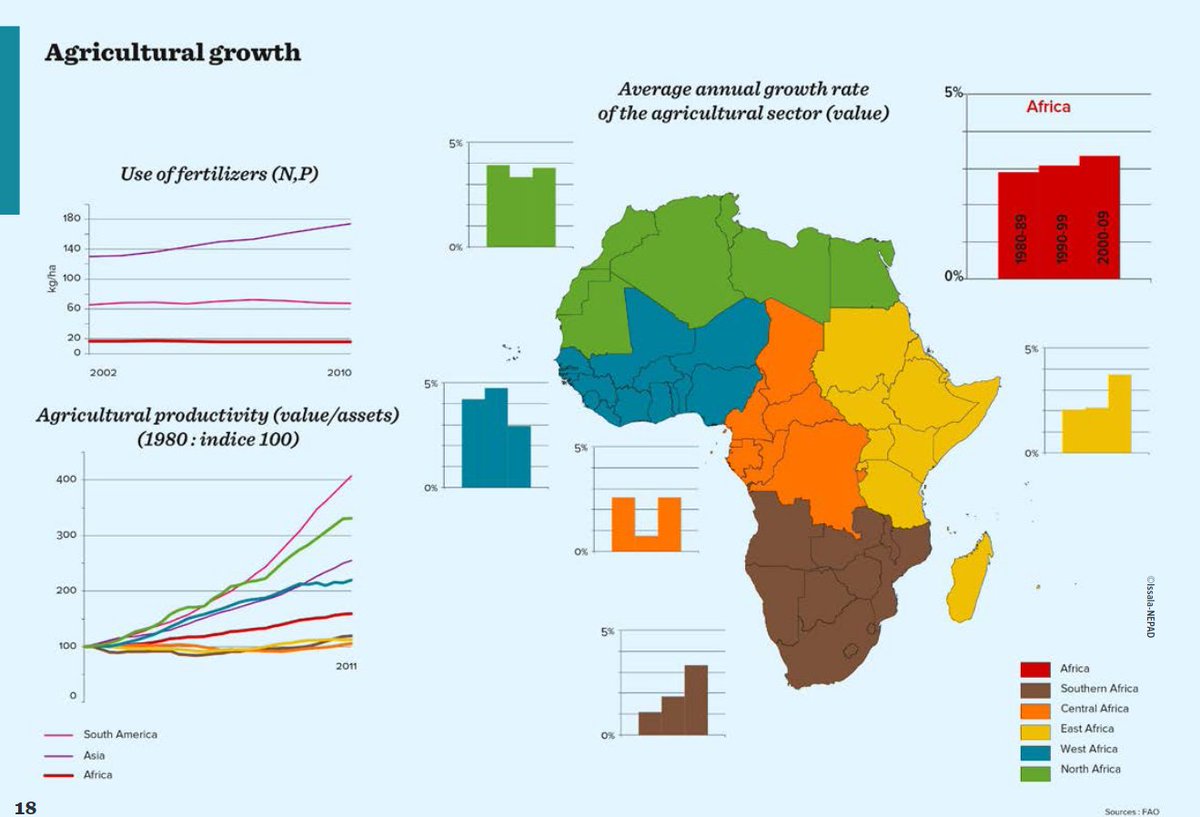
In Africa, agribusiness, more than any other sector, has the potential to reduce poverty and drive economic growth. Agriculture accounts for nearly half of the continent’s gross domestic product and employs 60 percent of the labor force.
#Cardano “Understanding Kamali”
#Cardano will be the underpinning of the emergence of Africa.
To grasp the full weight of the SOLUTIONS #Cardano can provide it is pertinent to read “Understanding Africa” as I will draw directly from the PROBLEMS laid out.
(2/50)
Here is a link if you have not already read
(1/38) #Cardano \u201cUnderstanding Africa\u201d (Part 1 of 2)
— FatCat (@fatcatofcrypto) February 10, 2021
This thread will be split into two parts with the 2nd coming out on Sunday.
Part 1 will layout the pervasive PROBLEMS Africa faces whereas Part 2 will apply direct technologies @InputOutputHK can implement as SOLUTIONS. pic.twitter.com/n3I91bnddq
(3/50)
What I will attempt to do here, is to create an immersive world for you to be placed in to grasp the weight and size of problems from the ground level and then take a grass-roots approach at solving them using #Cardano and its technology.
(4/50)
As an investor and community member of #Cardano, this should be extremely important to you as you have a stake (pun intended) in this.
“You are paid in direct proportion to the difficulty of the problems you solve” - @elonmusk
(5/50)
In Africa, agribusiness, more than any other sector, has the potential to reduce poverty and drive economic growth. Agriculture accounts for nearly half of the continent’s gross domestic product and employs 60 percent of the labor force.

@snip96581187 @Daoyu15 @lab_leak @walkaboutrick @ydeigin @Ayjchan @franciscodeasis @TheSeeker268 @angie_rasmussen Clearly, because as I have been saying for 8 months now, DTRA and DARPA have been using Ecohealth and UC Davis to collect novel pathogens for gain of function work back in the USA. I have documented this in many threads which I will post here just to annoy everyone.
@Daoyu15 @lab_leak @walkaboutrick @ydeigin @Ayjchan @franciscodeasis @TheSeeker268 @angie_rasmussen
@Daoyu15 @lab_leak @walkaboutrick @ydeigin @Ayjchan @franciscodeasis @TheSeeker268 @angie_rasmussen
@Daoyu15 @lab_leak @walkaboutrick @ydeigin @Ayjchan @franciscodeasis @TheSeeker268 @angie_rasmussen
@Daoyu15 @lab_leak @walkaboutrick @ydeigin @Ayjchan @franciscodeasis @TheSeeker268 @angie_rasmussen
@Daoyu15 @lab_leak @walkaboutrick @ydeigin @Ayjchan @franciscodeasis @TheSeeker268 @angie_rasmussen
28. Before moving on to DARPA, let's look at DTRA:
— Billy Bostickson \U0001f3f4\U0001f441&\U0001f441 \U0001f193 (@BillyBostickson) July 31, 2020
A must read!
It is astonishing the number of pies they had their dirty little fingers poking into:
Note John Epstein and Kevin Olival from EcoHealth Alliance are key figures in DTRA:https://t.co/O4QwVWrm7m pic.twitter.com/cnNGZ7AApj
@Daoyu15 @lab_leak @walkaboutrick @ydeigin @Ayjchan @franciscodeasis @TheSeeker268 @angie_rasmussen
24. DTRA Network for Collection of Viruses
— Billy Bostickson \U0001f3f4\U0001f441&\U0001f441 \U0001f193 (@BillyBostickson) January 9, 2021
7. DTRA - Metabiota - One Health - Ecohealth
Bat Research Networks and Viral Surveillance: Gaps and Opportunities in Western Asia pic.twitter.com/SOqSSXF3pa
@Daoyu15 @lab_leak @walkaboutrick @ydeigin @Ayjchan @franciscodeasis @TheSeeker268 @angie_rasmussen
That is the key question
— Billy Bostickson \U0001f3f4\U0001f441&\U0001f441 \U0001f193 (@BillyBostickson) January 5, 2021
1. DARPA/DTRA use NGOs like Ecohealth or Metabiota to collect new pathogens
2. They are sent to US labs (Mailman, Rocky Mountain, Atlanta CDC, UNC, USAMRIID) for GOF work by Lipkin, Nichols, Rasmussen, Baric, Dension, Munster, etchttps://t.co/wqhHK7uZO6
@Daoyu15 @lab_leak @walkaboutrick @ydeigin @Ayjchan @franciscodeasis @TheSeeker268 @angie_rasmussen
1. I wonder why Dr. Angela Rasmussen is so so upset & full of almost palpable venom about a Hypothesis and a "What if" question by @nicholsonbaker8 in the @NYMag https://t.co/a6lxtJLpKR
— Billy Bostickson \U0001f3f4\U0001f441&\U0001f441 \U0001f193 (@BillyBostickson) January 5, 2021
Did I hear someone say "DARPA"?
Did I hear someone say "DTRA"?https://t.co/i27mpxJDw2 pic.twitter.com/x4X3QPnTMS