A few days ago @mrjamesob asked me if I felt vindicated bc I’ve been saying for years that they’re fascists. And I realized when I woke up this morning the answer is: I feel angry. Furious. We warned people, using historical evidence, of what was happening.
And I'm more pissed now than when I woke up this morning. The traitors Cruz and Hawley must resign. Every means necessary against Trump and family. Stefanik and Malliotakis disgrace New York. No "unity," - no "healing" - we need justice. https://t.co/XG3RfbPqmV
— Tom Watson (@tomwatson) January 10, 2021
Unity with fascists makes us fascist.
We don’t unite with fascists. We defeat them.
They participated in an insurrection and an ongoing coup. They need to be removed, disqualified from ever holding office, & jailed where they have committed crimes.
Fuck unity. Fuck the fascists. And fuck anyone who makes this argument.
Fuck unity.
For five days I\u2019ve had the final passage of Susan Sontag\u2019s The Volcano Lover echoing through my head. pic.twitter.com/ZWsGFOJ2qx
— Prof Sarah Churchwell, PhD (@sarahchurchwell) November 13, 2016
More from For later read





(1/50)
#Cardano “Understanding Kamali”
#Cardano will be the underpinning of the emergence of Africa.
To grasp the full weight of the SOLUTIONS #Cardano can provide it is pertinent to read “Understanding Africa” as I will draw directly from the PROBLEMS laid out.
(2/50)
Here is a link if you have not already read
(3/50)
What I will attempt to do here, is to create an immersive world for you to be placed in to grasp the weight and size of problems from the ground level and then take a grass-roots approach at solving them using #Cardano and its technology.
(4/50)
As an investor and community member of #Cardano, this should be extremely important to you as you have a stake (pun intended) in this.
“You are paid in direct proportion to the difficulty of the problems you solve” - @elonmusk
(5/50)
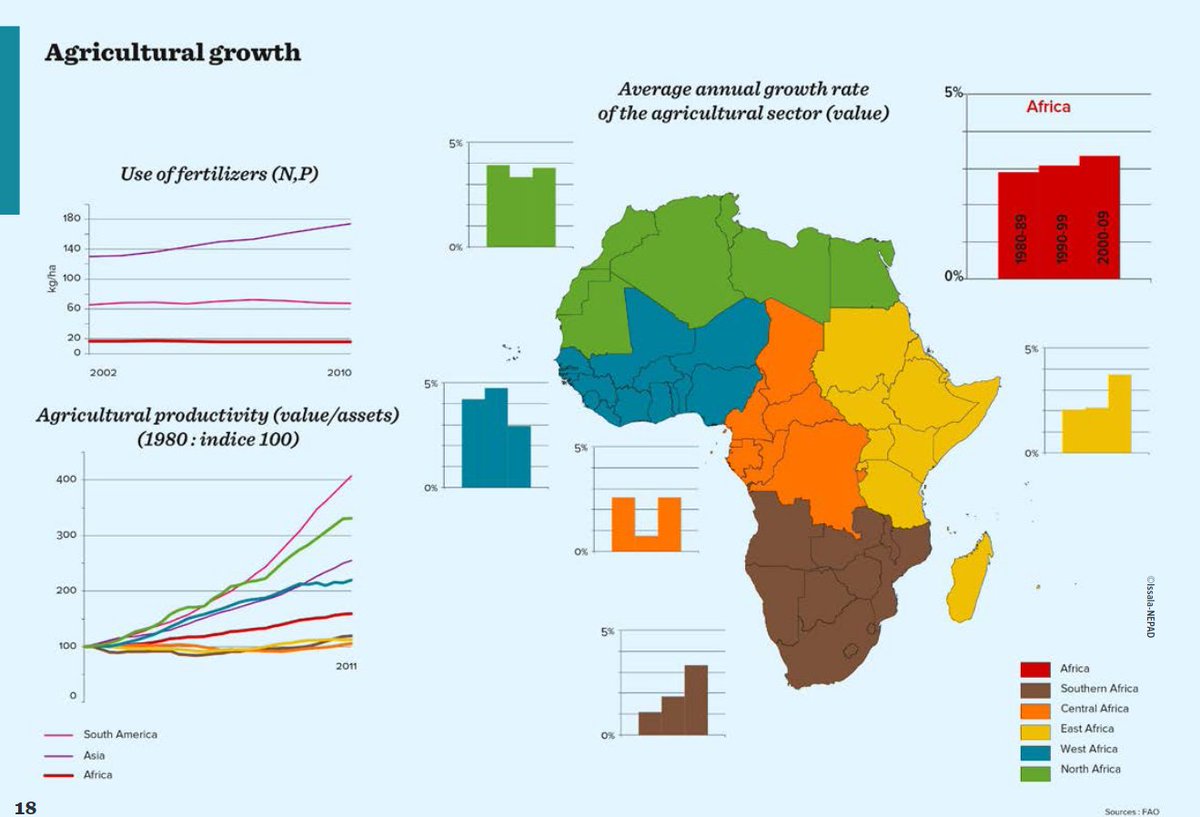
In Africa, agribusiness, more than any other sector, has the potential to reduce poverty and drive economic growth. Agriculture accounts for nearly half of the continent’s gross domestic product and employs 60 percent of the labor force.
#Cardano “Understanding Kamali”
#Cardano will be the underpinning of the emergence of Africa.
To grasp the full weight of the SOLUTIONS #Cardano can provide it is pertinent to read “Understanding Africa” as I will draw directly from the PROBLEMS laid out.
(2/50)
Here is a link if you have not already read
(1/38) #Cardano \u201cUnderstanding Africa\u201d (Part 1 of 2)
— FatCat (@fatcatofcrypto) February 10, 2021
This thread will be split into two parts with the 2nd coming out on Sunday.
Part 1 will layout the pervasive PROBLEMS Africa faces whereas Part 2 will apply direct technologies @InputOutputHK can implement as SOLUTIONS. pic.twitter.com/n3I91bnddq
(3/50)
What I will attempt to do here, is to create an immersive world for you to be placed in to grasp the weight and size of problems from the ground level and then take a grass-roots approach at solving them using #Cardano and its technology.
(4/50)
As an investor and community member of #Cardano, this should be extremely important to you as you have a stake (pun intended) in this.
“You are paid in direct proportion to the difficulty of the problems you solve” - @elonmusk
(5/50)
In Africa, agribusiness, more than any other sector, has the potential to reduce poverty and drive economic growth. Agriculture accounts for nearly half of the continent’s gross domestic product and employs 60 percent of the labor force.