
So much cultural criticism boils down to chewing on the strange result of popular genre chum--guilty pleasure stuff--being taken more seriously than it was really designed for or capable of sustaining.
More from For later read


Every single public defender. Every single day.
Bail arguments, motions, oral arguments, hearings. Judges don’t know, follow, or care about the law. Prosecutors are willing to take advantage of it. And mandatory minimums, withheld evidence, & pretrial detention coerces people to plead before trial. When theres a jury. A shot.
But defenders still fight. And still win. Most times wins aren’t “Justice.” It’s power of repetition of argument in front of same judges. Introducing those in power to the people they oppress. Not just a RAP sheet or words on a page. Defenders make it harder to be brutal & cruel.
I worked as a public defender at an office as well resourced as any in the country. Social workers, team of investigators, a reentry team, support staff, specialist attorneys in immigration, housing, education, family. Relatively low caseloads (80-100). And yet still injustice.
Most think that balancing the scales of justice means more funding for defenders. Thats part of it. Enough a attorneys to actually be at bail hearings. Wrap around services to be able to help people trapped in the system end up better off in their communities. Lower caseloads.
Raise your hand if you\u2019ve lost a case despite having the law, facts, quality lawyering, and justice on your side.
— Jon Feinberg (@JonFeinberg) February 13, 2021
Bail arguments, motions, oral arguments, hearings. Judges don’t know, follow, or care about the law. Prosecutors are willing to take advantage of it. And mandatory minimums, withheld evidence, & pretrial detention coerces people to plead before trial. When theres a jury. A shot.
But defenders still fight. And still win. Most times wins aren’t “Justice.” It’s power of repetition of argument in front of same judges. Introducing those in power to the people they oppress. Not just a RAP sheet or words on a page. Defenders make it harder to be brutal & cruel.
I worked as a public defender at an office as well resourced as any in the country. Social workers, team of investigators, a reentry team, support staff, specialist attorneys in immigration, housing, education, family. Relatively low caseloads (80-100). And yet still injustice.
Most think that balancing the scales of justice means more funding for defenders. Thats part of it. Enough a attorneys to actually be at bail hearings. Wrap around services to be able to help people trapped in the system end up better off in their communities. Lower caseloads.
You May Also Like


Keep dwelling on this:
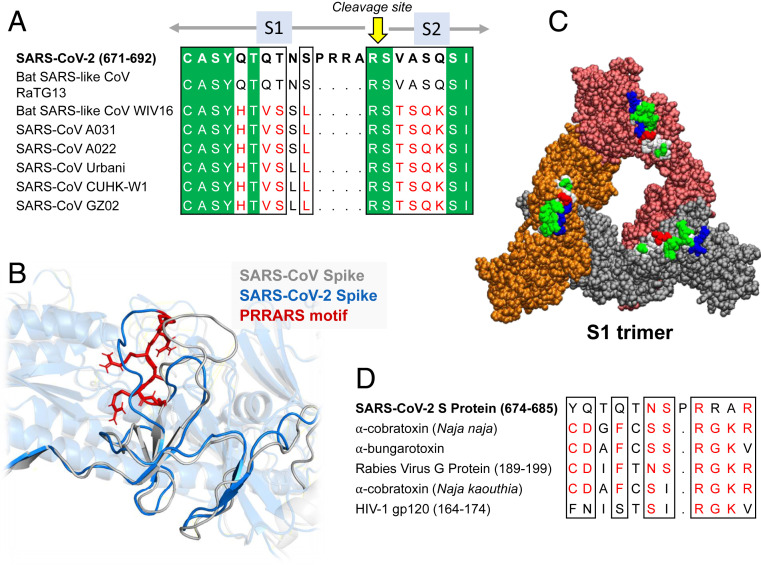
Further Examination of the Motif near PRRA Reveals Close Structural Similarity to the SEB Superantigen as well as Sequence Similarities to Neurotoxins and a Viral SAg.
The insertion PRRA together with 7 sequentially preceding residues & succeeding R685 (conserved in β-CoVs) form a motif, Y674QTQTNSPRRAR685, homologous to those of neurotoxins from Ophiophagus (cobra) and Bungarus genera, as well as neurotoxin-like regions from three RABV strains
(20) (Fig. 2D). We further noticed that the same segment bears close similarity to the HIV-1 glycoprotein gp120 SAg motif F164 to V174.
https://t.co/EwwJOSa8RK
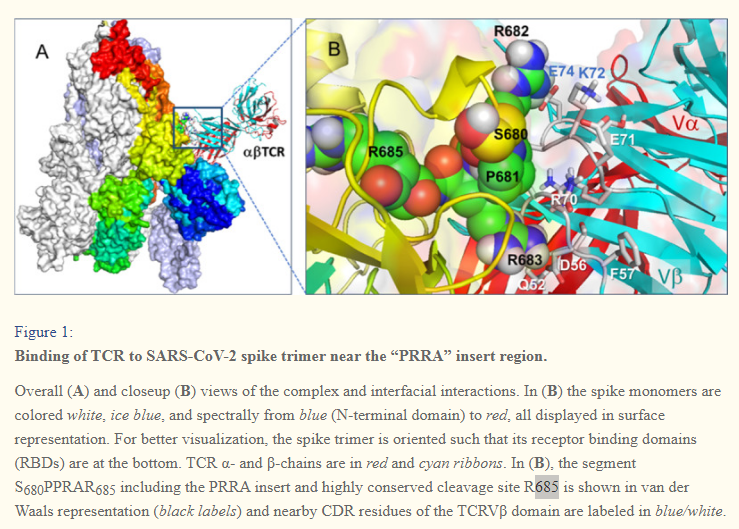
In (B), the segment S680PPRAR685 including the PRRA insert and highly conserved cleavage site *R685* is shown in van der Waals representation (black labels) and nearby CDR residues of the TCRVβ domain are labeled in blue/white
https://t.co/BsY8BAIzDa
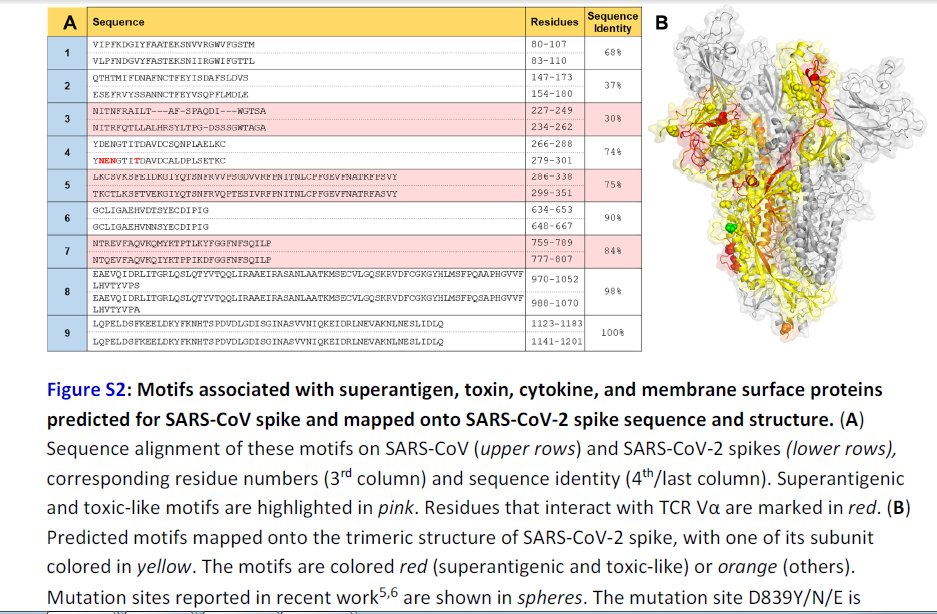
Sequence Identity %
https://t.co/BsY8BAIzDa
Y674 - QTQTNSPRRA - R685
Similar to neurotoxins from Ophiophagus (cobra) & Bungarus genera & neurotoxin-like regions from three RABV strains
T678 - NSPRRA- R685
Superantigenic core, consistently aligned against bacterial or viral SAgs
Further Examination of the Motif near PRRA Reveals Close Structural Similarity to the SEB Superantigen as well as Sequence Similarities to Neurotoxins and a Viral SAg.
The insertion PRRA together with 7 sequentially preceding residues & succeeding R685 (conserved in β-CoVs) form a motif, Y674QTQTNSPRRAR685, homologous to those of neurotoxins from Ophiophagus (cobra) and Bungarus genera, as well as neurotoxin-like regions from three RABV strains
(20) (Fig. 2D). We further noticed that the same segment bears close similarity to the HIV-1 glycoprotein gp120 SAg motif F164 to V174.
https://t.co/EwwJOSa8RK
In (B), the segment S680PPRAR685 including the PRRA insert and highly conserved cleavage site *R685* is shown in van der Waals representation (black labels) and nearby CDR residues of the TCRVβ domain are labeled in blue/white
https://t.co/BsY8BAIzDa
Sequence Identity %
https://t.co/BsY8BAIzDa
Y674 - QTQTNSPRRA - R685
Similar to neurotoxins from Ophiophagus (cobra) & Bungarus genera & neurotoxin-like regions from three RABV strains
T678 - NSPRRA- R685
Superantigenic core, consistently aligned against bacterial or viral SAgs


Oh my Goodness!!!
I might have a panic attack due to excitement!!
Read this thread to the end...I just had an epiphany and my mind is blown. Actually, more than blown. More like OBLITERATED! This is the thing! This is the thing that will blow the entire thing out of the water!
Has this man been concealing his true identity?
Is this man a supposed 'dead' Seal Team Six soldier?
Witness protection to be kept safe until the right moment when all will be revealed?!
Who ELSE is alive that may have faked their death/gone into witness protection?

Were "golden tickets" inside the envelopes??

Are these "golden tickets" going to lead to their ultimate undoing?
Review crumbs on the board re: 'gold'.

#SEALTeam6 Trump re-tweeted this.

I might have a panic attack due to excitement!!
Read this thread to the end...I just had an epiphany and my mind is blown. Actually, more than blown. More like OBLITERATED! This is the thing! This is the thing that will blow the entire thing out of the water!
Tik Tok pic.twitter.com/8X3oMxvncP
— Scotty Mar10 (@Allenma15086871) December 29, 2020
Has this man been concealing his true identity?
Is this man a supposed 'dead' Seal Team Six soldier?
Witness protection to be kept safe until the right moment when all will be revealed?!
Who ELSE is alive that may have faked their death/gone into witness protection?
Were "golden tickets" inside the envelopes??
Are these "golden tickets" going to lead to their ultimate undoing?
Review crumbs on the board re: 'gold'.
#SEALTeam6 Trump re-tweeted this.
