It's a slow, snowy afternoon. How about a ЁЯз╡ on "rationalists" & "rationalism"? I want to talk about what real rationalism might look like & what people devoted to rationalism might actually behave like--and how that differs from what you often see from self-styled rationalists.

Caveat up front: this is not about Slate Star Codex, which I haven't read regularly enough to have an opinion on, or about the recent controversy between SSC & the NYT. I'm more interested in the *idea* of rationalism (vs. the practice).
The core premise of rationalism, as I understand it, is simply that humans' cognitive machinery was not designed by evolution to find truth, but rather to advance the interests & welfare of the collective -- a Venn overlap, but not the same thing. Therefore ...
... reasoning well, both individually & as groups, requires special effort. It requires consciously trying to set aside the parochialism, biases, & other distortions that typically characterize our thinking -- resisting, to some extent, the dynamics of group membership/welfare.
That's all fine. I agree entirely that we should make special effort to reason well & to guard against the typical failures of reasoning to which we humans are prone. I believe it's the best (maybe only) way forward as a species. So far so good.
The real question is what that looks like in practice. And here we come to self-styled "rationalists." As someone who, in his youth, was a very stereotypical rationalist, who hung out with people who felt the same, I will just share my personal observation:
The people who talk most about how rational they are -- and how emotional you, their interlocutor, are clearly being (otherwise you'd see how right they are) -- are not the most rational. Rather, their "rationalism" appears to be compensation for their emotional illiteracy.
Whenever humans communicate, there are multiple channels being used. There's the straight, propositional meanings of the words, & then there's a whole other language of tone, implication, context cues, body language -- social & emotional info being exchanged.
Lots of smart young (esp. white) men are highly trained in the former but completely untrained in the latter, in fact taught that the latter is feminine & suspect. They are, in a nutshell, emotionally illiterate. They're always "saying the wrong thing" in that latter language...
... or failing to hear messages sent in that latter language. Their personal relationships suffer. And their response is to blame ... everyone else. To declare that second language illegitimate. To declare that ONLY propositional meanings that they consciously intend *count*.
This, in short, is what self-styled rationalism often (mostly?) is in practice: men, frightened & confused by the ambiguity of emotional & social communication, seeking to ban it, to declare it out of bounds, to frame their emotional illiteracy as a virtue.
We're all familiar with this type of dude. @AnnieLowrey called him Fact Guy. Also known as Reply Guy. I call him "I'm rational you're emotional" guy. The most notable thing about them is, they're some of the most emotional people you'll ever encounter! It's just that ...
... their primary emotions are anger & umbrage & outrage (which we all know are masculine & therefore not "emotional"). They are some of the most butthurt, quick-to-anger people you'll ever encounter. They are not, needless to say, paragons of reason.
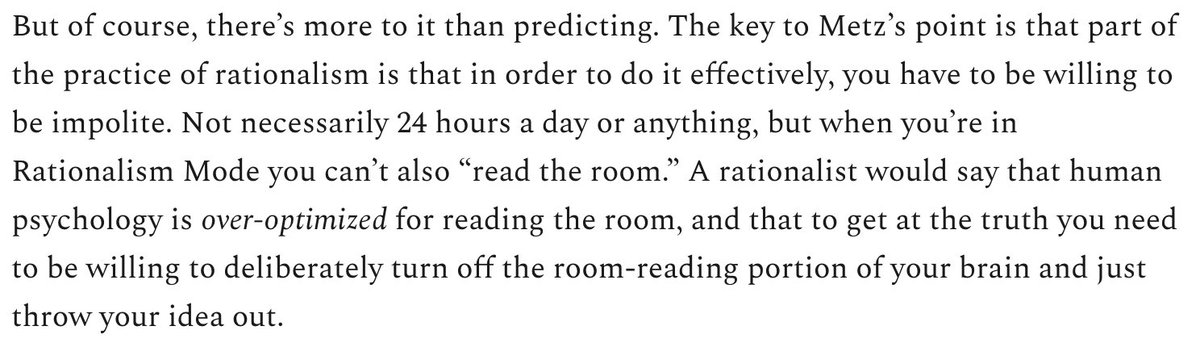
So what's the point of all this? Well, I was reading @mattyglesias' post on all this, mostly nodding along, when I got to this spot, which started my red sirens flashing.

https://t.co/F1nEQfUOJN
I agree that, in general, people are often carried along by peer pressure to suppress or ignore certain points & focus on others. Groupthink is real. Lots of people lack the confidence or thick skin necessary to tack against their peers. Granted. HOWEVER.
Among the class of people most likely to deem themselves "rationalists," being "impolite" is not a deterrent, it's often the reward. Telling a bunch of people they're wrong & dumb -- especially the people who have made the rationalists feel emotionally illiterate -- feels good.
In fact, lots of self-styled rationalists view being smarter than the masses, above them, as core to their identity. They're not sheeple. They think independently. They LOVE telling all the smug swells who made them feel awkward in HS that *actually*, they're the dumb ones!
IOW, the people most likely to identify as rationalists need the *least* encouragement to be impolite. If anything, the goal of being impolite often subsumes & distorts their reasoning ability! They love that shit, just them & their rational friends mocking the deluded masses.
(I am deliberately not using any names here, so as not to get pulled into dumb fights, but I suspect everyone reading can name one or two of these folks right off the top of their head.)
So I would take a different turn than Matt took. I would say, if you are the kind of person who aspires to be rational, or who self-identifies as rational, the main danger you need to watch out for is not politesse but *self-deception*.
People conspicuously proud of their rationality (and often, at a subconscious level, angered & ashamed by their emotional illiteracy) are some of the people *most likely* to ignore their own logical leaps, fallacies, & inconsistencies -- most likely to self-deceive.
So if you are attracted to rationalism (as I am!), your primary obligation is not rudeness or insensitivity to group dynamics (you probably already have that covered) but ***humility***. You should be aware, at all times, that you too are probably falling short of True Reason.
If you truly take that humility on board, then you take a different perspective on how to make human affairs & societies more rational. The answer is *not* for a handful of bros to train themselves to be ├Ьbermenschen, super-reasoners, & then lecture the rest of us.
Once you acknowledge the frailty & fallibility of individual reasoners (yourself included), you realize that the most important collective task is to learn how to reason better *together*, how to develop practices & institutions that guide us toward reason.
You realize no individual reasoner (or special group of "rationalists") is ever going to be reliable over the long-term. We're all human. The only hope is inscribing the practices & values of truth-finding into institutions that transcend any set of individuals.
You also realize that unreason is never going to be banished by the Ultimate Bro Lecture. No person/institution/group ever perfectly instantiate reason. We're not going to evolve into a species of perfect reasoners. Irrationality is an ineradicable feature of human societies.
Attempts to suppress or ban or stigmatize human parochial passions and group loyalties -- however technically irrational they may be -- will only result in tyranny & backlash. Attempts to engineer them out of ourselves will end in tears.
So the best we can hope for is to adopt values & design institutions that *encourage* reason on the margins, that nudge us in that direction. We cannot suppress or eliminate parochial passions, so we must accommodate them, manage them, as best we can. Meliorism.
And here we get to the central irony: if you truly understand humans, Reason leads you to support practices & institutions that, in their fuzziness, their accommodation of parochialism, their fallibility & partiality, *make self-styled rationalists uncomfortable*.
Self-styled rationalists favor clarity, right angles, lack of ambiguity. But fuzziness & messiness are core parts of humanity that must be designed around. A world built by Reason, for actually existing humans, is not necessarily going to celebrate or elevate rationalists!
A world built by Reason will not be ruled by a council of tech bros. It will be small-d democratic, messy, iterative, flawed, humble, biased toward compassion over judgment. That's what's effective in actual human affairs -- ie, that's what's rational!
In other words, if rationalists really cared about being rational, they'd become democratic socialists.

Sorry this got so long.

More from For later read

Nice to discover Judea Pearl ask a fundamental question. What's an 'inductive bias'?


I crucial step on the road towards AGI is a richer vocabulary for reasoning about inductive biases.

explores the apparent impedance mismatch between inductive biases and causal reasoning. But isn't the logical thinking required for good causal reasoning also not an inductive bias?

An inductive bias is what C.S. Peirce would call a habit. It is a habit of reasoning. Logical thinking is like a Platonic solid of the many kinds of heuristics that are discovered.

The kind of black and white logic that is found in digital computers is critical to the emergence of today's information economy. This of course is not the same logic that drives the general intelligence that lives in the same economy.

You May Also Like

рдХреБрдВрдбрд▓реА рдореЗрдВ 12 рднрд╛рд╡ рд╣реЛрддреЗ рд╣реИрдВред рдХреИрд╕реЗ рдЬреНрдпреЛрддрд┐рд╖ рджреНрд╡рд╛рд░рд╛ рд░реЛрдЧ рдХреЗ рдЖрдВрдХрд▓рди рдХрд░рддреЗ рд╕рдордп рдХреБрдВрдбрд▓реА рдХреЗ рд╡рд┐рднрд┐рдиреНрди рднрд╛рд╡реЛрдВ рд╕реЗ рдЧрдгрдирд╛ рдХрд░рддреЗ рд╣реИрдВ рдЖрдЬ рдЗрд╕ рдкрд░ рдЪрд░реНрдЪрд╛ рдХрд░реЗрдВрдЧреЗред
рдХреБрдгреНрдбрд▓реА рдХреЛ рдХрд╛рд▓рдкреБрд░реБрд╖ рдХреА рд╕рдВрдЬреНрдЮрд╛ рджреЗрдХрд░ рдЗрд╕рдореЗрдВ рд╢рд░реАрд░ рдХреЗ рдЕрдВрдЧреЛрдВ рдХреЛ рд╕реНрдерд╛рдкрд┐рдд рдХрд░ рдЙрдирд╕реЗ рд░реЛрдЧ, рд░реЛрдЧреЗрд╢, рд░реЛрдЧ рдХреЛ рдмрдврд╝рд╛рдиреЗ рдШрдЯрд╛рдиреЗ рд╡рд╛рд▓реЗ рдЧреНрд░рд╣


рд░реЛрдЧ рдХреА рд╕реНрдерд┐рддрд┐ рдореЗрдВ рдЙрддреНрдкреНрд░реЗрд░рдХ рдХрд╛ рдХрд╛рд░реНрдп рдХрд░рдиреЗ рд╡рд╛рд▓реЗ рдЧреНрд░рд╣, рдЖрдпреБрд░реНрд╡реЗрджрд┐рдХ/рдРрд▓реЛрдкреИрдереА/рд╣реЛрдорд┐рдпреЛрдкреИрдереА рдореЗрдВ рд╕реЗ рдХреМрди рдХрд╛рд░рдЧрд░ рд╣реЛрдЧрд╛ рдЗрд╕рдХрд╛ рдЖрдБрдХрд▓рди, рд░рдХреНрдд рд╡рд┐рдХрд╛рд░, рд░рдХреНрдд рдФрд░ рдЖрдкрд░реЗрд╢рди рдХреА рд╕реНрдерд┐рддрд┐, рдХреМрди рд╕рд╛ рдЖрдВрддрд░рд┐рдХ рдпрд╛ рдмрд╛рд╣рд░реА рдЕрдВрдЧ рдкреНрд░рднрд╛рд╡рд┐рдд рд╣реЛрдЧрд╛ рдЗрддреНрдпрд╛рджрд┐ рдЧрдгрдирд╛ рдХрд░рдиреЗ рдореЗрдВ рдХреБрдВрдбрд▓реА рдХрд╛ рдкреНрд░рдпреЛрдЧ рдХрд┐рдпрд╛ рдЬрд╛рддрд╛ рд╣реИред


рдореЗрдбрд┐рдХрд▓ рдЬреНрдпреЛрддрд┐рд╖ рдореЗрдВ рдЖрдЬ рдХреЗ рд╕рдордп рдореЗрдВ Dr. K. S. Charak рдХрд╛ рдирд╛рдо рдирд┐рд░реНрд╡рд┐рд╡рд╛рдж рд░реВрдк рд╕реЗ рдкреНрд░рдердо рд╕реНрдерд╛рди рд░рдЦрддрд╛ рд╣реИред рдЙрдирдХреА рд▓рд┐рдЦреА рдХрдИ рдкреБрд╕реНрддрдХреЗрдВ рдЖрдЬ рдЗрд╕ рдХреНрд╖реЗрддреНрд░ рдореЗрдВ рдирдП рдЬреНрдпреЛрддрд┐рд╖реЛрдВ рдХрд╛ рдорд╛рд░реНрдЧрджрд░реНрд╢рди рдХрд░ рд░рд╣реА рд╣реИрдВред
рдкреНрд░рдердо рднрд╛рд╡ -
рдЗрд╕ рднрд╛рд╡ рд╕реЗ рд╣рдо рд╡реНрдпрдХреНрддрд┐ рдХреА рд░реЛрдЧрдкреНрд░рддрд┐рд░реЛрдзрдХ рдХреНрд╖рдорддрд╛, рд╕рд┐рд░, рдорд╖реНрддрд┐рд╕реНрдХ рдХрд╛ рд╡рд┐рдЪрд╛рд░ рдХрд░рддреЗ рд╣реИрдВред


рджреНрд╡рд┐рддреАрдп рднрд╛рд╡-
рджрд╛рд╣рд┐рдирд╛ рдиреЗрддреНрд░, рдореБрдЦ, рд╡рд╛рдгреА, рдирд╛рдХ, рдЧрд░реНрджрди рд╡ рдЧрд▓реЗ рдХреЗ рдКрдкрд░реА рднрд╛рдЧ рдХрд╛ рд╡рд┐рдЪрд╛рд░ рд╣реЛрддрд╛ рд╣реИред
рддреГрддреАрдп рднрд╛рд╡-
рдЕрд╕реНрдерд┐, рдЧрд▓рд╛,рдХрд╛рди, рд╣рд╛рде, рдХрдВрдзреЗ рд╡ рдЫрд╛рддреА рдХреЗ рдЖрдВрддрд░рд┐рдХ рдЕрдВрдЧреЛрдВ рдХрд╛ рд╢реБрд░реБрдЖрддреА рднрд╛рдЧ рдЗрддреНрдпрд╛рджрд┐ред

рдЪрддреБрд░реНрде рднрд╛рд╡- рдЫрд╛рддреА рд╡ рдЗрд╕рдХреЗ рдЖрдВрддрд░рд┐рдХ рдЕрдВрдЧ, рдЬрд╛рддрдХ рдХреА рдорд╛рдирд╕рд┐рдХ рд╕реНрдерд┐рддрд┐/рдкреНрд░рдХреГрддрд┐, рд╕реНрддрди рдЖрджрд┐ рдХреА рдЧрдгрдирд╛ рдХреА рдЬрд╛рддреА рд╣реИ


рдкрдВрдЪрдо рднрд╛рд╡-
рдЬрд╛рддрдХ рдХреА рдмреБрджреНрдзрд┐ рд╡ рдЙрд╕рдХреА рддреАрд╡реНрд░рддрд╛,рдкреАрда, рдкрд╕рд▓рд┐рдпрд╛рдВ,рдкреЗрдЯ, рд╣реГрджрдп рдХреА рд╕реНрдерд┐рддрд┐ рдЖрдВрдХрд▓рди рдореЗрдВ рдкреНрд░рдпреЛрдЧ рд╣реЛрддрд╛ рд╣реИред

рд╖рд╖реНрда рднрд╛рд╡-
рд░реЛрдЧ рднрд╛рд╡ рдХрд╣рд╛ рдЬрд╛рддрд╛ рд╣реИред рдХреБрдВрдбрд▓реА рдореЗ рдЗрд╕рдХреЗ рддрддреНрдХрд╛рд▓рд┐рдХ рднрд╛рд╡ рд╕реНрд╡рд╛рдореА, рдХрд╛рд▓рдкреБрд░реБрд╖ рдХреБрдВрдбрд▓реА рдХреЗ рд╕реНрд╡рд╛рдореА, рджреГрд╖реНрдЯрд┐ рд╕рдВрдмрдВрдз, рд░реЛрдЧреЗрд╢ рдХреА рд╕реНрдерд┐рддрд┐, рд░реЛрдЧреЗрд╢ рдХреЗ рдирдХреНрд╖рддреНрд░ рдФрд▒ рд░реЛрдЧреЗрд╢ рд╡ рднрд╛рд╡ рдХреА рдбрд┐рдЧреНрд░реА рдЗрддреНрдпрд╛рджрд┐ред
8 March 1679 - The date on which 300 saffron clad warriors gave their life to protect temples from mugal army. ThreadтЮбя╕П
Aurangzeb's huge army, which was adorned with artillery, elephant and horses, under the leadership of Commander Darab Khan had marched to punish the ruler of/1


Khandela Raja Bahadur Singh, who became a rebel due to the anti-Hindu policies of Aurangzeb, and to destroy the temples of Shekhawati. Bahadur Singh to compete with such a large army, vacated Khandela for the purpose of conducting guerilla warfare and went Kot Sakrai /2

located in the inaccessible hills of Sakrai. People of Khandela also vacated Khandela and hid in nearby villages.

But some Shekhawat warriors did not like this as they knew that the royal army would not leave a single temple located in Shekhawati unbroken./3

so soon the teams of self-sacrificing Dharma-protectors Shekhawat heroes started reaching Khandela to protect the Dev temples.

Sujan Singh Shekhawat, the young thakur of Chhapoli, was coming back from his wedding when he heard about the imperial army from Shepherds./4

рдЭрд┐рд░рдореАрд░ рдЭрд┐рд░рдорд┐рд░ рдореЗрд╣рд╛ рдмрд░рд╕реЗ,рдореЛрд░рд╛рдВ рдЫрддрд░реА рдЫрд╛рдИ |
рдХреБрд▓ рдореЗрдВ рд╣реИ рддреЛ рдЖрд╡ рд╕реБрдЬрд╛рдг, рдлреЛрдЬ рджреЗрд╡рд░реЗ рдЖрдИ ||

if you are born in your glorious clan, then come, the army have come to destroy temple. /5