If the connotation of risk is an intertwined concept and is difficult to quantify, how does a Risk Officer look at it?
Is there any way other than using copula models to determine systemic risk with long tails or a black swan event?
@CQFInstitute @GARP_Risk @SOActuaries
•75- 80% of the loss given events are classified as Operational #LGE - (LOSS GIVEN EVENTS),
•Only 15%- 20% of the LGEs are driven by Market or Credit or both
#Risk managers can use #scenario #analysis based on an expert judgement, that can be more helpful, instead of applying #VaR models blindly.
The Financial Markets outcomes are not Normal or i.i.d in any sense.
Gaussian Copula model assumes that correlation (strength of association between x and y variables) is Linear and hence presents the symmetric perspective of market-driven loss events.
@BIS_org
But that didn't work out well using symmetric event modelling assumptions!
A #Poisson Probability Distribution Model to measure frequency, whereas stochastic simulation can be used to measure severity for each single event loss.
The most common assumption used is that loss severity is independent of loss frequency.
This Loss distribution model for e.g. in the context of a Hedge Fund?
Can we induce randomness into the experiment to better capture heavy loss incurring tailed events aka Black Swan Events (having high severity and low frequency)?
2. Sample nnn times from the loss severity distribution to determine the loss experienced for each loss event (L1, L2,…,Ln)
Kindly refer to the same BASEL II - ORM Taxonomy as laid down in Basel II literature to better understand the vertical dependencies between various risk types/ across various lines
The following lists the seven official Basel II event types with some examples for each category:
1.Internal Fraud – misappropriation of assets, tax evasion, intentional mismarking of positions, bribery
3.Employment Practices and Workplace Safety – discrimination, workers compensation, employee health and safety
5.Damage to Physical Assets – natural disasters, terrorism, vandalism
7.Execution, Delivery, and Process Management – data entry errors, accounting errors, failed mandatory reporting, negligent loss of client assets
To better comprehend hedge fund business complexity you need to have a proper FMEA (Failure Modes and Effect Analysis) ....
Management that is a classic problem observed in the #FRM Profession, just because it is difficult to do quantitative modelling.
More from Finance







You May Also Like





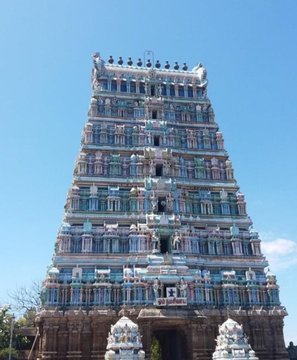
Margatha Natarajar murthi - Uthirakosamangai temple near Ramanathapuram,TN
#ArudraDarisanam
Unique Natarajar made of emerlad is abt 6 feet tall.
It is always covered with sandal paste.Only on Thriuvadhirai Star in month Margazhi-Nataraja can be worshipped without sandal paste.

After removing the sandal paste,day long rituals & various abhishekam will be https://t.co/e1Ye8DrNWb day Maragatha Nataraja sannandhi will be closed after anointing the murthi with fresh sandal paste.Maragatha Natarajar is covered with sandal paste throughout the year
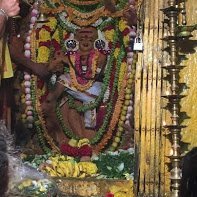
as Emerald has scientific property of its molecules getting disturbed when exposed to light/water/sound.This is an ancient Shiva temple considered to be 3000 years old -believed to be where Bhagwan Shiva gave Veda gyaana to Parvati Devi.This temple has some stunning sculptures.
#ArudraDarisanam
Unique Natarajar made of emerlad is abt 6 feet tall.
It is always covered with sandal paste.Only on Thriuvadhirai Star in month Margazhi-Nataraja can be worshipped without sandal paste.
After removing the sandal paste,day long rituals & various abhishekam will be https://t.co/e1Ye8DrNWb day Maragatha Nataraja sannandhi will be closed after anointing the murthi with fresh sandal paste.Maragatha Natarajar is covered with sandal paste throughout the year
as Emerald has scientific property of its molecules getting disturbed when exposed to light/water/sound.This is an ancient Shiva temple considered to be 3000 years old -believed to be where Bhagwan Shiva gave Veda gyaana to Parvati Devi.This temple has some stunning sculptures.